Table of Contents
- The Spark of Innovation: Pascal’s Calculator Demonstrated in Rouen
- The World Before Computation: Calculating the Immeasurable
- Blaise Pascal: The Prodigy and Visionary Mathematician
- From Intense Curiosity to Mechanical Precision: The Birth of the Pascaline
- The Rouen Exhibition: A Milestone in Scientific History
- Inside the Machine: How the Pascaline Worked
- Challenges and Skepticism: The Public and the Scholars React
- The Role of Automata and Mechanical Devices in 17th-Century France
- Pascal’s Personal Journey: Drive, Faith, and Determination
- The Broader Context: The Scientific Revolution in Europe
- Money, Mathematics, and the State: Why Pascal’s Calculator Mattered
- The Ripple Effects: How the Pascaline Influenced Future Computing
- A Revolution in Counting: The Importance of Mechanization
- From Rouen to the World: The Spread and Legacy of Early Calculators
- The Symbolic Meaning of Pascal’s Machine in Enlightenment Thought
- Technical Limitations and Inspirations Drawn
- The Pascaline in Art, Literature, and Popular Memory
- Modern Perspectives on Pascal’s Invention: Historiographical Debates
- Why 1642 Marks a Turning Point in Scientific Instrumentation
- Conclusion: The Unheralded Dawn of Computing
- FAQs
- External Resource
- Internal Link
1. The Spark of Innovation: Pascal’s Calculator Demonstrated in Rouen
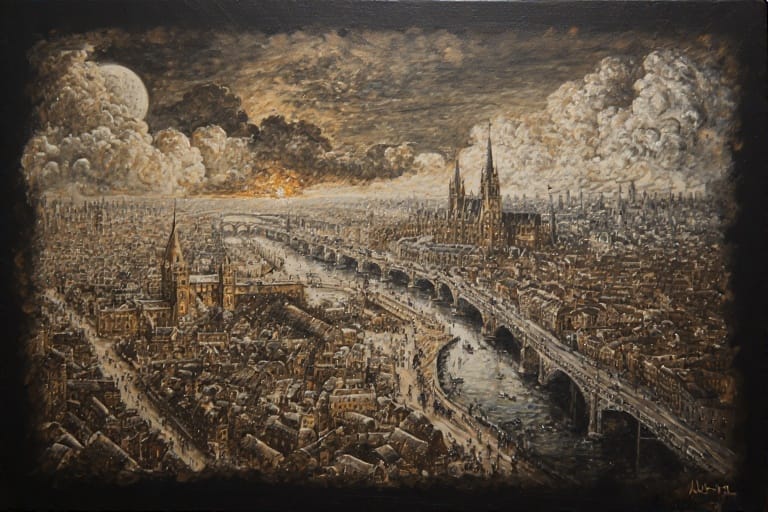
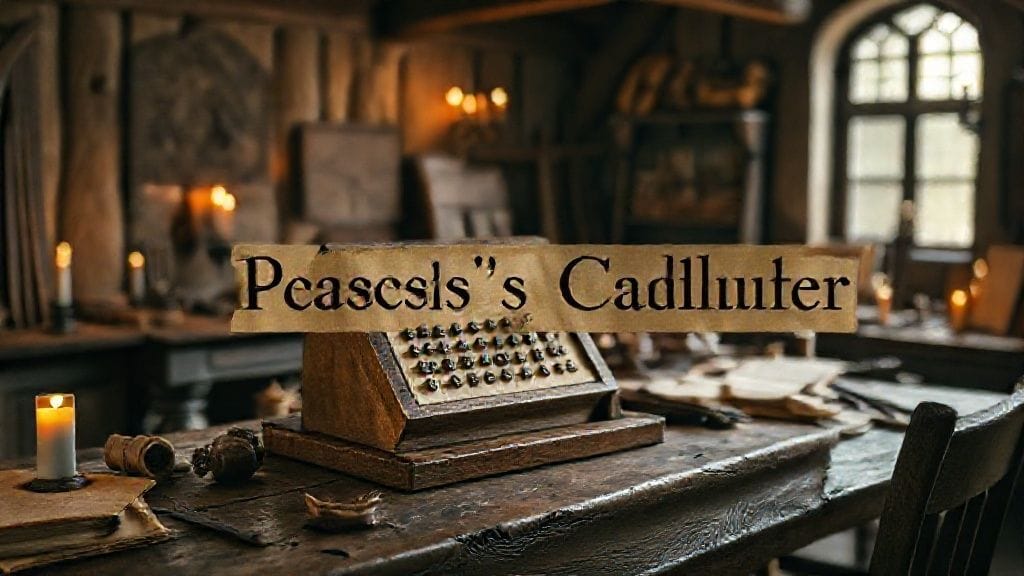
The morning light caressed the cobblestones of Rouen as curious spectators circled around a curious wooden box – the curious contraption of Blaise Pascal. It hummed softly, its gears clicking in rhythmic harmony, a mechanical heartbeat pulsing beneath the reverent eyes of an eager crowd. It was November 1642, and in this moment, long before the age of digital screens and silicon chips, a revolution in thought and technology quietly blossomed. Pascal’s calculator, the Pascaline, was unveiled not merely as a machine, but as a bold promise to tame the unruly chaos of arithmetic—a dream to ease human labor and illuminate the path to modern computation.
This day marked the inception of a profound transformation—a machine designed to automate addition and subtraction, promising accuracy and speed. The scene was charged with wonder but also skepticism, for it was difficult to envision from such a modest wooden frame how such a device might reshape the fabric of scientific and financial life. Yet, the demonstration in Rouen was a landmark, a whisper of the mechanized age to come.
2. The World Before Computation: Calculating the Immeasurable
Seventeenth-century Europe was a world teetering on the threshold of scientific awakening, yet still shackled to manual calculation. Merchants, tax collectors, engineers, and scientists alike grappled endlessly with numbers, caught in the tedium of arithmetic performed by hand. Mistakes were common; errors in tallying taxes or funds could ripple disastrously through economies.
Calculation was time-consuming, error-prone, and oppressive, marking a hidden bottleneck in progress. Before Pascal, there were rudimentary tools—the abacus, counting boards, and logarithmic tables—that aided numeracy, but they demanded skill and patience. The mere thought of automating this labor was revolutionary; the idea of a machine performing calculation had long hovered at the edges of mechanical experiment, but without practical realization.
3. Blaise Pascal: The Prodigy and Visionary Mathematician
Blaise Pascal was no ordinary mind. Born in 1623, he was a child prodigy—by the age of twelve, already immersed in geometry and advanced mathematics. Driven by an insatiable curiosity and obsessively fascinated by the sciences of his age, Pascal was also a man of deep religious conviction and philosophical reflection. His mind oscillated between the abstract realms of pure mathematics and practical needs dictated by his daily life.
Pascal’s father, Étienne, a local tax collector, faced enormous difficulties in calculating taxes quickly and accurately across expanding territories. Witnessing his father’s frustration with heavy accounting work spurred young Pascal into action. His creation, therefore, was not destined only for academic glory but was deeply rooted in a personal quest to alleviate real-world burdens.
4. From Intense Curiosity to Mechanical Precision: The Birth of the Pascaline
At the age of 18, Pascal began building what would become the Pascaline—one of the earliest mechanical calculators. Its design ingeniously combined a series of interlocking gears and wheels to perform addition and subtraction by “carrying” numbers between digits. The idea had similarities to modern odometers, and Pascal’s device was crafted to tally up to eight-digit numbers.
This combination of elegance and clarity resulted from months of experimentation and innovation, fusing complex arithmetic principles with mechanical ingenuity. The Pascaline encapsulated a delicate dance between abstract mathematics and tangible material technology—a true triumph at the dawn of mechanized cognition.
5. The Rouen Exhibition: A Milestone in Scientific History
The 1642 demonstration in Rouen was a seminal moment, not solely because the machine revealed its functional capability, but because it symbolized a new era. Witnessing the Pascaline process calculations with unprecedented precision fascinated locals and visiting dignitaries alike. The event drew attention from scientific circles throughout France, sparking debate and admiration.
This public presentation was crucial: it transformed the machine from a personal experiment into an artifact of communal knowledge. Rouen’s streets, for a brief moment, echoed with the noise of progress—the mechanical tick of innovation steadily overshadowing the human error it aimed to correct.
6. Inside the Machine: How the Pascaline Worked
At its core, the Pascaline was a marvel of simplicity and complexity intertwined. The machine’s face displayed a series of wheels marked from 0 to 9—each representing a decimal place—and a set of small pointers to indicate numerical results. Each wheel’s rotation corresponded to adding units, tens, hundreds, and so forth.
What set the Pascaline apart was its “carry” mechanism that automatically rolled the next wheel forward when a digit surpassed 9, echoing the human principle of carrying numbers in addition. This feature rendered manual recalculation obsolete for many operations. Made primarily from brass and iron encased in finely crafted wood, the Pascaline was both sturdy and delicate—a testament to craftsmanship and scientific insight.
7. Challenges and Skepticism: The Public and the Scholars React
Despite its ingenuity, Pascal’s invention was met with a wave of skepticism and resistance. Many mathematicians and officials found it difficult to trust a machine with their calculations—after all, no machine had yet proven reliable in a realm bounded by abstract reasoning. Purists argued that such devices lacked flexibility, unable to perform multiplication or division without complex human intervention.
Moreover, the Pascaline was expensive and intricate to produce, limiting its initial dissemination. Critics also saw it as a novelty, a mechanical curiosity unlikely to supplant traditional arithmetic practices embedded in education and bureaucracy. Such resistance, however, only underscored the revolutionary nature of Pascal’s work—it was too novel, too disorienting to fit into the intellectual categories of the time.
8. The Role of Automata and Mechanical Devices in 17th-Century France
The 1600s were a century enraptured by automata—clockwork figures and mechanical wonders fascinated both court and public. Automata exemplified a growing belief that machines could replicate natural or intellectual processes. Pascal’s calculator fit into this cultural context, as a kind of automaton not of motion or spectacle but of abstract reasoning.
France, under Louis XIII and later Louis XIV, fostered scientific inquiry alongside artistic grandeur. In salons and academies, inventions like Pascal’s found eager audiences curious about the potential of human ingenuity and mechanical life. The Pascaline thus differentiated itself by operating not on illusion or mimicry, but on practical problem-solving.
9. Pascal’s Personal Journey: Drive, Faith, and Determination
Pascal was not only a scientist but also a deeply introspective thinker wrestling with existential questions. He experienced a profound religious conversion in 1654, a decade after the Pascaline’s debut, which transformed his relationship to science and philosophy. Yet, through it all, his dedication to making thought mechanical endured.
The demonstration in Rouen can be viewed as both a scientific and spiritual milestone: it represented the triumph of human reason wielded through humble gearwork. Pascal’s ability to merge intellectual rigor with practical necessity underlined his exceptional character, a figure navigating the treacherous waters of innovation, faith, and societal expectation.
10. The Broader Context: The Scientific Revolution in Europe
Pascal’s invention did not occur in isolation; it was part of a sweeping tide of change now called the Scientific Revolution. This era saw the rise of empirical observation, mathematical description of natural phenomena, and technological breakthroughs. Galileo, Descartes, Kepler, and Newton were among the titans shaking the foundations of medieval knowledge.
The Pascaline dovetailed into a moment when quantification and measurement became fundamental to understanding nature and humanity alike. The calculator extended this obsession with precision into the realm of arithmetic, laying groundwork for later computational machines and the eventual birth of computer science centuries ahead.
11. Money, Mathematics, and the State: Why Pascal’s Calculator Mattered
Pascal’s father’s profession as a tax collector underscored the urgent practical importance of the Pascaline. Efficient bookkeeping and accurate tax collection were essential to the financial health of kingdoms expanding their reach and bureaucracies.
By mechanizing calculation, Pascal’s device promised not just speed but honesty—minimizing errors and corruption in accounting. In a world where accounts could determine wars, wealth distribution, and governance, the calculator suggested a new form of political authority rooted in rational, mechanical certainty.
12. The Ripple Effects: How the Pascaline Influenced Future Computing
Though the Pascaline never achieved mass production, it planted seeds that blossomed long after Pascal’s lifetime. Its influence echoed in later devices by Gottfried Wilhelm Leibniz, who sought to extend mechanical calculation to multiplication and division, and eventually through centuries culminating in the modern computer.
Historians regard the Pascaline as a foundational step that demonstrated the feasibility of automating arithmetic and mechanizing logic. It was the mechanical spark lighting the fire of computational invention, inspiring centuries of inventors to seek ever more efficient, versatile devices.
13. A Revolution in Counting: The Importance of Mechanization
To understand the magnitude of Pascal’s feat, one must imagine the laborious reality before mechanized calculation—the human mind struggling with complexity, prone to mistakes, and confined by fatigue. The Pascaline offered a radical promise: to transpose cognitive effort to metal and wood, to bring numbers under the reign of gears rather than fragile human memory.
This mechanization of counting and calculation revolutionized how people thought about knowledge. It introduced the idea that machines could extend human intellectual capacities, serving as partners in reasoning.
14. From Rouen to the World: The Spread and Legacy of Early Calculators
Though limited in number and reach, the Pascaline foreshadowed a global transformation. Copies and variants inspired artisans and mathematicians in France and beyond. Early modern governments and merchants keenly watched the possibilities that mechanical computation opened.
As the Enlightenment unfolded, calculators like Pascal’s became symbols of progress and rationality, embedded in the technological optimism that accompanied increasing mechanization of work and thought. Today, the legacy of Rouen’s demonstration resonates in every digital device that makes arithmetic instantaneous.
15. The Symbolic Meaning of Pascal’s Machine in Enlightenment Thought
The Pascaline embodied ideals central to Enlightenment philosophy—reason, order, and human mastery over nature. It illustrated the power of science to reshape tools and minds. The machine was a physical metaphor for clarity emerging from confusion, calculation replacing guesswork.
The notion that machines could participate in intellectual labor challenged existing hierarchies between human and mechanical, sparking philosophical debates about the nature of mind, reason, and creativity that continue to reverberate in contemporary discourse.
16. Technical Limitations and Inspirations Drawn
Despite its brilliance, the Pascaline had practical limitations—it only performed addition and subtraction, and required manual resetting for multiplication or division via repeated operations. Its complexity and cost inhibited widespread adoption.
Yet these drawbacks inspired further invention. Pascal’s design invited improvements, and his mechanical principles informed the work of later pioneers. The Pascaline’s strengths and weaknesses together crafted a blueprint for the evolving field of computational mechanics.
17. The Pascaline in Art, Literature, and Popular Memory
Though a niche scientific instrument, the Pascaline captured the imagination of artists and writers fascinated by the confluence of technology and intellect. Sketches, engravings, and written accounts circulated, immortalizing the machine as a marvel.
Today, museums and exhibitions celebrate Pascal’s invention, marking it as a visionary artifact bridging Renaissance craft and modern science. Its symbolic power continues to inspire explorations of human-machine interaction.
18. Modern Perspectives on Pascal’s Invention: Historiographical Debates
Contemporary historians view the Pascaline as more than a gadget—it is a revolutionary step signaling the dawn of information technology. Some emphasize Pascal’s genius in addressing concrete problems; others highlight the cultural and intellectual contexts enabling his innovations.
There remain debates about how to weigh the Pascaline’s practical versus symbolic significance. Regardless, its place as a foundational milestone in computational history is undisputed.
19. Why 1642 Marks a Turning Point in Scientific Instrumentation
The Rouen demonstration codified 1642 as a landmark date in the history of science and technology. It marked the first public display of a reliable mechanical calculator and set a precedent for integrating scientific theory with engineering practice.
This moment symbolizes a broader shift towards systematic instrument-making—a trend essential to modern science. It signaled that machines could embody intellectual processes, laying the groundwork for centuries of technological advancement.
Conclusion
The demonstration of Blaise Pascal’s calculator in Rouen in 1642 was a quiet revolution that echoed far beyond the narrow halls of seventeenth-century France. It was not mere mechanical artistry or a fleeting novelty but a visionary leap—an audacious attempt to mechanize thought itself. In gears and wheels, the chaos of arithmetic found order; in relentless precision, the elusive ideal of certainty in calculation took form.
This event invites us to reflect on the relentless human pursuit to expand the limits of cognition, to craft tools that amplify our mental reach. The Pascaline, though modest in size, towers in historical significance—heralding the vast epoch of computation that now underpins our world. Rouen’s cobblestones may have long since weathered away, but on that crisp November day, the future was quietly set in motion.
FAQs
Q1: Why did Blaise Pascal invent the calculator?
A1: Motivated by his father’s struggles with lengthy and error-prone tax calculations, Pascal invented the calculator to automate basic arithmetic, making accounting faster and more accurate.
Q2: What made the Pascaline different from previous counting tools?
A2: Unlike abacuses or counting rods, the Pascaline mechanically performed addition and subtraction with a carry-over mechanism, reducing human error and increasing calculation speed.
Q3: How was Pascal’s invention received by his contemporaries?
A3: While admired for its ingenuity, many scholars and officials were skeptical due to the device’s cost, complexity, and limited functions, viewing it largely as a curiosity.
Q4: Did the Pascaline influence future computing devices?
A4: Absolutely. Though limited, it laid foundational concepts that inspired later inventors like Leibniz, contributing to the evolution of mechanical and eventually electronic computation.
Q5: What were the limitations of the Pascaline?
A5: It could only add and subtract; multiplication and division had to be done by repeated operations. It was also expensive and mechanically delicate.
Q6: How did the Pascaline reflect the spirit of the Scientific Revolution?
A6: It embodied the era’s drive toward empirical, mechanical solutions to intellectual problems, merging mathematics with practical technologies.
Q7: Is the Pascaline still preserved today?
A7: Several original Pascalines survive in museums, cherished as pioneering scientific instruments and historical artifacts.
Q8: How important was the 1642 Rouen demonstration historically?
A8: It marked the first public display of a mechanical calculator, signifying a turning point from manual to mechanized arithmetic.