Table of Contents
- The Fiery Awakening: Alaska’s Pavlof Volcano in 2016
- An Introduction to Nature’s Raw Power
- The Geological Story of Pavlof Volcano
- Historical Eruptions: A Prelude to 2016
- The Quiet Before the Blaze: Early Signs and Seismic Activity
- March 2016: The First Flames of Eruption
- The Sky on Fire: Ash Plumes and Aviation Disruptions
- Community and Wildlife at Risk: The Human and Environmental Toll
- Volcanic Fury in a Remote Wilderness
- The Role of the Alaska Volcano Observatory
- Navigating Danger: Responses and Preparedness
- The Science Behind the Eruption: Magma, Pressure, and Release
- Monitoring Technology and Real-Time Data
- The Eruption's Progression: From Explosive Bursts to Steady Lava Flows
- Aftermath and Ash: The Landscape Transformed
- Economic Ripples: Impact on Aviation and Local Industries
- Cultural Connections: Indigenous Perspectives on Volcanic Activity
- Lessons Learned and Future Risks
- The 2016 Eruption in the Context of Global Volcanism
- The Enduring Mystery of Pavlof’s Next Move
- Conclusion: The Persistent Pulse of Alaska’s Volcanoes
- FAQs: Unraveling the Mysteries of Pavlof 2016
- External Resources
- Internal Link
The Fiery Awakening: Alaska’s Pavlof Volcano in 2016
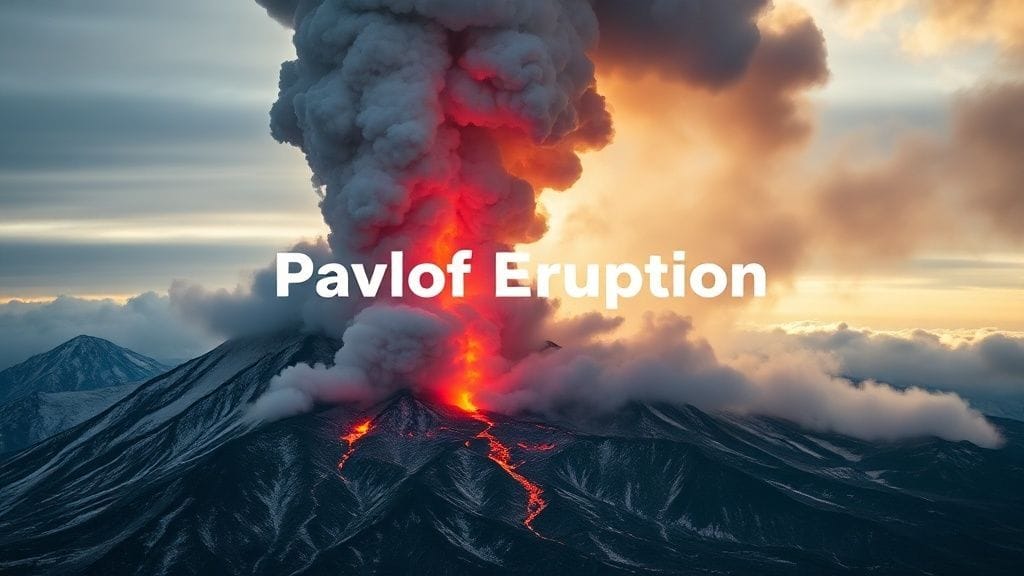
It was a chilling spring morning in Alaska’s Aleutian Range. The air, crisp and sharp, held a tension that only those attuned to nature’s whispers might have sensed. On March 27, 2016, Pavlof Volcano, one of the most active volcanic peaks in North America, shattered the tranquil skies with a sudden eruption. A towering plume of ash spiraled upward, darkening the blue, sending shockwaves through the wilderness and beyond. The eruption was not just a spectacular display of nature’s power; it was a stark reminder of Earth’s restless core beneath the seemingly frozen Alaskan landscape. This was nature’s urgent voice, booming over the icy expanse — vivid, dangerous, and awe-inspiring.
An Introduction to Nature’s Raw Power
Volcanoes have long fascinated and terrified humankind. They are the primal throbbing of the Earth’s heart, where rock melts into fire and reshapes the world above. When Pavlof erupted in 2016, it reaffirmed this enduring truth. For weeks, Alaska’s skies burned bright—not from the cold reflection of snow, but from the incandescent glow of flowing lava and acrid clouds of ash. Though thousands of miles away from major population centers, the eruption rippled impacts through aviation corridors, threatening wildlife habitats, and reminding anyone watching that the forces beneath our feet are anything but dormant.
The Geological Story of Pavlof Volcano
Pavlof’s story did not begin in 2016. It sits on the rugged Aleutian volcanic arc, a chain of volcanoes forming the rim of the Pacific Ring of Fire — a relentless zone of tectonic collisions and creativity. This arc traces the boundary where the Pacific Plate dives beneath the North American Plate, a process known as subduction. Here, intense pressure melts mantle rock to create magma, which finds its way to the surface through fractures and vents, forming volcanoes like Pavlof.
Rising 8,261 feet (2,518 meters), Pavlof is a stratovolcano — a steep, conical mound built from layers of hardened lava, ash, and tephra. What makes Pavlof particularly fearsome is its volatility. Its magma is high in silica and gas content, making eruptions explosive and unpredictable.
Historical Eruptions: A Prelude to 2016
Before 2016, Pavlof’s outbursts were frequent and fierce. Recorded activity goes back to the early 18th century, with over 40 documented eruptions in the last 230 years alone. The volcano’s behavior often oscillates between prolonged dormancy and sudden, violent blasts that send ash high into the atmosphere. Among its most memorable eruptions was the 1996 event, which propelled ash plumes up to 50,000 feet and disrupted flights along the busy trans-Pacific air routes.
These historical patterns set the stage for 2016—experts knew Pavlof’s rumbles and poise were a warning, a prelude to what was to come.
The Quiet Before the Blaze: Early Signs and Seismic Activity
In early 2016, Alaska’s Volcano Observatory began noticing subtle but unmistakable signals: increased seismic tremors beneath Pavlof. Small earthquakes rattled through the mountain’s core as magma moved upward, fracturing rock. Gas emissions started to change composition and quantity, another telltale sign.
For residents and scientists alike, these signs were a familiar but anxiety-inducing harbinger. Nature’s silence was giving way to an underground dialogue—one that anticipates rupture and upheaval.
March 2016: The First Flames of Eruption
On the morning of March 27, observers aboard vantage points and satellites witnessed the first dramatic burst. Bright orange lava spewed from the summit vent, glowing against the stark snow cover. The magma’s heat instantly vaporized the ice and snow, triggering explosive steam eruptions laden with ash.
Within hours, the ash column ascended thousands of feet, darkening the skies. The eruption was a powerful reminder of Pavlof’s latent strength, and its ability to disrupt both natural and human domains.
The Sky on Fire: Ash Plumes and Aviation Disruptions
Ash clouds from volcanic eruptions are more than just visually dramatic events—they pose severe dangers to aircraft engines and navigation systems. In the case of Pavlof 2016, flights crossing the North Pacific corridor, connecting Asia and North America, were forced to detour or cancel. Air traffic controllers vigilantly tracked ash dispersion using satellite imagery and ground observations.
Public advisories warned airlines and the general public about air quality degradation, especially for communities downwind like Cold Bay and Nelson Lagoon. The ash’s fine particles posed respiratory hazards and threatened to soil water supplies.
Community and Wildlife at Risk: The Human and Environmental Toll
Though Pavlof’s remoteness limited direct human casualties, the eruption’s impact on local Alaskan communities was palpable. Subsistence hunters, fishers, and indigenous Alaskan residents depended on the land and sea for survival—resources that volcanic ash and ashfall contaminated.
Caribou and other wildlife faced disruption as their grazing and migration patterns were disturbed. Additionally, the sudden influx of ash into rivers and streams posed toxic threats to salmon populations—a vital species for the ecosystem and the local economy.
Volcanic Fury in a Remote Wilderness
Pavlof’s eruption was a reminder of the paradox of volcanic activity: it creates devastating destruction yet fosters renewal. The lava flows buried parts of the mountain’s slopes, while the ash enriched the soil with new minerals. This dynamic interplay between destruction and creation shapes landscapes over millennia, sculpting Alaska’s wild heart.
The stark wilderness surrounding Pavlof witnessed a spectacle few humans live to see firsthand—a violent birth of new geological formations cloaked by ice and snow.
The Role of the Alaska Volcano Observatory
Central to understanding and mitigating the risks of the Pavlof eruption was the Alaska Volcano Observatory (AVO), a joint effort by the US Geological Survey, the University of Alaska Fairbanks, and the Alaska Division of Geological & Geophysical Surveys.
Throughout 2016, AVO’s volcanologists and geophysicists tirelessly monitored seismic data, gas emissions, satellite imagery, and pilot reports. Their real-time alerts provided critical windows for air travel adjustments, community preparedness, and scientific observation.
Navigating Danger: Responses and Preparedness
Because of Alaska’s harsh environment and limited infrastructure, evacuations were complex but essential. Local emergency response teams coordinated with federal agencies to issue preparedness guidelines and facilitate communications.
Oral histories and traditional knowledge from indigenous peoples enriched scientific models, helping responders predict how ashfall and lava might affect different areas.
The Science Behind the Eruption: Magma, Pressure, and Release
At Pavlof’s core lay a simmering batch of magma, rich in volatile gases. When the crust could no longer contain the pressure, windows to the surface blew open. The sudden release atomized magma into ash and encouraged lava fountains.
This explosive process, known as a Strombolian eruption, is marked by intermittent bursts rather than continuous flows. Gazes locked on the volcano saw rhythmic pulses—a fiery heartbeat beneath Alaska’s frozen crust.
Monitoring Technology and Real-Time Data
In 2016, advanced tools like infrared cameras, seismographs, remote sensing satellites, and gas analyzers gave researchers eyes and ears deep inside the mountain. New technologies enabled daily forecasts and precise mapping of lava flow and ash clouds.
This fusion of traditional fieldwork and modern tech represented a new era in volcanology, providing lessons for future volcanic events worldwide.
The Eruption's Progression: From Explosive Bursts to Steady Lava Flows
Over weeks, Pavlof’s eruption evolved. From initial violent blasts, it settled into a steadier phase, with lava flowing steadily across the snow-dusted flanks. The glowing rivers meandered down, cooling slowly and reshaping the mountain’s profile.
Though the spectacle slowed, dangers persisted. Ash continued to fall, and sudden explosions reminded observers of the volcano’s unpredictable moods.
Aftermath and Ash: The Landscape Transformed
When the eruption finally subsided in late April 2016, it left behind a reshaped landscape. Fresh lava caps capped old slopes, and ash blanketed valleys. Over time, this volcanic detritus would integrate into ecosystems—a slow but vital renewal.
Scientists documented changes in soil chemistry and observed how plants and animals began recolonizing the altered terrain. Pavlof’s fury was captured not only in raw destruction but in the potent soil of rebirth.
Economic Ripples: Impact on Aviation and Local Industries
The ripple effect of the eruption was felt far beyond Alaska’s borders. Airlines rerouted flights, incurring losses and delaying hundreds of passengers traveling international routes. Fishing operations had to adjust as ash-affected waters posed risks to catch safety.
The incident underscored the economic vulnerabilities interwoven with natural hazards, particularly in remote regions dependent on aviation and natural resources.
Cultural Connections: Indigenous Perspectives on Volcanic Activity
For indigenous peoples of Alaska, volcanoes like Pavlof are more than geological features—they are living entities with spiritual significance. Stories passed down generations speak of mountains that breathe fire, teaching respect for nature’s power and resilience.
In 2016, indigenous voices blended scientific observations with traditional wisdom, enriching the narrative of the eruption beyond mere physical phenomena.
Lessons Learned and Future Risks
The 2016 Pavlof eruption offered critical lessons about the necessity of ongoing monitoring, rapid communication, and community engagement. Alaska’s ever-active volcanoes remain a constant reminder that preparedness is a continuous journey.
Understanding the triggers, behavior patterns, and impacts equips authorities and citizens alike to face future eruptions with courage and knowledge.
The 2016 Eruption in the Context of Global Volcanism
Around the globe, volcanoes erupted in 2016—from Indonesia to Italy to Iceland—feeding a growing scientific understanding of Earth’s dynamic interior. Pavlof stood among them as a symbol of the Pacific Ring of Fire’s restless power, reinforcing the interconnectedness of these fiery phenomena.
The Enduring Mystery of Pavlof’s Next Move
Volcanoes like Pavlof are living puzzles; each eruption adds pieces but also raises new questions. Scientists remain vigilant, knowing the next awakening could be stronger, more explosive, or eerily silent.
This enigma keeps volcano watchers entranced—nature’s drama is far from over.
Conclusion: The Persistent Pulse of Alaska’s Volcanoes
In 2016, Pavlof Volcano’s eruption echoed across the Aleutian expanse, a fierce reminder of the Earth’s ceaseless inner energy. From fiery fountains to ash clouds that darkened distant skies, the mountain’s awakening was both spectacular and humbling. It tested human resolve and underscored the fragility and resilience of nature’s delicate balance.
This event etched a vivid chapter in the story of Alaska’s wild volcanic heart, a testament to life’s persistence amid power and unpredictability. As Pavlof sleeps once again, its fiery pulse remains a watchful presence—both a challenge and a marvel for those who observe, study, and respect the restless Earth beneath their feet.
FAQs: Unraveling the Mysteries of Pavlof 2016
Q1: What caused the Pavlof eruption in 2016?
A1: The eruption was caused by magma rising due to tectonic plate subduction beneath Alaska, building pressure until it burst explosively to the surface.
Q2: How dangerous was the ash from Pavlof’s eruption?
A2: The ash posed significant risks to aviation safety, human respiratory health, and local ecosystems, though it mostly affected remote areas limiting immediate human impact.
Q3: What role does the Alaska Volcano Observatory play?
A3: AVO monitors seismic activity, gas emissions, and ash plumes, providing real-time alerts that help manage risks and inform the public and aviation authorities.
Q4: How did the eruption impact local communities?
A4: While no direct destruction occurred, ashfall affected air quality, contaminated water, and disrupted subsistence activities critical to indigenous livelihoods.
Q5: How frequent are eruptions at Pavlof Volcano?
A5: Pavlof is one of the most active volcanoes in the U.S., with over 40 eruptions recorded in the last two centuries.
Q6: Why is Pavlof’s eruption significant in global volcanism?
A6: It illustrates the dynamic nature of tectonic subduction zones and the hazard volcanic activity poses to international air travel corridors.
Q7: What advancements in technology were used to monitor the eruption?
A7: Satellite remote sensing, seismographs, infrared imaging, and gas analyzers provided comprehensive data for tracking the eruption’s progress.
Q8: What are the long-term geological impacts of the eruption?
A8: The eruption reshaped the mountain’s slopes, deposited nutrient-rich ash, and set the stage for ecological renewal in the affected areas.

