Table of Contents
- The Late September Day That Changed Medicine Forever
- The State of Medicine Before Antibiotics
- Alexander Fleming: A Scientist in the Shadows
- The Untidy Laboratory and a Lucky Accident
- The Mold That Would Save Millions
- Initial Reactions: Skepticism and Curiosity
- Early Experiments and Growing Evidence
- The Challenge of Mass Production
- World War II: Penicillin’s Moment of Truth
- Saving Lives on the Frontlines
- The Race for Antibiotics: Parallel Discoveries and Collaborations
- Penicillin’s Impact Beyond Medicine
- From Miracle Drug to Global Necessity
- Resistance: The Coming Threat
- The Legacy of Fleming and His Discovery
- How Penicillin Transformed Modern Science
- The Cultural Myths and Legends Around Penicillin
- Ethical Dilemmas in Antibiotic Usage
- Penicillin in Popular Memory and Education
- Contemporary Reflections: Antibiotics in the 21st Century
- Conclusion: A Discovery That Continues to Shape Our World
- FAQs About Penicillin and Its Discovery
- External Resource
- Internal Link
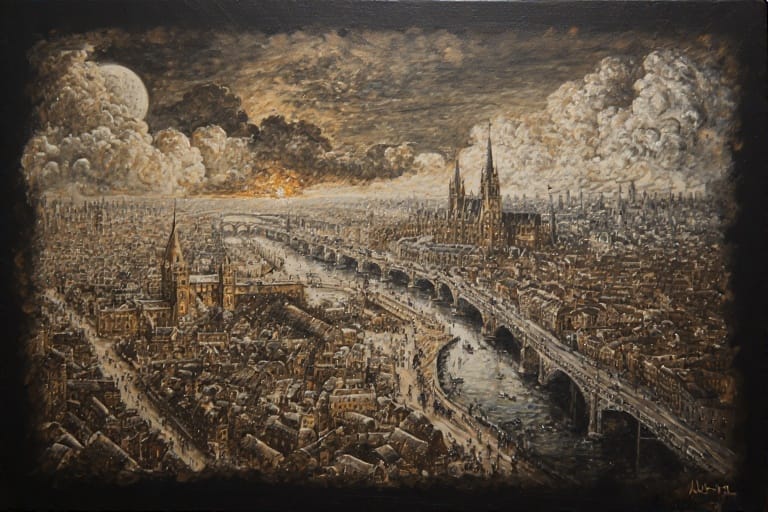
On the morning of September 28, 1928, London was waking under a gray sky that promised little more than an ordinary day in the bustling city. Alexander Fleming, a Scottish bacteriologist working quietly at St. Mary’s Hospital, walked into his cluttered laboratory, oblivious to the fact that what he was about to find would transform the destiny of medicine forever. It was here, amid forgotten petri dishes and untidy benches, that penicillin was discovered—by chance, perseverance, and an astute eye.
This moment, often romanticized as the epitome of serendipity in science, was not just a chance event but the culmination of the era’s quest to combat infectious disease, something that for centuries had plagued humanity with relentless mortality. Countless lives had been lost to bacterial infections, from the daily scourges on battlefields to silent killers in homes. This discovery opened a new chapter—one that bridged the gap between human vulnerability and scientific ingenuity.
The world of medicine in the early twentieth century was fraught with frustration and despair over infections that could neither be prevented nor cured effectively. Before the era of antibiotics, treatments were mostly palliative or surgical, often brutal and frequently ineffective. Diseases like pneumonia, scarlet fever, syphilis, and staphylococcal infections claimed millions of lives annually worldwide. Bacterial infections remained the silent killers lurking behind wounds, childbirth, and even minor injuries that by today’s standards seem trivial. The discovery of penicillin emerged out of this desperate context—a scientific breakthrough with a profoundly humanitarian impulse.
Alexander Fleming himself was no stranger to these grim realities. Trained at St. Mary’s Hospital and having served as a bacteriologist during World War I, he understood the brutally common nature of infections and the lack of effective remedies to confront them. His work until the late 1920s was largely centered on understanding staphylococci—bacteria responsible for abscesses, boils, and life-threatening sepsis. Fleming’s meticulous nature and curiosity drove him to experiment relentlessly, meticulously cataloging bacterial behavior.
Then came the day when an errant mold spore found its way onto a petri dish Fleming had inadvertently left uncovered. Weeks after returning from a holiday, Fleming noticed something curious: around the mold, colonies of staphylococci bacteria had vanished. The mold, later identified as Penicillium notatum, was secreting a substance that killed or inhibited the growth of these bacteria. Fleming’s instincts as a scientist led him to investigate further, and his insight turned a simple contamination into a monumental discovery.
At first, the notion that a mold could have medicinal properties was met with a mixture of skepticism and intrigue in the scientific community. Despite Fleming’s publication of his findings in 1929, penicillin remained largely an enigmatic phenomenon for nearly a decade. The difficulties were numerous—isolating the active substance, producing it in quantities sufficient for study, and convincing a traditionally cautious medical establishment that this “mold juice” was worth their attention.
The story of penicillin’s discovery is incomplete without the contributions of later scientists—most notably Howard Florey, Ernst Boris Chain, and their team at the University of Oxford—who took Fleming’s observation and transformed it into a viable antibiotic therapy. Their pioneering work in purifying penicillin and conducting clinical trials in the late 1930s and early 1940s brought the transition from laboratory curiosity to life-saving drug.
World War II became the crucible for penicillin’s true test. The Allies faced enormous casualties from infection, turning injuries fatal when antibiotics were non-existent. Penicillin’s mass production was accelerated like never before, owing to a collaborative effort among pharmaceutical companies and governments, especially in the United States. The drug earned its title as the “miracle drug” when it saved thousands of soldiers and civilians alike, fundamentally changing the face of wartime medicine.
Penicillin’s impact extended beyond the battlefield. It revolutionized civilian medicine, enabled safer surgeries, reduced maternal mortality from childbirth infections, and altered public health paradigms worldwide. Suddenly, bacterial infections were no longer a death sentence but a manageable condition. The economic and social ramifications were profound—public confidence soared, life expectancy increased, and the pharmaceutical industry embarked on a golden era of antibiotic discovery.
However, the triumph of penicillin was not without future challenges. The rise of antibiotic resistance, an unforeseen consequence of widespread use and sometimes misuse, has become a pressing global health concern. Fleming himself had warned against complacency and the dangers of underdosing—the very warnings that resonate with urgency today.
The cultural mythology around penicillin also grew, with Fleming’s figure emerging as a heroic archetype—an example of how chance, coupled with intellect and observation, can upset the natural order. Yet, this narrative sometimes oversimplifies the painstaking years and collaborative spirit that truly brought penicillin into the world.
Today, as we face new microbial threats and the specter of antibiotic-resistant “superbugs,” reflecting on penicillin’s discovery is more than a historical exercise. It is a reminder of science’s power and limits, the fragility of medical triumphs, and the eternal human quest to outwit nature’s deadliest adversaries.
Conclusion
The discovery of penicillin was more than a milestone in science—it was a profound leap in human resilience and hope. From a forgotten mold spotted accidentally in a messy London lab to thousands of lives saved daily worldwide, penicillin exemplifies the beautiful, unpredictable dance of discovery and necessity. It teaches us about humility, collaboration, and the responsibility that comes with extraordinary power over life and death.
Penicillin’s story is ongoing—its shadow looms over modern medicine, challenging us to innovate thoughtfully and act wisely. Yet, the resonance of that September 28, 1928 moment in London remains a beacon, illuminating the landscape of human health and progress for generations to come.
FAQs
Q1: Who discovered penicillin and when?
Alexander Fleming discovered penicillin on September 28, 1928, at St. Mary’s Hospital in London.
Q2: Why was penicillin such a revolutionary discovery?
Penicillin was the first true antibiotic capable of effectively killing or inhibiting bacteria, dramatically reducing deaths from infections.
Q3: How did World War II influence penicillin’s development?
The war accelerated mass production and widespread usage, proving penicillin’s efficacy in treating war-related infections and saving countless lives.
Q4: Were there others involved in penicillin’s development?
Yes. Howard Florey, Ernst Boris Chain, and their Oxford team purified penicillin and conducted clinical trials to make it commercially viable.
Q5: What challenges did early penicillin production face?
Difficulties included isolating the active compound, producing it in sufficient quantities, and overcoming skepticism in the medical field.
Q6: What are the long-term consequences of penicillin discovery?
While it saved millions, overuse has led to antibiotic resistance, representing a major public health challenge today.
Q7: How is penicillin remembered today?
It is celebrated as a turning point in medicine and a symbol of scientific discovery, yet reminders about responsible use persist.
Q8: How did Fleming’s background influence his discovery?
His wartime experience and focus on bacteriology sensitized him to the urgent need for infection treatments, sharpening his observational skills.