Table of Contents
- The Triumphant Return: Philip II Augustus Reclaims Paris
- France in the Late 12th Century: A Kingdom at the Crossroads
- The King’s Burden: Philip’s Early Reign and Challenges
- The Shadow of Richard the Lionheart: Rivalries and Rival Kings
- The Strategic Vision of Philip II Augustus: Solidifying Royal Authority
- Reasserting Control: The Reclamation of Paris and Its Significance
- The Royal Court and Administration: Centralizing Power in the French Monarchy
- Warfare and Diplomacy: Campaigns Against English Kings and Feudal Lords
- The Expansion of the Royal Domain: From Vulnerability to Dominance
- Legal Reforms and the Judicious King: Philip’s Quest for Justice
- Building Paris: Urban Development and the Symbolism of Power
- The Albigensian Crusade and Philip’s Role in Religious Politics
- The Manoeuvres Against the Angevin Empire: Strategic Masterstrokes
- The Battle of Bouvines (1214): Foundations of a New France
- The King and the Church: Balancing Power and Piety
- The Cultural Renaissance at Court: Patronage and Prestige
- The Socioeconomic Transformations under Philip II Augustus
- The Legacy of Philip II: A Friable France Reshaped into a Kingdom
- Remembering Philip II: From Medieval Chroniclers to Modern Historians
- Conclusion: The Architect of French Kingship and National Identity
- FAQs: Understanding Philip II Augustus’s Impact
- External Resource: Philip II of France on Wikipedia
- Internal Link: Visit History Sphere
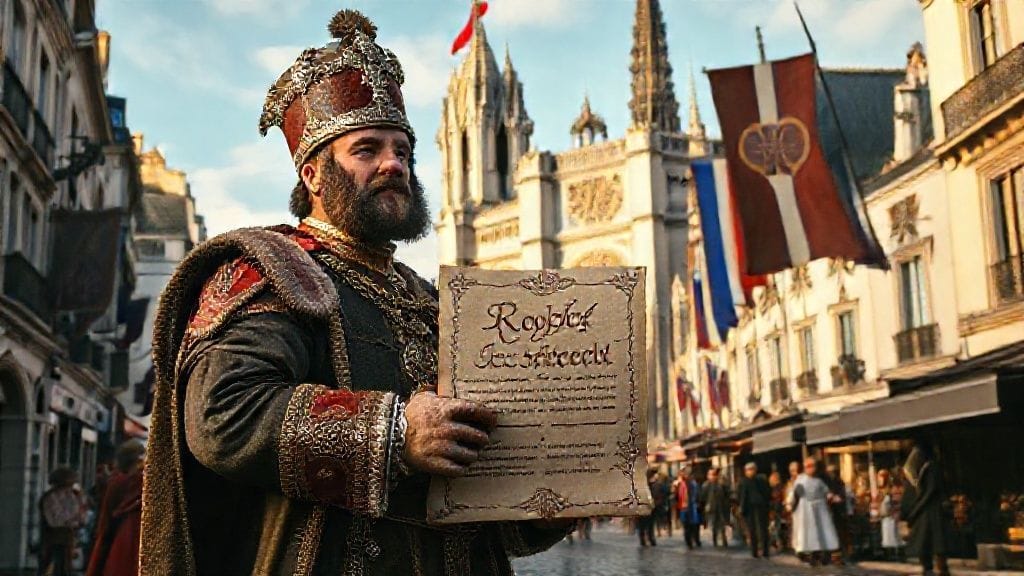
The streets of Paris were thick with anticipation and cautious jubilation in the early months following 1192. Philip II Augustus, weary but unbowed, crossed back into his beloved city after years shadowed by war and exile. His silhouette against the skyline—the Notre-Dame spires piercing the sky and the Seine murmuring beneath stone bridges—became a symbol more potent than banners or trumpets. This was not merely a king’s homecoming; it was the stirring of a new era. An era when the fragile threads of a fragmented kingdom would be pulled taut by the unyielding hand of a monarch both shrewd and ambitious. But the journey to this moment bristled with tension and turmoil—stories of battles lost and won, alliances built and broken, and a kingdom teetering between feudal chaos and centralized rule. Here begins the story of Philip II Augustus’s momentous return to Paris and the consolidation of French kingship that would shape the history of France forever.
France in the late 12th century had never been so complex, or precarious. While the notion of a “kingdom of France” existed, its practical reality was a patchwork quilt riddled with lords wielding local power as fiercely as kings wielded crowns. The Capetian monarchy, still young and fragile, faced a host of challenges—from the territorial ambitions of the Angevin rulers controlling large swaths of western France, to the deeply entrenched independence of feudal barons. Philip inherited a realm lacking cohesion, where Paris itself was just one jewel amid many scattered fiefs. The English King Richard the Lionheart was not only a formidable opponent on the battlefield but also a rival with strong claims and deep roots across French lands. The rivalry between these two medieval titans set the stage for Philip’s transformation from a beleaguered heir into a monarch whose legacy would outlast kingdoms and centuries.
Philip’s early reign was marked by uncertainty. Ascending the throne in 1180 at the tender age of just 15, the young king had to navigate a maze of political intrigue, noble dissent, and the ever-looming shadow of Henry II of England’s Angevin Empire. His father, Louis VII, had laid some foundations but left a frail state easily shaken by external aggression and internal rebellion. The young Philip was thrust into a perilous game of thrones barely two decades after the bloody Second Crusade had embroiled European nobility in distant conflicts. His crowning challenge came when Richard the Lionheart ascended as King of England and Duke of Aquitaine, holding key French territories in a bi-national empire stretching from England’s coasts deep into southwest France.
Despite these challenges, Philip’s vision for the kingdom began to crystallize clearly: a strong, centralized monarchy not beholden to the whims of fractious barons or foreign crowns. The moment of his actual return to Paris in 1192 was more than symbolic; it heralded the first step toward systematic reconquest and consolidation. Having spent years exiled or at war, Philip used the occasion to assert unequivocal royal control over the capital and its environs, re-establishing authority that had been challenged repeatedly during the campaigns against English holdouts. From Paris, he would reign not just with the power of sword and crown but through the construction of enduring institutions.
Philip’s return laid bare his dual approach of military strength and administrative innovation. Paris became the stage for his reforms—walls fortified, streets widened, trade encouraged, and the royal court elevated as a seat of justice and governance. More than a monarch waging wars, he was a statesman crafting the very identity of the French nation. His court brought together not only knights and knights’ retainers but also scholars, jurists, and clerics—all agents of a slowly but surely expanding royal power. The architecture of the city itself mirrored these ambitions: the Louvre was transformed from a mere fortress into a royal palace, symbolizing the convergence of defense and domestic power.
Between 1192 and 1199, Philip engaged in a series of calculated military campaigns to erode the Angevin grip on French soil. The infamous Plantagenet holdings—Normandy, Anjou, Maine, and beyond—were wrested one by one from English control through a combination of siege tactics, alliances, and shrewd diplomacy. Each victory not only expanded the royal domain but chipped away at the power of vassals who had long treated the king as a distant figurehead. These campaigns culminated in the decisive Battle of Bouvines in 1214, a hinge moment that further secured the French crown’s supremacy, fuelling a monarchy that was both feared and respected across the continent.
The legal and administrative reforms Philip introduced during this period also underscored his approach to kingship. The king became the ultimate judge, centralizing judicial authority away from feudal courts and increasing the reach of royal law through bailiffs and sénéchaux—representatives wielding his authority across the kingdom. His issuance of ordinances and the establishment of permanent royal courts gradually transformed the French monarchy from a loose assemblage of territories into a centralized political entity. This process was not without resistance: many nobles resented the diminution of their rights, but Philip’s deft blend of coercion and conciliation ensured the endurance of his reforms.
Religious politics played a parallel role. Philip adeptly aligned himself with the Church to legitimize his authority, positioning himself as a defender of orthodoxy during the Albigensian Crusade against the Cathar heresy in southern France. By engaging in such campaigns, he secured papal favor while extending royal influence into territories riddled with dissent. The mutual support between crown and clergy during this turbulent period helped shape the identity of the French monarchy as a divinely sanctioned institution.
On the cultural front, Philip’s reign ignited a flowering of medieval French culture and identity. Under his patronage, Paris swelled as a center of learning and art. The construction projects, courtly ceremonies, and royal sponsorship of troubadours and intellectuals created a sense of a unified kingdom with Paris as its luminous heart. It is often said that Philip II Augustus was the first king of France to truly symbolize the nation as something larger than a cluster of principalities—a conception that would echo through the centuries.
Economically, the strengthening of royal authority brought stability which encouraged trade and urban growth. By securing major trade routes and curbing feudal violence, Philip allowed towns to flourish, merchants to prosper, and taxation to be rationalized. This economic underpinning was crucial in supporting his military campaigns and administrative machinery, revealing the interconnectedness of political strength and economic vitality.
Philip II Augustus’s reign set foundational stones for a kingdom that was to endure centuries of conflict and change. His triumphs laid the groundwork for the Capetian dynasty’s consolidation and for France’s emergence as a major European power. The kingdom he forged after his return to Paris was a transformed entity—politically stronger, territorially broader, culturally richer, and institutionally more stable.
Medieval chroniclers lauded Philip as the “Builder King” and the “Great Captain,” and later historians have traced the roots of modern French nationhood directly to his reign. He remains a figure both celebrated and studied, embodying the complex alchemy of medieval kingship: the martial king, the judicious ruler, the patron of culture, and the astute strategist. His return to Paris was not merely a homecoming; it was the dawn of a new French monarchy—robust, resurgent, and inexorably on the path to greatness.
Conclusion
Philip II Augustus’s return to Paris between 1192 and 1199 was the fulcrum upon which the destiny of France pivoted. What began as a moment of personal triumph grew into a sweeping transformation that reshaped medieval French kingship from a fragile inheritance into a unified, centralized kingdom. His deft blend of military prowess, administrative innovation, diplomacy, and cultural patronage forged a legacy of power and identity that underpins the very notion of France today. Philip was not merely a king; he was the architect of monarchy itself, a figure whose vision and action echo across the centuries—a testament to the enduring force of determined leadership in shaping history.
FAQs
1. What were the main challenges Philip II Augustus faced upon his return to Paris in 1192?
Philip inherited a fractured kingdom facing pressures from powerful feudal lords and the Angevin Empire. The primary challenges included reclaiming lost territories, centralizing royal authority, and countering English influence under Richard the Lionheart.
2. How did Philip II’s campaigns against the Angevin Empire impact France?
These campaigns led to the gradual reconquest of key regions such as Normandy and Anjou, significantly expanding the royal domain. They weakened English influence in France and strengthened the Capetian monarchy’s territorial and political dominance.
3. In what ways did Philip II Augustus centralize royal power?
Philip centralized power by reforming judicial institutions, establishing permanent royal courts, appointing royal officials (bailiffs and sénéchaux) to administer justice and collect taxes, and by curbing the autonomy of powerful nobles.
4. What role did religion play in Philip II’s consolidation of power?
Philip allied closely with the Church, supporting the Albigensian Crusade and promoting orthodoxy, which lent religious legitimacy to his rule and extended royal influence into southern France, reinforcing monarchy over dissident regions.
5. How did Philip II Augustus contribute to the development of Paris?
He fortified the city with walls, expanded and transformed the Louvre, improved infrastructure, and patronized culture and learning, turning Paris into a political and cultural capital symbolizing his royal authority.
6. Why is Philip II Augustus considered a turning point in French history?
His reign marked the transition from fragmented feudal realms to a more cohesive, centralized monarchy, paving the way for France's rise as a major European power and creating the foundational structures of modern French governance.
7. How is Philip II Augustus remembered today?
He is remembered as a visionary monarch and military strategist whose reign laid the groundwork for the French nation, celebrated both in historical scholarship and popular memory as the “Builder King.”
8. Did Philip II’s policies have any long-term economic effects?
Yes, by stabilizing the kingdom, securing trade routes, and promoting urban growth, his reign contributed to economic development that supported stronger monarchy and fostered the growth of medieval French towns and commerce.

