Table of Contents
- The Night the Sea Roared: November 15, 1994, Mindoro’s Awakening
- A Silent Warning Ignored: The Geological Underpinning of the Tsunami
- Mindoro before the Wave: The Island’s Cultural and Economic Landscape
- Tremors and Tidal Fury: The Earthquake that Unleashed Disaster
- The First Wave Hits: Chaos Erupts along the Coastline
- The Heartbreaking Accounts: Survivor Stories from Tumbling Waters
- Emergency Response in the Philippines: Courage amid Catastrophe
- Local Heroism: Communities at the Brink, Refusing to Succumb
- The Philippine Government and International Aid: A Complex Dance
- Environmental Devastation: The Aftermath on Mindoro’s Ecosystems
- Economic Fallout: Fishing, Farming, and Livelihoods Shattered
- Rebuilding Hope: Reconstruction Efforts and Resilience
- Scientific Lessons Learned: Tsunami Monitoring and Prevention Advances
- Mindoro’s Memory: Commemoration and Cultural Healing
- The 1994 Mindoro Tsunami in Global Context: A Wake-Up Call for Asia-Pacific
- The Legacy of November 15: Reflecting on Natural Disasters and Human Vulnerability
The Night the Sea Roared: November 15, 1994, Mindoro’s Awakening
It was a quiet evening on Mindoro Island, the humid tropical air heavy with the scent of salt and mangroves. The villagers along the western shores hummed their everyday lives: fishermen repairing nets by lamp light, children chasing fireflies, families settling into evening meals. But beneath this fragile calm, the earth was shifting, a subtle prelude to chaos that no one could have foreseen.
At approximately 10:40 p.m. local time on November 15, 1994, the tranquil surface of the Mindoro Strait was shattered. A powerful undersea earthquake, registering a magnitude of 7.1, struck near the island’s western coast. Few understood then what was to come—a tsunami, born from the violent upheaval under the sea, racing toward the shores, a wall of water that would forever change the lives and landscapes of Mindoro and its people. The sea, once a source of sustenance and serenity, became a relentless force of destruction.
A Silent Warning Ignored: The Geological Underpinning of the Tsunami
The Philippines sits on the notorious Pacific "Ring of Fire," a volatile belt of tectonic plates that crisscrosses the region. It is one of the most seismically active and complex zones on earth, where the Philippine Sea Plate interacts with the Eurasian Plate. Beneath Mindoro, the convergence of these shifting plates creates perilous conditions ripe for earthquakes and tsunamis.
On that November night, an abrupt rupture along the Mindoro Fault Zone caused a massive displacement of seawater. The earthquake’s epicenter unleashed a shockwave that rippled beneath the ocean, lifting and dropping the seabed violently, triggering the tsunami. Unfortunately, despite the seismic activity, there was no widespread early warning system in place. Communications infrastructure was limited, and the patterns of such natural disasters were not well understood by many locals. The suddenness of the event meant the coastal communities had little to no warning before the first wave hit.
Mindoro before the Wave: The Island’s Cultural and Economic Landscape
Mindoro, the seventh-largest island in the Philippines archipelago, was home to a diverse mosaic of indigenous Mangyan peoples and Christian settlers. The island's economy was intimately tied to the sea — fishing, small-scale farming, and traditional crafts formed the backbone of everyday life. The mangrove forests sheltered the shorelines, acting as natural buffers, while rice terraces and coconut plantations dotted the interior.
For many, the sea was a provider — the sole source of protein, commerce, and cultural ritual. Coastal villages were tightly knit communities where oral traditions passed knowledge from one generation to the next. But this intimate connection with the natural world also left them vulnerable. The ocean’s mood could turn dark and hostile in seconds, but on that November night, few could grasp the magnitude of the imminent threat.
Tremors and Tidal Fury: The Earthquake that Unleashed Disaster
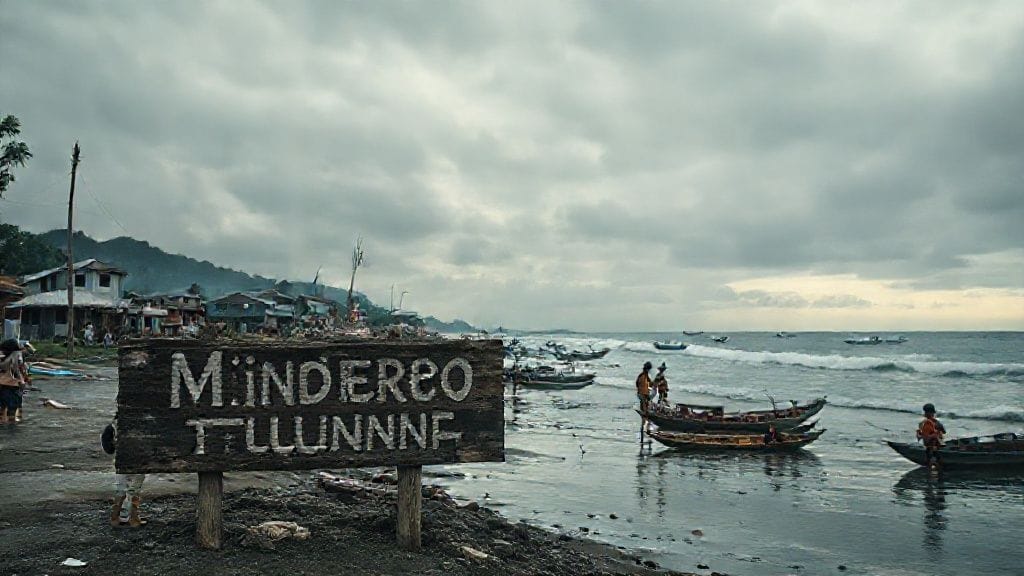
At 10:40 p.m., the earthquake shook Mindoro with terrifying intensity. Buildings swayed precariously, and aftershocks rippled through the night. Many residents described the ground “breathing,” a terrifying sensation of the earth heaving and shifting beneath their feet. What followed was even more frightening—a rapid recession of the sea, a telltale precursor to a tsunami, drawing fishermen’s boats away from the coast in a desperate flight from nature’s fury.
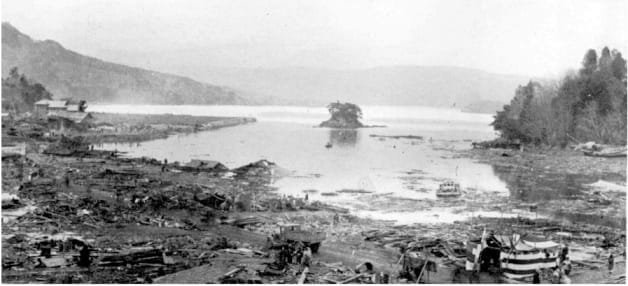
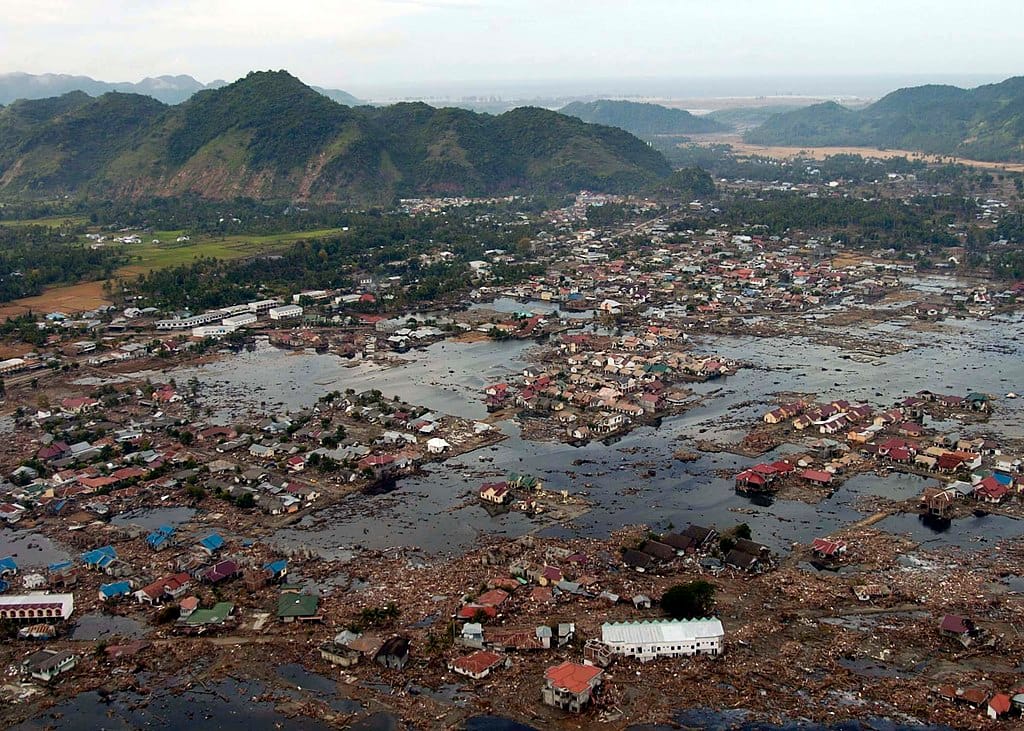
Moments later, walls of seawater – some estimated at heights beyond 5 meters – crashed into shorelines, sweeping away homes, boats, and lives. The first wave was soon followed by an onslaught of multiple surges, each compounding the devastation. Low-lying villages were drowned beneath the wrath of the waves, and the shoreline was unrecognizable by dawn.
The First Wave Hits: Chaos Erupts along the Coastline
Eyewitness accounts from survivors etch a vivid image of chaos—families running for higher ground under a sky muted by the storm’s shadow, screams piercing the roar of the sea, children clutched tightly in desperate arms. Entire fishing communities were obliterated in minutes, their homes and livelihoods swept into the angry ocean depths.
One fisherman, Manuel Alonzo, recounted later, “The sea disappeared. We ran to the hills, but before we caught our breath, the water came back like a beast. We lost our homes, our boats, everything.” Others spoke of the eerie silence before the waves, a haunting calm that whispered doom.
The Heartbreaking Accounts: Survivor Stories from Tumbling Waters
Survivors’ stories provide the human core to this tragedy. Some tell of miraculous escapes, clinging to tree branches or floating debris for hours. Others mourn the loss of loved ones, fathers, mothers, and children swallowed by the acrid mixture of salt, mud, and destruction.
Maria Santos, a mother of four, described the harrowing night: “We buried my husband and two children beneath the fallen coconut trees by the beach. We had nothing left but memories and grief.” The trauma seeped deep into the collective psyche of Mindoro, a scar woven into the island’s history.
Emergency Response in the Philippines: Courage amid Catastrophe
The disaster tested the limits of the Philippine government’s disaster response capability. Rescue operations began as dawn broke, with local authorities and volunteers scrambling to provide aid amid the debris. Medical teams set up field hospitals; humanitarian organizations mobilized to deliver food, water, and blankets to the displaced.
Yet infrastructure damage and rugged terrain hampered efforts. Roads were blocked or washed away, communication was intermittently disrupted, and many communities remained inaccessible for days. Despite these hurdles, acts of courage and solidarity illuminated the grim horizon. Volunteers risked their lives to save others, navigating dangerous waters and unstable ruins.
Local Heroism: Communities at the Brink, Refusing to Succumb
The crisis unearthed remarkable tales of grassroots heroism. Indigenous Mangyan leaders rallied their people to safer grounds using ancestral knowledge of the land. Fishermen who had lost their own families coordinated rescue patrols. Simple acts—a neighbor’s hand reaching through rubble, sharing scarce food—became lifelines.
These stories reveal the resilience of humanity amid devastating ruptures, emphasizing not just victimhood but the profound strength borne from shared hardship.
The Philippine Government and International Aid: A Complex Dance
In the wake of the tsunami, the Philippine government sought international assistance to bolster relief efforts. Aid poured in from neighboring countries and global agencies, bringing much-needed resources but also political complexities.
Coordination between local authorities, military units, NGOs, and multinational organizations proved challenging but indispensable. The disaster highlighted gaps in disaster preparedness policies and infrastructure, spurring calls for reform.
Environmental Devastation: The Aftermath on Mindoro’s Ecosystems
The tsunami did not only ravage human settlements—it tore through fragile ecosystems. Coastal mangroves were uprooted, beaches scarred, coral reefs damaged by the sediment churned up by the waves. These environmental losses jeopardized the island’s natural defenses against future storms.
The collapse of the fisheries and marine habitats created longer-term challenges for biodiversity and food security, exacerbating the hardships faced by local communities.
Economic Fallout: Fishing, Farming, and Livelihoods Shattered
Fishing villages were decimated, their fleets destroyed, and farms inundated by saltwater. Crop failure and loss of arable land became recurring problems in the years that followed. The tsunami plunged many families into destitution.
Statistical reports indicated sharp declines in fish catches and agricultural output in the months post-disaster. The economic ripple extended beyond Mindoro, impacting regional supply chains and market dynamics.
Rebuilding Hope: Reconstruction Efforts and Resilience
Despite the profound losses, reconstruction efforts gained momentum. Government programs, international aid, and local initiatives aimed to rebuild homes, restore livelihoods, and rehabilitate infrastructure.
Communities mobilized to plant mangroves anew and repair irrigation systems. Educational campaigns were launched to improve tsunami awareness. It became clear that recovery would be more than bricks and mortar but a rebirth of social and environmental resilience.
Scientific Lessons Learned: Tsunami Monitoring and Prevention Advances
The 1994 Mindoro tsunami served as a grim impetus to improve early warning systems in the Philippines and the greater Pacific region. Scientists invested in expanding seismic monitoring networks, tide gauges, and public alert protocols.
It underscored the imperative to understand subduction zone behavior, wave propagation, and coastal vulnerabilities in this seismically volatile zone. Today’s advanced disaster risk reduction frameworks bear the imprint of lessons carved in 1994.
Mindoro’s Memory: Commemoration and Cultural Healing
Annually, the people of Mindoro commemorate the tsunami’s anniversary as a somber reflection and collective remembrance. Memorial ceremonies honor those lost and celebrate the survival of the living.
Artistic expressions—songs, dance, literature—have emerged to process trauma and preserve history. This cultural healing forms an essential thread in Mindoro’s identity, reminding future generations of nature’s dual power to give and take life.
The 1994 Mindoro Tsunami in Global Context: A Wake-Up Call for Asia-Pacific
At a time when tsunami awareness was still developing globally, the Mindoro event added urgency to the formation of more cohesive regional alert systems. It paralleled other tragedies in the Pacific and Indian Oceans, such as the 1992 Flores tsunami and foreshadowed the cataclysmic 2004 Indian Ocean tsunami.
This disaster highlighted that no coastal community, however remote or developing, could ignore the seismic plates grinding beneath the waves.
The Legacy of November 15: Reflecting on Natural Disasters and Human Vulnerability
The Mindoro tsunami remains a stark testament to the unpredictable force of nature and humanity’s fragile position within it. But it also embodies resilience, community, and the evolving relationship between culture and environment.
More than a mere event in a calendar of catastrophes, it is a narrative of loss, survival, learning, and hope—a mirror to all who live with the sea.
Conclusion
The tsunami that swept through Mindoro on that fateful November night in 1994 was more than a natural disaster—it was a human tragedy woven into the fabric of an island’s identity. The roaring sea not only destroyed homes and lives but also awakened a profound awareness of the power of nature, the vulnerabilities of civilizations, and the unyielding spirit of communities.
Recounting the events, the anguish, and the courage reveals both the elemental fury that forged the moment and the enduring human capacity to rebuild and remember. It stands as a solemn reminder that while the earth’s forces can be relentless and overwhelming, the bonds of hope, solidarity, and knowledge hold the key to a safer, stronger future.
The legacy of the Mindoro tsunami is not only seen in reconstructed homes or scientific advancements, but in the stories passed down, the ceremonies held, and the vigilant watch kept by a community forever transformed yet unbroken.
FAQs
1. What caused the 1994 Mindoro tsunami?
The tsunami was triggered by a magnitude 7.1 undersea earthquake along the Mindoro Fault Zone, which caused a sudden displacement of seawater.
2. How many people were affected by the tsunami?
Thousands of people living along Mindoro’s western coast were affected, with hundreds reported dead or missing and many more displaced. Precise casualty numbers vary due to the remote nature of some communities.
3. Was there any early warning system in place at the time?
No effective early warning system existed in the Philippines in 1994, which meant coastal residents had little time to prepare or evacuate before the waves arrived.
4. How did the tsunami impact Mindoro’s environment?
The waves destroyed mangrove forests, damaged coral reefs, and led to saltwater intrusion in farmlands, severely affecting local ecosystems and biodiversity.
5. What lessons were learned from this disaster?
The event underscored the necessity of tsunami monitoring systems, public education on natural disaster preparedness, and coordinated emergency response frameworks, many of which were subsequently developed.
6. How did the local communities respond and cope after the tsunami?
Despite immense losses, local populations demonstrated resilience through mutual aid, cultural healing practices, rebuilding efforts, and sustained efforts to restore livelihoods.
7. Did the government receive international assistance in the aftermath?
Yes, several countries and international organizations provided emergency aid and technical support, which softened the disaster’s impact and facilitated recovery.
8. How is the Mindoro tsunami remembered today?
Through annual memorials, cultural arts, educational programs, and community narratives, the tsunami’s memory persists as both a warning and a tribute to survival.