Table of Contents
- The Morning the Sea Turned Deadly: August 17, 1976
- Mindanao’s Moro Gulf: A Region on the Edge
- Tectonic Tensions Beneath the Waves
- Early Warning Signs Ignored or Unseen
- The Earthquake that Shook the Foundations
- The First Wave: A Silent Prelude
- Out of the Depths: The Tsunami Unleashed
- Destruction in the Dark: Villages Swept Away
- The Human Face of Tragedy: Personal Stories from Survivors
- Government Response Amidst Chaos
- The Role of Science: Understanding the Disaster
- Global Reverberations: How the World Reacted
- Rebuilding Shattered Lives and Communities
- Lessons Learned and Forgotten
- The Moro Gulf Tsunami in Philippine Memory
- How This Event Changed Tsunami Awareness in Southeast Asia
- The Tragedy’s Lingering Shadows Today
- Remembering the Lost: Memorials and Remembrance
- From Catastrophe to Resilience: Mindanao’s Journey Forward
- Conclusion: The Unyielding Spirit of Survival
- FAQs: Unraveling the Moro Gulf Tsunami
- External Resource
- Internal Link
The Morning the Sea Turned Deadly: August 17, 1976
In the early hours of August 17, 1976, the peaceful dawn along the shores of Mindanao’s Moro Gulf was shattered by an earth-shattering event. Villagers asleep in their homes were startled by a violent tremor that roared beneath their feet—a prelude to a far more devastating force rising from the ocean's depths. Within moments, the sea, usually a giver of life and sustenance, transformed into a merciless juggernaut, swallowing entire coastal communities in its monstrous waves.
To truly grasp the depth of this catastrophe, one must feel the shock as it rippled through families, the despair carved into faces of survivors, the frustration mingled with hope as rescue workers scrambled against time. This was no ordinary tragedy—this was a calamity that reshaped the fate of the region and forever altered Philippine disaster preparedness.
Mindanao’s Moro Gulf: A Region on the Edge
Mindanao, the southern island of the Philippines, known for its rich natural resources and vibrant cultures, holds a strategic and cultural significance unlike any other part of the archipelago. The Moro Gulf, a vast inlet on Mindanao’s western flank, has long nurtured a tapestry of indigenous fishing communities, each living in harmony with the sea's rhythms.
Yet, the Moro Gulf itself sits on a perilous geological junction. The region's beauty hides a volatile secret: it is a hotspot for tectonic activity, where the Philippine Mobile Belt grinds and folds as neighboring plates collide and subduct beneath one another. Earthquakes have rattled the area before, but the scale and composition of the impending disaster would be unprecedented.
Tectonic Tensions Beneath the Waves
Beneath the turquoise waves of Moro Gulf lies a dramatic fault line known as the Cotabato Trench. This underwater subduction zone, where the oceanic plate slips beneath the Philippine Plate, periodically releases enormous energy in the form of earthquakes. The 1976 disaster was triggered by such a rupture—a sudden jolt that sent shockwaves horizontally across the seabed and vertically through the layers of sediment and water above.
Scientists studying the event later identified the quake's magnitude at an estimated 7.9 on the Richter scale, a violent tremor capable of fracturing the ocean floor in multiple places. The abrupt displacement of seabed rock mass triggered the tsunami: waves that surged with the raw force of nature’s fury, moving swiftly toward the coast at speeds exceeding a jet airplane.
Early Warning Signs Ignored or Unseen
In 1976, the Philippines, like many nations in Southeast Asia, had minimal tsunami warning infrastructure. The country’s civil defense systems were still developing, and the scientific community had an incomplete understanding of the exact mechanisms that trigger giant ocean waves.
Before the waves struck, some fishermen noticed unusual changes—water receding suddenly from the shoreline, an eerie silence falling over the sea. However, these signs went largely unheeded. Communication gaps, lack of public awareness, and the limitation of detection technologies meant that when the earthquake hit, many coastal dwellers were caught entirely off-guard.
The Earthquake that Shook the Foundations
The earthquake's violent trembling lasted just under two minutes but unleashed a lifetime of trauma. In the town of Lebak and several smaller villages dotting the Moro Gulf coastline, houses swayed and collapsed. The ground cracked open; roads and communication lines were severed. Yet, this was only the harbinger of the more profound destruction to come.
Eyewitness accounts speak of a surreal moment: after the shaking ceased, the sea rolled back miles, exposing coral reefs and the muddy seabed to the naked eye. Children, unaware of the impending danger, ran excitedly toward the retreating shoreline. No one could fathom that this behavior was in fact a death sentence.
The First Wave: A Silent Prelude
Seconds after the earthquake’s tremor faded, the ocean heaved skyward. The first tsunami wave, a towering wall of water, raced toward the coastline. But it was deceptively quiet, without the roaring noise people would expect from such a massive force. It was as if nature was gathering breath before the final devastating strike.
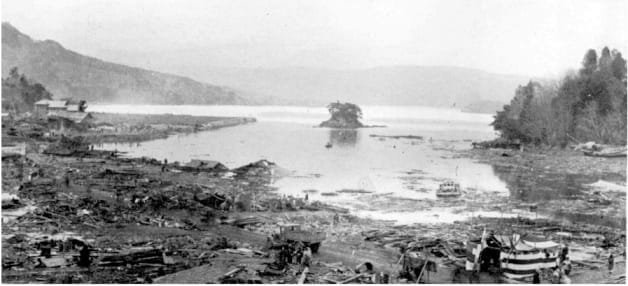
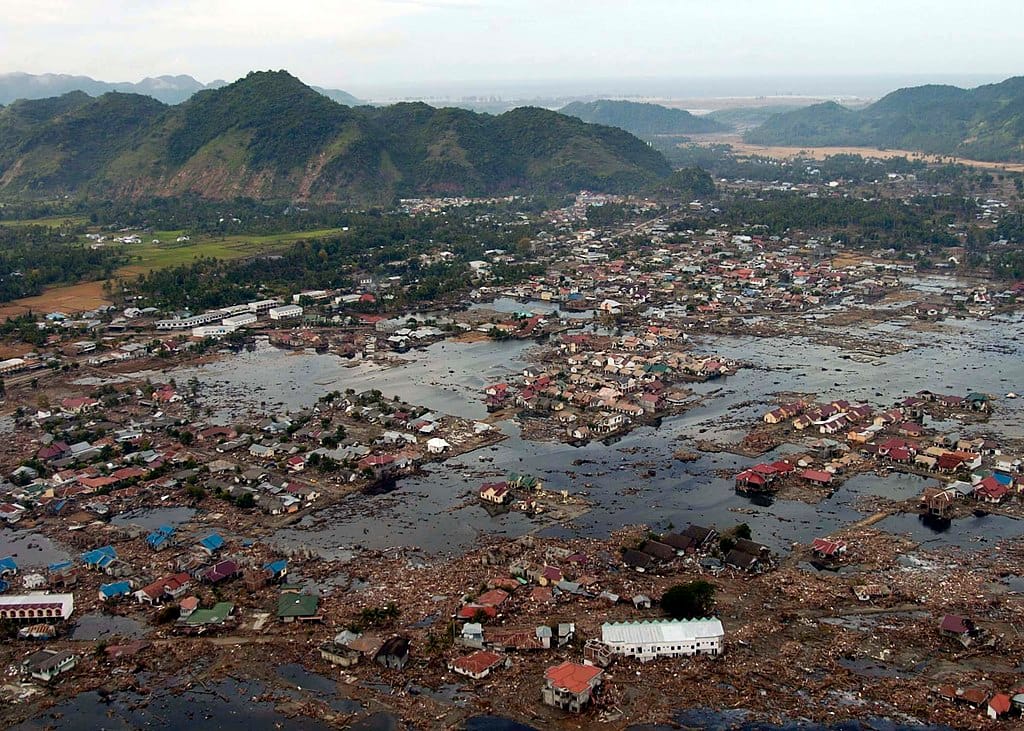
As the wave struck regions such as Lebak, Kalamansig, and Palimbang, the shock was instantaneous and catastrophic. Trees were uprooted; wooden homes designed to withstand typhoons crumbled against the wall of water. Entire fishing villages were submerged in an unrelenting flood of saltwater and debris.
Out of the Depths: The Tsunami Unleashed
The tsunami unleashed a series of powerful surges that swept across nearly 240 kilometers of coastal area. Waves reportedly reached heights of 9 meters or more—equivalent to a two- or three-story building slamming onto the shore. The velocity and force were so immense that few structures, even sturdily built ones, provided sanctuary.
Survivors described the experience as being caught in a “liquid furnace,” where the waters churned in a frenzy, tossing boats, houses, and people without discrimination. The flooding penetrated several kilometers inland, erasing entire communities from the map.
Destruction in the Dark: Villages Swept Away
Nightfall obscured the full scope of destruction, plunging survivors into disarray and fear. Villages once bustling with life were now ghostly remnants of what had been. In towns like Lebak, more than half the population perished or went missing.
Communities largely dependent on fishing and subsistence farming faced the obliteration of livelihoods as boats, equipment, and arable land were destroyed or drowned beneath layers of sediment. The 1976 Moro Gulf tsunami became one of the deadliest in Philippine history, with official death tolls estimated at between 5,000 and 8,000, though some accounts suggest higher.
The Human Face of Tragedy: Personal Stories from Survivors
Behind the staggering statistics lies a tapestry of individual suffering and resilience. Maria Tanggol, a survivor from Palimbang, recounted how she lost her entire family to the waves and was left clinging to a log for hours. “I thought the sea wanted to swallow the whole world,” she said in a later interview, her voice trembling but filled with defiance.
For others, the trauma was compounded by the failure of neighbors to survive, the obliteration of ancestral homes, and the grinding poverty that followed. Yet amid the heartbreak, stories emerged of extraordinary courage—neighbors pulling survivors from debris, strangers sharing scarce food, communities rebuilding with determination.
Government Response Amidst Chaos
The Philippine government, then under the rule of President Ferdinand Marcos, was thrust into crisis management mode. Military and civil defense units were deployed to assist in rescue and recovery operations. However, infrastructural damage and logistical challenges hampered efforts.
International aid arrived slowly, and coordination was initially fragmented. In many ways, the disaster exposed the fragility of disaster preparedness in the region. Nevertheless, emergency services worked tirelessly, and hospitals in nearby cities like Cotabato City were overwhelmed by the injured and displaced.
Beyond rescue, rebuilding social services, restoring communication lines, and counseling survivors became urgent priorities.
The Role of Science: Understanding the Disaster
The Moro Gulf tsunami became a case study of critical importance for geologists and oceanographers worldwide. Researchers documented the earthquake and tsunami’s sequence, gathering data on wave heights, sediment displacement, and fault rupture characteristics.
The Philippine Institute of Volcanology and Seismology (PHIVOLCS) began to strengthen its seismic monitoring capacity. Studies showed that this event was a textbook example of a tectonic tsunami generated by a megathrust earthquake in a subduction zone.
It also highlighted the importance of tsunami warning systems, which were scarce in Southeast Asia at the time. The scientific community called for the establishment of regional early warning networks, a plea partially heeded in the decades that followed.
Global Reverberations: How the World Reacted
News of the tragedy touched the world, evoking sympathy and solidarity. Aid flowed in from various countries and international organizations. The event catalyzed broader awareness of tsunami risks beyond the more well-known Pacific ‘Ring of Fire.’
Marine disaster response tactics underwent scrutiny internationally, and bodies like United Nations agencies began to promote disaster risk reduction frameworks tailored to vulnerable coastal nations.
Yet, the Moro Gulf tsunami remained a haunting reminder of nature's lurking presence in less publicized corners of the globe.
Rebuilding Shattered Lives and Communities
Reconstruction of the affected municipalities was painstaking and slow. Many residents faced the grim choice of relocating or rebuilding on land scorched and altered by the waves. Local governments took steps to improve infrastructure design, such as elevating homes and constructing evacuation routes.
Efforts also focused on restoring education and healthcare facilities. But psychological trauma persisted; counseling services were minimal, and many survivors struggled with profound loss in silence.
The disaster prompted important conversations on sustainable development and environmental stewardship—critical for ensuring that communities could better withstand future calamities.
Lessons Learned and Forgotten
Though the Moro Gulf tsunami left deep scars, it also offered lessons: the crucial need for effective early warning systems, community education on natural signs of tsunamis, better building codes, and coordinated emergency response.
Decades later, some of these lessons remained unimplemented or partially applied in some parts of the Philippines, contributing to vulnerabilities in future seismic events. The 1976 event became a somber benchmark urging governments and communities to strike a balance between development and disaster readiness.
The Moro Gulf Tsunami in Philippine Memory
For generations, the Moro Gulf tsunami became part of local oral histories, a poignant reminder etched into the collective memory of Mindanao’s coastal communities. Annual commemorations and storytelling keep the event alive, honoring those lost and teaching younger generations about respect for the sea's power.
Despite the passage of time, fresh scars and sunken ruins off the shorelines whisper testimonies of that harrowing night.
How This Event Changed Tsunami Awareness in Southeast Asia
The catastrophic 1976 tsunami ultimately accelerated efforts to develop tsunami monitoring across the Philippines and neighboring countries, contributing to the foundation of early-warning and disaster response alliances in Southeast Asia.
Systems such as the Pacific Tsunami Warning Center expanded their scope, and regional governments began investing in seismographic networks and public drills.
Still, the interaction between science and local knowledge remains an ongoing challenge in the archipelago’s complex maritime geography.
The Tragedy’s Lingering Shadows Today
Today, Mindanao’s coastal areas remain susceptible to seismic hazards. Despite technological advances, communities are still vulnerable due to poverty and geographical dispersion.
The Moro Gulf tsunami’s legacy prompts continual vigilance. Disaster preparedness programs have become integral in schools, fishing villages, and urban areas alike.
However, political instability and competing national priorities sometimes hinder fully comprehensive measures. The scars of 1976 thus serve as a reminder: history isn’t just to be remembered, but to actively shape how societies prepare for their futures.
Remembering the Lost: Memorials and Remembrance
Physical memorials dot parts of Mindanao, commemorating the thousands who perished. In coastal towns, plaques and monuments stand by roadsides or in town plazas, silent sentinels warning others of nature’s might.
These places of remembrance have become spaces for reflection, mourning, and community solidarity during annual observances.
Survivor groups have also formed, advocating for better disaster management, healing, and education as living legacies of tragedy transformed into hope.
From Catastrophe to Resilience: Mindanao’s Journey Forward
The road from devastation to recovery has been neither linear nor easy. Yet, the people of Mindanao have shown extraordinary resilience—rebuilding homes, reclaiming livelihoods, and weaving their trauma into a stronger identity grounded in survival and solidarity.
Today, community-based disaster risk reduction initiatives often involve indigenous knowledge combined with scientific methods, empowering locals to be the first responders.
Mindanao stands as a testimony to human perseverance in the face of nature’s most overwhelming forces.
Conclusion
The Moro Gulf tsunami of August 17, 1976, is far more than a chapter in Philippine history—it is a poignant narrative of humanity’s fragile coexistence with nature’s unpredictable power. From the ground-shaking earthquake to the towering waves that engulfed villages, the disaster revealed the limits of human foresight and the devastating consequence of unpreparedness.
Yet, amid the rubble and sorrow, stories of courage and resilience emerged—reminders that even in the darkest hours, the human spirit refuses to be drowned. This tragic event galvanized crucial changes in scientific understanding, disaster management, and regional cooperation that continue to shape Southeast Asia’s approach to natural hazards today.
As the waves retreated that night, they carried away lives but left behind hard-earned wisdom. Remembering the Moro Gulf tsunami means honoring those lost by continuing to build safer, more aware, and more compassionate communities—ready to face whatever challenges the tides of time may bring.
FAQs
Q1: What caused the Moro Gulf tsunami of 1976?
A1: The tsunami was triggered by a powerful undersea earthquake of about magnitude 7.9 along the Cotabato Trench subduction zone beneath the Moro Gulf, which caused a sudden displacement of the ocean floor and generated massive tsunami waves.
Q2: How many people died in the Moro Gulf tsunami?
A2: Estimates vary, but official figures suggest between 5,000 and 8,000 fatalities, with many more injured and displaced. The true toll may have been higher given the scale of destroyed villages and underreporting in remote areas.
Q3: How did the Philippine government respond to the disaster?
A3: The government deployed military and civil defense personnel to assist with rescue, relief, and rebuilding efforts. However, due to infrastructure damage and coordination difficulties, the response faced significant challenges.
Q4: What scientific insights were gained from the Moro Gulf tsunami?
A4: The event provided a detailed case study of megathrust earthquake and tsunami mechanics, emphasizing the necessity of early warning systems and better disaster preparedness in subduction zones, particularly in Southeast Asia.
Q5: Is the Moro Gulf region still at risk of future tsunamis?
A5: Yes, the Moro Gulf remains a seismic hotspot due to ongoing tectonic activity. Continuous monitoring and disaster risk reduction measures are essential to mitigate future tsunamis’ impact.
Q6: How is the Moro Gulf tsunami remembered today?
A6: The disaster is commemorated annually by local communities through memorials, storytelling, and survivor groups, serving both as remembrance and education for future generations.
Q7: Did the 1976 tsunami influence tsunami preparedness in the Philippines and the region?
A7: Absolutely. The tragedy spurred the development of improved seismic monitoring networks, public education, and regional cooperation towards establishing early warning systems.
Q8: What lessons does the Moro Gulf tsunami teach us today?
A8: It underscores the vital importance of disaster readiness, community education, scientific monitoring, and responsive governance to minimize human and economic losses from natural hazards.