Table of Contents
- The Awakening of a Sleeping Giant: Introduction to the 2019 Eruption
- Réunion Island: A Volcanic Jewel in the Indian Ocean
- The Piton de la Fournaise: Anatomy of an Active Volcano
- Setting the Stage: Geological and Historical Context
- Early Signs: Precursors to the 2019 Eruption
- The Tremors Begin: Seismic Activity Escalates
- The First Fissures: The Eruption Unfolds on April 2nd, 2019
- The Volcano’s Fury: Lava Flows and Ash Clouds Rise
- Local Responses: Communities on Alert
- The Scientists’ Watch: Monitoring and Forecasting the Eruption
- The Cultural Impact: Volcano in Réunion’s Collective Identity
- The Environmental Toll: Landscapes Reshaped and Wildlife Affected
- Economic Ripples: Tourism, Agriculture, and Disruptions
- Comparing Volcanoes: Piton de la Fournaise and Global Giants
- The Aftermath: Cooling Lava and the Return to Normalcy
- Lessons Learned: Advances in Volcanology and Emergency Management
- The Volcano’s Legacy: What 2019 Taught Us
- Looking Forward: Future Risks and Preparedness on Réunion
- Conclusion: Nature’s Power and Humanity’s Resolve
- FAQs: Understanding the 2019 Piton de la Fournaise Eruption
- External Resource
- Internal Link
The Awakening of a Sleeping Giant: Introduction to the 2019 Eruption
On a calm spring evening in early April 2019, the skies over Réunion Island darkened—not with the usual tropical storm clouds, but with thick plumes of black ash spiraling violently from one of the world’s most active volcanoes, the Piton de la Fournaise. From the small towns nestled on its slopes to the turquoise waves crashing on distant shores, a sense of awe and apprehension spread across the island. The earth was trembling. The molten heart of this volcanic titan had once again awakened and with it, the indomitable forces of nature unleashed a spectacle both dazzling and terrifying.
The eruption was neither the biggest nor the most destructive in Piton de la Fournaise’s recorded history, yet it embodied the paradoxical relationship between humans and volcanoes—a dance of fascination and fear, destruction and creation. In the fiery glow of flowing lava and the volcanic ash storms, the story of an island shaped by fire unfolded, reminding us all of Earth’s restless power.
But this eruption was more than just a natural event. It was a vivid chapter in the ongoing tale of life on Réunion Island, a vibrant narrative of resilience, science, and the intimate connection between a community and the volatile land beneath its feet.
Réunion Island: A Volcanic Jewel in the Indian Ocean
To truly grasp the significance of the 2019 eruption, one must first understand the extraordinary setting it took place in. Réunion Island, a French overseas territory, lies in the sparkling waters of the southwestern Indian Ocean, east of Madagascar and southwest of Mauritius. A land of rugged peaks, lush rainforests, and coral reefs, its very existence is owed to volcanic activity that began millions of years ago.
Réunion is a mosaic of vibrant cultures, languages, and histories, shaped by centuries of human settlement and nature’s relentless artistry. Yet, at its core, it remains a volcanic island. Unlike many Pacific islands formed by coral atolls, Réunion owes its dramatic geography—steep cliffs, plunging calderas, and fertile volcanic soil—to continuous volcanic forces.
This island’s identity cannot be extricated from the Piton de la Fournaise, its fiery sentinel whose frequent eruptions have both threatened and nurtured the people who call Réunion home.
The Piton de la Fournaise: Anatomy of an Active Volcano
Piton de la Fournaise, standing at 2,632 meters above sea level, is one of the most active volcanoes on Earth, erupting roughly once every nine months on average. Unlike the violent, explosive eruptions of stratovolcanoes such as Mount St. Helens, its eruptions are often effusive—characterized by outpourings of fluid lava from fissures and craters.
However, don’t mistake regularity for predictability. Each eruption can vary widely in intensity, duration, and impact. Beneath its seemingly calm, rounded summit lies a complex magmatic network and a restless mantle of molten rock that breathes life into the island’s rugged landscapes.
Geologists describe Piton de la Fournaise as a basaltic shield volcano, its broad, gently sloping sides built by layers of solidified lava flows. The volcano’s name, which means “Peak of the Furnace,” perfectly encapsulates its fiery temperament.
Setting the Stage: Geological and Historical Context
The geological story of Piton de la Fournaise begins tens of millions of years ago in the depths of the Indian Ocean. The island itself is a product of the Réunion hotspot—a plume of magma rising from the Earth’s mantle, slowly but surely building land through volcanic activity.
Historically, Piton de la Fournaise’s eruptions have not been known for causing catastrophic loss of life, largely because its volcanic activity is slow-moving and steered away from inhabited areas due to the island’s topography. Yet, its impact on agriculture, settlements, and infrastructure has been profound.
In the 20th and 21st centuries, the volcano’s eruptions have become iconic symbols of natural power and spectacle, attracting scientists and tourists alike. The French government dedicates significant resources to monitoring the volcano via the Observatoire Volcanologique du Piton de la Fournaise (OVPF), allowing for early warnings and reducing risk to human life.
By 2019, this careful watch had become ever more critical, as subtle signs emerged that the volcano was gearing up for a new round of activity.
Early Signs: Precursors to the 2019 Eruption
Months before the April eruption, the ground beneath Piton de la Fournaise was restless. Seismic instruments recorded increasing tremors and magma movement beneath the surface. Small earthquakes rattled sensors, an invisible murmur of the colossal energy awakening beneath.
Volcanologists noted deformation of the volcano’s edifice, with bulges appearing as magma pushed upwards. These subtle precursors are vital clues in the language of volcanoes, speaking volumes to those who know how to listen.
Locals, too, noticed changes: a faint sulfurous smell in the air, occasional cracks forming in the earth, and a strange stillness in the nearby forests. The stage was being set for the grand geological performance that would grip the island.
The Tremors Begin: Seismic Activity Escalates
As March slipped into April 2019, the volcano’s heartbeat quickened. Seismic activity escalated from minor tremors to a cacophony as magma forced its way upwards, fracturing rock and reshaping the volcanic plumbing. These rumbles were not just scientific data points, but a heartbeat announcing an imminent outburst.
Between late March and early April, dozens of earthquakes centered beneath the summit indicated magma migration. This seismic swarm was a clear alarm, triggering alerts and drawing attention from government officials and scientific observers.
But the volcano is a master of suspense. For a time, the unrest remained subterranean, a silent war between rock and fire out of sight, yet impossible to ignore.
The First Fissures: The Eruption Unfolds on April 2nd, 2019
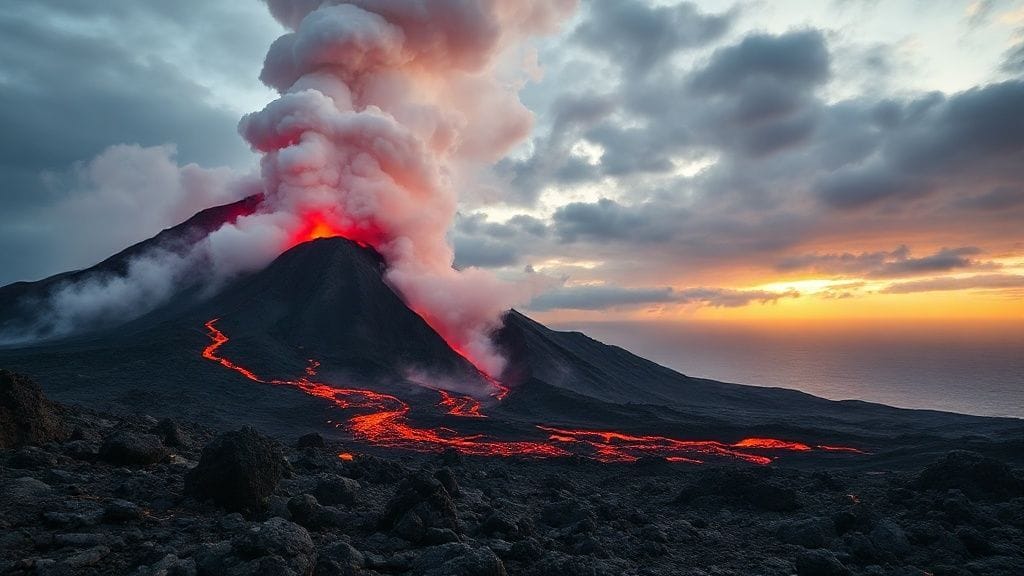
On the evening of April 2nd, the tension that had been building erupted quite literally. New fissures suddenly cracked open on the southeastern flank of Piton de la Fournaise, glowing orange with fresh, molten lava.
For nearby residents and visitors, the eruption was breathtaking—a vivid display of nature’s raw power under the darkened sky. Flames and sparks shot upward as lava fountains reached tens of meters into the air.
Despite the dramatic visuals, authorities had prepared well, and no injuries were reported. The eruption was classified as a tourist spectacle, albeit one framed by respect and caution.
The Volcano’s Fury: Lava Flows and Ash Clouds Rise
Over the next days and weeks, lava poured relentlessly from the new vents, carving glowing rivers that flowed down the volcano’s slopes. The molten rock consumed vegetation, reshaped the terrain, and sent up plumes of volcanic gas and ash.
While the eruptions were less explosive, the threat came from the unpredictable paths of lava flows potentially threatening infrastructure and agricultural lands. The surrounding forests bore the scars of fire, and ash blanketed parts of the island, darkening skies and coating surfaces in powdery grit.
Satellite images captured the glowing flows at night—molten veins tracing the volcano’s contour like fiery brushstrokes on a black canvas.
Local Responses: Communities on Alert
The people of Réunion have a long shared history with Piton de la Fournaise, one of cautious coexistence with this fiery neighbor. In 2019, local authorities swiftly activated emergency protocols. Temporary road closures, evacuation plans for vulnerable areas, and clear communication through media helped mitigate risk.
Despite these dangers, many locals treated the event with a sense of awe and acceptance. “It is our volcano,” explained one farmer who watched his fields slowly burn yet expressed gratitude for the fertile soil left behind by past lava flows.
Communities balanced the need for safety with the recognition of the volcano’s role in shaping their land and livelihoods.
The Scientists’ Watch: Monitoring and Forecasting the Eruption
The OVPF and associated institutions maintained a vigilant watch throughout, employing seismographs, GPS, gas emission sensors, and thermal cameras. Real-time data allowed precise tracking of eruption progress and forecasts of lava flow directions.
Scientific teams published detailed bulletins, keeping both the public and authorities informed. This collaboration between science, government, and community became a model of effective volcanic risk management.
The eruption also offered valuable insights into magmatic processes, adding to the body of knowledge essential for future preparedness.
The Cultural Impact: Volcano in Réunion’s Collective Identity
No story of Piton de la Fournaise is complete without recognizing its profound cultural symbolism. For the island’s diverse population—descendants of African, Malagasy, European, and Indian origins—the volcano represents both a threat and a source of spiritual significance.
Local legends speak of the volcano as a living spirit, a formidable force to respect and honor. The eruption of 2019 was no exception; artistic expressions, music, and community gatherings reflected the event’s imprint on Réunion’s identity.
Volcano tourism, deeply tied to this cultural connection, continues to thrive, attracting visitors eager to witness nature’s spectacle firsthand.
The Environmental Toll: Landscapes Reshaped and Wildlife Affected
The eruption’s environmental impact was immediate and profound. As lava cascaded down slopes, forests and natural habitats were transformed. For some species, this meant displacement or loss of habitat, while others found opportunity in the new landscapes.
Botanists and ecologists monitored recolonization patterns, studying how life begins anew on fresh volcanic rock. The eruption was a natural reset button, clearing old ecosystems and prompting regeneration.
Such cycles of destruction and rebirth have defined Réunion’s environment for millennia, highlighting nature’s impermanence and resilience.
Economic Ripples: Tourism, Agriculture, and Disruptions
While volcanic tourism often increases during eruption events, the 2019 eruption also brought logistical challenges. Temporary road closures and ash fallout affected local farmers and small businesses. Air quality concerns raised health questions, particularly for residents with respiratory vulnerabilities.
The balance of economic gain versus disruption was delicate. Yet, the eruption reminded all stakeholders of the island’s unique position—both vulnerable and gifted by its volcanic origins.
Comparing Volcanoes: Piton de la Fournaise and Global Giants
Globally, volcanoes vary widely in style and impact. Compared to catastrophic eruptions like Krakatoa, Mount Vesuvius, or Eyjafjallajökull, Piton de la Fournaise offers a different volcanic narrative—a story of frequent, mostly effusive eruptions rather than rare, massive explosions.
Yet it holds its own in intensity and drama. Its accessibility, combined with scientific monitoring and community engagement, makes it a living laboratory for volcanology.
Understanding its rhythms provides insights into broader geologic processes and humanity’s relationship with Earth’s volatile crust.
The Aftermath: Cooling Lava and the Return to Normalcy
As months passed, the fiery rivers gradually cooled. Vegetation began to creep back over hardened lava, and ash layers settled in the valleys. The island returned to its everyday rhythm, but with an indelible mark from the event.
Cleanup efforts focused on roads and infrastructure maintenance, while local communities reflected on the season they lived alongside a living flame.
Nature’s power may subside temporarily, but its memories remain etched in stone and story.
Lessons Learned: Advances in Volcanology and Emergency Management
The 2019 eruption reinforced the value of continuous monitoring and community preparedness. Innovations in remote sensing, real-time data transmission, and public communication were applied effectively.
Emergency services honed rapid response protocols and evacuation strategies, lessons that would inform future events not only on Réunion but in similarly vulnerable volcanic regions worldwide.
Science and society walked hand in hand, revealing the importance of respect, knowledge, and readiness in the face of nature’s unpredictability.
The Volcano’s Legacy: What 2019 Taught Us
More than just an eruption, the Piton de la Fournaise’s 2019 outburst taught humanity about patience, vigilance, and humility. It reaffirmed that while scientific progress can increase safety, living near a volcano means accepting uncertainty as a constant.
The event invigorated public interest in geology and conservation, fostering a strengthened sense of place and environmental stewardship among Réunion’s residents.
As a natural phenomenon, the eruption was both an ending and a beginning—a cycle refreshed by fire.
Looking Forward: Future Risks and Preparedness on Réunion
Though the 2019 eruption concluded, the underlying magma engine remains active. Scientists predict that the next eruption could occur within months or years; the volcano’s mood is ever-shifting.
Future preparedness depends on sustained investment in monitoring, education, and infrastructure resilience. Lessons from 2019 are now embedded in emergency plans that aim to protect lives while preserving the island’s unique character.
In this dance with fire, vigilance and respect remain our best allies.
Conclusion: Nature’s Power and Humanity’s Resolve
The 2019 eruption of Piton de la Fournaise is more than a geological event etched in scientific reports and satellite images. It is a vivid story of the interplay between earth’s molten forces and human lives—an evocative reminder that beneath the placid beauty of our planet lies a restless dynamism.
Réunion Island’s experience shows how humanity can live in harmony with, rather than in conquest over, nature’s volatility. It reveals resilience born of knowledge and preparation, and a profound respect for the powers shaping our world.
As the lava cools and the ash settles, the fiery heart of Piton de la Fournaise continues its silent dialogue with the island, a timeless testament to the earth’s fiery breath and mankind’s enduring spirit.
FAQs
What caused the 2019 eruption of Piton de la Fournaise?
The eruption was caused by the movement of magma rising through the Earth’s crust, driven by the Réunion hotspot’s mantle plume. Increased seismic activity and ground deformation indicated magma intrusion prior to the eruption.
How frequent are eruptions at Piton de la Fournaise?
The volcano typically erupts every 9 to 18 months, making it one of the most active volcanoes globally. Its frequent, mostly effusive eruptions generally pose moderate risk compared to explosive volcanoes.
Were there any casualties or injuries during the 2019 eruption?
No casualties or injuries were reported, thanks to effective monitoring and timely evacuation measures implemented by local authorities.
How did the eruption impact local communities?
While residents faced temporary disruptions, including road closures and ashfall, significant damage was avoided. The event also reinforced community solidarity and respect for volcano-related hazards.
What role did scientists play during the eruption?
Scientists from the Observatoire Volcanologique du Piton de la Fournaise monitored seismic, volcanic gas, and deformation data in real-time, providing crucial forecasts and updates that informed emergency responses.
How has the eruption influenced tourism on Réunion Island?
Volcanic activity often boosts tourism interest, as visitors seek to witness eruptions or explore volcanic landscapes. The 2019 event attracted many, though access to eruption sites was carefully controlled for safety.
What environmental effects did the 2019 eruption have?
Lava flows altered landscapes, destroyed vegetation, and temporarily disrupted ecosystems; however, these effects are part of the island’s natural volcanic cycle leading to ecological renewal.
How is Réunion prepared for future volcanic activity?
Continuous investment in volcanic monitoring, community education, emergency planning, and infrastructure resilience positions Réunion to manage future eruptions effectively.

