Table of Contents
- The Midnight Spark in Warsaw: The November Uprising Begins
- Congress Poland under the Russian Yoke: Seeds of Rebellion
- The Tumultuous Night of November 29, 1830: A City Awakens
- The Young Officers’ Revolt: Heroes in the Shadows
- The Role of Prince Józef Poniatowski's Legacy in the Uprising’s Heart
- From Barricades to Battlefields: Early Clashes and Momentum
- The Russian Empire’s Response: A Calculated Retaliation
- Dreams of Independence: The Polish National Identity Reborn
- The Political Chessboard: European Powers and their Hesitations
- The Iconic Figures: Leaders, Patriots, and Martyrs
- Civilian Life Amidst Revolt: Hope, Fear, and Daily Resolve
- The February 1831 Sejm: The Moment of Official Defiance
- Winter Campaigns and Strategic Gambles: The War Intensifies
- The Fall of Warsaw: Tragedy and Final Defiance
- The Uprising’s Ripple Effect: Polish Emigration and the Great Embrace of Émigré Community
- Cultural Reverberations: Romanticism and the Polish Cause
- Long Shadows: The November Uprising’s Legacy in Polish Memory
- Lessons from 1830: Nationalism, Repression, and Resistance
- Conclusion: The Eternal Flame of a Nation Unbowed
- FAQs: Understanding the November Uprising
- External Resource
- Internal Link
The Midnight Spark in Warsaw: The November Uprising Begins
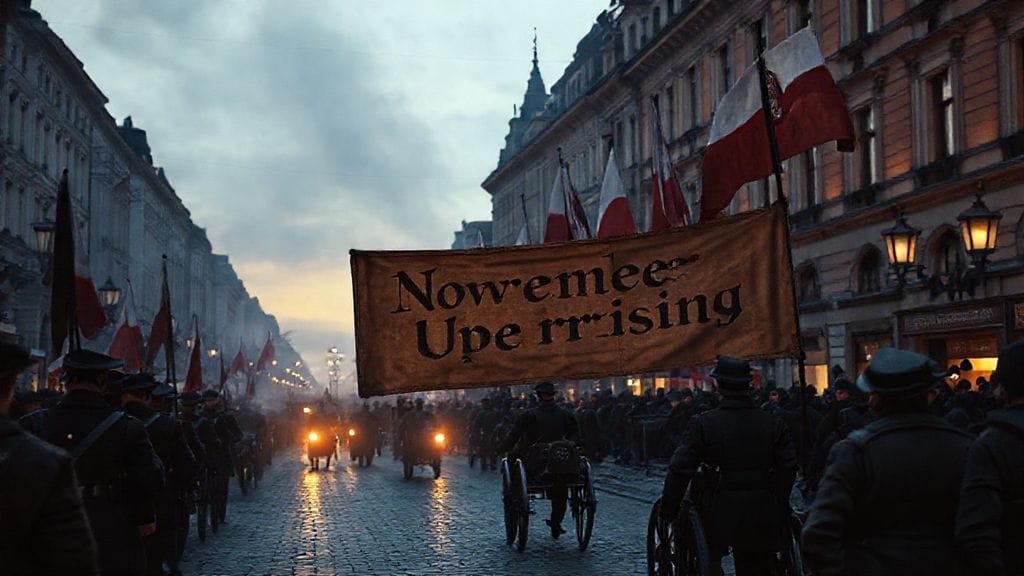
As the cold November night deepened over Warsaw on the 29th of November 1830, shadows moved swiftly and silently through the dim-lit streets of the Polish capital. The air was thick with a mixture of adrenaline, resolve, and a dangerous hope — a city on the brink of revolution. At the heart of the military academy, young cadets and officers conspired quietly, their whispering voices barely audible against the distant clang of church bells and the occasional patrol’s footsteps.
It was here, in that veiled moment, that the spark was struck which would ignite the November Uprising — an armed revolt against the Russian Empire’s dominion over Congress Poland. The clash that would unfold did not merely embody a military engagement, but represented the stormy rebirth of a national identity, long suppressed under imperial chains.
Poland, carved and shackled by foreign powers, would once again dare to dream of freedom. And though history would mark this uprising as ultimately unsuccessful, its fervor would burn brightly in the soul of a nation yearning for liberty.
Congress Poland under the Russian Yoke: Seeds of Rebellion
To understand why the November Uprising erupted like a tempest in 1830, one must trace back to the aftermath of the Napoleonic Wars, specifically to the Congress of Vienna in 1815. Europe’s victors had redrawn the continent’s borders, creating Congress Poland as a nominally autonomous kingdom under the Russian Tsar’s rule. It was a concession limited in liberty, as Russian governors and military presence consistently undermined Warsaw's self-governance.
Despite the constitution granted to the Kingdom of Poland, Russian authorities, particularly under Tsar Nicholas I, systematically eroded political freedoms, suppressed political dissent, and imposed heavy-handed control over the Polish army and administration. Economic hardship, national humiliation, and a burgeoning secret patriotic society intensified the collective dissatisfaction.
The younger generation of Polish officers and intellectuals, many influenced by Enlightenment ideals and Romantic nationalism, grew increasingly disillusioned with the Tsar’s regime. The weight of unfulfilled promises, censorship, and repression formed the fertile ground from which rebellion would sprout.
The Tumultuous Night of November 29, 1830: A City Awakens
It was shortly after 10 pm, on November 29, when a group of cadets from the Warsaw Military Academy, led by the charismatic Lieutenant Piotr Wysocki, launched a carefully planned rebellion. This carefully orchestrated insurgency began with the storming of the Belweder Palace, the residence of Grand Duke Konstantin, the Tsar’s appointed viceroy.
Despite being outnumbered and ill-equipped, the Polish insurgents seized the palace, a bold act of defiance that echoed through the city. The night streets quickly became a theater of tension and anticipation as news spread; barricades sprang up, citizens gathered, and the call for revolt rang out.
The uprising was spontaneous yet deeply symbolic—a youthful, fiery act aimed at reclaiming Poland’s dignity and sovereignty. Crucially, it also reflected widespread popular support beyond the military elite, stirring the hopes of many Warsaw residents.
The Young Officers’ Revolt: Heroes in the Shadows
The key figures of the uprising were young officers like Piotr Wysocki, who had grown frustrated by the Tsarist regime’s overt domination over the Polish army. Yet these young men were not merely warriors; they were intellectuals and patriots, inspired by the ideals of liberty and nationalism that had swept across Europe following the French and American revolutions.
Wysocki and his comrades were aware of the risks — rebellion against the mighty Russian Empire was a gamble with catastrophic potential consequences. Yet their sense of historical destiny and need to assert Poland’s right to self-rule triumphed over fear.
Their courage galvanized others, as additional military units and sections of the population joined. Soon, the uprising transcended a simple mutiny to become a nationwide insurrection.
The Role of Prince Józef Poniatowski's Legacy in the Uprising’s Heart
Though decades had passed since his death at the Battle of Leipzig, the spirit of Prince Józef Poniatowski inspired many of the revolutionaries. As a legendary figure symbolizing patriotic sacrifice and military valor, Poniatowski’s legacy underscored Poland’s long struggle for independence.
His embodiment of the Polish military tradition provided an emotional and cultural anchor as the insurgents took up arms. The echoes of his bravery in the Napoleonic Wars served to embolden those who dreamed of a free Poland, unbowed by imperial domination.
From Barricades to Battlefields: Early Clashes and Momentum
Following the initial uprising in Warsaw, the rebellion spread rapidly. Armed clashes erupted across Congress Poland as the insurgents sought to rally support from the citizenry and the fragmented military units. The first weeks saw a strange mixture of exhilaration and desperation — triumphs in battles were celebrated with profound hope, but the lack of cohesive command and international support loomed as growing challenges.
The insurgents managed, for a fleeting moment, to establish a semblance of a national government and army, determined to push the Russian forces back and restore Polish sovereignty.
The Russian Empire’s Response: A Calculated Retaliation
For Tsar Nicholas I, the uprising presented both a political and military threat too grave to ignore. His reaction was swift and brutal. The Russian military swiftly mobilized, pouring troops into Poland to crush the rebellion.
The imperial forces' logistical might and experience soon became evident, pushing back the rebellion with an unyielding resolve. What followed was a devastating conflict marked by fierce urban fighting, sieges, and severe repression.
Dreams of Independence: The Polish National Identity Reborn
More than a military conflict, the November Uprising was an emotional and cultural renaissance. It reaffirmed the Polish national identity that countless years of partition and subjugation had not extinguished.
The insurgency united soldiers, intellectuals, peasants, and urban dwellers alike, under the banner of a shared history, language, and dreams of freedom. It reignited patriotic literature, music, and cultural expressions that would thrive in the years to come despite foreign censorship.
The Political Chessboard: European Powers and their Hesitations
Europe’s great powers watched closely yet largely passively as Poland plunged into revolt. France, Britain, Austria, and Prussia faced a delicate balancing act—balancing their own imperial interests and the potential domino effect of nationalist uprisings within their borders.
The lack of significant external intervention doomed the uprising’s hopes of survival. The concert of European powers, committed less to liberty than to stability, ultimately allowed Russia to strangle the revolution.
The Iconic Figures: Leaders, Patriots, and Martyrs
Alongside Piotr Wysocki, names like General Józef Chłopicki, General Michał Gedeon Radziwiłł, and the poet-turned-commander Adam Mickiewicz emerged. These men represented the diverse facets of the insurgency — military leadership, cultural propaganda, and political will.
Their courageous leadership inspired their compatriots but also personified the tragic heroism that defined this rebellion. Many would later live in exile; others gave their lives on barricades and battlefields.
Civilian Life Amidst Revolt: Hope, Fear, and Daily Resolve
Warsaw’s citizenry experienced the uprising in intimate and painful ways. Fires, shortages, rumors, and casualties turned everyday life into a struggle for survival and dignity.
Yet amidst the chaos, stories of solidarity, bravery, and resilience shine brightly. Women organized supplies for fighters; families sheltering wounded soldiers; citizens risking their lives to spread news and encouragement.
The uprising was as much theirs as it was the soldiers’.
The February 1831 Sejm: The Moment of Official Defiance
In early 1831, the Polish parliament, the Sejm, formally declared the rebellion a war for full independence, severing all ties with the Russian Empire. It appointed insurgent leaders and sought international recognition.
This act, while symbolically powerful, escalated the conflict dramatically. The Tsarist regime viewed it as outright rebellion, hardening its resolve to crush the independence movement.
Winter Campaigns and Strategic Gambles: The War Intensifies
As 1831’s winter deepened, the insurgent forces, desperately outmatched, embarked on a series of bold, albeit risky, campaigns. Battles like those of Stoczek and Grochów revealed both tactical brilliance and the limits of a poorly supplied and divided Polish army.
Despite heroic efforts, the lack of reinforcements, harsh weather, and logistical strains hampered sustained resistance.
The Fall of Warsaw: Tragedy and Final Defiance
By September 1831, Russian forces besieged Warsaw itself. The siege was brutal and devastating. The city’s fall marked the effective end of the uprising but not the spirit behind it.
Polish fighters and civilians faced imprisonment, exile, or execution. Yet Warsaw’s resistance became a symbol of unyielding courage, remembered for generations as a testament to national resilience.
The Uprising’s Ripple Effect: Polish Emigration and the Great Embrace of Émigré Community
The uprising’s failure forced thousands of Poles into exile in France, Britain, and beyond, forming the "Great Emigration." These communities became centers of political activism, cultural preservation, and a beacon of hope for Poland’s eventual freedom.
Figures like Adam Mickiewicz in Paris fostered global support, preaching the cause of Polish sovereignty through literature and diplomatic channels.
Cultural Reverberations: Romanticism and the Polish Cause
The uprising resonated deeply within the broader European Romantic movement. Polish poets, artists, and intellectuals immortalized the uprising’s heroism and tragedy, contributing a rich cultural legacy of patriotism and sacrifice.
These works, suffused with pathos and defiance, helped keep the Polish question alive in Europe’s collective consciousness.
Long Shadows: The November Uprising’s Legacy in Polish Memory
Though militarily defeated, the November Uprising became a cornerstone of Polish national mythology. It shaped the discourse of resistance against oppression throughout the 19th and 20th centuries.
Annually commemorated, taught, and debated, the uprising inspired future generations, including the January Uprising of 1863 and the eventual regaining of independence in 1918.
Lessons from 1830: Nationalism, Repression, and Resistance
The November Uprising teaches enduring lessons about the power of nationalist fervor and the brutal realities of imperial power. It highlights the critical need for international solidarity, coherent leadership, and sustainable strategy in nationalist revolts.
Moreover, it reminds us that even in defeat, the birth pangs of freedom countries are never wasted.
Conclusion
The November Uprising of 1830–1831 was more than a doomed military revolt; it was the resounding cry of a nation refusing to be erased from history. In the shadowed streets of Warsaw, where young soldiers risked everything for a vision of liberty, Poland’s indomitable spirit was rekindled.
Though crushed by overwhelming force, the uprising planted seeds of hope that would blossom decades later. It became a symbol — immortalized in poetry, song, and memory — of courage in the face of tyranny.
In the echoes of those November nights, we find lessons of persistence, identity, and the unyielding human desire for freedom.
FAQs
Q1: What were the main causes of the November Uprising?
The uprising was fueled by the suppression of political freedoms in Congress Poland, Tsarist control over the Polish army, increasing censorship, economic hardship, and burgeoning nationalist sentiment after years of foreign domination.
Q2: Who led the November Uprising?
Key leaders included Lieutenant Piotr Wysocki, who initiated the revolt, as well as generals like Józef Chłopicki and Michał Gedeon Radziwiłł, and cultural figures like poet Adam Mickiewicz who inspired the nationalist cause.
Q3: How did the Russian Empire respond to the uprising?
Tsar Nicholas I deployed large military forces to suppress the rebellion, engaging in brutal sieges and punitive measures to crush the Polish insurgents and restore authority.
Q4: What role did international powers play during the uprising?
European powers, while sympathetic in some quarters, largely refrained from intervening due to their own political interests and fears of nationalist revolutions spreading, which ultimately isolated the Polish insurgents.
Q5: What was the impact of the uprising on Polish culture?
The uprising inspired a flowering of Romantic nationalist culture in Poland and abroad, immortalized in literature, music, and art, which helped sustain the Polish cause in exile and memory.
Q6: What happened to Poland after the uprising failed?
Following crushing defeat, Poland lost even the limited autonomy granted previously. Repression intensified, and many Poles emigrated, forming influential émigré communities advocating for independence.
Q7: How is the November Uprising remembered today?
It remains a symbol of Polish patriotism and resistance, commemorated in memorials, literature, and annual ceremonies as a crucial chapter in Poland’s fight for sovereignty.
Q8: Did the uprising contribute to Poland’s eventual independence?
While unsuccessful militarily, the uprising kept the idea of Polish independence alive and inspired later struggles, contributing indirectly to Poland regaining independence at the end of World War I.