Table of Contents
- The Breaking Dawn: August 21, 1415, Ceuta’s Siege Begins
- A Strategic Prize: Why Ceuta Mattered in the Early 15th Century
- The Portuguese Crown’s Ambition: Between Crusade and Commerce
- The Political Climate in Iberia: Portugal and Castile’s Rivalries
- The Moorish Stronghold: Ceuta under Marinid Rule
- The Gathering Storm: Preparing the Portuguese Expedition
- The Fleet and The Men: Crafting the First Overseas Venture
- The Moment of Impact: Assault and Capture of Ceuta
- Siege Tactics and Urban Warfare: Inside the Walls of Ceuta
- The Role of Prince Henry the Navigator: Vision beyond the Horizon
- Aftermath in Ceuta: Consolidating Control in a Foreign City
- Reverberations Across the Mediterranean and North Africa
- The Spark that Ignited the Age of Discovery
- The Portuguese Overseas Wars: Birth of a Maritime Empire
- Economic and Cultural Consequences: Trade Routes and Crossroads
- Ceuta in the Chronicles: Contemporary Voices and Later Memory
- The Moroccan Response: Marinid Decline and Resistance
- Religious Dimensions: Crusading Zeal and Christian-Muslim Conflict
- Ceuta and the Portuguese Navy: Naval Innovation and Expansion
- Lessons in Empire: Early Challenges and Governance
- The Legacy of the 1415 Capture in Modern History
- The Portuguese Capture of Ceuta: An Epochal Turning Point
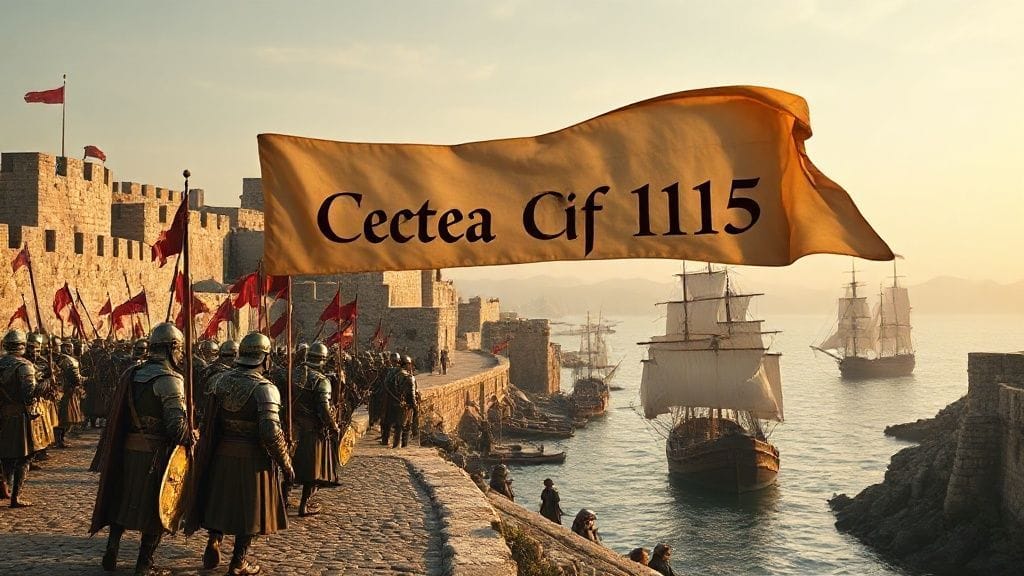
On the morning of August 21, 1415, the rising sun cast its faint glow over the restless waters of the Strait of Gibraltar. The air was taut with expectancy and whispered prayers as a fleet of Portuguese ships—eager, wary, and resolute—approached the distant silhouette of the Moorish city of Ceuta. The quiet calm of the Mediterranean gateway belied the fierce battle about to unfold, one that would shatter the centuries-old balance in North Africa and herald the dawn of European overseas expansion.
For the men of Portugal, the siege was no mere military engagement; it was a venture charged with faith, ambition, and destiny. Ceuta was a prize coveted not only for its strategic position but for what it symbolized: a foothold beyond the continental limits of Christendom and a challenge to the power of Islam in the western Mediterranean. It was an audacious gamble that would shape the future of empires and oceans alike.
A Strategic Prize: Why Ceuta Mattered in the Early 15th Century
The city of Ceuta straddled the northern tip of Africa, perched precariously on the edge of the Mediterranean, directly across from the Iberian Peninsula. It was a vital commercial hub that controlled maritime traffic entering and exiting the Mediterranean Sea. For centuries, Ceuta had been a node in the vast, complex network of Mediterranean and Saharan trade routes, linking sub-Saharan gold mines, African spice markets, and Mediterranean ports.
Control of Ceuta meant control of the narrow strait—effectively a choke point for naval power and commerce. Whoever held Ceuta influenced riches that flowed not only through goods but through culture, religion, and military might. For the emerging Portuguese state, eager to expand its horizons beyond the peninsula's fractious politics, Ceuta was the perfect gateway for the ambitions that would soon reshape the world.
The Portuguese Crown’s Ambition: Between Crusade and Commerce
Portugal in the early 15th century was a relatively young kingdom, newly consolidated but brimming with restless energy. King John I (Dom João I) had come to the throne amid internal strife and external threats, yet he harbored a vision for Portugal as a sea power. The recent Reconquista wars against the Moors on the Iberian Peninsula had subsided, but the zeal to continue the fight echoed strongly.
The capture of Ceuta was portrayed as a crusade—a righteous struggle to wrest Muslim-held lands and expand Christendom’s borders. Simultaneously, the Portuguese crown saw in Ceuta a golden opportunity to control lucrative trade in gold, ivory, and spices, products flowing from African territories beyond the Sahara, through Muslim intermediaries.
Prince Henry the Navigator, Dom João’s brother and chronicler of the era’s maritime ventures, became an emblematic figure of this dual-purpose quest: a blend of holy crusade, royal ambition, and commercial enterprise.
The Political Climate in Iberia: Portugal and Castile’s Rivalries
While Portugal looked outward, the Iberian Peninsula remained a patchwork of rival kingdoms and power struggles, particularly between Portugal and Castile. The conquest of Ceuta was as much a signal of Portuguese strength towards its Iberian neighbor as it was about the overseas challenge.
This contest spurred urgency: a successful military campaign beyond Iberia could redefine Portugal’s status and bargaining power. The campaign against Ceuta had to succeed to solidify Portugal’s political legitimacy and to reassure its allies and vassals about the king’s vision for expansion.
The Moorish Stronghold: Ceuta under Marinid Rule
Since the late 13th century, the North African port of Ceuta had been under the control of the Marinid dynasty, an Islamic Berber regime that ruled parts of Morocco and exerted influence along the coast. The city was fortified, defended by walls and a garrison experienced in confronting Christian incursions.
Ceuta was more than a military fortress; it was a melting pot of cultures, a vibrant center where Islamic, Jewish, and Christian traders met. Yet, threatened by Portuguese ambitions, the city was on edge, prepared for the gathering storm.
The Gathering Storm: Preparing the Portuguese Expedition
The planning for the assault on Ceuta was elaborate and secretive. King John I marshaled resources with exceptional care: the fleet consisted of around 200 ships and approximately 5,000 men, including knights, infantry, engineers, and sailors. Among them were high-ranking nobles and religious figures, galvanizing the crusading aura surrounding the enterprise.
The logistical challenge was immense. Supplies, weapons, and vessels had to be assembled discreetly to prevent Moorish intelligence from gaining advance notice. The fleet departed from Lisbon under favorable conditions—a summer breeze that promised swift passage to their target.
The Fleet and The Men: Crafting the First Overseas Venture
What distinguished the Ceuta expedition was not only its size but its composition. Portuguese military strategy emphasized naval strength, the integration of infantry with naval capabilities, and emerging technologies such as bombards and early firearms.
Prince Henry himself helped organize training and planning, recognizing that the future of warfare in distant lands would rely on such combined arms. This venture was pioneering: Portugal was no longer confined to defensive wars; it embraced offensive, overseas campaigns.
The Moment of Impact: Assault and Capture of Ceuta
After a tense crossing through the straits, the Portuguese fleet anchored near Ceuta. The initial assault began at dawn, catching parts of the Moorish defenses by surprise. Portuguese soldiers stormed the city walls, grappling with archers and defenders in brutal, close-quarters combat.
The fighting was fierce but swift. After days of siege, the Moroccan defenders’ morale eroded, and Portuguese forces secured key strongholds within the city. By August 21, 1415, Ceuta fell, marking a monumental victory for the Portuguese crown.
Siege Tactics and Urban Warfare: Inside the Walls of Ceuta
The siege revealed the evolving nature of medieval warfare. Portuguese commanders utilized artillery to breach walls, combined with tactical raids and sabotage within the city. Urban combat demanded adaptability—a contrast with open-field battles.
The city's narrow streets became blood-soaked arenas where courage and desperation mingled. Chroniclers recorded the valor of both defenders and attackers, who suffered heavy casualties but pressed on with determination.
The Role of Prince Henry the Navigator: Vision Beyond the Horizon
Prince Henry's role extended beyond the battlefield. His vision of expansion would not stop at Ceuta. The capture of this gateway was the first step towards establishing a lasting Portuguese presence across the Atlantic and African coasts.
Henry encouraged exploration, sponsoring voyages beyond the known seas, which eventually led to the discovery of Madeira, the Azores, and the opening of African trade routes. Ceuta became his laboratory of empire—a physical proof that maritime conquest was feasible and profitable.
Aftermath in Ceuta: Consolidating Control in a Foreign City
Holding Ceuta proved as difficult as its conquest. The Portuguese had to stabilize a foreign population that was predominantly Muslim, maintain supply lines across the sea, and defend against Moroccan counterattacks.
Governance combined military oversight with diplomatic efforts to manage local elites and merchants. Portugal invested in fortifications and sought to integrate Ceuta economically into its expanding network.
Reverberations Across the Mediterranean and North Africa
The fall of Ceuta sent shockwaves through the Mediterranean and North African political landscape. It marked the first Christian foothold on African soil since the Middle Ages and was perceived as a direct challenge to Islamic power in the region.
Neighboring Muslim states attempted to mount resistance, but the long-term impact was a shift in regional dynamics. Control of trade routes, alliances, and military posturing changed, setting the stage for centuries of conflict and cooperation.
The Spark that Ignited the Age of Discovery
The capture of Ceuta is often hailed as the moment that prefigured the Age of Discovery. It demonstrated Portugal’s capacity to project power overseas, giving momentum to ventures that would span continents.
The city became the springboard for exploration, establishing precedents in naval technology, colonization, and cross-cultural interaction that shaped the modern world.
The Portuguese Overseas Wars: Birth of a Maritime Empire
Ceuta’s capture inaugurated a series of Portuguese offensives in Africa and beyond—the so-called Portuguese Overseas Wars. These campaigns expanded Portugal’s influence from the African coast to the Indian Ocean and eventually Brazil.
They combined military conquest with commercial exploits, integrating new territories into a growing empire that would last for centuries.
Economic and Cultural Consequences: Trade Routes and Crossroads
By controlling Ceuta, Portugal gained access to the trans-Saharan trade, eventually redirecting it through Portuguese hands. This altered economic flows, introducing European products into African markets while importing precious commodities back to Europe.
Culturally, the encounter between Christian and Muslim populations in Ceuta became a site of exchange and tension, mixing traditions and innovations.
Ceuta in the Chronicles: Contemporary Voices and Later Memory
Contemporary chroniclers, like Gomes Eanes de Zurara, painted the conquest as a providential event. His vivid accounts blend heroism and divine favor, shaping the Portuguese national mythos.
In later centuries, Ceuta’s capture was romanticized as the first step in Portugal’s golden age, although historical reappraisal has added nuance to this narrative, emphasizing both achievement and complexity.
The Moroccan Response: Marinid Decline and Resistance
Morocco’s Marinid rulers were weakened after losing Ceuta, and although they attempted to reclaim it, control over the city was irrevocably lost.
The capture signaled the decline of Marinid power and the eventual rise of new dynasties more focused on internal affairs. Resistance to Portuguese presence persisted but was fragmented.
Religious Dimensions: Crusading Zeal and Christian-Muslim Conflict
The siege of Ceuta was framed almost as a crusade, rekindling religious zeal against Islam. Pope Martin V granted indulgences to participants, underscoring the religious stakes.
This spiritual dimension justified expansionist policies and fueled the religious conflicts that characterized much of Mediterranean and Atlantic history in the following centuries.
Ceuta and the Portuguese Navy: Naval Innovation and Expansion
The expedition demonstrated Portugal’s naval prowess and catalyzed innovations in shipbuilding, navigation, and maritime warfare. The lessons learned at Ceuta informed the development of the caravel and oceanic exploration.
Portugal emerged as Europe’s first great naval empire, thanks in part to the tactical and logistical breakthroughs during the Ceuta campaign.
Lessons in Empire: Early Challenges and Governance
Holding Ceuta was a trial by fire in colonial administration. Portugal grappled with issues of supply, diplomacy, and cultural accommodation—a microcosm of the challenges that would characterize later colonial endeavors.
The experience refined Portuguese imperial practices, though it also revealed the difficulties of sustaining overseas possessions far from the metropole.
The Legacy of the 1415 Capture in Modern History
Today, Ceuta remains a Spanish enclave in North Africa, a living legacy of the early battles for control of trade and territory. The 1415 capture resonates as a turning point in world history—the moment when European powers began to turn their gaze toward global horizons.
It was a first step that would eventually involve the mapping and shaping of continents, beginning an era of exploration, exploitation, and cultural encounter.
The Portuguese Capture of Ceuta: An Epochal Turning Point
More than a mere military victory, the assault on Ceuta was a fulcrum upon which the future pivoted—a prologue to the modern world. It signaled the time when maritime power eclipsed land-bound empires, when new frontiers promised fortune and faith, and when a small kingdom on Europe’s edge dared to dream of global influence.
Conclusion
The Portuguese capture of Ceuta on August 21, 1415, was not simply a conquest of a fortified city; it was the opening act of a vast transformation. With blood, courage, and conviction, the Portuguese monarchy threw down a challenge to established powers and redefined the boundaries of possibility.
This moment encapsulated the tension between faith and ambition, tradition and innovation, local struggle and global vision. Ceuta became the hinge upon which the doors to the Age of Discovery swung open, making distant worlds accessible and forever changing the course of history.
Though the echoes of conflict and conquest resonate still, the story of Ceuta remains a testament to human determination—the striving to cross horizons, break boundaries, and forge new paths in a world as full of promise as it is uncertainty.
FAQs
1. Why was Ceuta so important to Portugal in 1415?
Ceuta controlled a strategic point at the Strait of Gibraltar, vital for controlling Mediterranean trade routes. For Portugal, it was a gateway to African riches and a stepping-stone for overseas expansion.
2. Who led the Portuguese expedition against Ceuta?
The campaign was led by King John I of Portugal, with significant influence and support from his brother, Prince Henry the Navigator, who was instrumental in planning and promoting overseas exploration.
3. How did the Moorish rulers respond to the fall of Ceuta?
The Marinid dynasty attempted to retake Ceuta but ultimately failed, marking a decline in their power while fueling continued resistance and regional instability.
4. Did the capture of Ceuta influence the Age of Discovery?
Absolutely. It was the first successful overseas conquest by Portugal, providing the experience, confidence, and resources that launched further expeditions along the African coast and beyond.
5. What role did religion play in the Portuguese capture of Ceuta?
The campaign was framed as a crusade, with religious motivations intertwining with economic and political ambitions, reinforcing Christian-Muslim rivalry and securing papal support.
6. How did Portuguese governance evolve in Ceuta after the conquest?
Portugal established military and administrative control, integrating Ceuta into its empire but facing challenges in maintaining supply lines, managing local populations, and defending the city.
7. What were the long-term economic consequences of controlling Ceuta?
Portugal gained access to African trade routes, including gold and spices, bolstering its economy and strengthening its position as an emerging maritime power.
8. Is Ceuta still significant today?
Yes, Ceuta remains a Spanish autonomous city on the African continent, symbolizing centuries of Mediterranean history, colonial legacy, and ongoing geopolitical complexity.

