Table of Contents
- The Final Chapter Begins: April 9, 2021
- The Man Behind the Title: Who Was Prince Philip?
- A Life Intertwined with History: Early Years and Royal Ties
- The Winds of Change: His Role in the Modern Monarchy
- Health Struggles and Public Speculation: The Leading Up to April 2021
- The Announcement That Shook the World: News of His Passing
- Public Reaction: Mourning a Prince on a Global Scale
- The Royal Family in Grief: Personal Loss Under Public Eyes
- The Funeral at Windsor: Tradition and Adaptation amid a Pandemic
- The Military Honours and National Tributes
- Media Coverage and Global Broadcasts: A Shared Moment of Reflection
- The Symbolism of Windsor: A Final Resting Place
- The Duke’s Legacy: Modernization vs. Tradition
- Reflections from World Leaders and Close Friends
- The Impact on Queen Elizabeth II: A Reign Marked by Partnership
- The Role of the Duke of Edinburgh Award: Youth and Community Impact
- Reconsidering the Monarchy: Public Perception Post-Philip
- The Challenge of Mourning in a Time of Social Distancing
- Historical Comparisons: Royal Deaths in the Digital Age
- The Ongoing Influence of Prince Philip in the 21st Century
- Conclusion: Remembering a Life of Service and Complexity
- FAQs on Prince Philip’s Death and Legacy
- External Resources
- Internal Links
On a quiet spring morning on April 9, 2021, the world awoke to news that unfolded like a grave, solemn note in an ongoing symphony of history. Prince Philip, Duke of Edinburgh, the indomitable consort to Queen Elizabeth II, had passed away at Windsor Castle at the age of 99. The air was thick not only with the residue of global grief but with a profound sense of an era closing—an age marked by steadfast service, complex legacies, and the seamless intertwining of personal sacrifice and public duty.
That day, Windsor—usually a symbol of regal continuity and serene tradition—stood as the backdrop to a moment of shared international mourning. For decades, Prince Philip had been a pillar of the British monarchy, a figure both celebrated and critiqued, who navigated the shifting tides of post-war society, cultural revolutions, and the pressures of modern media scrutiny. His death was not simply the loss of a royal family member but the passing of one of the 20th century’s most elusive yet influential aristocrats.
Yet, that morning’s announcement was only the beginning of a complex narrative, one that would echo far beyond the castle’s gray stone walls.
The Man Behind the Title: Who Was Prince Philip?
To approach the story of Prince Philip’s death is to peer behind the veil of titular grandeur and understand the dimension of a man who lived beyond his dukedom. Born Prince Philip of Greece and Denmark in 1921, his early life was shadowed by exile and upheaval—the fall of the Greek monarchy, forced migrations, and a childhood that embodied political instability. His birth into European royalty set the stage for a life marked by both privilege and displacement.
Despite his noble lineage, Philip’s youth was anything but conventional, and his pathway to becoming the consort of the British sovereign was characterized by perseverance, adaptation, and the forging of a new identity. The announcement of his death stirred memories not only of a prince but of a husband, father, and public servant who embodied a changing monarchy.
A Life Intertwined with History: Early Years and Royal Ties
Philip Mountbatten’s voyage through history reveals a man who was a living bridge between the old continent’s royal houses and a nation grappling with the aftermath of empire. Educated in Britain, Germany, and Scotland, he was shaped by the tumult of interwar Europe. His naval career during World War II showcased his leadership and unwavering commitment, traits that would define his royal role for decades.
Marrying Princess Elizabeth in 1947, shortly before she ascended to the throne, Prince Philip stepped into a role that would require humility and resilience. His marriage was a partnership carved out amid the challenges of constitutional monarchy, shifting public expectations, and the post-war rebuilding of Britain’s identity.
The Winds of Change: His Role in the Modern Monarchy
Prince Philip was not content to be a silent consort. Instead, he became a driving force in modernizing the monarchy’s image, pushing its members toward public engagement and charitable work in advancing causes from science to environmentalism. His establishment of the Duke of Edinburgh Award was revolutionary in promoting youth development, a beacon that extended his influence far beyond palace walls.
Yet, his candidness and sometimes controversial remarks often cast shadows, eliciting both criticism and laughter. His role was a delicate balancing act—modernizer and traditionalist, loyal supporter and occasional outspoken voice challenging royal propriety.
Health Struggles and Public Speculation: The Leading Up to April 2021
In the final years of his life, whispers about Prince Philip's health grew louder, sparking a mixture of concern and speculation across Britain and the Commonwealth. Hospital visits and medical checks became focal points for public attention yet remained shrouded in discretion. His admission to King Edward VII’s Hospital in February 2021 for a heart condition heightened anxieties just as the world battled the Covid-19 pandemic.
Despite retirement from public duties in 2017, Philip’s presence lingered in the public consciousness, a symbol of endurance. However, his failing health reminded the world of the inevitable vulnerability behind the stoic facade.
The Announcement That Shook the World: News of His Passing
At 12:34 pm BST on April 9, Buckingham Palace’s brief statement rippled through newsrooms and social media alike: "It is with deep sorrow that Her Majesty The Queen announces the death of her beloved husband, His Royal Highness The Prince Philip, Duke of Edinburgh." The simple words belied an emotional tsunami unfolding across continents.
Leaders, citizens, and royal watchers grappled with the news, each reaction steeped in layers of grief, respect, and reflection on a life close to the epicenter of global affairs for over seven decades. The pandemic’s social restrictions imposed a quietness to the mourning—a collective sadness shared from afar.
Public Reaction: Mourning a Prince on a Global Scale
Unlike the roaring crowds that marked previous royal commemorations, Prince Philip’s death was mourned with a more subdued, isolated dignity. Yet social media exploded with personal memories, official tributes, and spontaneous acts of remembrance—flower-laden gates at Buckingham Palace, flags at half-mast, and moments of silence.
The Commonwealth nations, many with their own complex histories with Britain, offered condolences that underscored Philip’s multifaceted legacy. International figures highlighted his wartime heroism, patronage of arts and sciences, and the stabilizing effect he had on Queen Elizabeth’s reign.
The Royal Family in Grief: Personal Loss Under Public Eyes
Few have witnessed grief under such relentless scrutiny. For the royal family, the death of Prince Philip was an intimate tragedy played out on a public stage. Queen Elizabeth’s stoicism—a trait long admired—was tested as she lost not only her partner of over 70 years but also a chief advisor and confidant.
Their four children, grandchildren, and great-grandchildren navigated personal sorrow amid protocol and public expectation. Insider accounts revealed a family drawing closer even as they maintained the composed front expected of their station.
The Funeral at Windsor: Tradition and Adaptation amid a Pandemic
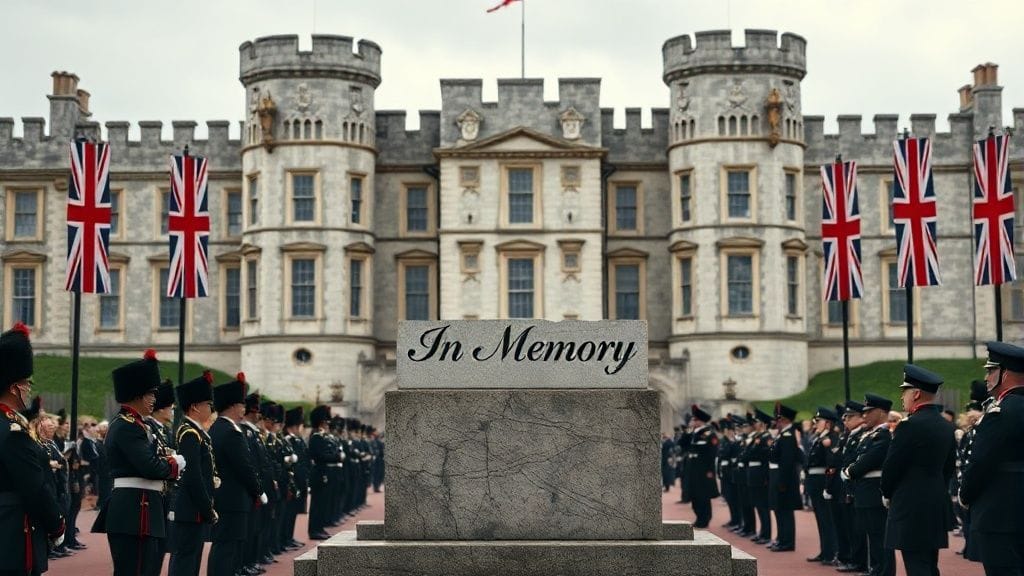
On April 17, 2021, Windsor Castle became the setting for a funeral unlike any other in recent royal memory. With Covid-19 restrictions limiting attendance to just 30 guests, the ceremony was stripped of typical grandeur but heightened in emotional resonance.
The procession, military honors, and funeral service blended centuries-old customs with the sober realities of lockdown Britain. The Duke was laid to rest in the Royal Vault, a final symbol of his life’s dedication to the monarchy.
The Military Honours and National Tributes
Prince Philip’s lifelong military service was honored with precision and respect. Armed forces personnel from multiple branches attended, their disciplined presence a reminder of his naval career and commitment to defense.
Gun salutes echoed through London and Edinburgh, and memorial services across the Commonwealth paid homage. Yet, each tribute was tinged with the recognition that these ceremonies also marked a turning point—a closing chapter on a royal mode of life.
Media Coverage and Global Broadcasts: A Shared Moment of Reflection
In a media landscape dominated by instantaneous updates, Prince Philip’s death became a unifying thread across broadcasters globally. The BBC, Sky News, and international outlets offered extensive coverage that combined historical retrospectives, live updates, and expert interviews.
The decision to televise the funeral service brought the nation together in a shared moment of reflection rarely experienced during pandemic isolation. The intimate glimpses into royal mourning also humanized the monarchy for viewers worldwide.
The Symbolism of Windsor: A Final Resting Place
Windsor Castle, steeped in centuries of British royal history, served as more than a ceremonial stage—it was a symbol of stability, heritage, and continuity. The Duke’s final resting place within the castle grounds signaled both the end of an era and the perpetuation of tradition.
The choice to inter Prince Philip here, rather than the more customary royal burial ground at Frogmore, reflected a personal affinity for the castle and a subtle statement about prioritizing family over pomp.
The Duke’s Legacy: Modernization vs. Tradition
Prince Philip’s legacy is a tapestry woven from contradictions: a fierce advocate of progress within a bastion of tradition, a public servant known for dedication yet shadowed by occasional controversies. His push for modernization helped transform the monarchy into a more relatable institution, albeit one still anchored in historic rituals.
His influence on Queen Elizabeth II’s approach to duties, on charitable organizations, and on the monarchy’s global stature was profound and enduring, shaping the institution for the 21st century.
Reflections from World Leaders and Close Friends
Leaders from Joe Biden to Angela Merkel paid heartfelt tributes, recognizing Philip’s decades of service and personal warmth. Former Prime Ministers and close friends shared anecdotes revealing a man of wit, resilience, and sometimes surprising tenderness.
These reflections painted a portrait far richer than official statements, underscoring the human dimension of a royal figure often perceived through the lens of ceremony.
The Impact on Queen Elizabeth II: A Reign Marked by Partnership
Few royal partnerships have endured as many historic upheavals and personal trials as that of Queen Elizabeth II and Prince Philip. His death cast into sharp relief their joint role in sustaining the monarchy’s relevance.
The Queen’s subsequent appearances and statements conveyed resilience yet unmistakable sorrow, highlighting how intimately the Duke’s presence had shaped her reign and personal strength.
The Role of the Duke of Edinburgh Award: Youth and Community Impact
Perhaps one of Prince Philip’s most tangible legacies is his eponymous award scheme, launched in 1956, which has since empowered millions of young people worldwide. Focused on encouraging perseverance, community service, and personal development, the award stands as a living testament to his belief in youth as a force for positive change.
In the wake of his death, the award’s significance gained renewed attention as a symbol of his lasting impact beyond royal confines.
Reconsidering the Monarchy: Public Perception Post-Philip
Philip’s death prompted not only mourning but reflection on the monarchy itself in a rapidly evolving society. Debates about cost, relevance, and the future of the British royal family intensified, with Philip’s figure embodying both the strengths and challenges of the institution.
Whether his passing will accelerate transformation within the monarchy or reinforce traditional continuity remains a subject of public and scholarly speculation.
The Challenge of Mourning in a Time of Social Distancing
Unlike the charismatic public figures whose deaths once brought crowds to the streets, Prince Philip’s funeral occurred under heavy restrictions. The pandemic imposed a novel form of collective grief—shared through digital platforms rather than physical proximity—challenging norms of communal mourning.
This situation exposed new facets of how societies process loss and honor legacies under unprecedented constraints.
Historical Comparisons: Royal Deaths in the Digital Age
Prince Philip’s death stands among the first major royal passings in the fully digital era, where social media, instantaneous news, and global live broadcasting alter how grief is expressed and experienced.
Comparisons with past royal deaths highlight both continuities—the ceremonial pomp, state protocols—and ruptures driven by technology and societal change.
The Ongoing Influence of Prince Philip in the 21st Century
Even beyond his death, Prince Philip’s presence endures in institutions, memories, and public life. His advocacy for environmental issues foreshadowed contemporary concerns, and his patronages continue to influence cultural and scientific fields.
Understanding his ongoing influence invites a nuanced appreciation of a life that bridged two centuries and witnessed the monarchy’s profound transformation.
Conclusion
Prince Philip’s death was not merely the passing of a royal consort but the farewell to a complex man who embodied the contradictions, endurance, and evolving narrative of the British monarchy in the modern age. His nearly century-long journey traversed exile, war, love, duty, and an unyielding commitment to service—all amid sweeping societal change.
As the world reflected on his life, a deeper human story emerged: of resilience in partnership, personal sacrifice, and the quiet dignity of a life spent both in the spotlight and in steadfast support of another’s reign. Prince Philip’s legacy, with all its nuances, remains a compelling chapter in the continuing story of monarchy and modern public life.
FAQs
Q1: What were the main causes or circumstances of Prince Philip’s death?
Prince Philip died of natural causes at Windsor Castle, aged 99, following a period of declining health and a recent hospital stay related to a heart condition. The official statement cited his death as peaceful.
Q2: How did the public react to the news of Prince Philip’s death?
Public reaction was marked by widespread mourning and respect, varied across generations and cultures. Social media became a major platform for tributes, while traditional forms of mourning occurred in accordance with pandemic restrictions.
Q3: What role did Prince Philip play in the British monarchy?
As husband to Queen Elizabeth II, Prince Philip was a key supporter and adviser, known for modernizing efforts, founding the Duke of Edinburgh Award, and promoting numerous charitable causes.
Q4: How was Prince Philip’s funeral different from previous royal funerals?
The funeral was markedly smaller due to Covid-19 restrictions, limited to 30 attendees, with more intimate and austere arrangements compared to earlier grand state funerals, yet retaining traditional military honors.
Q5: What is the significance of the Duke of Edinburgh Award?
Launched by Philip in 1956, the award encourages youth development, leadership, and community service, impacting millions worldwide and standing as a significant aspect of his legacy.
Q6: How did Prince Philip’s death affect Queen Elizabeth II personally and publicly?
He was her longest-serving consort and partner. His death was a deep personal loss for the Queen, who publicly displayed both grief and commitment to her duties, reinforcing their decades-long partnership.
Q7: How did world leaders respond to Prince Philip’s death?
Global leaders sent condolences highlighting Philip’s military service, dedication to public causes, and role within the monarchy, reflecting his international stature and respect.
Q8: How has Prince Philip’s death influenced discussions about the monarchy’s future?
His death prompted renewed dialogue on the monarchy’s relevance, costs, and modernization needs, with some seeing the event as a catalyst for institutional reflection and potential change.