Table of Contents
- The Quiet Tremor Before the Roar: Early Signs of the Puget Sound Earthquake
- Washington on Edge: The Precarious Setting of 1965
- Geology and Fault Lines: The Invisible Threat Beneath Puget Sound
- April 29, 1965: Dawn Breaks with an Unseen Fury
- The Tremor Unleashed: The Sudden Jolt to Puget Sound
- Shockwaves Through the Cities: Seattle and Tacoma in Crisis
- Voices from the Ground: Eyewitness Tales of Fear and Confusion
- Emergency Response: Mobilizing Amidst Chaos
- Infrastructure Under Siege: Bridges, Roads, and Buildings Tested
- The Human Toll: Casualties, Injuries, and Community Resilience
- Scientific Scramble: Understanding what Just Happened
- Media Coverage and Public Reaction: Rallying a Community
- The Aftershocks: A Lingering Specter of Uncertainty
- Political and Economic Consequences: Rebuilding Amidst Ruin
- Long-Term Impact: Changes in Seismic Policy and Urban Planning
- The Puget Sound Earthquake in Popular Memory
- Lessons Learned: How 1965 Shaped Earthquake Preparedness
- Commemorations and Memorials: Honoring the Event and Its Victims
- The Earth’s Restlessness: Puget Sound and Modern Seismic Risks
- Conclusion: Echoes of 1965 in Today’s Washington
The Quiet Tremor Before the Roar: Early Signs of the Puget Sound Earthquake
It began, as all such catastrophes do, quietly. The early morning hours of April 29, 1965, in Washington’s Puget Sound region were wrapped in a calm mist, the air thick but still. Residents awoke to subtle, almost indiscernible vibrations—a faint rumble that seemed to emanate from beneath the earth itself. Unlike the flash and fury of a volcanic eruption or the destructive immediacy of a wildfire, this natural menace crept upwards from deep geological fault lines. Unseen and unheard by many, it was the stillness before the storm.
In the days and weeks leading up to the quake, seismographs recorded minor tremors—minor enough to escape widespread notice but ominous enough to spark quiet concern among the small community of local geologists who watched Puget Sound’s restless earth. These murmurs of instability hinted at a natural event that would soon rattle the region’s foundations and lives.
Washington on Edge: The Precarious Setting of 1965
In 1965, Washington State was in a delicate phase of growth and transition. Seattle was blossoming as an industrial hub, the aerospace industry buoyed by Boeing’s meteoric rise. Tacoma, nestled to the south, was a vital port city with bustling commerce and shipping operations. Yet this prosperity masked an underlying vulnerability—a geographic location perched precariously on the converging tectonic plates of the Pacific Northwest.
Despite the region’s beauty and economic promise, it was a place acutely aware of natural challenges. Floods, winter storms, and landslides had tested the inhabitants before. But seismic danger, though understood in scientific circles, had not fully permeated the public consciousness. The year 1965 would rewrite this narrative in dramatic and unforgettable ways.
Geology and Fault Lines: The Invisible Threat Beneath Puget Sound
What makes Puget Sound uniquely vulnerable is its complex geological makeup—a mosaic of faults tangled beneath layers of sediment, water, and rock. Sitting along the Cascadia Subduction Zone, an immense fault capable of generating massive megathrust earthquakes, this region endures tectonic pressure built over centuries.
The Seattle Fault, a buried crustal fracture line, runs west-east directly beneath the Puget Sound cityscape, and it was this fault that gave way on April 29. Though invisible to the naked eye, the fault’s capacity for destruction had been honed by millennia of plate movement. Scientists studying these patterns would later describe the 1965 event not as an isolated shake but as a significant warning sign—a reminder of nature’s immense, sometimes chaotic, power.
April 29, 1965: Dawn Breaks with an Unseen Fury
The morning of April 29 was ordinary in appearance—clear skies, birdsong, and the slow kickstart of urban life. Yet beneath this veneer, tension built quietly, a literal shifting in the earth that would soon evolve into something unstoppable.
At approximately 7:45 a.m., residents would feel the first true quake—a jolt sharp, sudden, and unrelenting. It was the kind of movement that tosses objects off tables, rattles windows, and freezes hearts mid-beat. For some, it was a mere tremor; for others, a terrifying signal that the earth was speaking in an urgent, violent language.
The Tremor Unleashed: The Sudden Jolt to Puget Sound
What followed was a 6.7 magnitude earthquake that shook the Puget Sound corridor for nearly a minute—a seemingly brief but infinitely long span for those caught in its grip. Buildings swayed, bridges groaned, and the earth itself appeared to ripple in waves beneath the surface.
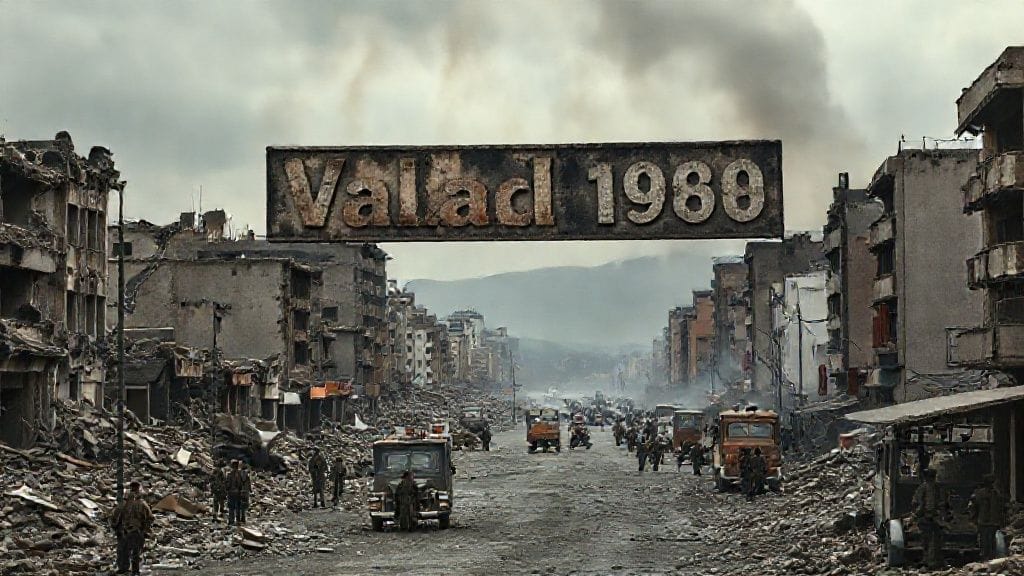
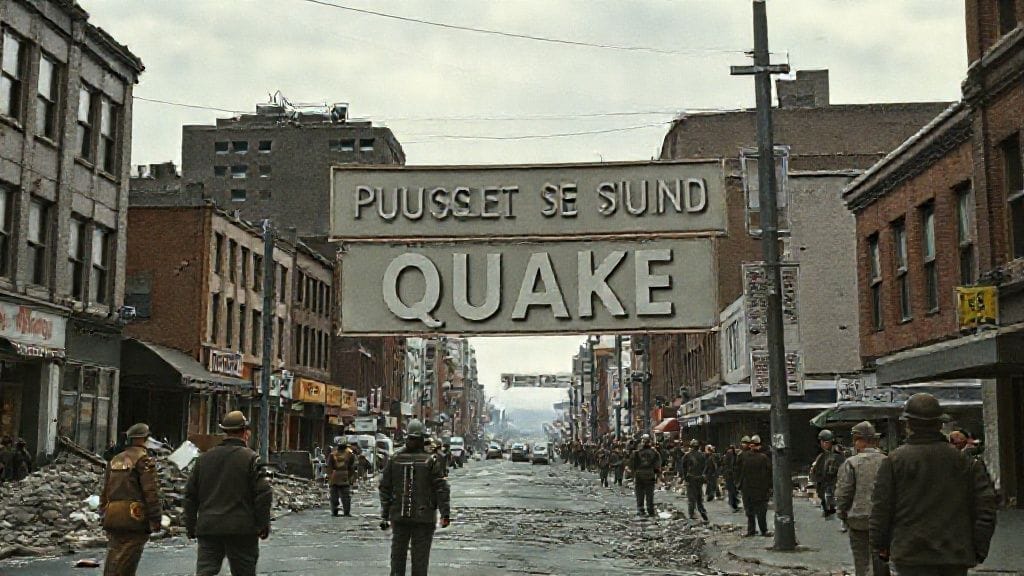
Seattle’s downtown was especially hard-hit, skyscrapers flexing and streets buckling under the strain. To the south, Tacoma’s infrastructure suffered from fractured bridges and damaged docks. The tremor was felt across a wide swath of territory, jolting communities both large and small into an intense state of emergency.
Shockwaves Through the Cities: Seattle and Tacoma in Crisis
Seattle had been growing rapidly, its skyline punctuated by mid-century high-rises and the iconic Space Needle—a symbol of progress and future ambition. Yet, the quake’s impact was a cruel reminder of urban fragility. Several buildings sustained structural damage; some lost power instantly, plunging offices and schools into darkness.
Tacoma, with its port and industrial zones, experienced significant disruptions. The waterfront infrastructure—piers, cranes, and warehouses—shook violently, delaying operations that connected Washington to the broader Pacific trade routes.
Amidst the chaos, everyday life was paused. Commuters stopped mid-step, vehicles halted on cracked roads, and a pervasive silence fell over the region—broken only by occasional groans of damaged infrastructure or distant sirens.
Voices from the Ground: Eyewitness Tales of Fear and Confusion
"I was getting ready for work when the whole house started shaking like a leaf in a storm," recalled Margaret Jenkins, a Seattle schoolteacher. "The pictures on the wall jumped down, the windows rattled—I thought the city was falling apart."
John Peters, a dockworker in Tacoma, described his experience with raw candor: "We felt the ground bounce under our feet like a heavy drum. Everything unstable was toppling. I remember the smell—dust and something like electricity in the air. It was like the earth was alive, angry."
These voices, scattered and personal, painted a vivid portrait of human vulnerability. They captured the fleeting moments when ordinary people confronted an extraordinary natural event, their narratives threading together a tapestry of fear, disbelief, and ultimately, survival.
Emergency Response: Mobilizing Amidst Chaos
In the quake’s immediate aftermath, Washington’s civil defense and emergency services swung into action—not always smoothly, but with resolve. Firefighters, police, and volunteer groups scrambled to the hardest-hit areas, battling limited communications and damaged routes.
Hospitals braced for casualties, some setting up triage sites in parking lots as structural fears mounted. The state government declared a state of emergency, initiating plans that would coordinate response efforts across counties.
Though somewhat underprepared for an event of this magnitude, local agencies managed to contain the immediate danger, saving lives through swift evacuations and medical interventions.
Infrastructure Under Siege: Bridges, Roads, and Buildings Tested
The Puget Sound earthquake forced a brutal stress test on the region’s infrastructure. The Alaskan Way Viaduct, a major Seattle elevated highway, exhibited critical damage, foreshadowing its eventual replacement decades later.
Bridges connecting communities trembled; some cracks appeared, raising concerns of long-term safety. Water mains and gas lines ruptured in several neighborhoods, posing secondary dangers of flooding and fire.
Electrical outages swept across cities, plunging tens of thousands into darkness. Communication lines, both phone and radio, were down or erratic, complicating coordination efforts and heightening public anxiety.
The Human Toll: Casualties, Injuries, and Community Resilience
Miraculously, the Puget Sound earthquake’s death toll was relatively low for such a sizeable event—reportedly fewer than 20 fatalities. Injuries were more numerous, with hundreds seeking medical treatment for fractures, cuts, and shock.
Yet the psychological impact rippled further than bones and flesh. Neighbors checked in on neighbors, communities opened doors for displaced families, and a profound sense of collective hardship fostered unexpected bonds.
Local newspapers captured stories of heroism—individuals who risked peril to rescue trapped victims or calm panicked crowds. It was an event that tested the human spirit as much as the earth beneath.
Scientific Scramble: Understanding what Just Happened
In the quake’s wake, scientists delved into analysis with urgency. Seismographs worldwide recorded the event, offering rich data on the nature of the Seattle Fault and Cascadia Subduction Zone.
Researchers debated its implications, wondering whether this was a prelude to larger seismic activity or an isolated rupture. The earthquake proved crucial in catalyzing more detailed geological studies and the development of region-specific seismic risk maps.
Dr. William Yeats, a prominent geologist involved in the early studies, would later remark, “The 1965 quake was a wake-up call, a stark reminder that beneath our feet lies a restless earth, capable of changing our lives in moments.”
Media Coverage and Public Reaction: Rallying a Community
Media outlets across Washington and the nation pounced on the story—capturing destruction, relief efforts, and personal stories of survival. Photographs of cracked streets and toppled chimneys filled newspapers front pages.
Radio broadcasts relayed emergency information, while community meetings sprang up to discuss safety measures and rebuilding plans. Public awareness of earthquake risks surged, marking a significant cultural shift.
For many, the event fostered a newfound respect for disaster preparedness; for others, it remained a haunting memory of vulnerability.
The Aftershocks: A Lingering Specter of Uncertainty
The main quake was only the beginning. Over the subsequent days and weeks, a series of aftershocks rattled the region, ranging from barely noticeable tugs to jolts that reignited anxiety.
These tremors served as constant reminders of the earth’s unsettled state—waking children from sleep and sending adults hurrying outdoors. Structural engineers continually reassessed buildings deemed stable, prolonging uncertainty.
Though less powerful than the initial quake, these aftershocks cemented a new awareness in the community: the danger never truly disappears.
Political and Economic Consequences: Rebuilding Amidst Ruin
The Puget Sound earthquake posed significant economic challenges. Businesses shuttered temporarily; insurance claims skyrocketed; and the cost of repairs strained municipal budgets.
Political leaders faced pressure to invest in infrastructure resilience and disaster readiness. Initiatives for building code reform and seismic retrofitting gained momentum, reflecting lessons harshly learned.
The event sparked funding debates and policy shifts—balancing the urgent need for safety with the realities of economic recovery.
Long-Term Impact: Changes in Seismic Policy and Urban Planning
Out of disaster often comes reform. The 1965 earthquake profoundly influenced Washington’s approach to urban development and seismic safety.
Building codes were strengthened; emergency services expanded training; public education campaigns on earthquake preparedness became routine. Cities adopted hazard zoning to limit development on vulnerable land.
These measures played crucial roles in mitigating damage in subsequent years, including during the 2001 Nisqually earthquake.
The Puget Sound Earthquake in Popular Memory
Despite the passage of decades, the 1965 Puget Sound earthquake remains etched in local memory. It is commemorated in oral histories, museum exhibits, and academic work.
For a generation that witnessed the shaking first-hand, it was a defining moment—one that shaped perceptions of safety, community, and the power of the natural world.
Schoolchildren learn about the quake’s effects; emergency drills recall its lessons; the story lives on as a cautionary tale and tribute.
Lessons Learned: How 1965 Shaped Earthquake Preparedness
A key legacy of the event was its role in motivating proactive measures. Washington’s communities embraced seismic awareness—stocking supplies, planning evacuation routes, and investing in resilient infrastructure.
Emergency management agencies honed communication strategies, disaster drills became commonplace, and public engagement increased.
The Puget Sound earthquake demonstrated that while nature’s forces cannot be tamed, human preparedness can save lives and reduce destruction.
Commemorations and Memorials: Honoring the Event and Its Victims
Monuments and plaques across the Puget Sound area serve as quiet reminders of that day. Community events on anniversaries honor those lost and celebrate resilience.
Like a scar marking the landscape and its people, these commemorations invite reflection on fragility and strength—on the intertwining of human stories and earth’s own rhythms.
The Earth’s Restlessness: Puget Sound and Modern Seismic Risks
Today, Puget Sound stands vigilant. Advances in seismology enable better monitoring, but the threat remains ever-present.
Scientists continue to study the fault lines, aware that the 1965 quake was neither isolated nor the last. Plans are underway for “the big one”—a major Cascadia megathrust earthquake that could dwarf past events.
This knowledge has transformed how Washington plans, builds, and prepares—never forgetting the warning tremor that shattered a seemingly peaceful morning over half a century ago.
Conclusion: Echoes of 1965 in Today’s Washington
The Puget Sound earthquake of April 29, 1965, was far more than a natural disaster—it was an awakening. It cracked open the visible and invisible foundations of the region, shaking more than buildings: shaking minds, policies, and communal bonds.
From the trembling earth rose a story of fear and courage, loss and resilience. It revealed humanity’s fragile dance with nature’s primal forces, a dance that demands respect and readiness.
As modern Washington continues to evolve, the echoes of 1965 serve as both warning and inspiration—a testament to the enduring spirit of a community that faced the earth’s fury and refused to be shaken.
FAQs
Q1: What caused the Puget Sound earthquake in 1965?
A1: The quake was caused by a rupture along the Seattle Fault, part of a complex system of tectonic faults beneath Puget Sound and influenced by the Cascadia Subduction Zone. An accumulation of tectonic stress eventually resulted in a sudden release of energy.
Q2: How strong was the 1965 Puget Sound earthquake?
A2: The earthquake registered a magnitude of approximately 6.7, causing significant shaking across Seattle, Tacoma, and neighboring areas.
Q3: Were there many casualties from the earthquake?
A3: Though the earthquake was powerful, the death toll was relatively low, estimated under 20, with hundreds of injuries reported. The relatively low casualties were partly due to the time of day and building standards of the period.
Q4: How did the 1965 earthquake influence emergency preparedness in Washington?
A4: The event spurred improvements in building codes, public education on earthquake safety, and the formation of more coordinated emergency response frameworks designed to better protect communities.
Q5: Is the Puget Sound region still at risk for earthquakes today?
A5: Yes, Puget Sound remains an active seismic zone due to the nearby Cascadia Subduction Zone and regional faults. Authorities and scientists continuously monitor risks and advise preparedness.
Q6: What were some of the major infrastructure damages caused by the earthquake?
A6: Damage included cracked bridges (notably the Alaskan Way Viaduct), ruptured water and gas lines, damaged roads, and power outages affecting tens of thousands.
Q7: How is the 1965 earthquake remembered today?
A7: Through community commemorations, museum exhibits, educational programs, and memorials, the earthquake remains a significant chapter in local history, emphasizing resilience and readiness.
Q8: Could a similar earthquake happen again in Puget Sound?
A8: Yes, experts warn that earthquakes of similar or greater magnitude could occur, underscoring the importance of continued vigilance and improved infrastructure.