Table of Contents
- The Awakening of a Sleeping Giant: June 2011
- The Volcanoes of Chile: A Land Shaped by Fire
- Puyehue and Cordón Caulle: Two Peaks, One Eruption
- Prelude to Catastrophe: Geology Beneath the Surface
- The First Tremors: Early Signs of a Brewing Fury
- June 4th, 2011: When the Sky Turned Dark
- Ash Clouds and Pyroclastic Surges: A Fiery Symphony
- The Human Face of Disaster: Evacuation and Survival
- Aviation Chaos and Global Disruptions
- Ecological Impact: Destruction and Resilience
- The Role of Science: Monitoring and Forecasting the Eruption
- Chile’s Emergency Response: Coordination and Challenges
- International Reactions and Aid
- The Economy under Siege: Agriculture, Tourism, and Power
- Myths and Memories: Puyehue–Cordón Caulle in Chilean Culture
- The Slow Fade of Volcanic Fury: Months of Activity
- Environmental Recovery and New Landscapes
- Volcanoes as Teachers: Lessons Learned from Puyehue
- Narratives from the Ashes: Personal Stories of Loss and Hope
- The 2011 Eruption in the Context of Chile’s Volcanic History
- Political Implications: Governance and Public Trust
- Scientific Discoveries and Advances Post-Eruption
- Puyehue–Cordón Caulle Today: Dormant but Watching
- Volcanoes and Human Drama: The Eternal Dance
The Awakening of a Sleeping Giant: June 2011
It began with a rumble—a deep, ominous shaking beneath the Chilean earth that few could immediately interpret as a prelude to nature’s devastating spectacle. On the early days of June 2011, under an overcast sky heavy with expectation, the Puyehue–Cordón Caulle volcanic complex erupted with a force that would send plumes of ash high into the stratosphere and disrupt life for thousands across continents. For many Chileans, the eruption was not just a geological event—it was a visceral confrontation with the raw power of their land, a reminder of volcanic fury alive and waiting beneath their feet.
The air filled with thick smoke and ash, turning bright daylight into an eerie twilight. Roads vanished under layers of fine grey dust; crops, homes, and animals were threatened by the suffocating fallout. Across international airspace, flights were grounded, and travel schedules obliterated. But behind this chaotic panorama lay centuries of history, geology, and culture, intertwining to tell the story of an eruption that would mark the beginning of a new chapter in volcanic science and human endurance.
The Volcanoes of Chile: A Land Shaped by Fire
Chile stands as one of the most volcanically active countries on Earth—a slender ribbon of land stretching along the Pacific “Ring of Fire.” This geological hotspot is shaped by the subduction of the Nazca Plate beneath the South American Plate, producing a myriad of towering volcanoes, many with centuries-old eruption records. The landscape resonates with nature’s tension: fertile valleys born from volcanic ash, juxtaposed against the lurking threat of eruption.
The Puyehue and Cordón Caulle are twin peaks embedded within this volatile context. Together they form a volcanic complex in the southern Andes, known for its violent past explosive eruptions. While the local communities had learned to live with the presence of such forces, the 2011 event proved that even the most prepared populations could be overwhelmed.
Puyehue and Cordón Caulle: Two Peaks, One Eruption
Nestled about 800 kilometers south of Santiago, Puyehue and Cordón Caulle, though distinct volcanic structures, share a connected magma system. The eruptive behavior of Cordón Caulle, a fissure volcano, often channels explosive energy through a network of fissures and lava flows, while Puyehue, a stratovolcano, tends to emit volcanic ash and pyroclastic materials.
Prior to 2011, Cordón Caulle’s most recent major eruption dated back to 1960, itself triggered by the catastrophic Valdivia earthquake, the strongest ever recorded. That historic eruption had left a deep imprint on the local psyche. But the 2011 awakening was destined to be unlike any other in living memory.
Prelude to Catastrophe: Geology Beneath the Surface
Deep beneath the Andes, immense pressures build as molten magma rises through a labyrinth of cracks and faults. Seismic networks revealed an increasing number of low-frequency earthquakes weeks before the eruption, a sign that magma was moving closer to the surface. Tectonic stresses added complexity to this subterranean drama, as crustal plates engaged in their slow but relentless dance.
These early tremors, often unnoticed by the general public, were the prelude to an event that would shake the earth literally and figuratively. Researchers debated the precise triggers, noting the influence of regional tectonics and hydrothermal activity compounded by the underlying magma chamber’s dynamics.
The First Tremors: Early Signs of a Brewing Fury
As spring gave way to winter in the Southern Hemisphere, residents in the nearby town of Puyehue began feeling unusual vibrations. Instrumentation recorded thousands of seismic events, many clustered tightly in time and location. The volcano was restless, and volcanologists were alert.
On May 27, pilot sightings of smoke near the volcano began circulation, an ominous sign confirmed by satellite imagery. The alarm bells rang. Scientists, emergency managers, and local authorities mobilized to face an imminent disaster that could engulf the valleys below and spew ash far into the sky.
June 4th, 2011: When the Sky Turned Dark
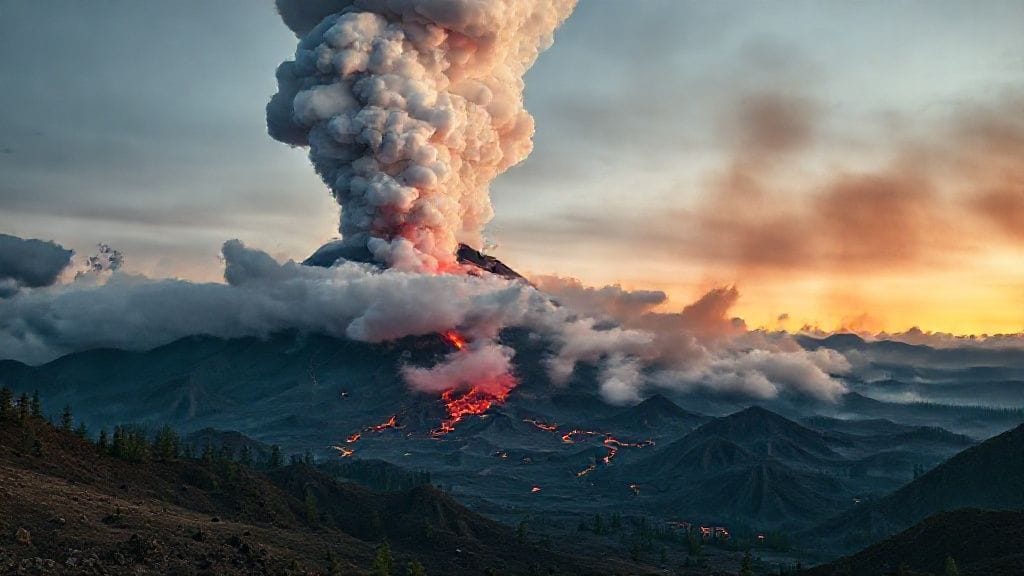
Early on June 4th, the volcano exploded. An enormous plume of volcanic ash and gases shot up to more than 10 kilometers into the atmosphere, visible for hundreds of miles. Dark clouds blotted out the sky as ash settled across the landscape, blanketing forests, fields, and towns. The eruption combined explosive bursts with flowing lava, creating a terrifying contrast between destruction and creation.
It was as if a mythical beast had been awakened, breathing fury upon the earth. Residents fled, roads filled with dust and debris, and the normally serene region plunged into darkness. For many, this was the first time they had witnessed firsthand the raw, unfiltered power of an Andean volcano.
Ash Clouds and Pyroclastic Surges: A Fiery Symphony
The volcanic column rapidly grew in intensity, spewing vast quantities of ash, pumice, and volcanic gases. Pyroclastic flows—fast-moving currents of hot gas and volcanic matter—rushed down the slopes, destroying everything in their path. Ash reached airports in neighboring Patagonia, forcing closures and cancellations.
The spread reached far beyond Chile’s borders. Winds carried ash across the South Atlantic, impacting air traffic as far away as Australia and New Zealand. The eruption’s atmospheric effects reminded the world how local natural disasters could have global ripples.
The Human Face of Disaster: Evacuation and Survival
While geological and meteorological data illustrated the eruption’s scale, the human stories brought it into sharp focus. Tens of thousands were evacuated from their homes; communities faced uncertainty as they watched their livelihoods buried beneath ash.
Among them were farmers, whose fields were smothered, and indigenous Mapuche communities confronting not only natural disaster but an ongoing struggle for their ancestral territories. The emotional toll was immense—loss of homes, animals, and ways of life.
Yet within this crisis emerged stories of solidarity and resilience. Volunteers distributed aid, neighbors opened doors, and government agencies coordinated efforts to keep people safe and informed.
Aviation Chaos and Global Disruptions
In a modern world hooked on air travel, the eruption brought the skies to a halt. Ash clouds are notoriously dangerous for aircraft engines, and aviation authorities immediately grounded flights over vast swaths of South America.
Chile’s major airports suspended operations, while international airlines scrambled to reroute or cancel flights. The economic cost soared as passenger and cargo movements ground to a partial halt. The event highlighted the vulnerability of global transportation networks to natural phenomena.
Ecological Impact: Destruction and Resilience
The fertile ecosystems of southern Chile faced a harsh trial. Ashfall altered soil chemistry, streams became choked with sediments, and forests suffered from burns and suffocation. Wildlife fled or perished in affected areas.
However, the eruption also set in motion cycles of renewal. Volcanic minerals enriched soils, and over time, new habitats emerged—proof of nature’s extraordinary capacity to recover and adapt.
The Role of Science: Monitoring and Forecasting the Eruption
This eruption became a case study in how modern science and technology can help humanity anticipate and mitigate natural hazards. Satellite imagery, seismographs, gas analysis, and thermal imaging provided real-time data that informed decisions.
Chilean volcanologists collaborated internationally, deploying instruments to measure the eruption’s height, ash composition, and seismic activity. Their work allowed more precise warnings and minimized casualties.
Chile’s Emergency Response: Coordination and Challenges
Chile’s government swiftly declared states of emergency and coordinated rescue and relief operations. Local municipalities, the army, and the national emergency office combined resources to support displaced populations.
Challenges abounded—from logistical hurdles in remote areas to maintaining communication amid disrupted infrastructure—but the concerted response earned commendations internationally.
International Reactions and Aid
Countries near and far expressed solidarity. Argentina opened its borders to evacuees, while scientific bodies offered expertise and equipment. Humanitarian organizations provided aid kits and medical supplies.
The eruption re-affirmed the importance of international cooperation in facing natural disasters, transcending borders through shared knowledge and compassion.
The Economy under Siege: Agriculture, Tourism, and Power
Economic activities bore the brunt of volcanic destruction. Farmers lost crops and livestock, while vineyards and orchards faced contamination. Tourism suffered as visitors canceled trips, wary of ash and closures.
Energy production was also affected; hydropower plants faced sediment-laden waters, interrupting electricity supplies in some regions.
Recovery strategies included compensation schemes and targeted support for affected industries—efforts that would span years.
Myths and Memories: Puyehue–Cordón Caulle in Chilean Culture
Volcanoes are more than geological features in Chile—they hold powerful places in local myths and identity. The eruption stirred narratives about earth spirits, ancestral gods, and human vulnerability.
Storytellers and artists captured the eruption’s impact, weaving it into contemporary folklore and national memory, ensuring that this event would not fade forgotten.
The Slow Fade of Volcanic Fury: Months of Activity
Though the initial explosion was the most dramatic, the volcano remained active for months, with intermittent ash emissions and lava flows. Scientists documented the decline carefully, noting changes in magma composition and gas output.
The gradual winding down allowed affected communities to plan reconstruction and adapt to a new landscape fashioned by fire.
Environmental Recovery and New Landscapes
As ash settled and waters cleared, new landforms emerged—a volcanic plateau, new lakes, and altered river courses. These changes promised future challenges and opportunities alike.
Ecologists began monitoring succession patterns, studying how life would reclaim the scorched terrain, eager to witness nature’s resilience in action.
Volcanoes as Teachers: Lessons Learned from Puyehue
This eruption provided invaluable lessons—from improving early warning systems to understanding magma dynamics. It reinforced the need for integrating science with public policy and community preparedness.
Chile’s volcanic alert networks were strengthened, emergency protocols refined, and geological research deepened—a legacy extending beyond the immediate disaster.
Narratives from the Ashes: Personal Stories of Loss and Hope
Amid the scientific and political narratives, individual voices tell the most human stories of the eruption—children watching their schools close, elders recounting ancient warnings, families rebuilding shattered lives.
These testimonies remind us that history is lived through people’s experiences, resilience, and spirit.
The 2011 Eruption in the Context of Chile’s Volcanic History
Chile’s long history of volcanic activity sets the 2011 event in a broader tapestry. From Llaima to Villarrica, eruptions have shaped the land and the nation’s identity.
Comparisons reveal patterns of behavior, risks, and responses, situating the Puyehue–Cordón Caulle eruption as a pivotal moment in this ongoing story of fire and earth.
Political Implications: Governance and Public Trust
Government handling of the crisis influenced public trust in authorities. Efficient communication and crisis management bolstered credibility, while any missteps sparked criticism.
The eruption also spurred policy debates about land use, disaster preparedness, and environmental protection—a reminder that natural disasters are inherently political as well as natural phenomena.
Scientific Discoveries and Advances Post-Eruption
Research following the eruption led to advances in volcanology, including improved eruption forecasting models and better understanding of fissure eruptions.
New monitoring technologies were tested, yielding tools that now aid in managing volcanic risks globally.
Puyehue–Cordón Caulle Today: Dormant but Watching
The volcanic complex has since quieted, its magma chambers slowly cooling. But scientists remain vigilant—the earth remembers.
Regular monitoring continues, with sensors in place to detect signs of future unrest. The 2011 eruption stands as a testament to nature’s power and a warning for generations to come.
Volcanoes and Human Drama: The Eternal Dance
Ultimately, Puyehue–Cordón Caulle epitomizes a timeless human story—the encounter between civilization and the wild forces beneath the earth. This eruption is more than geology; it is a narrative of survival, transformation, and respect for a powerful planet that is always alive beneath our feet.
Conclusion
The 2011 eruption of Puyehue–Cordón Caulle was a profound reminder of our planet’s restless nature and humanity’s fragile foothold upon it. It was an event of shattering destruction and hopeful renewal, a chapter in a larger epic written in fire, ash, and human courage. The eruption disrupted lives and economies, re-shaped landscapes, and expanded the frontiers of volcanic science. But perhaps most importantly, it revealed the strength of communities, the creativity of science, and the enduring dance between humankind and the Earth’s primal forces—fragile, unpredictable, yet deeply intertwined.
As we look back, the lessons remain clear: vigilance, preparation, and respect for nature’s pace are essential. Puyehue–Cordón Caulle’s fiery breath in 2011 will long echo—not only in the fissures it left behind but in the hearts and minds of those who witnessed its power.
Frequently Asked Questions
Q1: What geological processes caused the Puyehue–Cordón Caulle eruption in 2011?
A1: The eruption was caused by magma rising through fractures in the earth's crust due to subduction of the Nazca Plate beneath the South American Plate, combined with tectonic stresses and pressure buildup in a magma chamber beneath the volcanic complex.
Q2: How did the eruption impact air travel worldwide?
A2: The massive ash clouds forced the closure of multiple airports across South America and disrupted international flights, as volcanic ash poses severe risks to aircraft engines, prompting cancellations and rerouting over several weeks.
Q3: What measures did Chile take to protect its population during the eruption?
A3: Chile implemented large-scale evacuations, established emergency operations centers, provided timely communication via media and scientific updates, and coordinated support between military, local authorities, and humanitarian agencies.
Q4: How has the eruption affected the local environment and economy?
A4: Ashfall devastated agriculture by destroying crops and contaminating lands, disrupted tourism, and affected energy production due to sediment in water reservoirs. However, the volcanic material also enriched soils and eventually fostered ecological recovery.
Q5: What scientific advancements resulted from studying this eruption?
A5: Scientists gained better insights into fissure eruptions, improved seismic monitoring, ash dispersion modeling, and developed more accurate eruption forecasting tools, which have informed volcanic risk management worldwide.
Q6: Are Puyehue and Cordón Caulle still active volcanoes today?
A6: Yes, while currently dormant, both volcanoes are monitored continuously. The complex remains a significant volcanic hazard due to its geological setting, and signs of future activity are vigilantly observed.
Q7: How is the eruption remembered in Chilean culture?
A7: The event has been incorporated into local folklore, art, and collective memory as a symbol of both nature's destructive power and the resilience of Chile’s people, reflecting deep respect for the volcanoes embedded in national identity.
Q8: What lessons can the world learn from the 2011 eruption?
A8: Key lessons include the importance of early warning systems, international cooperation, community preparedness, and integrating scientific knowledge with emergency planning to mitigate the human and economic costs of volcanic disasters.

