Table of Contents
- The Final Days of Pythagoras: An End Marked by Turmoil
- The Vibrant World of Metapontum: A City on the Edge
- Magna Graecia in the 5th Century BCE: Cultural Crossroads
- Pythagoras’ Philosophical Triumphs and Controversies
- The Birth and Rise of the Pythagorean School
- Political Factions and Social Upheaval in Metapontum
- The Clash Between Pythagoreans and Democratic Forces
- The Night of the Fire: The Assault on Pythagoras’ Community
- The Unfolding Tragedy: From Siege to Death
- Legends and Conflicting Accounts Surrounding Pythagoras’ Death
- The Immediate Aftermath: The Fall of Pythagorean Influence in Magna Graecia
- The Broader Impact on Philosophical Thought and Mathematics
- The Survival of Pythagoreanism: Legacy through the Ages
- The Role of Metapontum in Greek and Western History
- Revisiting Pythagoras’ Death: Archaeology and Historical Debates
- Pythagoras’ Death as a Symbol of Intellectual Persecution
- The Cultural Memory of Pythagoras in Magna Graecia
- The Philosophical Seeds Sown in the Shadow of Violence
- Reflections on Power, Philosophy, and Mythmaking
- Conclusion: The End of a Life, the Beginning of a Legend
- FAQs: Understanding Pythagoras’ Death and Its Legacy
- External Resource
- Internal Link
The Final Days of Pythagoras: An End Marked by Turmoil
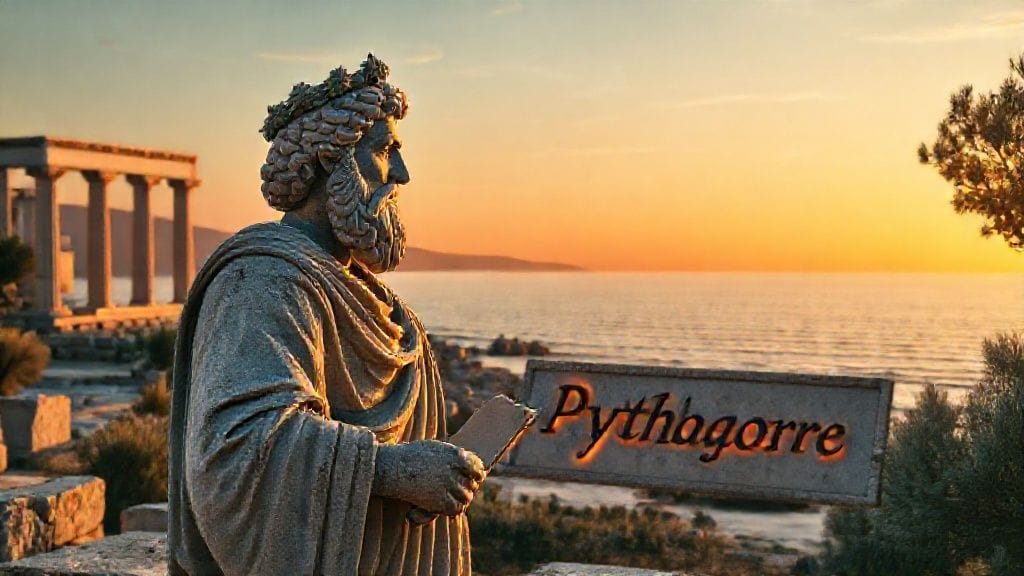
On a sultry evening around 495 BCE, the tranquil coastal city of Metapontum simmered with unrest. What began as philosophical discourse and communal living under the guidance of the renowned thinker Pythagoras had erupted violently into chaos. The air was thick with smoke and fear, as torches blazed and cries split the night. Inside a modest house, once a sanctuary of knowledge, an aged man found himself besieged not only by enemies but by history itself: Pythagoras, the enigmatic philosopher and mathematician, faced his final moments amid political upheaval and social strife. This was no quiet death in a scholar’s chamber, but a dramatic crescendo that would echo for millennia—marking both the fall of a man and the transformation of an intellectual legacy.
The Vibrant World of Metapontum: A City on the Edge
Metapontum, nestled along the Ionian shore of Magna Graecia—Southern Italy’s fertile beacon of Greek colonization—was far from a sleepy backwater. Founded by settlers from Achaea in the late 7th century BCE, it had grown into one of the richest agricultural hubs of the western Greek world. Its lush plains yielded abundant grain, and its walls hinted at the wealth amassed by its elites. But beneath this prosperity lurked tensions.
Unlike the democratic city-states of mainland Greece, many of Magna Graecia’s polities, including Metapontum at times, were ruled by oligarchies or aristocratic coalitions. These local power structures sought stability but often clashed fiercely with populist movements and incoming waves of philosophical and religious currents—including the enigmatic Pythagoreans—who challenged established orders with calls for spiritual reform and societal harmony.
Magna Graecia in the 5th Century BCE: Cultural Crossroads
By the early 5th century BCE, Magna Graecia had become a melting pot of Greek traditions, indigenous Italic cultures, and foreign influences from Etruscans, Phoenicians, and others. This region was a fertile ground for innovation—politically, culturally, and philosophically. As Greek refugees, colonists, and traders mingled, they seeded new ideas about governance, ethics, and science.
Pythagoras, whose life spanned the late 6th and early 5th centuries BCE, found this environment both welcoming and hostile. His ideas—revolutionary blends of mathematics, mysticism, and communal ethics—attracted followers keen on reordering their cities and souls but antagonized local rulers wary of threats to their control.
Pythagoras’ Philosophical Triumphs and Controversies
Pythagoras of Samos remains one of antiquity’s most captivating figures: part sage, part mystic, part mathematician. His teachings blurred boundaries, linking numbers to cosmic harmony, morality to music, and political order to metaphysical balance. He introduced the idea that numbers underpin not only reality but also the ethical fabric of society.
The Pythagorean Brotherhood, a secretive and disciplined community bound by strict rules of conduct and shared beliefs, became not just an intellectual circle but a potent socio-political force. However, their exclusivity and enigmatic rituals bred suspicion. Many perceived them as an elitist sect wielding influence behind the scenes, stoking fears that would ultimately fuel opposition.
The Birth and Rise of the Pythagorean School
Migrating from Samos to Croton and then to Metapontum, Pythagoras founded schools where his disciples studied not only geometry and arithmetic but cultivated an encompassing way of life. These communities emphasized purity, dietary restrictions, communal property, and introspective meditation.
Their growth disrupted existing structures. The Pythagoreans’ ascendance in political affairs—often aligning with oligarchic rulers—created friction with democratic factions and rival groups who viewed the Brotherhood as a shadow government threatening popular sovereignty.
Political Factions and Social Upheaval in Metapontum
In Metapontum, tensions between Pythagoreans and democratic citizens reached a boiling point by the mid-5th century BCE. Oligarchs allied with Pythagoreans attempted to control civic institutions, diminishing the voice of common citizens.
Adding to this, broader regional instability—from shifting alliances with neighboring Greek cities to pressures from Italic tribes—exacerbated fears. Rumors flourished of Pythagorean plots, and resentment darkened the intellect’s shining legacy, transforming respect into paranoia.
The Clash Between Pythagoreans and Democratic Forces
The divisions culminated in violent conflict. Democratic insurgents, angry at perceived elitism and the Brotherhood’s encroachments, mobilized to purge Pythagorean influence forcibly. This was not merely about philosophy—power and control of the city were at stake.
Against this turbulent backdrop, Pythagoras’ followers, though loyal and disciplined, found themselves besieged by a populace whipped into fury by political agitators. The Brotherhood’s simple ideals of harmony dissolved into bitter confrontation.
The Night of the Fire: The Assault on Pythagoras’ Community
Accounts—fragmentary and often contradictory—describe a night when Metapontum’s streets ran red with revolt. Neighborhoods once serene became battlegrounds. The Pythagorean meeting places were set ablaze, homes stormed, and defenders overwhelmed.
Legend states that Pythagoras himself was trapped inside a burning building or cornered in a garden, where he succumbed to either wounds, smoke, or despair. Some tell of a dramatic flight and eventual suicide to avoid capture; others speak of execution by enemies.
Regardless, this violent uproar signaled the collapse of Pythagoreans’ hold on Metapontum.
The Unfolding Tragedy: From Siege to Death
The aftermath was grim. Countless disciples were killed or driven into exile. Libraries burned; sacred teachings scattered. The community that had nurtured a philosophical revolution was shattered.
Pythagoras’ death was not a quiet philosophical passing but a brutal closing chapter in a saga where ideas and political power intertwined lethally.
Legends and Conflicting Accounts Surrounding Pythagoras’ Death
Ancient sources offer a kaleidoscope of narratives. Iamblichus, Diogenes Laërtius, and others blend history and myth: some depict Pythagoras calmly transcending death; others emphasize his tragic demise.
Complicating this are the secretive nature of the Brotherhood and the fragmentary state of records from Magna Graecia. The figure of Pythagoras shifted into legend, making historical facts elusive and often inseparable from symbolism.
The Immediate Aftermath: The Fall of Pythagorean Influence in Magna Graecia
In the decades following Pythagoras’ death, the Brotherhood’s political influence waned sharply. Democratic regimes became dominant in Metapontum and neighboring cities, rewriting civic landscapes and redefining cultural identities.
Yet Pythagorean ideas did not vanish entirely; rather, they went underground or transformed, influencing subsequent philosophical traditions and scientific inquiry.
The Broader Impact on Philosophical Thought and Mathematics
Though violently suppressed, the Pythagorean vision endured in ways subtle yet profound. Their numerical mysticism laid foundations for later mathematical discoveries and philosophical systems—from Plato’s ideal forms to the mysticism of Neoplatonism.
The intertwining of ethics, cosmology, and mathematics pioneered by Pythagoras left indelible marks on Western intellectual heritage.
The Survival of Pythagoreanism: Legacy through the Ages
Pythagorean doctrines persisted through secret societies, influenced early Christian thinkers, and inspired Renaissance scholars. Their quest for harmony and proportion echoed in art, architecture, and sciences throughout centuries.
This endurance reflects not only the power of their ideas but also the perennial human search for meaning amid chaos.
The Role of Metapontum in Greek and Western History
Though overshadowed by larger city-states, Metapontum’s role as a crucible for Pythagorean thought places it at a unique crossroads of history and philosophy.
Its story exemplifies how distant colonies of the Greek world were vibrant centers of innovation, yet also arenas of intense socio-political conflict.
Revisiting Pythagoras’ Death: Archaeology and Historical Debates
Modern archaeology in Southern Italy continues to shed light on the Pythagorean presence. Excavations have revealed ruins of communal buildings and inscriptions suggesting organized social life consistent with ancient narratives.
Historians debate the precise circumstances and timelines of Pythagoras’ final years, but each discovery adds texture to our understanding of his death and its context.
Pythagoras’ Death as a Symbol of Intellectual Persecution
More than a historical moment, Pythagoras’ violent end symbolizes the eternal tension between radical ideas and established powers. His story resonates with those who value free thought threatened by political or social backlash.
The philosopher’s demise serves as a cautionary tale about the costs of challenging dominant structures.
The Cultural Memory of Pythagoras in Magna Graecia
In Magna Graecia and beyond, Pythagoras became a quasi-mythical figure—sometimes demonized, often idealized. Stories of his death were told to warn or inspire, reflecting changing attitudes toward philosophy, science, and power.
His memory was woven into local traditions, festivals, and later literary works, ensuring his presence lived on despite his tragic demise.
The Philosophical Seeds Sown in the Shadow of Violence
Though drowned in fire and blood, the intellectual seeds sown by Pythagoras bore fruit far beyond 5th century BCE Magna Graecia. His fusion of numbers and spirit, polity and soul, heralded a shift in how humans conceptualize order and meaning in the cosmos.
This legacy reminds us that ideas, though fragile, possess an almost immortal vitality.
Reflections on Power, Philosophy, and Mythmaking
Pythagoras’ death invites reflection on the fraught relationship between truth-seekers and power brokers. It illustrates how legends grow from complex, painful realities, blending fact and fiction into narratives shaping civilizations.
In this dance of ideology and politics, the smallest city like Metapontum can host dramas of universal significance.
Conclusion
The death of Pythagoras in Metapontum was more than the passing of a man—it was the violent closing of a chapter that challenged the very fabric of society in Magna Graecia. Yet, from the ashes of that dark night rose a legacy that would permeate centuries of thought, from ancient philosophy to modern science. His life and dramatic end remind us how ideas can be both revolutionary and dangerous, bridging the divine and the earthly in a delicate balance often disrupted by human fears and ambitions. Pythagoras’ story is a testament to the enduring human quest for wisdom, harmony, and meaningful existence despite the tumultuous forces shaping history.
FAQs
1. Who was Pythagoras and why is he important?
Pythagoras was an ancient Greek philosopher and mathematician credited with founding the Pythagorean school, which profoundly influenced mathematics, philosophy, and spirituality. His work linked numbers to cosmic and moral order.
2. What was the Pythagorean Brotherhood?
A secretive community following Pythagoras’ teachings, emphasizing communal living, strict ethical codes, and a belief in the mystical significance of numbers and harmony.
3. Why did tensions arise between Pythagoreans and other citizens of Metapontum?
Pythagoreans often allied with oligarchs and threatened democratic factions, creating political conflicts intensified by social envy, suspicion, and competing visions for the city.
4. How did Pythagoras die?
Historical accounts vary: some describe his death during an assault on his community in Metapontum, possibly in a fire or execution; others suggest different versions blending fact and legend.
5. What was the immediate impact of his death?
The violent suppression of Pythagoreans led to the collapse of their political influence in Magna Graecia, exile of followers, and destruction of their centers, though their ideas survived.
6. How did Pythagorean thought influence later philosophy?
Their ideas on numbers, harmony, and ethics influenced Plato, Neoplatonists, and later Western philosophical and scientific traditions.
7. What do archaeological discoveries tell us about Pythagoras’ community?
Excavations in Southern Italy reveal communal buildings and artifacts consistent with disciplined social groups, offering a glimpse into the Pythagorean way of life.
8. Why is Pythagoras’ death considered a symbol of intellectual persecution?
Because his killing reflects the broader conflict between revolutionary ideas and established power, highlighting the risks faced by radical thinkers challenging prevailing norms.