Table of Contents
- A Nation Pauses: The Afternoon of September 8, 2022
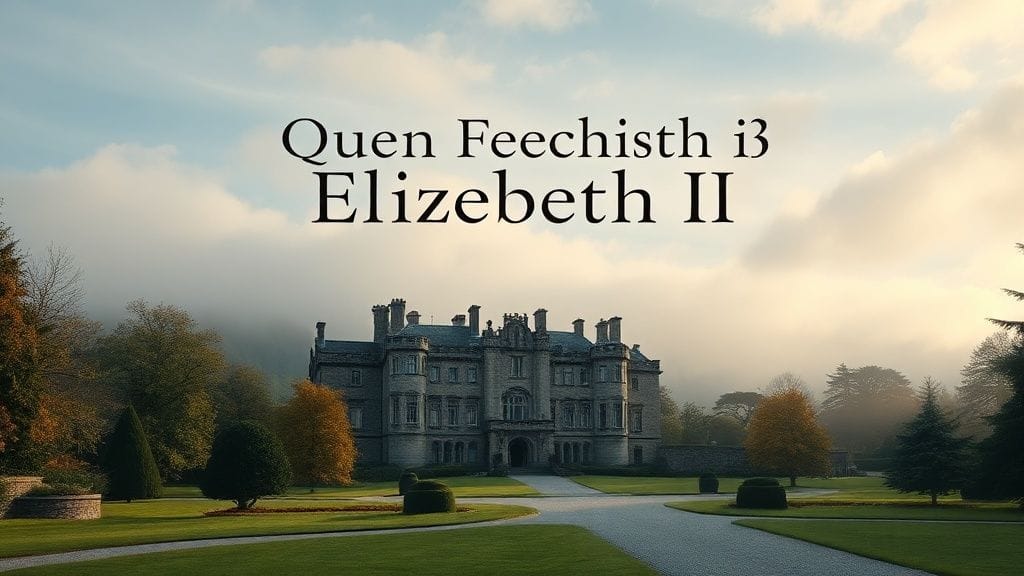
- Balmoral Castle: The Last Sanctuary
- The Weight of the Crown: Elizabeth II’s Legacy by 2022
- The Final Hours: Silent Witnesses and Fading Light
- The News Spreads: A World in Mourning
- The Role of the Palace: Protocols and Poise
- A Family’s Grief: Behind Closed Doors at Balmoral
- The Global Reaction: From Royals to Commoners
- Media Canvas: How the Story Unfolded Across Continents
- Scotland’s Emotional Landscape: The Balmoral Connection
- The Dynamics of Monarchy: Continuity and Change
- Public Gatherings: London and Beyond in Mourning
- Political Ripples: The Commonwealth and the UK
- Rituals of Farewell: The Days That Followed
- The Emergence of King Charles III: From Heir to Monarch
- Cultural Reflections: Songs, Art, and Public Memory
- The Historical Significance: Queen Elizabeth II’s Place in Time
- Personal Stories: Individuals Touched by the Queen’s Passing
- Lessons on Leadership and Service
- The Monarch’s Enduring Symbolism in the 21st Century
- Conclusion: A Crown Passed, A Nation United
- FAQs: Understanding Elizabeth II’s Death and Its Impact
- External Resource
- Internal Link
1. A Nation Pauses: The Afternoon of September 8, 2022
The Scottish Highlands held an unusual stillness on a crisp autumn afternoon—one that would soon crystallize into a moment forever etched in history. At Balmoral Castle, the Queen’s beloved estate where she had spent countless summers, there was a solemn hush as word quietly began to ripple through palace walls. It was 3:10 pm local time when the Guard at the gates was told the news that had been anticipated yet dreaded: Her Majesty Queen Elizabeth II was no more.
As the sun dipped behind rugged hills, casting long shadows over the sprawling estate, an empire’s matriarch took her final breath. The death of Elizabeth II on September 8, 2022, was not just the end of a reign; it was the closing of a chapter that spanned over seventy years—a story of resilience, transformation, and continuity amid ceaseless global change.
2. Balmoral Castle: The Last Sanctuary
Balmoral wasn’t merely a summer residence; it was a sacred refuge where Queen Elizabeth II could shed the burdens of monarchy and find solace in the Scottish countryside. Nestled amid heather-covered hills and ancient forests, the castle had witnessed many moments of joy and sorrow. It was there that, on that momentous day, she was surrounded by family, bearing witness to the end of an era far from the prying gaze of the public eye.
In the dimmed light of the drawing rooms, with the crackle of a fireplace hinting at comfort, the final hours at Balmoral were marked by a profound stillness. Those present—her children, grandchildren, and close aides—grappled with the weight of impending loss, even as the Queen herself maintained the dignity so characteristic of her decades on the throne.
3. The Weight of the Crown: Elizabeth II’s Legacy by 2022
By the time September 2022 arrived, Elizabeth II had become an enduring symbol, an emblem of stability in a world endlessly spinning on the axes of crisis, change, and challenge. Her reign, commencing in 1952 after the death of her father, King George VI, outlasted eight British prime ministers, witnessed the Cold War thaw and freeze anew, and saw the United Kingdom’s transformation from a global empire into a modern constitutional monarchy.
With over seventy years of service, she embodied a role that transcended politics—the “Queen” in the public imagination was part guardian, part symbol, both immutable and human. Beneath the regal exterior lay a woman who had endured personal tragedies, public scrutiny, and the relentless demands of duty. Her legacy was not just about monarchy but about the notion of service itself.
4. The Final Hours: Silent Witnesses and Fading Light
On that last day, those in Balmoral moved with quiet reverence. The Queen had reportedly retired to bed early, a departure from her usual routine, and aides watched closely as time slipped by. It was clear to some that the end was near. The palace quietly prepared for what would come next.
At 3:10 pm BST, the announcement was made: “The Queen died peacefully at Balmoral this afternoon.” The air seemed to thicken with both sorrow and gravity. Outside, the wind whispered through ancient trees; inside, hearts bore the crushing weight of farewell.
5. The News Spreads: A World in Mourning
Within minutes, the news spread with unprecedented speed. Social media feeds flooded with disbelief; news outlets scrambled to verify and report. Broadcasters descended upon Buckingham Palace, which was soon swarmed by crowds of onlookers clutching flowers, flags, and photographs. For many, Elizabeth II had been a lifelong constant, a fixture who had marked time itself.
Across continents and oceans—from Canada to Australia, from the Caribbean to the Indian subcontinent—leaders and citizens alike expressed their condolences. The queen’s death was mourned not only as a British loss but as a monumental moment for the Commonwealth and an emblematic passing in the world’s political and cultural history.
6. The Role of the Palace: Protocols and Poise
Behind the public mourning was a carefully orchestrated sequence of events—Operation London Bridge. This meticulously planned procedure, long rehearsed within the palace walls, dictated every step from the announcement of the Queen’s death to her state funeral. It was a choreography of sorrow and ceremony, blending centuries-old tradition with the realities of modern governance.
The palace’s spokesperson delivered statements with solemn composure. Security and staff moved with purpose to prepare the royal residences. Flags were lowered to half-mast. Despite the somber mood, there was a calm precision, a reflection of the discipline that had characterized Elizabeth’s reign.
7. A Family’s Grief: Behind Closed Doors at Balmoral
Away from the cameras and public gaze, the Royal Family gathered in Balmoral’s private rooms. Faces etched with grief, they shared moments of intimacy and solace—parents comforting children, siblings holding hands. The monarch’s passing reshaped family dynamics instantly, catapulting Prince Charles into his new role as King.
Queen Elizabeth II was not simply a figurehead but a mother, grandmother, and great-grandmother. The toll of her loss was deeply personal, a reminder that beneath the ancient jewels and formal ceremonies were lives intertwined with love and loss.
8. The Global Reaction: From Royals to Commoners
From lodged palaces in Asia to bustling squares in Africa, from quiet villages in the Pacific to grand capitals in Europe, Elizabeth II’s death reverberated. World leaders broadcast statements steeped in admiration and respect; ordinary citizens lit candles and held vigils. The queen’s decades of diplomatic tours, personal visits, and symbolic gestures had touched nearly every corner of the globe.
As millions mourned, questions surfaced about the future of the monarchy, the role of the Commonwealth, and the nature of modern leadership. Yet in these turbulent times, Elizabeth’s passing underscored a remarkable unity, a shared moment of reflection on leadership and legacy.
9. Media Canvas: How the Story Unfolded Across Continents
Newsrooms transformed into epicenters of historical narration, balancing rapid updates with in-depth analysis. Documentaries aired, biographical features were re-broadcast, and interviews with experts filled the airwaves. Journalists pieced together a life story that spanned the technological leaps of the 20th and 21st centuries—from black-and-white television broadcasts of her coronation to viral social media tributes.
This complex media mosaic framed Elizabeth II not just as a British monarch but as a global icon whose life chronicled the story of a changing world.
10. Scotland’s Emotional Landscape: The Balmoral Connection
For Scots, Balmoral represented more than a royal residence—it was a symbol of the queen’s affection for Scotland itself. Many locals spoke of her frequent visits, an annual return to the land of tartan and castles. The sense of loss here was intimate, grounded in personal memory and regional identity.
Scotland’s political landscape, rife with debates on independence and identity, was momentarily unified in a collective farewell. The queen’s relationship with Scotland, often marked by respect and affection, became a poignant part of the national mourning.
11. The Dynamics of Monarchy: Continuity and Change
Elizabeth II’s death marked a significant transition in the monarchy’s narrative. Her reign epitomized stability amidst change, but with Charles’s accession, a new chapter began—fraught with questions about relevance, modernization, and public sentiment.
The monarchy, long adapted as a constitutional fixture, faced fresh challenges: evolving social attitudes, debates about colonial legacies within the Commonwealth, and changing expectations around transparency and accountability. The passing of Elizabeth was simultaneously an end and a beginning.
12. Public Gatherings: London and Beyond in Mourning
The days following the announcement witnessed an outpouring of public grief. Trafalgar Square, Westminster Abbey, and thousands of towns saw impromptu memorials. Flowers, letters, and personal keepsakes piled near royal residences, echoing moments from past national tragedies.
These gatherings were not mere displays of celebrity mourning but complex social rituals, blending emotion, history, and collective identity. People found solace in shared grief, honoring the monarch while reflecting on their own experiences of loss.
13. Political Ripples: The Commonwealth and the UK
Elizabeth II had long been the symbolic head of the Commonwealth—a voluntary association of 54 countries, many formerly under British rule. Her death raised questions about the future cohesion of this group, some of whose members are reassessing their relationship with the British monarchy.
Domestically, debates on the monarchy’s constitutional role re-emerged, with republican voices growing louder. Yet for many, the queen remained a unifying figure amid political turmoil, a symbol capable of transcending party lines.
14. Rituals of Farewell: The Days That Followed
Following the announcement, a sequence of meticulously choreographed rituals unfolded. The royal standard was lowered, official mourning was declared, and flags flew at half-mast across the Commonwealth.
Public lying-in-state was announced for London’s Westminster Hall, allowing millions to pay respects. Parliamentary sessions were adjourned; churches rang bells in mourning. These rituals combined solemnity with accessibility, enabling a shared national catharsis.
15. The Emergence of King Charles III: From Heir to Monarch
With the crown passing to Charles Philip Arthur George, the world watched the transformation of heir apparent into reigning monarch. Charles’s new role would carry the immense legacy of his mother while confronting his own unique identity and challenges.
His first speeches and public appearances were laden with symbolism and the weight of expectation. Unlike his mother, whose reign had been shaped by circumstance, Charles stepped forward defining what a 21st-century monarchy might look like.
16. Cultural Reflections: Songs, Art, and Public Memory
Artists, musicians, and writers contributed profound tributes. In songs that echoed through streets and galleries, the queen was recalled as a figure both majestic and approachable. Poets grappled with themes of time, mortality, and duty.
Cultural institutions organized exhibitions exploring Elizabeth’s impact on art and society. The queen, once a living icon, was quickly becoming an enduring symbol imprinted on collective memory.
17. The Historical Significance: Queen Elizabeth II’s Place in Time
Few figures have inhabited history’s stage as prominently and for as long as Queen Elizabeth II. Her life intersected with pivotal events—the end of empire, the digital revolution, global conflicts, and the reshaping of social norms.
She personified the complexities of monarchy in the modern age: tradition entwined with adaptation, power tempered by constraint, and permanence challenged by flux. Her death invited historians and citizens alike to reevaluate the institution she embodied and the epoch she defined.
18. Personal Stories: Individuals Touched by the Queen’s Passing
Beyond the pomp, the queen’s passing reverberated deeply in private lives. Stories emerged of individuals whose lives were changed by her interventions—children granted scholarships, citizens inspired by her broadcasts during times of war and crisis, those touched by simple acts of kindness.
Such narratives humanized a figure often viewed through the lens of statecraft, reminding the world of a woman who, for all her majesty, shared the vulnerability of mortality.
19. Lessons on Leadership and Service
Elizabeth II’s reign offered lessons in steadfastness, adaptability, and humility. Her approach to leadership—listening more than speaking, embodying duty over desire—challenged modern notions of power.
In an era often dominated by rapid change and fluctuating loyalties, her life was a testament to endurance and the potential of symbolic leadership to unify and inspire.
20. The Monarch’s Enduring Symbolism in the 21st Century
Even as debates about monarchy’s relevance continue, the symbolic power of the crown endures. The death of Elizabeth II was a profound reminder that monarchy can act as a vessel for national identity, memory, and continuity.
In a fragmented world, the ritual and symbolism surrounding the crown speak to a deep human need—to anchor ourselves amid uncertainty through shared history and tradition.
21. Conclusion: A Crown Passed, A Nation United
The death of Queen Elizabeth II at Balmoral on September 8, 2022, was far more than the passing of a monarch; it was a moment of collective reflection on identity, history, and the nature of leadership. It was a reminder that, no matter how vast the institution, behind the throne sits a human story—a story of duty, love, grief, and resilience.
Her legacy rings across generations, casting a long shadow over the world she long served. As the crown passed and King Charles III ascended, a nation paused—grateful, mournful, hopeful. It was an ending, yes, but also the beginning of a new chapter in the endless story of monarchy and nationhood.
FAQs
1. What led to Queen Elizabeth II being at Balmoral on September 8, 2022?
Balmoral Castle was one of the Queen’s favored residences, especially during late summer and early autumn. It offered privacy and tranquility away from London, making it her sanctuary where she often spent holidays and important personal moments.
2. How was the news of her death communicated to the public?
The official announcement was made by Buckingham Palace, using carefully crafted language to confirm that “The Queen died peacefully at Balmoral this afternoon.” The announcement triggered worldwide media coverage and a formal period of mourning.
3. What is Operation London Bridge?
Operation London Bridge was the long-established protocol detailing all procedures following the Queen’s death. It included announcements, the mourning period, lying-in-state, funeral arrangements, and the transition of power to the new monarch.
4. How did the world react to Elizabeth II’s death?
The global reaction was one of deep mourning and respect. Leaders, citizens, and Commonwealth nations expressed condolences. Many held memorials, and cultural tributes proliferated worldwide.
5. What significance does Balmoral hold in the Queen’s life?
Balmoral was more than a residence; it symbolized peace, family, and connection to Scotland. The Queen cherished its landscape and privacy, often retreating there during difficult times.
6. How did the Queen’s death affect the Royal Family?
Her death reshaped family dynamics instantly, especially as Charles became King. The family retreated into private mourning before engaging with the public mourning rituals, revealing the personal impact behind public roles.
7. What future challenges does King Charles III face?
King Charles III inherits a throne surrounded by evolving public expectations, calls for modernization, and political complexities within the United Kingdom and the Commonwealth.
8. How is Queen Elizabeth II remembered culturally?
She is remembered through art, music, literature, and public memory as a powerful symbol of resilience, service, and continuity—reflecting a life interwoven with global history.