Table of Contents
- Introduction
- Birth and Royal Lineage
- A Noble Education
- Marriage to Ferdinand of Aragon
- The Unification of Spain
- The Reconquista and Fall of Granada
- Supporting Christopher Columbus
- The Spanish Inquisition
- Faith and Religious Policy
- Death and Succession
- Legacy and Controversy
- Fascinating Facts about Isabella I
- External Resource
- Internal Link
Introduction
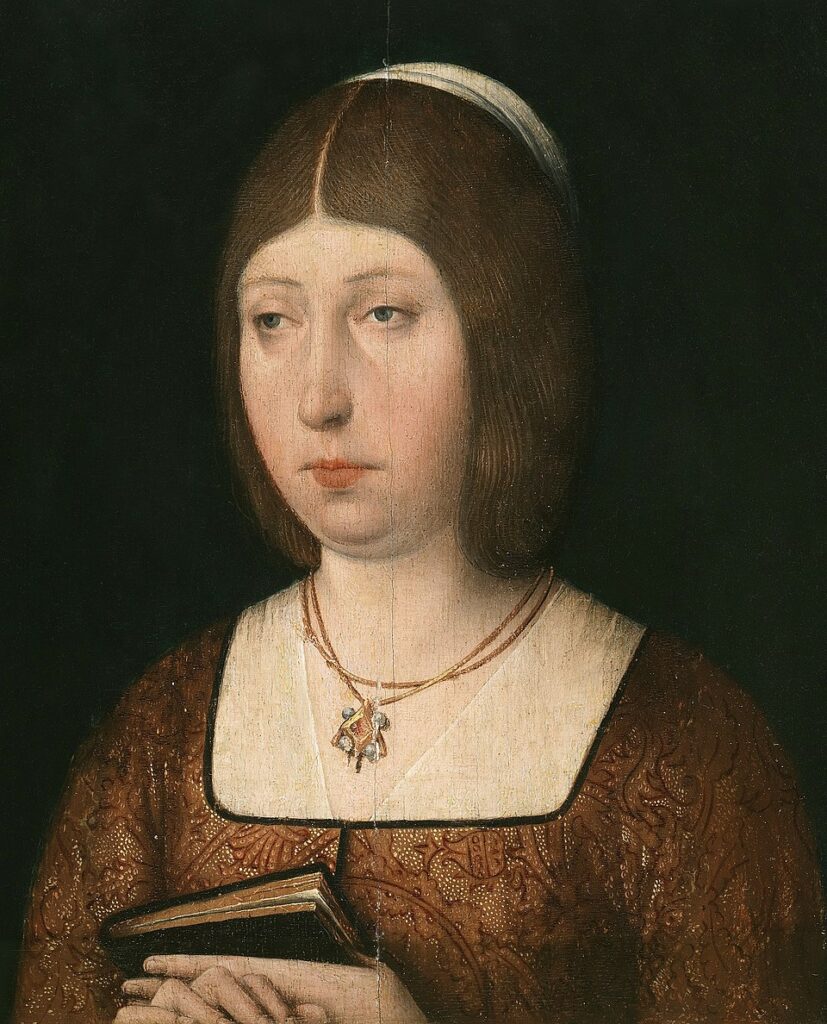
Queen Isabella I of Castile wasn’t born to rule—but she ruled like no other. Born on April 22, 1451, in Madrigal de las Altas Torres, Spain, Isabella grew from a quiet, devout princess into one of the most influential monarchs in world history. Her reign shaped the foundation of modern Spain, concluded centuries of Islamic rule in Iberia, and quite literally changed the map of the world by backing the voyage of a sailor named Christopher Columbus. She was a queen of devotion, strategy, and unshakable will—revered by some, reviled by others.
Birth and Royal Lineage
Isabella was the daughter of King John II of Castile and Isabella of Portugal. She was born into a court riddled with factionalism, political intrigue, and succession disputes. Her elder half-brother, Henry IV, was king, but his reign was weak and deeply contested.
From a young age, Isabella witnessed firsthand the fragile state of the Castilian crown. Her early life was marked by instability—but it was also filled with lessons in politics, faith, and survival.
A Noble Education
Unlike many women of her time, Isabella received an exceptional education. She studied Latin, theology, history, and court etiquette. Deeply religious, she was drawn to spiritual contemplation and devout Catholic practice from an early age.
But don’t mistake her piety for passivity. Isabella understood power. She read about ancient rulers, studied politics, and was determined to rule not as a figurehead, but as a sovereign.
Marriage to Ferdinand of Aragon
In 1469, Isabella made a bold move—she married Ferdinand, heir to the throne of Aragon, without her half-brother Henry IV’s consent. Their union was politically explosive. It brought together two of the most powerful kingdoms on the Iberian Peninsula: Castile and Aragon.
Together, Isabella and Ferdinand would become known as the Catholic Monarchs—an inseparable duo who forged modern Spain through diplomacy, war, and faith.
The Unification of Spain
After Henry IV’s death in 1474, Isabella claimed the Castilian throne. Her claim was immediately contested, sparking a civil war with supporters of her niece, Juana la Beltraneja, who was backed by Portugal.
Isabella prevailed. Over the next two decades, she and Ferdinand worked to centralize royal authority, break noble power, and unify their kingdoms into a single, Catholic identity. Their combined reign marked the true beginning of Spain as a nation-state.
The Reconquista and Fall of Granada
One of Isabella’s most defining legacies was the completion of the Reconquista—the centuries-long campaign to drive Muslim rulers from Iberia.
The final stronghold, Granada, fell in 1492 after a prolonged siege. Isabella and Ferdinand entered the Alhambra in triumph, reclaiming the city for Christendom. Yet the terms of surrender, initially tolerant, were later reversed—ushering in forced conversions and expulsion.
Supporting Christopher Columbus
The same year Granada fell, Isabella made another historic decision: she agreed to finance an expedition proposed by an obscure Genoese navigator—Christopher Columbus.
Despite opposition from her advisors, Isabella believed in the potential of finding a westward route to Asia. Columbus’s voyage instead led to the “discovery” of the Americas. The consequences were massive: colonization, conquest, cultural exchange, and genocide.
Isabella’s support of this journey launched Spain’s global empire, extending her influence far beyond Europe.
The Spanish Inquisition
Not all of Isabella’s legacy is celebrated. In 1478, she and Ferdinand established the Spanish Inquisition to enforce Catholic orthodoxy and root out heresy.
It became a feared and brutal institution. Jews and Muslims were forced to convert or face exile. Those suspected of secretly practicing their faith were investigated, tortured, and in many cases, executed.
In 1492, Isabella issued the Alhambra Decree, expelling all Jews who refused conversion. Her desire for religious unity came at a staggering human cost.
Faith and Religious Policy
Isabella wasn’t motivated by greed or hatred—at least not in her eyes. She truly believed religious unity was essential for a stable kingdom. Her policies were driven by a profound, almost mystical Catholic faith.
She founded convents, promoted clergy reform, and ensured the Bible and church law guided her decisions. But in her fervor, she conflated religious purity with national strength—and millions paid the price.
Death and Succession
Isabella died on November 26, 1504, at 53 years old. Her death plunged Spain into political uncertainty. Her daughter Joanna inherited the crown—but Joanna’s mental instability led to her confinement, and eventually, the throne passed to her grandson, Charles V, who would rule a global empire.
In her will, Isabella expressed regret for some actions—but remained unwavering in her faith. She asked to be buried modestly, in a simple Franciscan habit.
Legacy and Controversy
Isabella I remains a towering, complex figure in global history. Her reign gave birth to the Spanish Empire, transformed Europe’s political landscape, and reshaped entire continents. She is celebrated for her intelligence, leadership, and tenacity.
But she is also remembered for religious intolerance, colonization, and expulsion policies that devastated communities. For some, she is a saint. For others, a symbol of imperial cruelty.
In 1974, the Catholic Church declared her a “Servant of God”—the first step toward sainthood. Her canonization remains controversial and incomplete.
Fascinating Facts about Isabella I
- She never allowed herself to be addressed as “Queen Consort”—she insisted on equal royal authority.
- Legend says she sold her jewels to fund Columbus’s voyage—a romantic tale, though historians debate its accuracy.
- She spoke Latin fluently and personally managed foreign correspondence.
- She traveled with the army and gave battlefield speeches.
- Her marriage contract with Ferdinand included a clause guaranteeing her sovereign rights, even after his ascension.
External Resource
🌐 Wikipedia – Isabella I of Castile