Table of Contents
- The Last Day of a Monarch: January 22, 1901
- Early Morning Shadows Over Osborne House
- Queen Victoria’s Declining Health: The Final Months
- The Empress of India’s Long Reign Comes to an End
- The Significance of Osborne House: Home, Refuge, and Royal Haven
- The Royal Family in Quiet Vigil: Intimate Moments of Grief
- The Impact of Victoria’s Death on the British Empire
- Public Mourning and National Grief: A Country in Tears
- The Transition of Power: From Victoria to Edward VII
- The Technological and Political Context of 1901 Britain
- The Legacy of the Queen: Victorian Values and Modern Britain
- The Isle of Wight as a Royal Landmark and Mausoleum
- Portraits, Obituaries, and Memory: How the World Remembered Victoria
- The Death Ceremony and State Funeral Traditions Unfold
- Queen Victoria’s Death Seen Through Contemporary Accounts
- Cultural Reflections: Literature, Art, and Music in Mourning
- Empire in Flux: How Victoria’s Passing Signaled a New Era
- Personal Letters and Diaries: The Human Side of the Royal Household
- How the Press Covered the Event: From Sombre to Sensational
- The Evolution of Royal Mourning Practices Since Victoria
- Commemorations and Monuments Arising from 1901
- Queen Victoria’s Death in the Context of British History
- Lessons from the End of the Victorian Age
- Conclusion: A World Changed by the Passing of the Queen
- FAQs on Queen Victoria’s Death and its Impact
- External Resource
- Internal Link
The Last Day of a Monarch: January 22, 1901
The winter morning of January 22, 1901, dawned cold and gray over the Isle of Wight. At Osborne House, the beloved retreat of Queen Victoria, a silence more profound than the biting sea air pervaded the grand chambers. Within the walls that had been witness to decades of imperial strategy, domestic joys and grievous sorrows, the slow fading of a formidable figure was reaching its inevitable finale.
Queen Victoria, the longest-reigning monarch of Britain at the time, was dying—not in the chaos of battlefields nor surrounded by the pomp of public decree, but in the quiet solitude of a private royal home where family gathered, hearts heavy with anticipation. The air crackled with the weight of a century’s close: the Victorian era, with all its moral rigor, imperial expansion, and social upheaval, was drawing its final breath alongside its sovereign.
In this moment, history held its breath. The Empress of India was about to pass from life, and with her, an era.
Early Morning Shadows Over Osborne House
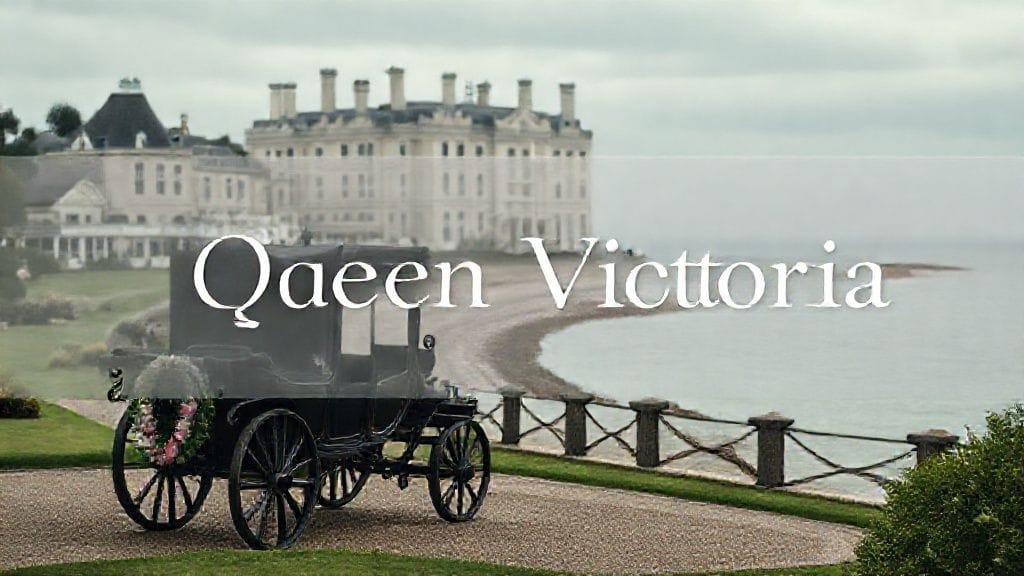
Osborne House, perched on the south coast of England, had long been more than just a royal residence; it was the sanctuary of a woman who defined an age. This was where Queen Victoria fled the relentless demands of court life, where she mourned Prince Albert, and where her children grew under her vigilant eyes.
On that fateful January morning, a thin light filtered through the frosted glass of her bedroom as the queen lay silent, her breaths shallow and uneven. Around her, the attendants whispered prayers and hopes, aware this day might mark history’s starkest turning point. Her son and heir, the future King Edward VII, was summoned urgently, crossing the sea that separated the mainland from the island, to be at her side.
The family who had once surrounded her in joy was now cloaked in shadows of loss, ready to witness the last chapter of an epoch-defining life.
Queen Victoria’s Declining Health: The Final Months
After nearly 64 years on the throne, Victoria’s body was failing. The queen, once robust and commanding, had been afflicted by recurring illnesses since the death of Prince Albert in 1861, her grief never quite abated. In the final year of her life, she had grown increasingly frail, burdened by chronic bronchitis and failing eyesight.
Doctors attending her during the winter of 1900-1901 noted her alarming deterioration. Episodes of coughing fits, exhaustion, and fever signaled that the monarch's vitality was dangerously depleted. Yet, Victoria’s indomitable spirit shone through her physical decline; she remained composed, even as those closest to her prepared for the end.
Her diary entries from these last months reveal a queen conscious of her mortality but attuned to her role as a symbol of continuity for the empire. “I feel my strength slipping away,” she wrote softly, “yet my heart remains with my people.”
The Empress of India’s Long Reign Comes to an End
Victoria’s reign began in 1837, when she was just 18 years old, and transformed Britain from a nation still wrestling with its own industrial revolution into a global superpower. Through wars, reforms, and revolutions abroad and at home, her presence was a symbol of steadiness and imperial destiny.
Now, as the 20th century dawned, the “grandmother of Europe” was preparing to join history’s pantheon. Her death was both personal—the loss of a mother, grandmother, sovereign—and deeply political, precipitating a transfer of power that would shape Britain’s future profoundly.
The empire she had ruled expanded to its greatest extent under her guidance and vision. With titles such as “Empress of India,” adopted in 1876, her identity was inextricably linked to a British world order dependent on territories and peoples across continents.
The Significance of Osborne House: Home, Refuge, and Royal Haven
Osborne House was more than a mere backdrop to Victoria’s last moments; it was emblematic of her reign’s quieter side. Commissioned by Prince Albert in the style of an Italianate palazzo, Osborne was a personal project that represented a break from regal formality.
Its rooms contained family photographs, mementos of happier times, and the echoes of laughter—reminders that Victoria was as much a mother and widow as a sovereign. It was here that she had retreated during times of state crises and personal grief, shaping her private life in the shadow of imperial power.
The house bore witness to her humanity—a woman grieving a prince, a mother mourning children—and now a monarch meeting her own mortality with tranquil dignity.
The Royal Family in Quiet Vigil: Intimate Moments of Grief
As the queen’s final hours stretched out, the royal family gathered under Osborne’s austere roofs. Edward, the Prince of Wales, paced with a mixture of solemn duty and personal sorrow. Princess Beatrice, Victoria’s youngest daughter and constant companion, was a pillar of silent strength.
These intimate scenes, documented through letters and memoirs, reveal a family bound by both affection and the heavy mantle of monarchy. It is recorded that the queen’s last words were faint yet full of love—expressions aimed at those closest to her, even as the light in her eyes dimmed.
The gravity of loss was interwoven with the necessity of transition; the family knew that with the queen’s passing, not only a mother but a national institution was being irrevocably altered.
The Impact of Victoria’s Death on the British Empire
Victoria’s death sent shockwaves not only through the United Kingdom but also across the imperial realms scattered across the globe. She had reigned during times when the British flag flew from Africa to Asia, and her face adorned coinage, stamps, and postcards worldwide.
News of her passing was disseminated rapidly by telegraph, reaching distant colonies and protectorates: Canada, Australia, India, South Africa, and beyond. For many, her death symbolized the end of a protective, unifying figure and the dawn of questions about the empire’s future direction.
In India, where she had been proclaimed Empress, a wave of mourning enveloped officials and natives alike, demonstrating the quasi-divine reverence she had accrued in far-flung corners of the empire.
Public Mourning and National Grief: A Country in Tears
In Britain itself, the reaction was immediate and intense. Streets emptied as shops closed, flags flew at half-mast, and newspapers carried front-page obituaries overflowing with reverence. Mourners thronged to royal palaces, leaving flowers and candles as tokens of their farewell.
Victoria had been not just a figurehead but a national symbol—steadfast, moralistic, and embodying an age marked by progress and stability. Her visage was familiar from portraits and photographs, her voice immortalized through recordings and proclamations.
The collective sorrow captured a nation’s awakening awareness that it was stepping out of an era defined by Victorian values into an uncertain modern world.
The Transition of Power: From Victoria to Edward VII
With Victoria’s death, a new monarch ascended: her son Edward VII, aged 59, who would bring a markedly different tone to the British crown. Known for his flamboyant personality and modernist leanings, Edward’s accession signified a subtle but profound shift in royal style and imperial policy.
This transfer of power was smooth yet poignant—a new generation inheriting an empire and a legacy. Edward’s coronation would not come until a year later, but the period was charged with both anticipation and uncertainty.
Victoria’s caution and reticence gave way to Edward’s charm and openness, reflecting the evolving culture of Britain itself.
The Technological and Political Context of 1901 Britain
The year 1901 marked a cusp between old and new. Britain was the world’s foremost industrial and naval power, yet faced challenges: social reform movements, political shifts towards constitutional democracy, and pressures from rising international rivals.
Technological advances, such as the expansion of the telegraph and railways, meant news of the queen’s death spread instantly, a novelty compared to previous generations. Politically, the Conservative government under Lord Salisbury maintained imperial dominance, but beneath the surface, republicanism and labor activism hinted at changes ahead.
Victoria’s death symbolically underscored this transition from 19th-century certainties to 20th-century complexities.
The Legacy of the Queen: Victorian Values and Modern Britain
Victoria’s lengthy reign had instilled a set of values—duty, morality, family, empire—that came to define British identity in many eyes. Yet these ideals were both celebrated and contested in her time and beyond.
In death, Victoria became mythologized as the embodiment of an age of empire and industrial progress, but also of social inequalities and imperial conflicts. Her legacy would shape debates on monarchy’s role in a modernizing society.
Her cautious approach to politics, personal fidelity, and symbolic authority set precedents for future sovereigns navigating constitutional constraints and popular expectations.
The Isle of Wight as a Royal Landmark and Mausoleum
Osborne House and the Isle of Wight had long been inseparable from Victoria’s personal and political identity. Following her death, the island became a place of pilgrimage and reflection.
Victoria’s final resting place was ultimately chosen to be Frogmore Estate in Windsor, but Osborne’s significance remained intact. The local community, too, bore the mark of their royal connection, and the landscape itself held stories of reign, retreat, and farewell.
This geographic facet of Victoria’s end ties the intimate to the symbolic, making the Isle of Wight a memory-laden site of imperial history.
Portraits, Obituaries, and Memory: How the World Remembered Victoria
Internationally, Victoria’s death was mourned in capitals from Paris to Berlin, Washington to Delhi. Newspapers printed evocative portraits and extensive obituaries, highlighting her historic longevity and symbolic importance.
In art and photography, her image was revisited and reinterpreted—sometimes solemn, sometimes idealized—as the world sought to make sense of the passing of a woman who had watched over an empire at its zenith.
Her death inspired not only grief but reflection on monarchy’s place in a modern society and the fragile nature of imperial power.
The Death Ceremony and State Funeral Traditions Unfold
The events following Victoria’s death adhered to strict protocols developed over centuries, blending solemnity with spectacle. The queen’s body lay in state for public viewing, allowing citizens from all walks of life to pay their respects.
The state funeral, held weeks later, was a grand affair with military honors, religious solemnity, and procession through London’s streets. These rituals reinforced monarchy’s continuity even in times of loss.
Historic details of the arrangements reveal a balance between personal mourning and public duty—a pattern that shaped royal funerals for generations.
Queen Victoria’s Death Seen Through Contemporary Accounts
Diaries, letters, and press reports from those present offer intimate and varied portraits of the queen’s final hours. From the somber expressions of servants to the contemplations of court officials, the accounts bear witness to a complex mixture of reverence, sadness, and acceptance.
One nurse wrote of Victoria’s last breath as “quiet and peaceful, like the drawing down of a curtain on a long and magnificent play.” These vivid recollections provide texture beyond the formal history, humanizing a figure sometime seen only through the lens of power.
Cultural Reflections: Literature, Art, and Music in Mourning
Victoria’s death inspired a wave of cultural expression, from poetry lamenting the lost queen to commemorative paintings depicting her reign’s grandeur. Chapels and memorials echoed with hymns composed in her honor.
Victorian-era sensibilities about death and mourning rituals found wide expression, reinforcing social norms yet also allowing personal grief to become collective catharsis.
This period’s cultural output reflects how art became a means of processing national trauma and historical change.
Empire in Flux: How Victoria’s Passing Signaled a New Era
In the aftermath of Victoria’s death, the British Empire entered an era marked by new challenges: nationalism in colonies, geopolitical rivalries, and changing economic conditions.
Her successors could not assume that imperial unity would persist unchanged. The queen’s long reign had bridged eras, but global history marched forward relentlessly.
The symbolic end of Victoria’s reign underscored that empires, like individuals, are mortal and must adapt or fade.
Personal Letters and Diaries: The Human Side of the Royal Household
Private correspondence conveys the personal toll of the queen’s death on family and staff. Princess Beatrice’s poignant letters recount moments of intimacy and grief. Court physicians documented the clinical details mixed with emotional strain.
These documents reveal a household as human and vulnerable as any, holding onto memories even as history demanded public composure.
The juxtaposition of private sorrow and public ceremony deepens our understanding of monarchy’s dual realities.
How the Press Covered the Event: From Sombre to Sensational
Newspapers played a crucial role in shaping public perception. The Times led with dignified editorials, while popular papers oscillated between respectful mourning and sensationalist headlines.
Photographs of the queen appeared alongside stories of mourning crowds, intertwining fact and emotion. Editorials debated the future of monarchy in a society increasingly influenced by mass media.
This coverage set precedents for how royal deaths would be reported for decades.
The Evolution of Royal Mourning Practices Since Victoria
Queen Victoria’s death consolidated many rituals and customs around royal mourning, some of which endure. Black clothing, half-masting flags, official statements, and public processions became standard.
Her influence extends to the ceremonial language surrounding death in Britain’s monarchy and beyond.
Comparing Victorian-era customs to those of later royal funerals highlights the evolving balance between tradition and modernity.
Commemorations and Monuments Arising from 1901
In the years following her death, numerous memorials were established—from statues in major cities to plaques in colonial territories. The Victoria Memorial in London, near Buckingham Palace, stands as a grand tribute.
Educational institutions, public squares, and even geographical features in colonies were renamed to honor her memory, infusing the cultural landscape with Victorian symbolism.
These monuments continue to provoke reflection on imperial history and identity.
Queen Victoria’s Death in the Context of British History
The queen’s passing marks a pivotal chapter—the closing of the Victorian Age and the beginning of the Edwardian era. It signals the transition from 19th-century monarchic solidity to 20th-century modern challenges including world wars, social upheavals, and the gradual decolonization of the empire.
Understanding this moment enriches perspectives on Britain’s evolving place in the world and the monarchy’s adaptive strategies.
Lessons from the End of the Victorian Age
Victoria’s death teaches us about the interplay of personal loss and public change, the limits of monarchy’s power, and the cyclical nature of history. Her era emphasized duty and empire with unyielding resolve, but her passing encouraged reflection on progress, reform, and emerging global realities.
Through this lens, 1901 becomes not just a date, but a metaphor for the complexities of change.
Conclusion
The death of Queen Victoria on January 22, 1901, at Osborne House on the Isle of Wight was far more than the passing of a monarch. It was the closing of a monumental chapter in world history—an epoch of empire, industrial growth, and social order steeped in the queen’s own steadfast will.
Yet, beneath the grandeur and the rituals, there was a human story of a woman grappling with age, loss, and legacy. As family and empire mourned, the world stood at the threshold of modernity, uncertainty seeping into the shifting shadows of a new century.
Victoria’s death reminds us that history is alive, breathed by those who both shape it and succumb to its tides. Her life and final moments at Osborne House resonate still, offering insight into the intimate burdens of power and the enduring mark one figure can leave on time itself.
FAQs
Q1: What caused Queen Victoria’s death?
A1: Queen Victoria died primarily from natural causes related to old age and chronic illnesses, including bronchitis and heart failure, exacerbated by general frailty in her 81st year.
Q2: Why was Osborne House significant to Queen Victoria?
A2: Osborne House was Victoria’s private retreat, gifted by Prince Albert, where she found solace away from court pressures. It was a family home, a place of mourning and happiness.
Q3: How did the public react to Queen Victoria’s death?
A3: The British public entered a period of profound mourning, marked by national rituals, newspaper obituaries, mourning attire, and public gatherings to honor the queen’s memory.
Q4: Who succeeded Queen Victoria and what changes did this bring?
A4: Her son, Edward VII, succeeded her, bringing a more modern and sociable style to the monarchy, signaling gradual shifts in royal culture and imperial policy.
Q5: How did Victoria’s death affect the British Empire?
A5: It marked the symbolic end of Victorian imperial consolidation, ushering in uncertainties amid rising nationalism and geopolitical competition in the 20th century.
Q6: What were some key mourning traditions established after her death?
A6: Practices like prolonged public mourning, half-masting flags, black attire, and elaborate state funerals became standardized through her death ceremonies.
Q7: How has Queen Victoria’s death been remembered in culture and history?
A7: Through monuments, literature, and ceremonies, Victoria’s death is remembered as a defining moment closing the Victorian Age and highlighting the monarch’s impact.
Q8: What role did the media play during the queen’s last days?
A8: The press disseminated constant updates, shaping public emotions and attitudes, blending respect with commercial urgency, setting a precedent for modern media coverage of royal events.