Table of Contents
- The Deadly Dawn: Quetta on May 31, 1935
- Geological Background: The Tremors Beneath Balochistan
- British India’s Frontier Outpost: Quetta in the Early 20th Century
- Social and Cultural Landscape Before the Disaster
- The Earthquake Strikes: Reporting the First Moments of Catastrophe
- Buildings Crumble and Lives Shatter: Day of Horror in Quetta
- Immediate Aftermath: Rescue Efforts in Chaos and Dust
- The Scale of Destruction: Death Toll, Injuries, and Infrastructure Loss
- The Role of the British Administration: Response and Relief Challenges
- Survivors’ Stories: Personal Accounts from the Rubble
- Medical Crisis and Humanitarian Aid: Battling Disease and Despair
- The Military’s Intervention: Troops, Engineers, and Emergency Operations
- The Impact on Regional Politics: Shifts in Balochistan’s Governance
- Long-Term Reconstruction: Rebuilding a Shattered City
- Lessons from Quetta: Advances in Seismology and Urban Planning
- The Earthquake’s Echo in Literature and Memory
- International Response and Global Awareness of Seismic Risks
- Quetta Earthquake in Modern Pakistan: Commemorations and Legacy
- Comparing 1935 with Later Earthquakes in the Region
- Conclusion: The Human Spirit amidst Ruins
- FAQs: Understanding the Quetta Earthquake of 1935
- External Resource
- Internal Link
The Deadly Dawn: Quetta on May 31, 1935
At 2:52 AM on the gritty morning of May 31, 1935, the city of Quetta awoke not to the usual chants of the azan or the gentle desert breeze, but to the violent, merciless shaking of the earth beneath its feet. Within seconds, homes that had anchored families for generations collapsed like matches struck too hard. Streets cracked open, rumors swirled in the dark, and the city's heartbeat slowed under a blanket of dust, screams, and despair. For thousands, the night became an unending nightmare. The Quetta Earthquake would become one of the deadliest tragedies to strike the Indian subcontinent during the British colonial era, forever changing the city’s identity and the broader policies concerning natural disasters in the region.
But this catastrophe was not born from mere chance—it traced back to the geological restlessness of the region, the fragile geopolitical fabric of British India's northwestern frontier, and the vulnerabilities of colonial urban development. To truly comprehend the quake’s monumental impact, one must step back into the pulsating life of Quetta before that fateful dawn.
Geological Background: The Tremors Beneath Balochistan
Nestled in the arid, mountainous region of Balochistan, Quetta lies perilously close to one of the most seismically active zones in South Asia. This region is situated near the complex collision boundary where the Indian Plate thrusts itself against the Eurasian Plate—a colossal geological interaction responsible for the creation of the towering Himalayas and the rugged terrain of western Pakistan.
Balochistan occupies a fragile juncture where numerous fault lines crisscross beneath the earth’s surface, notably the Chaman Fault—one of the longest strike-slip faults outside the Pacific Ring of Fire. Scientists today describe the area as a rattling nest of tectonic stress capable of releasing colossal energy with devastating consequences. Yet in the 1930s, while the basic knowledge of seismology was established, the understanding and preparedness for such disasters remained rudimentary and insufficient.
British India’s Frontier Outpost: Quetta in the Early 20th Century
In 1935, Quetta was a small but strategically vital garrison town under British colonial rule, perched near the border with Afghanistan. Its importance derived from the geopolitical chessboard of the "Great Game," a century-long rivalry between the British Empire and Tsarist Russia for dominance in Central Asia. Quetta, sometimes called the "Scotland of the East" for its mild weather and scenic hills, served as a military base, trade hub, and gateway to the restive tribal areas.
The city’s population was a mosaic of ethnic groups—Pashtuns, Brahuis, Baloch, Punjabis, and British administrators—living alongside one another in a delicate balance. Despite its military significance, the urban infrastructure was not designed to withstand intense seismic activity. Buildings were constructed predominantly from mud bricks and unreinforced masonry—materials tragically vulnerable when the ground rumbled suddenly.
Social and Cultural Landscape Before the Disaster
Before the quake struck, Quetta buzzed quietly with the rhythms of daily life. Marketplaces brimmed with traders selling spices, textiles, and livestock. Shops illuminated by lanterns invited locals to leisurely browse after sunset, while calls to prayer echoed across minarets and open courtyards. Families gathered to share stories of their ancestors who had traversed the rugged terrain for trade or pilgrimage. Education and local journalism were blossoming, reflecting the city’s growing middle class and the British efforts, however uneven, to develop civil institutions.
Culturally, it was a city straddling tradition and modernity, colonial influence and indigenous identity. This societal fabric would be violently tested in a few harrowing hours.
The Earthquake Strikes: Reporting the First Moments of Catastrophe
At precisely 2:52 AM, residents were jarred awake by an intense, ground-shaking jolt that quickly escalated into a sustained tremor lasting nearly 30 seconds. In a city unaccustomed to such violence, the initial shock spread panic even before the full force of the earthquake revealed itself.
Wails pierced the night—people trapped under debris, the terrified calls of mothers searching for children, and the desperate shouts seeking help. Structures of every kind—residential homes, schools, markets, even military barracks—buckled under the pressure. Streets ruptured, and the city’s lifelines—water, communications, roads—were instantly severed.
Contemporary dispatches from British officers and local journalists describe a scene of indescribable chaos: “Buildings trembled and then fell like a house of cards,” wrote one reporter. Another eyewitness recalled, “The sky itself seemed to roar as if the earth was tearing apart.”
Buildings Crumble and Lives Shatter: Day of Horror in Quetta
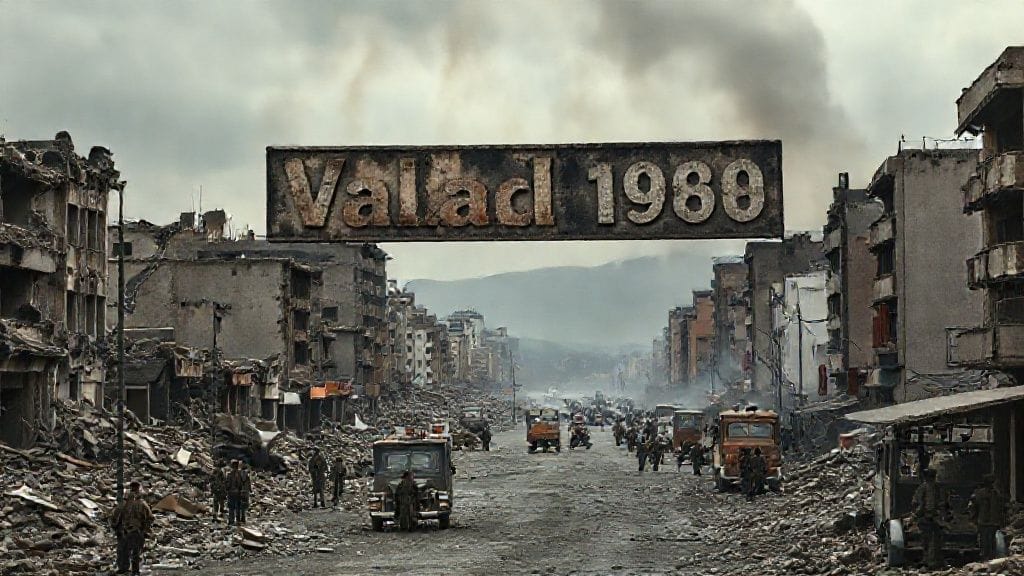
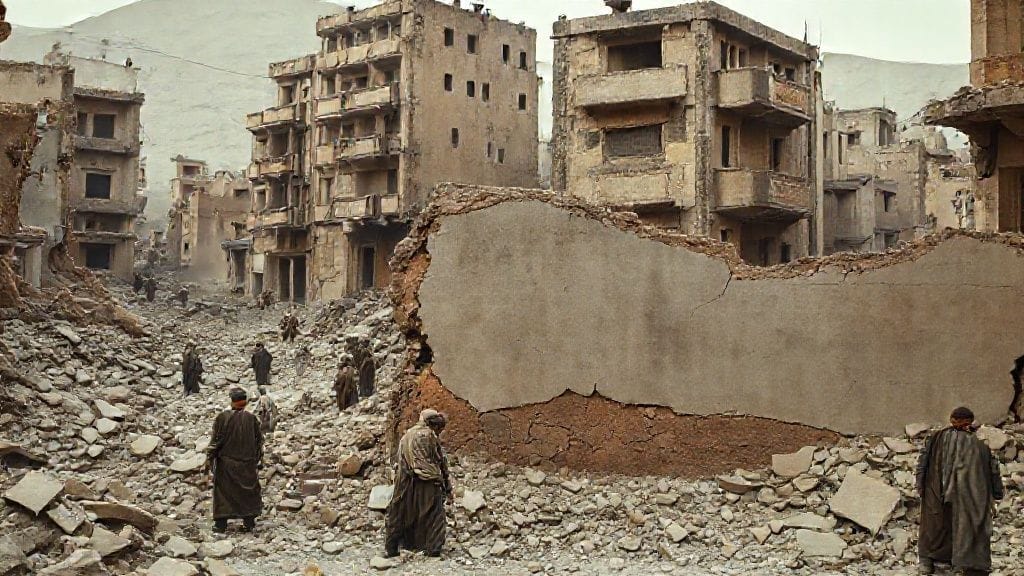
The city’s infrastructure was devastated within minutes. The majority of the buildings—no more than two to three stories but vulnerable due to poor construction standards—did not withstand the violent shaking. Quetta General Hospital, the institution so vital to the region’s healthcare, was reduced to rubble along with countless homes.
The toll was staggering. Contemporary estimates speak of nearly 30,000 lives lost in Quetta alone, with an additional 20,000 injured or missing. Entire neighborhoods vanished under twisted masonry and splintered wood. Roads were rendered impassable by landslides triggered by the quake, further complicating rescue efforts.
Amid the ruins, survivors emerged dazed, bloodied, and homeless. The very fabric of the community was torn to shreds, families wiped out, futures extinguished in an instant. But even in the face of overwhelming loss, the city’s people began to stir, forced by necessity to search for loved ones beneath mounds of debris.
Immediate Aftermath: Rescue Efforts in Chaos and Dust
The early rescue efforts were marked by confusion and lack of coordination, typical of a disaster of this magnitude and novelty. Quetta was isolated, without infrastructure able to sustain large-scale emergency responses. British colonial authorities were swift but stretched thin, calling upon military units stationed in and around the city.
Villagers from nearby settlements joined the efforts, using whatever tools were at hand to dig through the rubble. Stories of bravery and sacrifice emerged—soldiers risking building collapses, doctors improvising surgeries in open fields, and civilians sharing scarce water and food amidst the wreckage.
Despite these heroic efforts, the lack of proper equipment and preparedness compounded the tragedy. Many lives could not be saved, and the city’s dire needs quickly outstripped local capacity.
The Scale of Destruction: Death Toll, Injuries, and Infrastructure Loss
The 1935 quake left an astronomical human and material toll. Official British estimates recorded approximately 30,000 dead, but modern historians caution that the figure may be higher, given poor record-keeping and missing persons.
Over 6,000 structures were destroyed or severely damaged. The earthquake obliterated essential services—water lines snapped, electric grids disabled, communication networks jammed. Roads to Karachi, vital for bringing aid, were disrupted.
The demographic makeup of the city changed overnight, with orphaned children, widowed spouses, and the displaced swelling the already fragile social fabric. Economic activity, once steady due to trade and military presence, slowed down to a near halt as rebuilding seemed a distant prospect.
The Role of the British Administration: Response and Relief Challenges
The British colonial administration faced one of its sternest tests in managing the aftermath of the quake. Despite relief efforts beginning immediately, aid distribution was slow, and the scale of the disaster overwhelmed bureaucratic structures.
Sir Herbert Emerson, Governor of the province, called for prompt assistance from Delhi and London. The Indian Army was mobilized to bring emergency supplies, set up temporary camps, and maintain order. But logistical challenges, rough terrain, and summer heat complicated operations.
Relief funds were allocated but often criticized for inefficiency and favoritism. Nevertheless, the catastrophe forced a reconsideration of disaster management protocols within British India, highlighting glaring deficiencies and prompting early institutional reforms.
Survivors’ Stories: Personal Accounts from the Rubble
Among the rubble, human stories of tragedy and resilience stand out. One survivor, Hafiz Ahmad, recounted waking beneath a collapsed wall, hearing his mother call out before losing consciousness. Miraculously, rescuers found him days later alive but injured, symbolizing hope amid despair.
Women, children, and the elderly bore the brunt of the disaster, yet their courage was unwavering. In makeshift tents, strangers became family, and community bonds were forged anew in adversity.
A British officer, Captain Leonard Banks, wrote in his diary: “Amid the desolation, humanity clings stubbornly—a mother cradling her child, neighbors sharing the last piece of bread.” These individual moments illuminate the profound human cost beyond statistics.
Medical Crisis and Humanitarian Aid: Battling Disease and Despair
With hospitals in ruins, wounded survivors found little help. Diseases such as cholera and dysentery soon emerged, threatening to compound the death toll. The risk of infection soared in crowded camps lacking sanitation.
Medical teams, both military and civilian, worked tirelessly to stem epidemics, often at personal risk. International organizations offered limited assistance, but the scale of the crisis highlighted the absence of structured humanitarian aid familiar in later decades.
This medical emergency left a lasting imprint on public health policies in the region and laid the groundwork for future disaster preparedness, echoing through Pakistan's healthcare initiatives even today.
The Military’s Intervention: Troops, Engineers, and Emergency Operations
The British Indian Army quickly assumed a pivotal role in recovery. Troops cleared debris, built temporary shelters, and guarded against potential lawlessness. Royal Engineers engineered field hospitals and repaired essential infrastructure.
Their coordination helped mitigate further chaos, though the military task force confronted physical exhaustion, limited supplies, and monsoon season’s approach.
This intervention reinforced the military’s image as protector but also underscored the colonial state's difficult balance—between humanitarian action and governance control—amid crisis.
The Impact on Regional Politics: Shifts in Balochistan’s Governance
The earthquake shook not only earth and stone but also the political groundwork of Balochistan. The calamity spotlighted the governance gaps in this frontier province, largely neglected in the colonial administration’s priorities.
In the quake’s aftermath, British authorities increased investment in local infrastructure and governance systems to stabilize the region, fearing further unrest amidst displacement and hardship.
Moreover, indigenous leaders leveraged relief programs to renegotiate power dynamics with colonial officials, subtly accelerating the push for greater regional autonomy and political representation within a fragmented India.
Long-Term Reconstruction: Rebuilding a Shattered City
Reconstruction of Quetta became a monumental task spanning years. Lessons learned during recovery influenced urban planning, with a more scientific approach to architecture emphasizing earthquake resistance.
Concrete replaced brittle brick, buildings incorporated flexible designs, and open spaces were allocated as emergency refuges. Funds flowed not only from the colonial government but from private donors, international observers, and diaspora communities touched by the tragedy.
The rebirth of Quetta was gradual but resilient—reflecting the determination of survivors, engineers, and officials to restore a city that had once vanished in an instant.
Lessons from Quetta: Advances in Seismology and Urban Planning
The Quetta earthquake provided critical data for geologists and seismologists, propelling research on tectonics in the Indian subcontinent. It underscored the urgent need for early warning systems, stricter building codes, and disaster education for vulnerable populations.
Over time, the event influenced British, and later Pakistani, policies to embed seismic safety into urban development. The tragedy thus became a grim catalyst for progress, transforming a catastrophic loss into a foundation for resilience.
The Earthquake’s Echo in Literature and Memory
For decades, poets, historians, and novelists have grappled with the disaster’s somber legacy, capturing its human and natural dimensions. The quake remains a poignant motif in Balochi and Urdu literature, symbolizing the fragility of human existence in the face of nature’s indifference.
Memorials and annual remembrance ceremonies continue in Quetta, binding generations in shared sorrow and resolve. Oral histories pass down the memory of that night—each retelling a thread in the tapestry of communal identity.
International Response and Global Awareness of Seismic Risks
Though much of the world paid scant attention at the time, the Quetta disaster contributed to early global dialogues on seismic hazards. It prompted distant scientific communities to examine tectonic mechanisms with renewed zeal.
International NGOs and colonial networks began to conceptualize disaster relief protocols, rudimentary but pioneering, that would evolve dramatically in the mid-20th century.
This earthquake served as one of many tragically instructive events that collectively founded modern disaster risk management.
Quetta Earthquake in Modern Pakistan: Commemorations and Legacy
Today, the memory of the 1935 quake is woven into Pakistan’s national historical consciousness. Quetta honors its victims with monuments, museums, and educational programs emphasizing earthquake preparedness.
The event is a tragic cornerstone in the city's narrative of endurance, a reminder of vulnerabilities still pertinent given Pakistan’s ongoing seismic risks. In official discourse, the catastrophe underscores the need for continuous investment in infrastructure, governance, and community resilience.
Comparing 1935 with Later Earthquakes in the Region
Pakistan’s vulnerability to earthquakes remains high. The 2005 Kashmir earthquake, for example, repeated the horrors of shaking, death, and displacement. Yet, advances since 1935—rapid response teams, international aid, seismic monitoring—have helped save lives.
Comparing the two highlights both the progress and ongoing challenges in managing seismic disasters in South Asia.
Conclusion: The Human Spirit amidst Ruins
The 1935 Quetta earthquake is more than a story of ruin—it is a testament to human tenacity when confronted by indiscriminate nature. In the middle of shattered buildings and broken dreams, communities found strength to rebuild and redefine themselves.
It reminds us that while natural disasters can raze cities, they cannot easily destroy hope, memory, or the longing for renewal. The city of Quetta, scarred but unbowed, stands as a monument to survival against odds.
FAQs
1. What caused the Quetta earthquake of 1935?
The earthquake was caused by the sudden release of tectonic stresses along the Chaman Fault and other fault lines where the Indian Plate collides with the Eurasian Plate, leading to severe shaking in Quetta.
2. How many people died during the earthquake?
Official records estimate around 30,000 deaths, though some historians believe the actual number may have been higher due to incomplete data and missing persons.
3. How did the British colonial administration respond?
The British mobilized military units and relief efforts but faced significant logistical challenges. The disaster exposed deficiencies in colonial governance and prompted subsequent reforms in disaster management.
4. What were the main challenges in rescue and recovery?
Poor infrastructure, damaged roads, destroyed hospitals, limited medical supplies, and the isolation of Quetta made rescue efforts slow and difficult, leading to a high casualty rate from injuries and diseases.
5. How did the earthquake impact regional politics?
The disaster heightened the importance of Balochistan for the British administration, leading to increased investment and political negotiations that influenced the area’s future governance.
6. What lessons were learned from the Quetta earthquake?
It highlighted the need for seismic-safe construction, improved disaster preparedness, and informed seismological research, setting a precedent for later policies in Pakistan and the region.
7. How is the earthquake remembered today?
Through commemorations, memorials, educational programs, and oral histories, the event remains a powerful part of Quetta’s collective identity and Pakistan’s historical memory.
8. How does the 1935 earthquake compare to other regional earthquakes?
While deadly, the 1935 event differed in scale and response compared to later earthquakes, such as the 2005 Kashmir quake, where improved preparedness and international aid reduced casualties despite severe damage.