Table of Contents
- The Fateful Dawn: Witnessing Quizapu's Fury
- Chile’s Volcanic Stage: Setting the Scene for Disaster
- A Mountain's History: Quizapu Before the Explosion
- Geological Tensions: Understanding the Causes of the 1932 Eruption
- The Human Element: Communities Living in Quizapu’s Shadow
- February and March 1932: The Quiet Before the Storm
- April 10, 1932: The Eruption Unleashed
- Streams of Fire and Ash: The Nature of Quizapu’s Blast
- The Ash Fallout: Darkness Descends on Maule
- Immediate Response: How Locals Faced the Calamity
- Scientific Eyes on the Sky: Volcanologists Study the Phenomenon
- Devastation and Loss: Human, Economic, and Environmental Toll
- The Aftermath: Rescue, Recovery, and Resilience
- Quizapu in Global Context: Comparing Other Great Eruptions
- Conclusion: Lessons Carved in Lava and Ash
- FAQs: Understanding Quizapu’s 1932 Eruption
- External Resource
- Internal Link
The Fateful Dawn: Witnessing Quizapu's Fury
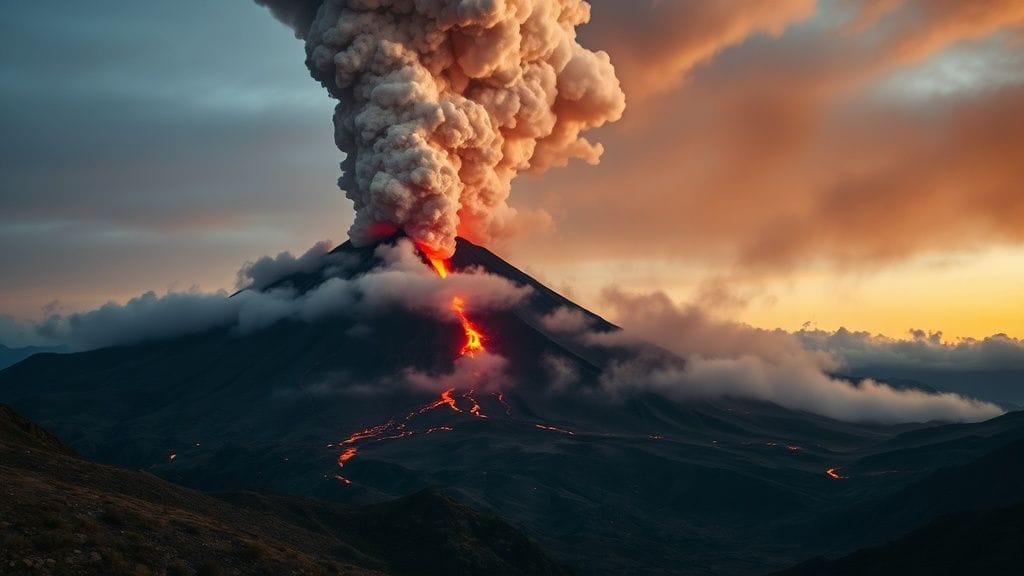
April 10th, 1932 began as any other for the scattered rural communities nestled in Chile’s Maule Region. But at dawn, an ominous grumble stirred deep within the Earth—Quizapu, the slumbering volcano of the Cerro Azul massif, was awakening. The sky darkened unnaturally as clouds of ash billowed upwards, swallowing the morning light in a choking veil of smoke. Within moments, the earth roared and spewed molten rivers, tearing through the fragile landscapes below. Villagers could hardly believe their eyes: the monstrous force they revered from afar had transformed into an unrelenting beast of fire and ash.
For hours, Quizapu unleashed one of the most violent eruptions of the early 20th century—nature’s brutal reminder of human vulnerability. The Maule region, proud and serene, was thrust into chaos, forever scarred by the 1932 event that would capture international scientific attention and reshape local histories. This was no ordinary volcanic outburst; this was a cataclysmic rebirth of a sleeping giant.
Chile’s Volcanic Stage: Setting the Scene for Disaster
Chile, a slender ribbon of land stretched along the volatile edge of the Pacific Ring of Fire, has always lived with the restless temper of its Earth. The Andes Mountains, with their jagged peaks and dormant giants, are volcanoes in waiting. Among these, Cerro Azul’s Quizapu crater occupies a special place. The region is a tapestry of fertile soils born from ancient eruptions and rugged wilderness, where human settlements cautiously thread their existence.
The Maule region’s volcanic portfolio is rich and complex. Its mountainous backdrop is marked by layers of geological history, evidence of tectonic collisions between the Nazca and South American Plates. This relentless subduction fuels magma chambers beneath, ready to shatter the surface signs of calm. Quizapu’s 1932 eruption was the product of this restless Earth, catalyzed by distinctive shifts deep below.
A Mountain's History: Quizapu Before the Explosion
Quizapu was far from an unknown volcano in 1932. Its past was marked by episodic eruptions, though none as intense as the forthcoming cataclysm. Local lore spoke of fiery breath, but scientific records traced smaller outbursts, sending ash and smoke in quieter gestures.
Its reputation as potentially dangerous was recorded in Chile’s early geological surveys during the late 19th and early 20th centuries. Quizapu was recognized for its history of phreatomagmatic and strombolian activity—intermittent playfulness between steam explosions and mild lava flows. But that was about to change dramatically. The volcano’s magma reservoir was swelling beneath its surface with forces yet fully understood in the era’s scientific circles.
Geological Tensions: Understanding the Causes of the 1932 Eruption
Geologists attribute Quizapu’s devastating eruption to multiple converging factors. The subduction of the Nazca Plate beneath the South American Plate generates immense pressure and melts mantle rocks, creating magma rich in volatile gases.
By 1932, magma beneath Quizapu had evolved into a highly gas-charged, viscous mixture. The delayed release of these gases coupled with rising magma created tension that Aymara and Mapuche oral histories had sometimes alluded to—precursors of eruption.
Recent studies confirm that the eruption fell into the “Plinian” category—massive explosive events characterized by tall convective clouds of ash and pumice. Gas pressure built until the crust fractured violently, releasing an eruption column that soared over 20 kilometers into the sky. This was a textbook demonstration of volatile degassing dynamics in stratovolcanoes.
The Human Element: Communities Living in Quizapu’s Shadow
Long before 1932, indigenous and settler communities lived with Quizapu’s threats, developing customs, rituals, and survival strategies centered on respect and vigilance. Farms dotted the valleys; small towns thrived off the fertile volcanic soils.
These communities, while familiar with Quizapu’s moods, harbored an unease. The volcano was more friend than foe, but respect for its caprice never faded. Stories of previous ash-fallouts and tremors shaped daily life. When rumblings increased in early 1932, many watched anxiously.
Yet, despite warnings, the eruption caught many unprepared. Communication and scientific infrastructure were limited, and the eruption’s scale was a cruel surprise to all.
February and March 1932: The Quiet Before the Storm
The first months of 1932 were deceptively calm. Seismic activity beneath Quizapu increased subtly, but sensing danger was difficult. Villagers reported minor tremors; some even reported brief steam plumes from the crater, but none expected a full-scale eruption.
In hindsight, these months bore the classic signs of volcanic unrest—magma ascent, increased gas emissions—but the remote location and lack of technology meant these warning signs went largely unnoticed by authorities.
Something primal was shifting underground. Quizapu was gathering its breath, preparing to write its most violent chapter.
April 10, 1932: The Eruption Unleashed
When Quizapu finally erupted on April 10, it announced itself with thunderous roars. The sky ignited as dark plumes thrust upwards, reaching heights extraordinary for the time. Volcanic bombs launched kilometers away, shaking the very bedrock.
Eyewitnesses described the scene with a mix of awe and horror—as if the heavens split open. Villagers ran for cover, and chickens scattered in frantic panic. The eruption was no mere explosion; it was a war between earth, air, and fire.
Streams of Fire and Ash: The Nature of Quizapu’s Blast
Quizapu’s eruption was primarily explosive, generating massive ash columns and pyroclastic flows that swept the slopes with deadly speed. Lava was less visible, but the violent fragmentation of magma created vast pumice falls.
Ash darkened skies for hundreds of kilometers, disrupting transportation and communication. The eruption’s intensity rivaled Mount Vesuvius’ historic blasts, with volumes of tephra expelled estimated in tens of millions of cubic meters.
Scientists classify the eruption as a sub-Plinian type, featuring continuous ash column formation with intermittent lava fountains—a terrifying spectacle that reshaped Cerro Azul’s summit crater.
The Ash Fallout: Darkness Descends on Maule
Ashfall was Quizapu’s cruel signature. Layer upon layer of fine, abrasive dust blanketed fields and homes. Crops were smothered; water supplies contaminated. The sun disappeared behind a gray mantle for days.
Animals suffered as pastures disappeared. Respiratory ailments appeared in humans, many of whom lacked any protective gear. The psychological toll was immense: villagers described a suffocating world where the very air seemed hostile.
Yet the ash, paradoxically, promised future fertility—though that was small consolation amid immediate suffering.
Immediate Response: How Locals Faced the Calamity
The eruption thrust the Maule communities into survival mode. Emergency responses were hampered by isolation and the sheer scale of the event.
Stories emerged of neighbors helping neighbors, rescuing trapped families, and sharing scarce resources. Women and elders played crucial roles in organizing shelters and caring for the sick.
Meanwhile, the Chilean government scrambled to send aid—though road damage and communication blackouts slowed efforts. The event underscored the need for better disaster preparedness in volcanic regions, a lesson still relevant today.
Scientific Eyes on the Sky: Volcanologists Study the Phenomenon
The Quizapu eruption sparked scientific curiosity worldwide. It became one of the early 20th century’s best-documented volcanic eruptions, thanks to Chilean and international researchers.
Volcanology was still an emerging science, but Quizapu’s eruption provided invaluable data on eruption dynamics, magma chemistry, and gas emissions. Instruments captured eruption columns, while geologists mapped ash deposits.
These observations helped refine theories on volcanic explosivity and risk management in active volcanic zones—a legacy that outlived the destruction.
Devastation and Loss: Human, Economic, and Environmental Toll
Chatting dusty trails and burnt horizons tell only half the story. Quizapu’s eruption caused deaths, injuries, and widespread displacement. Entire livelihoods were uprooted as farms and infrastructure crumbled.
Economic losses extended beyond agriculture; regional trade was disrupted, and recovery costs burdened a country already battling economic instability during the interwar period.
Environmentally, forests were scorched, river systems clogged with sediment, and ecosystems destabilized. The scars remain visible to this day, permanent reminders of nature’s volatile power.
The Aftermath: Rescue, Recovery, and Resilience
As the ash settled, recovery began. Relief agencies brought aid; rebuilding efforts slowly restored homes and farmland. Maule’s people proved resilient, weaving the disaster into their communal identity.
Quizapu, for a time, quieted once more, but the volcano’s memory lingered—a silent threat and a source of local pride. Annual commemorations and storytelling preserved the event’s place in collective consciousness.
Quizapu in Global Context: Comparing Other Great Eruptions
Quizapu’s 1932 eruption sits among the most significant volcanic events of the 20th century. While smaller in scale than Mount St. Helens 1980 or Pinatubo 1991, its explosive power was remarkable for South America.
Lessons learned at Quizapu influenced monitoring techniques worldwide and helped spark international cooperation in volcanology. Its dramatic plume photographs and eyewitness accounts still feature in academic texts and documentaries.
Conclusion: Lessons Carved in Lava and Ash
Quizapu’s 1932 eruption was a stark testament to our planet’s volatility and humanity’s fragile foothold upon it. It disrupted lives dramatically, yet sparked advances in science and disaster management that continue to safeguard lives today.
The event reminds us that beneath tranquil landscapes, powerful forces wait patiently—and when unleashed, they demand our attention, respect, and preparedness.
FAQs
Q1: What triggered the Quizapu eruption in 1932?
The eruption was caused by magma rich in volatile gases building pressure beneath the volcano until it explosively fractured the surface.
Q2: How deadly was the eruption?
Though precise death tolls vary, the eruption caused multiple fatalities, injuries, and significant displacement, devastating local communities.
Q3: Were there warning signs before the eruption?
Yes, increased seismic activity and gas emissions occurred in the months leading up to April 1932, but they went largely unnoticed at the time.
Q4: How does Quizapu’s eruption compare with other historic volcanic eruptions?
While less globally renowned, it shared characteristics with sub-Plinian eruptions like Vesuvius' famous blasts and provided key scientific insights.
Q5: What were the long-term impacts on Maule’s environment?
Ashfall and pyroclastic flows altered soil quality, vegetation, and river systems, affecting agriculture and ecosystems for years.
Q6: How did the eruption influence volcanic monitoring in Chile?
It heightened awareness about volcanic risks, prompting improved observation techniques and emergency planning in the region.
Q7: Is Quizapu still considered active?
While currently dormant, Quizapu remains an active volcanic system capable of erupting again, warranting ongoing monitoring.
Q8: How is the 1932 eruption remembered today?
Locally, through oral traditions and commemorations; internationally, via scientific literature and historical studies.

