Table of Contents
- The Calm Before the Storm: Iceland in the 14th Century
- The Giants Beneath the Ice: Understanding Öræfajökull
- The Year 1362 Approaches: A Time of Tension and Transformation
- The Unseen Roar: Early Signs of the Coming Catastrophe
- The Cataclysm Unfolds: The Öræfajökull Eruption of 1362
- Flames, Ash, and Falling Sky: Eyewitness Accounts and Oral Traditions
- The Landscape Transformed: Destruction of Farms and Villages
- Human Stories Amidst the Chaos: Survival and Loss
- The Economic and Social Impact on Icelandic Society
- The Aftermath: Environmental Changes and Long-Term Effects
- The Eruption’s Global Breath: How a Icelandic Volcano Stirred the World
- Öræfajökull in Icelandic Memory and Saga Literature
- The Science of Fire and Ice: Modern Understanding of the 1362 Event
- The Volcano’s Continuing Threat: Lessons from History
- Remembering Öræfajökull: Volcanoes as Agents of Change
1. The Calm Before the Storm: Iceland in the 14th Century
Imagine for a moment the rugged and remote land of medieval Iceland—an island carved by glaciers and volcanic fires, inhabited by hardy people whose livelihoods depended on the volatile marriage of sea, earth, and sky. The year 1362 finds this fragile society nestled in isolated farmsteads scattered between black volcanic sands and moss-covered lava fields. Life was a delicate balance: fishing the icy North Atlantic waters, tending sheep upon sparse pastures, and telling stories of gods, heroes, and natural wonders.
Yet beneath this very stillness, something colossal was brewing. The Öræfajökull volcano, hidden beneath one of Iceland’s largest glaciers, kept its slumber, a giant sleeping beneath ice and stone. Few could have grasped then that within mere hours, their world would be transformed by one of the most powerful volcanic events in Iceland’s history, reshaping landscapes and lives — and echoing far beyond the island’s borders.
2. The Giants Beneath the Ice: Understanding Öræfajökull
Öræfajökull is no ordinary volcano. Towering at 2,110 meters, it is Iceland’s highest peak and a striking example of a stratovolcano cloaked beneath the massive ice cap of Vatnajökull, Europe’s largest glacier. Its very name—Öræfi, meaning “wasteland” or “desolation”—hints at its fierce and unpredictable power, a fearsome legacy etched in the scars of lava and ash.
This volcano juts prominently on Iceland’s southeastern edge, a sentinel watching the ocean’s passageways used by Viking settlers centuries earlier. Unlike regular eruptions that pour lava calmly, stratovolcanoes like Öræfajökull ready themselves to unleash explosive fury, blending molten rock with steam and ice. When the ice melts rapidly from such heat, it triggers deadly floods known as jökulhlaups—a hallmark of Icelandic volcanic disaster.
Recognizing Öræfajökull’s potential to awaken was beyond the scope of medieval people whose understanding of the earth sprang from saga and superstition, yet for modern volcanologists, the 1362 eruption is a crucial chapter in interpreting the volcano’s life.
3. The Year 1362 Approaches: A Time of Tension and Transformation
Iceland in the mid-14th century was a land grappling with far more than mere geological changes. The island’s society had endured environmental hardships, including the twilight of the Medieval Warm Period and the onset of the Little Ice Age. Crop failures, harsh winters, and changing fish stocks pressed communities that already lived at the edge of survival.
Politically, Iceland was tethered to Norway, experiencing the gradual decline of its unique Commonwealth structure established almost four centuries earlier in 930 AD. The social fabric was woven tightly with chieftains, farmers, and seafarers, yet the stress of climatic shifts and economic uncertainties brewed unrest and vulnerability.
It is within this delicate and sobering backdrop that Öræfajökull awoke with cataclysmic force.
4. The Unseen Roar: Early Signs of the Coming Catastrophe
Unlike heralded disasters with forewarnings in our modern age, the dangers of Öræfajökull revealed themselves in whispers and subtle signals: tremors felt deep underfoot, the shudder of the glacier’s icy mass, small plumes of steam rising like spirits escaping the earth’s core. Local folk would have interpreted these with unease—omens, whispered warnings from the gods or the land itself.
But already, those closest to the volcano paid heed. Glen and valley animals avoided certain fields, and murmurs of “smoking mountains” began to thread through farmsteads. By late summer of 1362, clear signs crystallized; the mountain was restless beyond mere natural quivers—something monumental was about to occur.
5. The Cataclysm Unfolds: The Öræfajökull Eruption of 1362
Then, suddenly, the sky darkened and the ground roared with unstoppable fury.
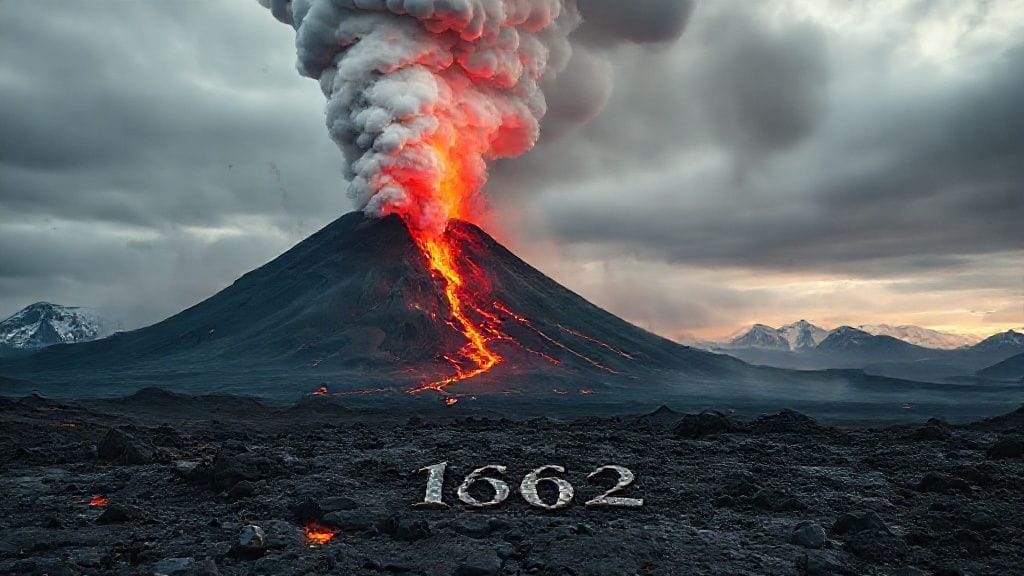
The eruption of Öræfajökull in 1362 was an explosive event, classified by scientists today as VEI 5 (Volcanic Explosivity Index), an eruption of vast scale involving powerful blasts, pumice fall, and vast ash clouds penetrating the atmosphere. It is described in contemporary Icelandic annals as a terrifying spectacle—a “black day” when “the sun was veiled and fire rained down”.
Molten rock pierced the ice sheet, unleashing torrents of meltwater that surged as glacial floods, devastating the surrounding terrain. Pyroclastic flows, lethal clouds of superheated gas and ash, tore through the valleys. Entire farms disappeared under layers of volcanic debris, fertile fields became toxic wastelands almost overnight.
Records tell of darkness falling at midday, animals fleeing and people scrambled for shelter, many failing to escape nature’s wrath.
6. Flames, Ash, and Falling Sky: Eyewitness Accounts and Oral Traditions
While written chronicles from this era in Iceland are sparse, the eruption left deep imprints in oral traditions and sagas. Elders recalled stories passed down of rivers turned to boiling torrents, skies black with ash, and the unbearable pall of choking dust that lingered for days.
One poignant account notes that “the earth shook and fire broke from the mountain, blotting out the sun and swallowing homes in its grasp”. Such testimonies, though fragmentary, bring a haunting human dimension to the overwhelming natural event.
The volcanic ash plume likely circled the northern hemisphere, dimming sunlight and requiring months for the skies to clear, affecting weather and harvests beyond Iceland’s shores.
7. The Landscape Transformed: Destruction of Farms and Villages
Before 1362, the southeastern region of Iceland, though harsh, supported small clusters of farms and fishing communities. After the eruption, vast tracts of this area became known as Öræfi—“the wasteland,” a name that itself memorializes destruction.
Hundreds of acres were buried beneath pumice and lava; arable land was lost. The plains north of the volcano, once green with grass and dotted with sheep, turned barren and uninhabitable. Traditional routes became blocked by lava flows or thick ash layers, isolating communities.
For medieval Icelanders, closely tied to their land, this meant not only loss of property but a rupture in social and economic life that endured generations.
8. Human Stories Amidst the Chaos: Survival and Loss
Behind the scientific descriptions lies profound human tragedy. Families were torn apart, livestock perished en masse, and communities faced starvation as food supplies were destroyed or cut off.
Local lore speaks of survivors wandering into strange new landscapes, confronting despair and change. Some fled toward safer coastal regions, others clung to remnants of their farms, attempting the impossible task of rebuilding atop ruined soil.
The eruption did not just reshape geography—it reshaped identity, forcing a reconsideration of the relationship between people and the volatile Icelandic earth beneath their feet.
9. The Economic and Social Impact on Icelandic Society
The eruption's aftermath rippled through Iceland’s fragile economy. Pastoral farming, the backbone of local sustenance, was crippled. Sheep flocks that formed wealth and status were decimated, trade routes disrupted, and subsistence practices strained.
With reduced resources, tensions escalated over land and survival. This disaster likely accelerated social stratification, as wealthier landowners consolidated surviving territories, while poorer farmers faced displacement or ruin.
Iceland’s contacts with Norway and European markets also suffered, as the eruption’s climatic impact contributed to broader regional hardships—crop failures, colder weather, and famines that wrought turmoil in the decades that followed.
10. The Aftermath: Environmental Changes and Long-Term Effects
In a land governed by ice and fire, the 1362 eruption left an indelible mark.
Glacial melts altered water systems, changing the courses of rivers and flooding valleys. Volcanic soils, initially hostile, would over centuries enrich the land, yet for generations after, barren fields and lava deserts dominated.
Climatic effects—both immediate and extended—are believed to have contributed to the onset of the Little Ice Age in the North Atlantic region, a century-long period of colder temperatures and harsher winters.
Öræfajökull’s eruption thus fits into a global narrative of interconnected environmental shifts, showing how local geologic fury can cascade into planetary consequences.
11. The Eruption’s Global Breath: How an Icelandic Volcano Stirred the World
Remarkably, the 1362 eruption’s ash and sulfurous gases circled far beyond Iceland.
Volcanic aerosols injected into the stratosphere cause sunlight reflection, cooling climates—a phenomenon noted in this period's cold summers and famines recorded across Europe and Asia.
Some historians link the eruption to widespread crop failures that exacerbated social tensions—famines in England, famine noises in Scandinavia, and even dampened yields in China’s Yuan Dynasty.
Öræfajökull reminds us that the earth’s deep convulsions connect distant human histories through shared atmospheric changes.
12. Öræfajökull in Icelandic Memory and Saga Literature
Volcanic eruptions in Iceland weave tightly into cultural identity.
The 1362 event survives in saga literature as a somber emblem of nature’s dominion over man, inspiring tales blending fear, reverence, and survival. Poetic accounts speak of the “fire mountain’s wrath” and the “silent wasteland” left by destruction.
Even today, in local place names and folklore, echoes of that summer persist, shaping Iceland’s collective memory of resilience and respect towards the land’s volatile character.
13. The Science of Fire and Ice: Modern Understanding of the 1362 Event
Modern volcanology has pieced together Öræfajökull’s past through ice core samples, tephrochronology (the study of ash layers), and geological surveys.
Analysis confirms the eruption’s explosive nature and quantifies its emissions of ash—around one cubic kilometer of tephra deposited. Ice cores from Greenland show associated sulfur spikes, linking atmospheric disturbances to this event.
The combination of glacial ice and explosive volcanism classifies it as a “phreatomagmatic” eruption, blending magma with water in devastating blasts.
Today’s monitoring alerts Icelanders to renewed activity, reminding us that the 1362 eruption is neither isolated nor extinct in memory or future risk.
14. The Volcano’s Continuing Threat: Lessons from History
Öræfajökull is a living volcano. Its history, culminating dramatically in 1362, serves as both warning and lesson to modern Icelanders and scientists.
In 2010, signs of unrest and minor eruptions renewed fears of a catastrophe. Given Iceland’s role as a hub for air travel and its fragile ecosystems, understanding past eruptions helps shape preparedness plans and emergency responses.
More than a geological subject, Öræfajökull compels a dialogue between humanity and nature—balancing awe, respect, and vigilance.
15. Remembering Öræfajökull: Volcanoes as Agents of Change
The 1362 eruption stands as a testament to the profound ways volcanoes shape history—not just physically, but socially and culturally.
It reminds us that beneath serene ice and quiet wilderness, forces both destructive and generative await. Through these fiery events, landscapes form, climates shift, and people learn resilience.
Öræfajökull teaches us the intertwined fate of humans and nature—a story of catastrophe, survival, and eventual renewal.
Conclusion
The Öræfajökull eruption of 1362 was more than a geological event; it was a human tragedy writ large across a wild landscape, a moment when fire shattered ice, and the world seemed to darken in the noon sun. It forced medieval Icelanders into exile and despair, only to inspire stories of survival and deep respect for nature’s power.
From the blackened wastelands that stripped away homes and hope, new life would eventually emerge, teaching timeless lessons about endurance in the face of elemental fury. For modern eyes, the 1362 eruption offers a vivid window into how a single natural disaster can echo through centuries—shaping land, legend, and the very fabric of society.
Through the lens of Öræfajökull, history reveals itself not as a series of isolated events, but as a symphony woven by nature and human courage, fear and tenacity, destruction and renewal.
FAQs
Q1: What caused the Öræfajökull eruption in 1362?
A: The eruption was caused by a buildup of magma beneath the stratovolcano, which interacted explosively with the glacier ice above, triggering a massive phreatomagmatic explosion.
Q2: How powerful was the 1362 eruption compared to other volcanic events?
A: It was a VEI-5 event, making it one of the most explosive eruptions in Iceland’s history, comparable in magnitude to the famous 1783 Laki eruption but with its own particular climatic and regional effects.
Q3: Did the eruption affect areas beyond Iceland?
A: Yes, volcanic aerosols reached high into the atmosphere, influencing climate conditions throughout the Northern Hemisphere and contributing to crop failures and famines in Europe and Asia.
Q4: How did Icelandic society recover from the eruption?
A: Recovery was slow, involving relocation, rebuilding of farms, and adaptation to changed landscapes. Social and economic stresses lasted for decades, with effects felt through multiple generations.
Q5: Are there any surviving written accounts of the eruption?
A: Contemporary Icelandic annals and later oral traditions describe the event, providing vivid but sometimes fragmented descriptions that have been supplemented by geological evidence.
Q6: What lessons does the 1362 eruption offer for modern volcanology?
A: It underscores the dangers of glacier-covered volcanoes, the potential for sudden explosive eruptions, and the importance of monitoring and preparedness in vulnerable regions.
Q7: Has Öræfajökull erupted since 1362?
A: Yes, though none as large, with recorded eruptions in more recent centuries that keep the volcano under close scientific observation.
Q8: How is the eruption commemorated in Iceland today?
A: Through place names, folklore, geological studies, and public awareness, the eruption remains a potent symbol of Iceland’s enduring relationship with volcanic power.

