Table of Contents
- The Fateful Day: April 6, 1520, Rome’s Silent Grief
- The Life and Genius of Raphael: A Brief Portrait
- Rome on the Eve of Loss: The Papal States in Turmoil
- Artistic Flourish Amid Political Crosswinds
- Raphael’s Final Days: The Weight of Glory and Burden
- The Sudden Collapse: Death Strikes at the Height of Genius
- Reverberations Through the Eternal City: Rome’s Mourning
- Papal States’ Response: Ceremony, Politics, and Power
- The Burial in the Pantheon: A Tomb Fit for an Artist-King
- Raphael’s Legacy in Renaissance Art: The Dawn of a New Era
- The Shifting Tides of Papal Patronage After 1520
- Personal Accounts: Eyewitnesses to the Death of a Genius
- Symbolism and Myth: How Raphael’s Death Became Legend
- The Impact on His Contemporaries: Michelangelo, Bramante, and Beyond
- The Art World Without Raphael: Evolution and Vacuum
- Cultural Echoes: Raphael in Literature, History, and Memory
- The Intersection of Art and Religion in Raphael’s Rome
- Political Intrigue and Artistic Patronage in the Early 16th Century
- The Human Side: Family, Friends, and the Man Behind the Masterpieces
- Reflections on Mortality: How Raphael’s Death Shaped Renaissance Thought
- Modern Reassessments of Raphael’s Death: Historiography and Forensics
- Enduring Inspirations: Raphael’s Influence into the Modern Age
- Conclusion: The Eternal Imprint of Raphael’s Final Breath
- FAQs: Understanding Raphael’s Death and Its Historical Context
- External Resource
- Internal Link
The Fateful Day: April 6, 1520, Rome’s Silent Grief
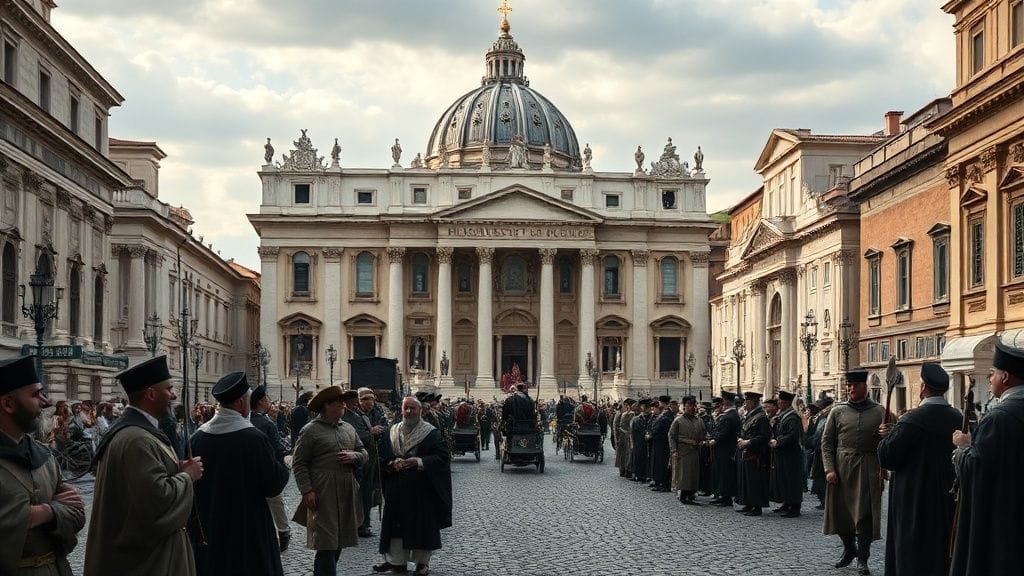
It was a quiet spring day in Rome—April 6, 1520—and yet, beneath the buzzing life of the city, a shadow was creeping silently behind the marble facades and bustling streets. The sun cast its golden light over the ancient city, but for one man, the brightest star of the Renaissance, the lights were fading forever. Raphael Sanzio, the beloved painter and architect whose brush had breathed new life into Rome’s artistic heart, succumbed to a mysterious illness at the age of just 37. His sudden death shook a city already rife with power struggles and sacred duties. The Eternal City, steeped in history and ennobled by art, had lost one of its greatest sons. Yet their mourning revealed not only grief but also the complex weave of art, religion, and politics that defined Rome at the dawn of the 16th century.
The Life and Genius of Raphael: A Brief Portrait
Born in Urbino in 1483, Raphael was a prodigious talent from his earliest days. A child of the burgeoning Renaissance, his mastery of harmony, balance, and human emotion on canvas elevated him swiftly above his peers. By his late twenties, he had won the favor of Pope Julius II and become the cornerstone of artistic innovation—a luminous star in a constellation that included Michelangelo and Leonardo da Vinci. Raphael’s frescoes in the Vatican’s Stanze and the architecture of the new St. Peter’s Basilica marked him as a polymath who could command both brush and blueprint with equal ease. His death, though premature, left a legacy that would ripple through centuries.
Rome on the Eve of Loss: The Papal States in Turmoil
Rome in 1520 was a city with many faces. The Papal States struggled under the complex reforms of Julius II’s pontificate, marked by military campaigns and the ambitious urban transformation projects. The city was both a spiritual and temporal power center, drawing nobles, artists, soldiers, and clergy into a dense tapestry of alliances and rivalries. It was amid this volatile atmosphere that Raphael had risen—not just as an artist, but as a symbol of papal grandeur and cultural supremacy.
Artistic Flourish Amid Political Crosswinds
Raphael was more than a painter; he was a man navigating the turbulent currents of Renaissance Rome. His commissions were as political as they were artistic. The frescoes of the “School of Athens” and the “Disputa” in the Vatican were visual manifestos celebrating classical philosophy and Catholic doctrine alike, subtly reinforcing papal authority. His work on St. Peter’s Basilica, commissioned after Bramante’s death, placed him at the heart of one of Europe’s most contested architectural projects—a symbol of the Church’s ambition and the fragile balance of power.
Raphael’s Final Days: The Weight of Glory and Burden
Behind Raphael’s serene smile in his self-portraits, few knew of the immense pressures he carried. Constant demands from Popes Leo X and Julius II, competitors vying for his favor, and the relentless pace of his creative output left him exhausted. Accounts suggest that in early 1520, Raphael's health began to decline rapidly. Some chroniclers mention a fever, possibly malaria or typhoid, diseases common in Rome’s marshy environs despite Renaissance medical knowledge. His friends and apprentices struggled to attend to him as he slipped away in the Palazzo Branconio dell’Aquila.
The Sudden Collapse: Death Strikes at the Height of Genius
On April 6, 1520, Raphael died unexpectedly. His sudden passing stunned both the artistic community and the papal court. The young master who had transformed Rome’s visage and invigorated its spiritual life was gone. Though his death certificate was vague, speculation of the time—ranging from heartbreak following personal losses to overwork and illness—added layers of tragic aura. For many Romans, Raphael’s death signaled the end of an era, a poignancy heightened by the city’s own uncertain future.
Reverberations Through the Eternal City: Rome’s Mourning
News of Raphael’s death rippled swiftly across Rome. In the vibrant piazzas and beneath the arches of the Forum, whispers of disbelief gave way to open lamentation. Nobles commissioned masses and candles in his honor, and artisans placed flowers at his workshop’s door. Yet, mourning in Renaissance Rome was not merely spiritual — it was a politicized spectacle. The loss of Raphael was mourned publicly with grandeur that reflected not only affection but also the papal interest in showcasing cultural supremacy.
Papal States’ Response: Ceremony, Politics, and Power
The papacy moved quickly to honor Raphael’s memory, understanding the symbolic weight of his demise. Pope Leo X arranged a funerary procession of exceptional solemnity, weaving together religious rites and political messaging. Raphael’s burial in the Pantheon—an ancient Roman temple repurposed as a Christian church—was a deliberate choice, aligning the master with Rome’s imperial past and eternal destiny. The ceremony underscored Raphael’s role not only as an artist but as a servant of the Church’s earthly and spiritual aspirations.
The Burial in the Pantheon: A Tomb Fit for an Artist-King
Raphael’s interment in the Pantheon was unprecedented for an artist. The inscription on his tomb, penned by Pietro Bembo, famously reads: “Ille Hic Est Raphael, timuit quo sospite vinci / rerum magna parens et moriente mori” — “Here lies Raphael, by whom Nature feared to be outdone while he lived, and, dying, feared she too would die.” The tomb’s placement, near the tombs of Rome’s greats, immortalized Raphael as equal to the emperors and poets of old. The Pantheon became both a shrine of mourning and a site of pilgrimage for art lovers and devotees alike.
Raphael’s Legacy in Renaissance Art: The Dawn of a New Era
Raphael’s death closed a chapter of Renaissance artistry marked by harmony, clarity, and the pursuit of ideal beauty. His style became a timeless template for balance between naturalism and idealism, influencing generations of painters across Europe. Through his students—like Giulio Romano—and the works left unfinished, Raphael’s vision lived on, guiding the evolution of Mannerism and eventually Baroque artistry. His death, therefore, was not just a personal loss but a pivotal moment in the transformation of Western art.
The Shifting Tides of Papal Patronage After 1520
After Raphael’s death, the papal court experienced both artistic uncertainty and political shifts. Pope Leo X continued to support the arts, but none matched Raphael’s transcendent appeal and diplomatic finesse. The mantle passed to other artists and architects, yet the immediate void left a subtle realignment of patronage networks. Future initiatives such as Michelangelo’s Sistine Chapel ceiling gained renewed attention, but the tone had irrevocably shifted without Raphael’s unifying hand.
Personal Accounts: Eyewitnesses to the Death of a Genius
Several contemporary voices paint a poignant picture of Raphael’s demise. Giorgio Vasari, the famed chronicler, lamented the world’s loss in his biographies, highlighting Raphael’s generosity and humility alongside his genius. Letters from his apprentices recount frantic attempts to nurse him back to health, while Vatican records detail the official preparations for his funeral. These intimate glimpses humanize the towering figure, reminding us that beneath the marble and frescoes lay a man both mortal and deeply loved.
Symbolism and Myth: How Raphael’s Death Became Legend
Raphael’s death quickly left the realm of history and entered that of myth. Tales of the divine nature of his talent, the celestial mourning of the heavens, and whispered curses on those who might surpass him abounded. Later centuries romanticized his passing as a symbol of Renaissance fragility in the face of emerging modern chaos—a poignant reminder that even greatness is temporal. This mythologization helped cement Raphael’s status as a cultural icon beyond his earthly life.
The Impact on His Contemporaries: Michelangelo, Bramante, and Beyond
Among the greatest Renaissance figures, Raphael’s death was keenly felt. Michelangelo, notoriously competitive, is said to have expressed genuine sadness, recognizing the loss of a rival and friend whose work pushed him to new heights. Bramante had died earlier, but Raphael’s architectural projects carried forward his legacy. The world these artists inhabited—a crucible of genius and tension—was palpably altered. Their responses illuminate the complex web of respect and rivalry fueling the Renaissance’s creative explosion.
The Art World Without Raphael: Evolution and Vacuum
The immediate aftermath of Raphael’s death left a vacated throne in Roman art circles. His workshop dispersed, students scattered, and patrons sought new masters. This absence ushered in shifts that saw the rise of Mannerism’s more dramatic and eccentric forms, contrasting with Raphael’s serene balanced classicism. Yet this evolution would always circle back to him as a benchmark, a standard both impossible and essential to reach.
Cultural Echoes: Raphael in Literature, History, and Memory
Beyond visual arts, Raphael’s demise influenced writers, poets, and thinkers. The humanist circles of Rome and beyond revered him not only for technique but for his embodiment of Renaissance ideals—beauty, harmony, and intellect. Over the centuries, countless biographies, poems, and historical studies have re-examined his death, using it as a lens through which to contemplate the nature of genius, mortality, and cultural legacy.
The Intersection of Art and Religion in Raphael’s Rome
Raphael’s work—and death—occurred at a vital crossroads. As Rome stood as the religious center of Christendom, art was a tool of spiritual persuasion and expression. Raphael seamlessly merged humanist ideals with Catholic dogma, creating images that instructed and inspired. His passing during Pope Leo X’s reign, just before the Reformation upheavals, marks an end of innocence, a moment when art and faith were both deeply intertwined and about to be challenged.
Political Intrigue and Artistic Patronage in the Early 16th Century
The politics of patronage were inseparable from artistic production in Renaissance Rome. Raphael’s proximity to power made him a figure of influence and sometimes of envy. The delicate maneuvering between Popes, cardinals, and noble families played out not only in council chambers but on frescoed walls and architectural facades. His death thus reverberated beyond artistry, impacting the court’s delicate balance and the trajectory of Rome’s cultural politics.
The Human Side: Family, Friends, and the Man Behind the Masterpieces
While often shrouded in the glamor of genius, Raphael was a man of warm relationships and personal struggles. He left behind a family, including his beloved fiancée Maria Bibbiena, who was reportedly inconsolable. Close friends and students remembered a generous mentor with a joyful spirit who struggled privately with the immense demands placed upon him. This human dimension adds a deeply emotional layer to the story of his untimely death.
Reflections on Mortality: How Raphael’s Death Shaped Renaissance Thought
The unexpectedly young death of one of the era’s brightest lights provoked broader reflections on mortality and the fleeting nature of glory. Humanist scholars debated the balance between fame and human frailty, while artists pondered how to immortalize fleeting beauty. Raphael’s demise became a meditation point, inspiring works that grappled with death, legacy, and the eternal aspirations of the human spirit.
Modern Reassessments of Raphael’s Death: Historiography and Forensics
In recent decades, historians and medical experts have revisited the circumstances of Raphael’s death. Analyses of contemporary accounts, possible diseases, and environmental conditions in Renaissance Rome suggest likely causes—ranging from malarial fever to complications of overwork and stress. Such forensic histories bring a richer understanding and demystify some legends without diminishing the tragedy and cultural significance of that day in 1520.
Enduring Inspirations: Raphael’s Influence into the Modern Age
Raphael’s legacy has survived countless centuries, inspiring artists from the Baroque period to modern times. His principles of composition, balance, and human emotion continue to be studied and revered. Museums worldwide celebrate his genius, and his death remains a poignant chapter in the story of Western art, a reminder of the price of greatness and the immortality that art can confer.
Conclusion
The death of Raphael on April 6, 1520, was far more than the loss of a master painter—it was the extinguishing of a radiant flame in a city that lived and breathed art, faith, and power. At only 37, Raphael had transformed Rome and the world of art with a vision that married humanist thought with divine inspiration. His passing left a void that echoed through the artistic, political, and spiritual life of the Renaissance and beyond. Yet from the depth of grief emerged a legacy so profound that Raphael’s spirit still walks through the halls of the Vatican, the Pantheon, and every canvas that strives for harmony, beauty, and eternal truth. His life and death together compose a testament to the fragile, luminous nature of genius—forever suspended between mortality and immortality.
FAQs
1. What caused Raphael’s death on April 6, 1520?
The precise cause remains uncertain, but historical accounts suggest he died from a sudden fever, possibly malaria or typhoid, common in Rome’s environment at the time. Overwork and stress may have also weakened his health.
2. How did Raphael’s death affect the Papal States politically?
Raphael’s death removed a key cultural figure who helped symbolize papal magnificence. His absence affected patronage dynamics and was felt during a time when the Papal States were consolidating power amidst complex political challenges.
3. Why was Raphael buried in the Pantheon?
The Pantheon was an ancient and prestigious site, aligning Raphael’s memory with Rome’s imperial legacy. His burial there was a papal honor recognizing him as a cultural icon on par with emperors and poets.
4. How did Raphael influence Renaissance art?
Raphael set new standards in composition, clarity, and depiction of human emotion. His integration of classical ideals and Christian themes shaped Renaissance art and influenced later movements, including Mannerism and Baroque.
5. What was Pope Leo X’s role in responding to Raphael’s death?
Pope Leo X orchestrated a grand funeral and used Raphael’s death as an occasion to reinforce the cultural glory of his papacy, intertwining art with political and religious power.
6. How did Raphael’s contemporaries react to his death?
Artists like Michelangelo mourned Raphael’s loss sincerely, recognizing the void left by his absence and the impact on their own creative pursuits.
7. How is Raphael’s death remembered in history and culture?
Raphael’s death is surrounded by myth and reverence, often symbolizing the fragility of genius and the transition from Renaissance harmony to more complex artistic forms.
8. What legacy did Raphael leave for future generations?
He left a lasting legacy of aesthetic ideals, inspiring countless artists and becoming a symbol of the fusion between art, faith, and humanist philosophy.