Table of Contents
- The Fall of Al-Andalus: Prelude to Granada
- The Nasrid Rise: Muhammad I's Vision and Strategy
- Ibn al-Ahmar: The Architect of the Nasrid Emirate
- The Treaty of 1238: Granada’s Birth as an Emirate
- Al-Andalus in Decline: Fragmentation and Internal Struggles
- The Christian Advance: Expansion of Castile and Aragon
- Strategic Alliances and Diplomacy in the Iberian Peninsula
- Granada’s Geography and Defensibility: A Natural Fortress
- Nasrid Granada’s Political Structure and Governance
- Society and Culture Under Nasrid Rule
- The Role of Islam and Religious Identity in Granada
- Granada’s Economy: Trade, Agriculture, and Tribute
- The Nasrid Emirate as a Last Muslim Bastion in Iberia
- Granada’s Relations With Christian Kingdoms: Hostility and Coexistence
- The Emirate’s Legacy: Art, Architecture, and Literature
- The Seeds of the Future Reconquista Conflict
- The Nasrid Emirate’s Survival Through Centuries of Warfare
- Human Stories From Granada: Life in a Time of Transition
- Cultural Syncretism and the Exchange Between Faiths
- The End of an Era: Prelude to the Final Fall of Granada in 1492
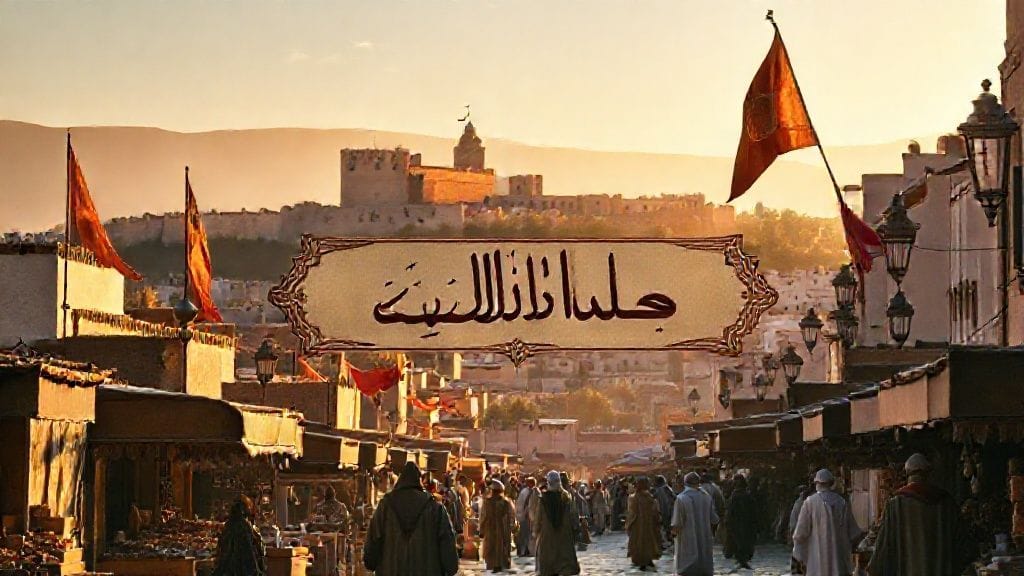
Granada, 1238. The sun dips low over the rugged hills and fertile valleys of southern Iberia, casting a gilded glow over an ancient city poised on the edge of history. The air is thick with anticipation and uncertainty as emissaries gather in ornate halls, pledging allegiance, negotiating peace and survival. It is here, amid the clash of swords and the negotiation of fragile peace, that the Nasrid Emirate of Granada is born—an improbable yet enduring polity carving out an existence amid the crumbling vestiges of Muslim rule in Iberia.
This moment is far from just a political event; it is the last flicker of Al-Andalus, a beacon of Islamic culture, learning, and identity sewn deep into the land’s soul. To understand how Granada came to be the last Muslim stronghold in Iberia, and the intricate tapestry of alliances, betrayals, diplomacy, and resilience that sustained it for over two centuries, we must journey back through the turbulent years of the Reconquista—a centuries-long saga of conquest and conversion, hope and despair.
This article is not only the story of a city or an emirate but a human drama folded into the fate of a continent at crossroads. It tells of rulers striving to maintain identity and sovereignty, of ordinary men and women adapting to tides of change, and of a culture whose achievements would resonate far beyond the fall of its walls.
The Fall of Al-Andalus: Prelude to Granada
By the early 13th century, Al-Andalus—once a unified Muslim realm stretching across the Iberian Peninsula—had fragmented into multiple taifa kingdoms, vulnerable to Christian reconquest and internal dissension. After the decisive defeat of the Almohads at Las Navas de Tolosa in 1212, the Christian kingdoms of Castile, Aragon, Navarre, and Portugal surged forward aggressively. The political landscape was shattered; former Muslim strongholds quickly succumbed to siege and negotiation. Yet amid the chaos, a new power began to rise.
The Nasrid Rise: Muhammad I's Vision and Strategy
Muhammad I ibn al-Ahmar, a scion of the Arab Banu Nasr clan, emerged as a cautious yet ambitious leader. Born into a lineage with connections to the Almohad rulers yet tempered by the reality of shifting alliances, Muhammad sought not immediate conquest but survival and renewal. His vision was to consolidate the last Muslim territories under his control into a coherent and defensible entity.
Unlike previous regimes, his approach combined military pragmatism with shrewd diplomacy. Muhammad brokered treaties with Christian kings, recognizing that a balance of power would be necessary to maintain autonomy amid relentless pressure.
Ibn al-Ahmar: The Architect of the Nasrid Emirate
Known in the West as Ibn al-Ahmar, Muhammad I was a renaissance ruler for his time—court poet, tactician, builder. His court in Granada flourished as he established the foundations of what would become the Nasrid Emirate. His administration was notable for encouraging Islamic learning, culture, and architecture, planting the seeds of the famed Alhambra complex.
His leadership was marked by deft negotiation with the Castilian Crown, securing a treaty that recognized Granada’s vassal status but guaranteed her rulers autonomy to govern.
The Treaty of 1238: Granada’s Birth as an Emirate
The official founding of the Nasrid Emirate is marked by the Treaty of 1238, when Muhammad I formally pledged allegiance to Ferdinand III of Castile after surrendering the city of Córdoba and other territories. This act was not a simple capitulation but a pragmatic move to buy time and maintain governance over Granada and its environs.
The treaty established Granada as a tributary state—paying tribute to Castile in exchange for relative peace and self-rule. It set the stage for Granada’s emergence as the final Muslim polity on the peninsula.
Al-Andalus in Decline: Fragmentation and Internal Struggles
The once-great Caliphate of Córdoba’s collapse in the 11th century had fractured Muslim control into dozens of small kingdoms. The Nasrids’ ascendancy was part of a complex narrative involving shifting alliances, betrayals, and internecine rivalries among Muslim factions, as well as their relationships with rising Christian powers.
Internal divisions often weakened resistance against the advancing Reconquista armies, making Granada’s survival under Muhammad I all the more remarkable.
The Christian Advance: Expansion of Castile and Aragon
The triumphant Christian kingdoms, buoyed by papal support and religious zeal, expanded steadily southward. The conquest of Córdoba in 1236 and Seville in 1248 marked devastating blows to Muslim power.
Ferdinand III, known as “The Saint,” played a crucial role in these campaigns, combining military might with religious motivation to reshape Iberia’s political map.
Strategic Alliances and Diplomacy in the Iberian Peninsula
Diplomacy was as vital as warfare during this era. Muhammad I and his successors negotiated vassalage treaties, shifted allegiances between Castile and Aragon, and sometimes even sought support abroad from the Marinid dynasty in North Africa.
These alliances helped keep Granada viable amid increasing isolation.
Granada’s Geography and Defensibility: A Natural Fortress
Granada’s mountainous terrain, overlooked by the Sierra Nevada, provided natural defenses that few Iberian cities enjoyed. The city’s strategic location, combined with a complex system of walls and fortifications, made it difficult to conquer.
This geography allowed the Nasrids to hold their ground for centuries, even as surrounding territories fell.
Nasrid Granada’s Political Structure and Governance
The Nasrid Emirate was a hereditary monarchy with centralized authority in the emir. The state apparatus was skilled at managing a multi-ethnic and multi-religious population, balancing Arab, Berber, Jewish, and Christian elements.
The emir’s court was a center of power, culture, and learning, blending religious legitimacy with political pragmatism.
Society and Culture Under Nasrid Rule
Granada became a vibrant mosaic of cultures and religions. Muslim scholars, poets, artisans, as well as Jewish and Christian communities contributed to a flourishing society.
Nasrid patronage of the arts, medicine, philosophy, and architecture created a golden age remembered to this day.
The Role of Islam and Religious Identity in Granada
Islam was the foundation of Nasrid societal values and law, but religious tolerance was often practical rather than dogmatic. “People of the Book”—Christians and Jews—were generally allowed to practice their faiths under certain conditions, though tensions remained.
Islamic scholarship thrived, with Granada as a beacon of learning, even as the Christian kingdoms pressed on.
Granada’s Economy: Trade, Agriculture, and Tribute
Granada’s economy was diverse, supported by fertile lands producing wheat, olives, and citrus fruits, alongside lucrative trade linking the Mediterranean and North Africa.
The payment of tribute to Castile was a heavy burden but underscored the delicate balance of survival.
The Nasrid Emirate as a Last Muslim Bastion in Iberia
Granada stood as the final Muslim polity on Iberian soil, a symbol of resilience and identity. It constituted the final chapter in centuries of Muslim presence marked by remarkable achievements in culture and science.
Yet this status also meant relentless pressure from Christian neighbors determined to complete the Reconquista.
Granada’s Relations With Christian Kingdoms: Hostility and Coexistence
The relationship was paradoxical: intermittent warfare, uneasy truces, and active diplomacy characterized Granada’s dealings with Castile and Aragon.
Marriage alliances, prisoner exchanges, and negotiated requests for reinforcements reflected a complex frontier world.
The Emirate’s Legacy: Art, Architecture, and Literature
The Nasrid dynasty’s greatest legacy is the Alhambra palace—an architectural masterpiece embodying their worldview—melded with poetry, music, and art that echoed Islamic aesthetics and Andalusian heritage.
This cultural legacy influences Spain and the world today.
The Seeds of the Future Reconquista Conflict
Though subdued politically, Granada’s very existence provoked religious and military ambitions.
The emirate’s survival depended on constant vigilance, political acumen, and sometimes desperation.
The Nasrid Emirate’s Survival Through Centuries of Warfare
Against all odds, Granada endured for over two centuries after 1238. The emirate faced civil wars, foreign invasions, economic hardships, and shifting alliances but managed to persist until the final fall in 1492.
This endurance speaks to the resilience of its rulers and people.
Human Stories From Granada: Life in a Time of Transition
Behind the grand narratives were common people—farmers, traders, scholars, soldiers—who lived and labored amidst uncertainty and hope.
Minutes of city life reveal joys, sorrows, festivities, and daily struggles, humanizing the epoch.
Cultural Syncretism and the Exchange Between Faiths
Granada was more than a battleground; it was a meeting point of civilizations. Language, art, cuisine, and customs reflected centuries of interaction between Muslims, Christians, and Jews.
This cultural syncretism enriched Iberian identity and speaks to universal themes of coexistence.
The End of an Era: Prelude to the Final Fall of Granada in 1492
The foundation laid in 1238 culminated in a dramatic and emotional end over 250 years later. The Nasrid Emirate’s story is one of endurance and transition—the last chapter of Al-Andalus and a turning point in European history.
Though its walls eventually fell, its memory endures as a symbol of cultural brilliance and resilience.
Conclusion
The birth of the Nasrid Emirate of Granada in 1238 was not merely a political transaction but a poignant moment of survival, identity, and hope amid the convulsions of medieval Iberia. Muhammad I’s founding vision forged a fragile sanctuary where Islamic culture could endure as the rest of Al-Andalus crumbled.
Granada’s two-century story is one of paradoxes: a kingdom bound to Christian Castile yet fiercely Muslim; a fortress city defending heritage while navigating compromise; a society at war yet striving for intellectual and artistic flowering.
This emirate is a testament to human tenacity in the face of overwhelming odds—a mosaic of cultures that, even in decline, illuminated a corner of the world with beauty and wisdom. Its legacy continues to inspire, reminding us that history breathes in the lives of people who strive to preserve their identity against the tides of change.
Granada’s last lights may have dimmed in 1492, but the story that began in 1238 burns bright in the human saga of courage, loss, and cultural grandeur.
FAQs
Q1: What caused the formation of the Nasrid Emirate of Granada in 1238?
The fragmentation of Muslim territory after the fall of the Almohad Caliphate and military defeats by Christian kingdoms forced Muslim leaders like Muhammad I to consolidate control over the remaining lands in southern Iberia, culminating in the treaty of 1238 that recognized Granada as a vassal but autonomous emirate.
Q2: Who was Muhammad I ibn al-Ahmar?
Muhammad I was the founder and first ruler of the Nasrid Emirate. A skilled politician and strategist, he established Granada as a crucial center of power, culture, and diplomacy in Iberia during a period of decline for Muslim rule.
Q3: How did Granada manage to survive as the last Muslim bastion for over two centuries?
Through a combination of fortified geography, astute diplomacy—especially tributary relations with Castile—and cultural resilience, Granada navigated constant pressure from Christian kingdoms, internal dissent, and economic challenges.
Q4: What was the nature of Granada’s relationship with the Christian kingdoms nearby?
Granada’s relationship was marked by complex cycles of warfare, peace treaties, marriages, and tributes. It maintained vassalage to Castile while asserting internal autonomy, balancing hostility with cautious coexistence.
Q5: What cultural achievements is the Nasrid Emirate best known for?
The Nasrids are famous for the architectural and artistic masterpiece of the Alhambra palace, flourishing Islamic arts and scholarship, poetry, and maintaining a rich cultural blend that influenced Andalusian identity.
Q6: How did religious identity play out in Nasrid Granada?
Islam was central, but the Nasrids generally allowed Christians and Jews religious freedom as “people of the book” under a system of dhimmi protections, although social and religious tensions existed in times of conflict.
Q7: What role did geography play in the Nasrid Emirate’s endurance?
Granada’s location amidst mountains with natural fortifications created formidable defenses that hindered Christian conquest and allowed the Nasrids to sustain their rule.
Q8: How does the Nasrid Emirate’s history contribute to our understanding of medieval Iberia?
It illustrates a complex mosaic of cultural exchange, religious coexistence, political pragmatism, and the enduring legacy of Islamic civilization in Europe, enriching narratives beyond simple conquest and loss.

