Table of Contents
- The Awakening of Redoubt: Prelude to an Unexpected Fury
- Alaska’s Volcanic Heritage: Landscape Forged by Fire
- The Quiet Before the Storm: Geologic Signs and Human Awareness
- The First Roar: Initial Explosions and Ash Clouds
- The Human Response: Communities on the Edge of Disaster
- Flight and Fury: The Volcanic Plumes Disrupting the Skies
- The Naknek River Flood: Danger Beyond the Ash
- Pilots and Planes: The Mount Redoubt Hazard to Aviation
- Scientific Vigilance: Monitoring the Volcano’s Every Breath
- The Volcanic Bomb: Lahar Flows and Muddy Tsunamis
- Redoubt’s Signature Blast: The Peak of the Eruption
- Impacts on Wildlife and Ecosystems: A Firestorm in Nature
- Economic Repercussions: The Cost of Nature’s Wrath
- Media Coverage: The Volcano in the Public Eye
- Lessons Learned: Emergency Management and Volcano Science
- The End of the Eruption: A Slow Return to Normalcy
- Redoubt’s Legacy: Shaping Volcanology and Community Resilience
- Remembering the Redoubt Eruption: Oral Histories and Personal Tales
- Comparisons with Other Eruptions: What Made Redoubt Unique?
- Environmental Recovery: Nature’s Road to Healing
- Conclusion: The Lasting Echo of Redoubt’s Fire
- FAQs: Exploring the Redoubt Eruption
- External Resource
- Internal Link
The Awakening of Redoubt: Prelude to an Unexpected Fury
On a cold day in late 1989, the vast wilderness of Alaska was pierced by an ominous plume of smoke rising from the snow-capped peak of Mount Redoubt. For those living in the shadow of this glacier-clad stratovolcano, the quiet solitude of the Alaskan wilderness shattered into ash and fear. Suddenly, a colossal natural power stirred beneath the frozen surface—a violent reminder of the forces sculpting the Earth.
The eruption of Mount Redoubt between 1989 and 1990 was far more than geological drama. It was a moment when humanity's relationship with nature’s unpredictability came into sharp relief, revealing the fragility of life when nature’s fury unfolds. The skies blackened with ash, rivers swelled with volcanic mud, and aviators faced perils airborne, all while the residents of Alaska observed with wide-eyed tension the theater of destruction at their doorstep.
But how did this eruption come about? What forces conspired beneath the earth’s crust to belch fire, ash, and toxic steam to the heavens? And how did this singular volcano become a witness to the resilience and vulnerability of the land and its people?
Alaska’s Volcanic Heritage: Landscape Forged by Fire
To understand the colossal eruption of Redoubt, one must first appreciate Alaska’s fiery heritage. The state lies at the junction of the Pacific and North American tectonic plates, a volatile boundary where the Pacific Plate dives beneath the North American Plate, generating immense pressure. This subduction zone is the engine behind the infamous Aleutian volcanic arc, home to over 130 known volcanoes, many of them active.
Mount Redoubt itself is a stratovolcano that has shaped the landscape with layers of ash, lava, and pyroclastic deposits over hundreds of thousands of years. Positioned about 90 miles southwest of Anchorage, Redoubt’s summit pierces the skyline at nearly 10,000 feet, cloaked in glaciers that both feed and suffer from its eruptions.
Though volcanic earthquakes and minor eruptions have been part of Alaska’s story for millennia, the Redoubt eruption caught the attention of scientists and locals alike because of its intensity and multifaceted hazards: violent explosions, ash clouds so thick they darkened the skies, and lahars (volcanic mudflows) racing down river valleys to threaten communities far downstream.
The Quiet Before the Storm: Geologic Signs and Human Awareness
In the months leading to the eruption, subtle tremors teased the earth beneath Redoubt’s summit. Seismographs began recording small but increasing volcano-tectonic earthquakes—signs of magma rising through the crust. Steam began to vent from the summit crater, and temperature anomalies were detected, hinting at a warming underground reservoir.
Yet, for many locals and even scientists, the volcano’s repose had made it feel like a distant beast. The last eruption had been decades earlier — in 1966 and 1968 — comparatively minor and long forgotten by the public. As the tremors built in October 1989, volcanologists at the United States Geological Survey (USGS) ramped up monitoring efforts, deploying instrumentation to detect vibrations and gases emanating from the mountain.
Civil defense officials issued early warnings, but the vastness and sparsity of the local population eased the immediate sense of panic. This lull between the volcano’s sleeping and awakening formed the fragile curtain between tranquillity and catastrophe.
The First Roar: Initial Explosions and Ash Clouds
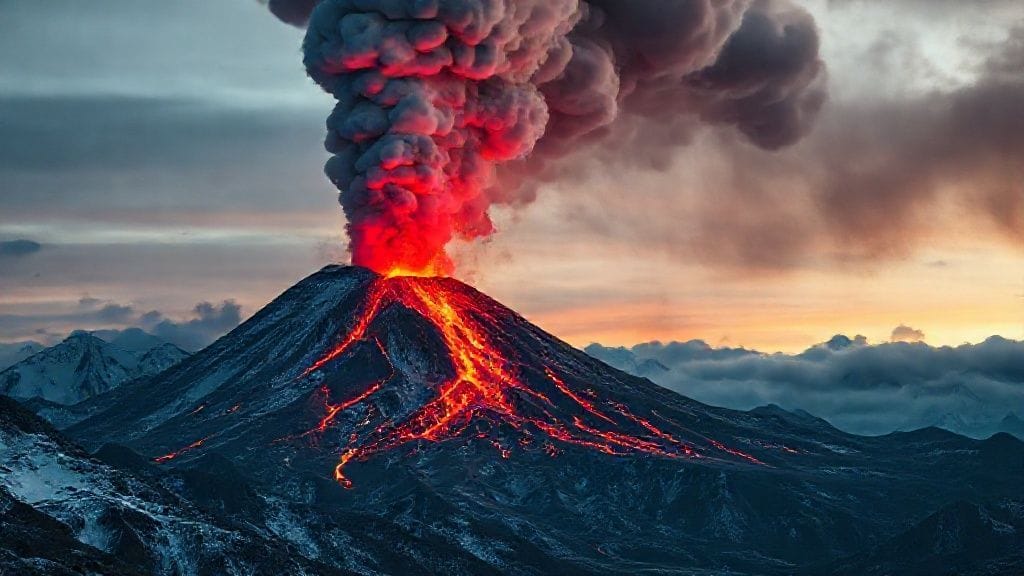
On December 14, 1989, the earth shook with a sudden intensity. Explosive eruptions broke the winter silence, the summit crater bursting with violent ash columns that shot nearly 45,000 feet into the sky, visible for hundreds of miles. Fierce pyroclastic bombs hurled molten rock, and glowing incandescent avalanches swept down the glacier-covered flanks.
Communities such as the small town of Kenai watched nervously as ash began to settle on rooftops and cars. Grouped professionals in volcanology centers wrestled with real-time data pouring in: the explosive power was building, the eruption dynamic and unpredictable.
One can picture the awe and terror of those on the ground: the apocalyptic sky thick with ash, the air pregnant with the acrid sting of sulfur dioxide, endings and beginnings played out in volcanic fury.
The Human Response: Communities on the Edge of Disaster
Alaskan residents and emergency planners faced difficult decisions as the volcanic activity intensified. The region’s rugged terrain and limited road access complicated evacuation and emergency response. Although no fatalities were reported, the threat of lahars and ash fall prompted evacuation orders for lower valley areas near rivers fed by melting glaciers.
Emergency shelters were set up, communication lines kept open, and contingencies planned. It was a moment when the strength and vulnerabilities of rural Alaskan life collided with cataclysmic natural forces.
Farmers, pilots, bush pilots, and indigenous communities shared stories of resilience, preparedness, and anxiety — a human mosaic reacting to an elemental siege.
Flight and Fury: The Volcanic Plumes Disrupting the Skies
The eruption’s ash cloud was no mere local nuisance: it posed one of the most dangerous hazards to aviation in North America. Volcanic ash can cause jet engines to fail, and several near-catastrophic incidents emerged during Redoubt’s eruption.
In January 1989, a commercial Boeing 747, operating near the volcano, encountered a massive ash cloud resulting in the failure of all four engines temporarily—a harrowing incident that brought the threat into sharp focus worldwide. Fortunately, all passengers survived, but the event underscored the growing need for better monitoring and forecasting.
The USGS and Federal Aviation Administration (FAA) collaborated to coordinate ash cloud tracking, issuing alerts that prevented further disasters. Redoubt’s eruption, thus, transformed aviation safety protocols and raised awareness of volcanic hazards in global air travel.
The Naknek River Flood: Danger Beyond the Ash
Beyond the aerial and ash hazards, Redoubt’s eruption unleashed another peril: lahars, swollen rivers of volcanic mud and meltwater. Streams and valleys below the volcano flooded with thick slurries of rocky debris and scalding water. The Naknek River basin, vital for salmon fisheries and local livelihood, became engulfed in sediment and destruction.
Floods damaged infrastructure, altered river courses, and devastated fish habitats, threatening the region’s ecology and economy. Residents downstream witnessed their landscapes—once serene and snow-dusted—transform into scenes reminiscent of mythic cataclysms.
Pilots and Planes: The Mount Redoubt Hazard to Aviation
The Redoubt eruption remains a textbook case for aviation hazards posed by volcanic ash. The 1989 incident involving KLM Flight 867 became legendary—an aircraft suddenly blinded and immobilized by ash, its engines flaming out in midair. For crew and passengers, the minutes of helpless drifting above Alaskan wilderness were a test of human courage and skill.
The aftermath led to groundbreaking research: ash clouds were identified to alter aircraft sensors, engines ingested abrasive particles, and visibility dropped to zero. Airlines revised flight routes, invested in detection technology, and coordinated more closely with volcanic observatories.
Scientific Vigilance: Monitoring the Volcano’s Every Breath
Throughout the eruption, scientists maintained a relentless vigil. Using seismic stations, gas sampling equipment, and satellite imagery, they pieced together Redoubt’s behavior like an evolving story. Notably, sulfur dioxide emissions—measured via remote sensing—provided clues about magma ascent.
The USGS Volcano Hazards Program took Redoubt’s eruption as an opportunity to refine predictive models and communication with emergency services. Their experience set a precedent for monitoring 21st-century volcanic crises worldwide.
The Volcanic Bomb: Lahar Flows and Muddy Tsunamis
As the eruption continued for months, lahars surged downstream. The confluence of heat from molten material and glacial ice melt triggered floods of mud, rock, and debris rushing through valleys. These lahars sometimes reached the Cook Inlet, dynamically reshaping coastlines and threatening maritime activity.
Documentaries described these flows as “muddy tsunamis,” moving with frightening speed and carrying destruction far beyond the volcano’s footprint. Local fishermen and coastal operators adapted in real time to the hazards.
Redoubt’s Signature Blast: The Peak of the Eruption
The most dramatic explosion came in late January 1990. A towering eruption column blasted more than 60,000 feet high, venting powerful jets of ash and gas. Seismic activity surged; ice and volcanic glass shattered in the fog-bound caldera.
Witnesses recalled the sensory overload: deafening sounds, ash blanketing the landscape, and a daylight so darkened it resembled night. The eruption also sent volcanic lightning crackling through ash clouds—an eerie natural spectacle at the intersection of sky and earth.
Impacts on Wildlife and Ecosystems: A Firestorm in Nature
The eruption’s violence rippled into ecosystems that had evolved in quiet isolation. Salmon populations in rivers choked by sediment faced temporary declines; bird habitats were destroyed beneath ash drifts; alpine flora suffered scouring and burial.
Yet, in time, volcanic soils enriched the land with nutrients, creating fertile grounds for new growth. Scientific surveys post-eruption documented a cycle of destruction and renewal playing out on Alaskan soil—a potent reminder of nature’s resilience even amid devastation.
Economic Repercussions: The Cost of Nature’s Wrath
Mount Redoubt’s eruption inflicted substantial economic costs. Agriculture and fisheries suffered from ash contamination and sedimentation. Aviation reroutes and cancellations impacted airlines and commerce. Infrastructure repairs drained local budgets and disrupted everyday life.
Insurance claims poured in, and federal disaster aid was mobilized. For local economies dependent on natural resources, the eruption was a harsh wake-up call to vulnerabilities in the face of natural disasters.
Media Coverage: The Volcano in the Public Eye
Throughout the months of fiery spectacle, media outlets across the world broadcast images of ash plumes piercing cold blue skies, and of communities bracing for uncertain futures. The eruption became a symbol of the raw power underlying Earth’s seemingly stable surface.
Newspapers, television news, and documentary filmmakers captured the narrative of science racing against disaster, the human stories of survival, and the grandeur of volcanic fury writ large. The event entered popular culture as a modern portrait of nature’s awesome unpredictability.
Lessons Learned: Emergency Management and Volcano Science
Redoubt’s eruption fostered profound lessons for emergency preparedness and volcano science. The need for rapid communication between scientists, government, and the public was starkly evident. Volcanic ash’s dangers to aircraft reshaped protocols internationally.
The eruption accelerated remote sensing technology usage and introduced new gas-monitoring devices. Communities incorporated eruption scenarios into disaster planning with new urgency, blending scientific data with social awareness.
The End of the Eruption: A Slow Return to Normalcy
By April 1990, volcanic activity had subsided noticeably. Seismic tremors waned, ash clouds dissipated, and rivers cleared of sediment. Redoubt’s summit returned to a fragile repose, but its scars remained in the earth and memory.
Life in Alaska cautiously resumed rhythms paused by fire and ash. Scientists shifted from constant crisis management to long-term study and recovery assessment. For residents, the eruption became a chapter in a continuing story of living at nature’s edge.
Redoubt’s Legacy: Shaping Volcanology and Community Resilience
The 1989–1990 Redoubt eruption left an indelible legacy. Its well-monitored activity provided invaluable data for understanding and predicting volcanic events. Emergency services improved coordination models, and aviation safety concerning volcanic ash became a global preoccupation.
Equally important was the human dimension: the demonstration of Alaskan communities’ resilience, the forging of trust between scientists and citizens, and the reminder that modern technology must respect the timeless caprices of the natural world.
Remembering the Redoubt Eruption: Oral Histories and Personal Tales
Decades later, oral histories preserve the eruption’s memory. Residents recount nights spent watching fiery skies, children playing amid falling ash, and shared meals in evacuation centers. These personal narratives add texture beyond scientific facts, giving voice to human courage, fear, and hope.
The eruption remains a living memory, passed down through families and communities, a testament to survival and learning.
Comparisons with Other Eruptions: What Made Redoubt Unique?
While Alaska boasts many volcanic giants, Redoubt’s 1989–1990 eruption stood out for its combined threats: explosive ash plumes, lahars from melting glaciers, and directly documented aviation hazards. Unlike other eruptions limited to lava flows or isolated ash falls, Redoubt was a complex, multifaceted event.
Its impact on international aviation safety was unmatched at the time, highlighting new global challenges posed by volcanoes in an era of expanding air travel.
Environmental Recovery: Nature’s Road to Healing
In the decades since, the landscape around Redoubt has gradually healed. Scientific teams have tracked reforestation, wildlife return, and sediment stabilization. Volcanic soils now support lush meadows, and salmon runs, though altered, have rebounded.
The eruption serves as a fascinating case study in ecological resilience, a volcanic phoenix slowly rising from ashes and mud.
Conclusion: The Lasting Echo of Redoubt’s Fire
Mount Redoubt’s eruption was not just a geological event; it was a human drama etched into the web of nature and society. The roar of the volcano, the flight of ash through northern skies, and the steadfastness of the people who lived through it compose a story of fear and fascination, loss and hope.
This chapter in Alaska’s history reminds us that beneath the calm of frozen mountains lie forces of immense power, waiting patiently to remind us of our smallness. Yet, it also teaches us resilience—how science, community, and preparedness can soften nature’s blows.
As we look to future volcanic challenges around the world, Redoubt’s fiery saga offers both warning and inspiration: that the earth’s breath is mighty and capricious but navigable through vigilance and respect.
FAQs
1. What caused the Mount Redoubt eruption in 1989?
The eruption was triggered by magma rising through the earth’s crust due to tectonic activity related to the Pacific Plate subducting beneath the North American Plate. Increased seismic activity and gas emissions signaled the magma’s movement, culminating in the explosive eruption.
2. How dangerous was the eruption for local communities?
While no fatalities occurred, the eruption posed significant risks through ashfall, lahars (mudflows), and flooding. Evacuations were conducted to protect residents in low-lying areas.
3. Why was Mount Redoubt’s eruption significant in terms of aviation?
Volcanic ash clouds pose severe hazards to aircraft engines and instruments. The 1989 eruption caused near-disasters, including a multi-engine failure on a Boeing 747, highlighting the need for better monitoring and aviation protocols.
4. What precautions were taken to monitor and respond to the eruption?
The USGS and local agencies increased seismic monitoring, used satellite imagery, issued warnings, and coordinated evacuations. Aviation authorities tracked ash clouds to inform flight paths.
5. How did the eruption affect the environment and wildlife?
Ash and lahars damaged fish habitats, bird nesting grounds, and vegetation, but volcanic soils later enhanced the richness of the terrain, aiding recovery over time.
6. What were the long-term economic impacts of the eruption?
The eruption affected fisheries, agriculture, transportation, and required costly infrastructure repairs. Aviation disruptions also had economic consequences.
7. How did Redoubt’s eruption influence volcano science?
It advanced monitoring technology, improved emissions tracking, and deepened understanding of glacier-volcano interactions, setting standards for future eruptions worldwide.
8. Are there ongoing risks from Mount Redoubt today?
Yes. Mount Redoubt remains an active volcano, and scientists continue monitoring it closely for signs of renewed activity to protect communities and aviation.

