Table of Contents
- The Calm Before the Fury: Alaska’s Sleeping Giant
- A Land of Fire and Ice: The Geology Behind Redoubt Volcano
- Early Signs: Tremors Beneath the Surface
- The First Explosions: March 2009 Awakening
- The Ash Plume Rises: Impact on Aviation and Communities
- Life on the Edge: Residents Brace for the Unknown
- The Power of Nature: Seismic Swarm and Lava Dome Growth
- The Climactic Eruption: April’s Explosive Spectacle
- River in Flames: Lahars and Flooding Devastate Valleys
- Scientists on the Frontline: Monitoring Redoubt’s Fury
- Environmental Toll: Forests, Wildlife, and Air Quality
- Economic Shockwaves: Aviation, Oil, and Local Livelihoods
- Global Ripples: How a Volcano in Alaska Shook the World
- Folklore Rekindled: Indigenous Voices and Oral Histories
- Lessons Learned: Emergency Response and Preparedness
- The Aftermath: Quiet Resilience and Rebuilding
- Redoubt’s Legacy: Shaping Volcanology and Disaster Management
- Remembering 2009: Community Reflections and Memorials
- Nature’s Reminder: Ongoing Risks in the Aleutian Range
- Redoubt Today: From Dormancy to Vigilance
- Conclusion: The Ever-Present Dialogue Between Humanity and Fire
- FAQs: Understanding the Redoubt Eruption of 2009
- External Resource
- Internal Link
The Calm Before the Fury: Alaska’s Sleeping Giant
On a freezing March day in 2009, a quiet tension hung over the rugged landscapes of Alaska’s Cook Inlet. For months, something beneath the snow and ice had been stirring—a silent heartbeat pulsing deep within the earth. The massive Redoubt Volcano, long a dormant sentinel in the Aleutian Range, had begun to whisper through faint tremors. For many, the volcanic mountain was just another remote giant—majestic, imposing, but safely asleep. Yet, as day broke on that chilly morning, the earth spoke with sudden, violent clarity. A column of ash erupted skyward, blotting out the sun and heralding a trial of forces both natural and human.
This was no ordinary eruption. It was a dramatic, multi-phased event that tested the limits of scientific understanding, emergency preparedness, and the resilience of the communities watching nervously from miles away. The 2009 Redoubt eruption would etch itself into history—not only as a natural disaster but as a vivid reminder of the fragile line we live upon between civilization and the primordial forces beneath us.
A Land of Fire and Ice: The Geology Behind Redoubt Volcano
Redoubt Volcano is no stranger to eruption. Nestled in the Aleutian volcanic arc—part of the Pacific “Ring of Fire”—this stratovolcano commands respect with its towering 10,197-foot (3,108 meters) peak and a history of activity spanning thousands of years. Formed by the subduction of the Pacific Plate beneath the North American Plate, the region is riddled with magma chambers, faults, and intricate geological movements.
In understanding Redoubt, one must appreciate the delicate balance of tectonic forces. The slow but relentless pressure from below causes magma to accumulate, sometimes leaking into the surface and sometimes retreating unseen. Its last major eruption prior to 2009, in 1989-1990, was already a stark warning, producing ash clouds that disrupted flights and coated nearby towns in soot.
But Redoubt’s geological personality is not one of simple repetition. Its eruptions vary—from explosive ash plumes to lava dome growth and mudflows called lahars—making it a complex puzzle for volcanologists. Each seismic jolt beneath its slopes is a coded signal, a potential herald of change.
Early Signs: Tremors Beneath the Surface
The calm was deceptive. Starting in January 2009, low-level seismic activity began to register on instruments scattered around Cook Inlet. Minor earthquakes, barely noticed at first, hinted at magma movement and the slow fracturing of subterranean rock.
Scientists from the Alaska Volcano Observatory (AVO) maintained a watchful eye. The tremors were increasing in frequency and intensity, a clear sign that Redoubt was stirring from its slumber. Technological advances since the last major eruption allowed for continuous monitoring—seismic networks, satellite imagery, and gas measurements created a multi-dimensional picture.
Yet the challenge remained: predicting exactly when Redoubt would erupt, or how violent it would be, was still fraught with uncertainty.
The First Explosions: March 2009 Awakening
Then, on March 15, those quiet rumbles gave way to a startling announcement. Around midday, Redoubt blew open with a violent explosion, sending a towering ash column soaring miles into the atmosphere.
Residents near the volcano were jolted awake by the shockwave. The sky darkened as ash began to fall like dirty snow, settling on rooftops, vehicles, and the rugged wilderness. The blast was powerful enough to be heard hundreds of miles away, a reminder that nature’s voice, though often silent, could at times be deafening.
A series of explosive events followed in quick succession. Each eruption blanketed the region in fine volcanic ash, forcing the closure of the nearby Anchorage Airport—the busiest in Alaska—and disrupting flights nationwide. This initial phase was only the beginning of a months-long saga that would challenge the community, scientists, and authorities alike.
The Ash Plume Rises: Impact on Aviation and Communities
The ash cloud unleashed by Redoubt was not just a local menace. Volcanic ash, composed of tiny shards of rock and glass, proved deadly for aircraft engines. With Anchorage serving as a critical hub for air travel between North America and Asia, the eruption’s timing could not have been worse.
Commercial airlines canceled hundreds of flights, rerouting helicopters and cargo planes vital for Alaska’s remote villages. Ash fell in thick layers, not just in small towns but as far as the city of Anchorage itself, coating cars, clogging drains, and forcing clean-up efforts under grim gray skies.
Communities in the shadow of Redoubt braced for more. Schools were closed, residents stocked up on supplies, and local officials issued emergency alerts. Memories of previous eruptions loomed large, adding a psychological weight to the physical threat.
Life on the Edge: Residents Brace for the Unknown
For those living around Redoubt, nature’s unpredictability was a constant companion. The eruption became a test of human endurance and adaptability.
Longtime residents shared stories of previous eruptions, packed “grab bags” ready for evacuation, and advised newcomers on the hazards of lahar floods—a dangerous slurry of volcanic debris and meltwater rushing down valleys. Yet even with preparation, the loneliness of isolation was palpable in this sparsely populated wilderness, where roads cut through forests and mountains like fragile lifelines.
Local communities forged bonds through shared uncertainty—neighbors helping neighbors, emergency services on high alert. The mountain’s roar was both a threat and a strange kind of uniting force, reminding everyone that their lives were intertwined with the pulse of the earth.
The Power of Nature: Seismic Swarm and Lava Dome Growth
Between March and April, the volcano entered a new phase. Tremors evolved into a seismic swarm—a clustering of hundreds of earthquakes—that signaled magma was nearing the surface. Observers noted a gradual inflation of the volcano’s summit, an ominous bulge suggesting the growth of a lava dome.
Lava domes form when viscous magma accumulates slowly, often creating unstable structures prone to collapse. At Redoubt, the dome pushed upwards, inch by inch, swelling beneath the ash-laden skies.
These geological dramas were closely watched by scientists who tracked every rockfall, every tremor—each an imperfect but vital message from the mountain’s bowels. Their efforts to predict collapses and possible explosive blasts were crucial in directing safety measures for the valleys below.
The Climactic Eruption: April’s Explosive Spectacle
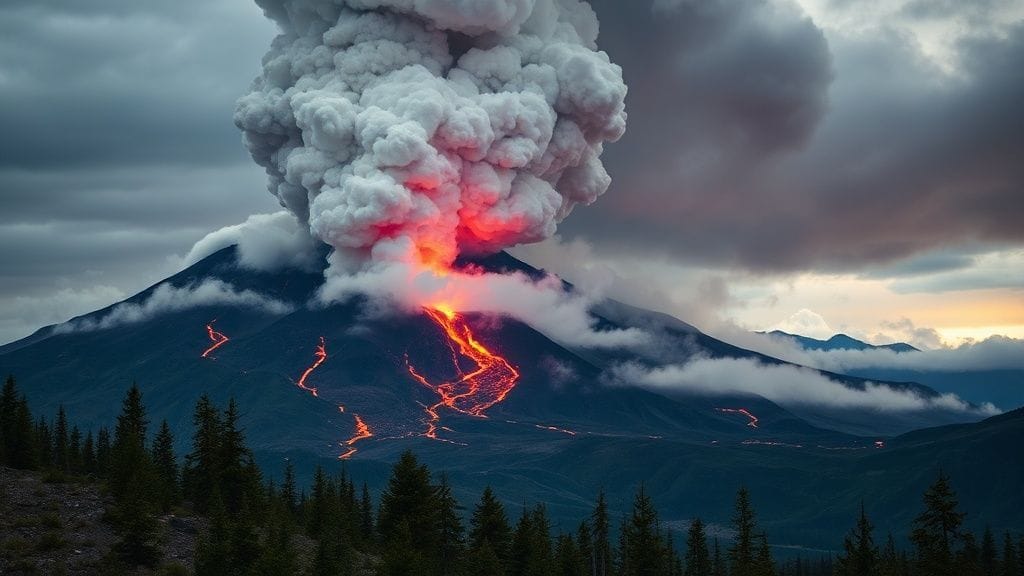
April 4th, 2009, marked one of the most violent eruptions of Redoubt’s episode. A massive explosion hurled ash 60,000 feet into the atmosphere—high enough to disrupt transpacific flight paths and draw global attention.
The event generated lightning storms within the ash cloud, a terrifying spectacle captured on video by pilots and researchers alike. Thunder rumbled alongside fiery plumes, a visual testament to the raw energy unleashed.
Lava dome collapse triggered enormous pyroclastic flows—fast-moving currents of hot gas and volcanic matter—that surged down the volcano’s flanks, devastating areas within the Drift River Valley. The accompanying lahars roared along rivers, swallowing roads and reshaping the landscape.
This climax was a potent reminder of volcanic unpredictability, a display of power both destructive and primitive.
River in Flames: Lahars and Flooding Devastate Valleys
Lahars, often underestimated among volcanic hazards, became a silent villain in the Redoubt narrative. The rapid melting of summit glaciers during eruptions fed rivers swollen with volcanic debris—mud, rocks, and ash—that cascaded down valleys.
The Drift River carried these deadly flows straight toward oil tank farms and transportation arteries, raising fears of environmental catastrophes beyond the immediate volcanic destruction. Alarms blared as containment systems strained against the floodwaters.
For downstream communities, the lahars represented a force far beyond natural disaster; it was a challenge to infrastructure, the economy, and the careful balance between human use and wilderness.
Scientists on the Frontline: Monitoring Redoubt’s Fury
Behind the scenes of ash and fire stood a dedicated group of scientists from the Alaska Volcano Observatory and other institutions. Equipped with seismic instruments, remote cameras, GPS, and gas analyzers, they raced to decode the volcano’s every signal.
Their work was perilous, often requiring field visits near active vents, braving toxic gases and unstable grounds. Each piece of data fed into complex models, aiming to forecast Redoubt’s behavior and provide timely warnings for aviation and populations.
The 2009 eruption was a proving ground for volcanic science: new technology, real-time data streams, and international collaboration all played parts in navigating the crisis.
Environmental Toll: Forests, Wildlife, and Air Quality
Beyond ash-covered fields and disrupted human life, the eruption exacted a silent toll on the local ecosystem. Forests surrounding Redoubt bore the brunt of falling ash and acid rain, while streams clothed in ash threatened fish habitats crucial to the state’s biodiversity and fishing economy.
Birds and animals faced scarce food and clean water, their behaviors altered by the changing conditions. Air quality detectors recorded elevated levels of sulfur dioxide and particulates, pressing health concerns for residents and workers exposed to the volcanic haze.
Nature’s fingerprints were indelible, reminding humanity that the web of life is tightly interconnected—even with elements we might deem remote or wild.
Economic Shockwaves: Aviation, Oil, and Local Livelihoods
The Redoubt eruption rippled through Alaska’s economy with undeniable force. Anchorage’s Ted Stevens International Airport—the gateway connecting Alaska to the outside world—was temporarily closed, grounding flights and stranding travelers.
The risk to the nearby Drift River Oil Terminal raised alarms over fuel supply and environmental contamination. Local businesses reliant on tourism and transportation faced uncertainty as ash clouds frustrated schedules and deterred visitors.
Fisheries and native subsistence hunting also felt pressure from the environmental disturbances. For many, the eruption illustrated how natural disasters could quickly cascade into economic crises, especially in regions so tightly linked to fragile environmental cycles.
Global Ripples: How a Volcano in Alaska Shook the World
Though isolated in landscape, Redoubt’s eruption sent shockwaves far beyond Alaska. Airlines rerouted flights across North America, Asia, and Europe, wary of damaging engines in volcanic ash plumes.
Air cargo delays impacted global supply chains, illustrating the interconnectedness of modern economies with natural events occurring thousands of miles away. Media outlets covered the spectacle extensively, with images of towering ash columns and lightning striking ash clouds gripping audiences worldwide.
This eruption became a stark example of how local geological events resonate globally in our age of technology and transportation.
Folklore Rekindled: Indigenous Voices and Oral Histories
For the indigenous peoples of the Cook Inlet region, Redoubt was more than a mountain; it was woven into stories, legends, and spiritual worldviews. The eruption rekindled oral histories passed down through generations—tales of fire gods, earth spirits, and nature’s capricious might.
Elders and community leaders spoke of the land with reverence, interpreting the eruption as a chapter in humanity’s ongoing relationship with the earth. Their voices brought depth and cultural understanding often missing from purely scientific or media narratives.
This blend of ancient knowledge and modern science enriched the collective response and reminded all that history is alive not only in textbooks but in living memory.
Lessons Learned: Emergency Response and Preparedness
The 2009 eruption tested Alaska’s emergency systems. Coordination between federal agencies, local governments, indigenous groups, and scientists proved crucial in minimizing casualties and damage.
Evacuation plans, hazard mapping, and communication technology were refined through experience. The event highlighted the importance of community involvement and education, as well as the need for ongoing investment in monitoring infrastructure.
Preparedness became not just reactive but proactive, fostering resilience against future volcanic events not only at Redoubt but throughout the Aleutian arc.
The Aftermath: Quiet Resilience and Rebuilding
As ash settled and waters receded, a weary calm returned. Communities slowly cleaned the mess left by nature’s violent breath. Roads rebuilt, habitats recovered, and residents resumed their lives, marked but unbroken.
Memories of fear and awe mingled with gratitude for survival. The eruption’s scars remained visible on the landscape—charred forests, altered riverbeds—silent testimony to the episode’s overwhelming power.
Yet, life’s persistent rhythm reasserted itself, with hope rooted in Alaska’s enduring spirit of resilience and adaptation.
Redoubt’s Legacy: Shaping Volcanology and Disaster Management
The scientific knowledge gleaned from Redoubt’s 2009 fury reshaped volcanic monitoring worldwide. Lessons in gas emission tracking, seismic warning signs, and dome collapse predictions influenced protocols from Kamchatka to Iceland.
Emergency management incorporated these insights into more robust planning frameworks, improving safety across volcanic zones globally. Redoubt became a case study demonstrating the value of interdisciplinary collaboration and sustained vigilance.
Its legacy continues to inform both science and society’s evolving relationship with natural hazards.
Remembering 2009: Community Reflections and Memorials
For many, the memory of the eruption remains vivid—a defining moment in personal and communal histories. Local museums and cultural centers preserve artifacts, photographs, and stories from the event.
Annual commemorations offer moments of reflection, honoring the lives impacted and celebrating the bonds forged amid adversity. These acts of remembrance weave the eruption into the cultural fabric of Alaska—a story of challenge met with courage.
Nature’s Reminder: Ongoing Risks in the Aleutian Range
Though the 2009 eruption subsided, Redoubt remains an active volcano, part of a restless chain shaping the Alaskan landscape. Ongoing monitoring continues, as scientists know the mountain’s voice may rise again.
Redoubt serves as a potent reminder that the earth’s interior is never truly quiet. For residents and officials alike, the 2009 eruption is a lesson in humility and respect—an enduring dialogue between humanity and fire.
Redoubt Today: From Dormancy to Vigilance
In the years since the eruption, Redoubt returned to tentative dormancy, yet never to oblivion. Monitoring stations stand vigilant; satellite sensors scan daily; scientists maintain watchfulness born of experience.
The mountain’s slopes have begun to green anew, but the knowledge of what lies beneath remains fresh. Alaska’s volcanic sentinel watches over a land where fire and ice coexist, a symbol of nature’s breathtaking power and the fragile resilience of those who live in its shadow.
Conclusion
The Redoubt eruption of 2009 is more than a geological event; it is a narrative of confrontation and coexistence between humanity and the elemental forces that shape our planet. From the first tremors to the towering ash plumes, from the fearful evacuations to the determined rebuilding, the story encapsulates the profound interdependence of nature, science, and human spirit.
It reminds us that beneath the frozen peaks and shimmering skies lies a restless energy, a powerful testament to Earth’s ongoing evolution. The people who witnessed Redoubt’s fury learned lessons etched in ash and memory—lessons about vigilance, community, and respect for the forces we cannot control but must understand.
As the ash settles and the world moves forward, the dialogue continues. Redoubt remains a living symbol of resilience and hope, its fiery voice a call to listen closely to the earth beneath our feet.
FAQs
Q1: What caused the 2009 eruption of Redoubt Volcano?
A1: The eruption was caused by the subduction of the Pacific Plate beneath the North American Plate, which led to magma accumulation and pressure build-up beneath Redoubt’s vent. Increased seismic activity in early 2009 signaled magma movement, culminating in the explosive eruption in March-April.
Q2: How did the eruption affect air travel?
A2: The ash clouds generated by the eruption posed serious risks to aircraft engines. Anchorage International Airport was temporarily closed, with hundreds of flights canceled or rerouted, affecting national and international air traffic.
Q3: Were there any casualties during the eruption?
A3: Remarkably, there were no direct casualties attributed to the eruption, thanks to effective monitoring, evacuation plans, and public awareness.
Q4: What is a lahar, and why was it significant in this eruption?
A4: A lahar is a dangerous volcanic mudflow composed of ash, debris, and water. The melting of summit glaciers during the eruption caused lahars to rush down valleys, threatening infrastructure and raising environmental concerns.
Q5: How did local indigenous communities interpret the eruption?
A5: Indigenous groups viewed the eruption through the lens of their oral traditions and spiritual beliefs, interpreting it as a significant natural event connected to their ancestral stories and relationship with the land.
Q6: What scientific advancements emerged from studying the 2009 eruption?
A6: The event advanced volcanic monitoring techniques, including real-time seismic data interpretation, lava dome growth tracking, and coordinated emergency response strategies.
Q7: Has Redoubt erupted since 2009?
A7: Since the 2009 episode, Redoubt has remained largely dormant, but continues to be closely monitored due to its history of activity.
Q8: What lessons did communities around Redoubt learn from the eruption?
A8: Communities learned the importance of preparedness, communication, and respecting natural warning signs. Enhanced emergency protocols and infrastructure improvements have since been implemented.

