Table of Contents
- Dawn of Tremors: The Quiet Before the California Quake
- Geological Prelude: Understanding the San Andreas Fault System
- The Ridgecrest Epicenter: A Land Tensed and Waiting
- July 4, 2019: The First Jolt That Shook the Desert
- The Aftershock Symphony: Hundreds of Quakes in the Following Hours
- July 5, 2019: The Magnitude 7.1 Mainshock and Its Potent Roar
- Communities on Edge: Immediate Human Response and Resilience
- Infrastructure Under Trial: Roads, Power Lines, and Water Systems Shaken
- Scientific Race: Seismologists Capturing Data in Real Time
- The Military’s Earthquake Echo: Proximity to Naval Air Weapons Station China Lake
- Stories from the Ground: Eyewitness Accounts and Personal Testimonies
- The Economic Toll: Damage Estimates and Recovery Costs
- California’s Earthquake Preparedness Put to the Test
- Media Coverage: The Nation’s Eye on Ridgecrest
- Strategic Learnings: How Ridgecrest Changed Seismic Risk Perceptions
- Long-term Environmental Consequences: Fault Lines and Desert Shifts
- Psychological Impact: PTSD and Community Healing
- Comparing Ridgecrest to Past California Quakes
- Political Responses: Local and State Government Actions
- The Role of Technology: From Early Warning Systems to Social Media
- Community Solidarity: Grassroots Movements and Volunteer Efforts
- Scientific Debates Spurred by Ridgecrest’s Unusual Seismic Patterns
- The Aftermath Months Later: Recovery Progress and Lingering Threats
- Global Resonance: Ridgecrest in the Context of Worldwide Seismic Activity
- Reflections: What Ridgecrest Tells Us About Living with Nature’s Fury
Dawn of Tremors: The Quiet Before the California Quake
The summer heat pressed down on California’s Mojave Desert, baking the landscape in a relentless sun. Ridgecrest, a modest city nestled in Kern County, was waking up on July 4th, 2019, to a seemingly ordinary Independence Day. Families were readying barbecues, fireworks were being loaded onto trucks, and the endless horizon stretched like an ancient breath over the quiet town. Yet beneath this placid surface, deep within the earth, tectonic forces were building tension along brittle fault lines. An invisible drama was about to unfurl that would shake the desert sands and ripple far beyond the sleepy town itself.
Suddenly, at 10:33 a.m., the ground convulsed. A sharp, violent jolt radiated—a magnitude 6.4 earthquake announcing its presence with a shake so fierce that homes rattled and car alarms pierced the air. It was the first harsh whisper of a seismic story that would grip Ridgecrest and capture global attention for days to come. The shockwaves from this initial quake, and the catastrophic events that followed shortly after, would redefine how Californian communities understood their vulnerability and resilience.
Geological Prelude: Understanding the San Andreas Fault System
To grasp the significance of the Ridgecrest earthquakes, one must look beneath the surface to the geologic stage on which they played out. California lies astride the infamous San Andreas Fault system—a sprawling network of fractures that marks a tectonic boundary where the Pacific Plate slides past the North American Plate. This boundary, extending over 800 miles, is the birthplace of some of the most infamous earthquakes in U.S. history.
But Ridgecrest sits not directly on the San Andreas Fault itself; rather, it is nestled near the less conspicuous but equally important Eastern California Shear Zone. This area is known for complex faulting and accommodates much of the strain produced by the ongoing plate motions. For decades, geologists have monitored this zone, aware that strain accumulation would eventually be released in the form of earthquakes. What remained unpredictable was precisely when and how such a rupture would unfold, and with what magnitude.
The Ridgecrest Epicenter: A Land Tensed and Waiting
Ridgecrest’s landscape is a mixture of arid desert valleys and mountain ranges—rugged, dry, and punctuated by fault scarps that hint at ancient ruptures. Scientists had identified the region as seismically active, but the calm days preceding the July events belied the anxious gearing of the earth’s crust. Underground, stress had been quietly accumulating for decades, stored like a taut bowstring waiting to snap.
It's here, amidst the sagebrush and sun-baked mesas, that the first quake would release long-buried energy. The memory of past regional quakes—including the 1992 Landers event—loomed as a reminder that while the area was not as infamous as Los Angeles or San Francisco, it was by no means immune to cataclysmic shaking.
July 4, 2019: The First Jolt That Shook the Desert
At 10:33 a.m. local time on July 4, the first major earthquake struck. Measuring magnitude 6.4, it originated about 11 miles northwest of Ridgecrest. The shaking was violent and unmistakable. It was felt across Southern California; homes rattled, windows shattered, and roads cracked.
Survivors described a terrifying split second where the ground seemed to shudder beneath them. Schools quickly enacted lockdowns, and emergency services mobilized, though initial damage was moderate. The fact that this powerful tremor occurred on Independence Day added an eerie irony—the country’s celebrations disrupted by the earth’s raw power.
But this initial quake was only the harbinger. As the day progressed, the earth’s rumblings did not wane—they intensified.
The Aftershock Symphony: Hundreds of Quakes in the Following Hours
In the immediate aftermath of the magnitude 6.4 event, hundreds of aftershocks rattled Ridgecrest and its surroundings. Scientists recorded more than 100 quakes exceeding magnitude 3 within hours, a turbulent chorus revealing the complexity of the crustal rupture zones.
The aftershocks created an aura of persistent fear and uncertainty. Residents who had barely recovered from the first jolt found themselves repeatedly jolted awake or sent scrambling outdoors as the earth continued to convulse unpredictably. This seismic ‘afterparty’ was a living demonstration of nature’s restless, unyielding force.
July 5, 2019: The Magnitude 7.1 Mainshock and Its Potent Roar
Just a day after the initial quake, the earth roared again—this time with a magnitude 7.1 earthquake, the most powerful to strike California in 20 years. Occurring at 8:19 p.m., this mainshock was felt as far away as Nevada and Arizona.
The impact was far more intense. Structures that had survived the previous day’s shaking now suffered serious damage. Roads buckled, power outages swept the region, and emergency responders faced an overwhelming surge in calls. The ground moved with such violent force that the effects were captured vividly on global seismic networks, catapulting Ridgecrest into global headlines.
This mainshock also re-ruptured multiple fault segments, revealing what many scientists termed a “complex rupture process.” For seismologists, the event was both a challenge and a treasure trove of data.
Communities on Edge: Immediate Human Response and Resilience
Amid the chaos, Ridgecrest’s residents showed remarkable resilience. Emergency shelters opened within hours; volunteers distributed food, water, and blankets; neighbors checked on one another. Social media platforms became hubs of real-time communication, warnings, and support networks.
Local authorities swiftly declared states of emergency, mobilizing resources to ensure public safety. Firefighters, police, and medical personnel worked tirelessly to search for casualties and prevent disasters from ruptured pipelines or electrical hazards.
Stories emerged of people rescued from collapsed structures or helping stranded motorists. A deep sense of community prevailed even in the face of overwhelming natural fury.
Infrastructure Under Trial: Roads, Power Lines, and Water Systems Shaken
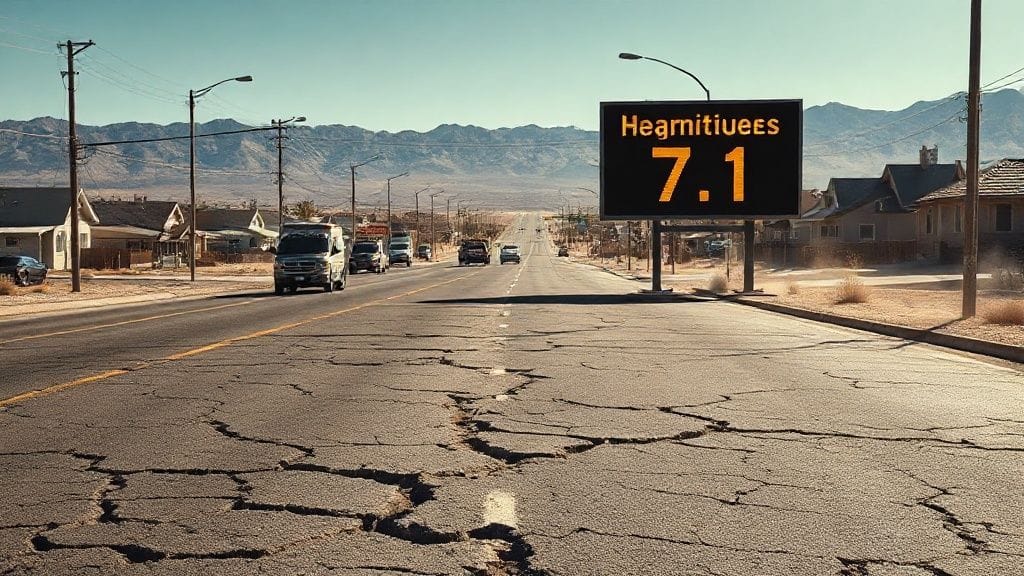
The earthquakes wreaked havoc on Ridgecrest’s infrastructure. One of the hardest-hit was the region’s primary transportation artery—State Route 178—which sustained cracks and damage that delayed emergency response and hindered evacuation routes.
Electrical grids faltered, leaving tens of thousands without power. Water mains were ruptured in several neighborhoods, complicating recovery efforts. The Naval Air Weapons Station China Lake, an essential military installation nearby, experienced shocks but reported no major damage, underscoring the strategic importance of robust infrastructure in quake zones.
Repairs began swiftly, but it was clear the event exposed vulnerabilities in the area’s ability to withstand seismic shocks—calling for upgrades and reassessments.
Scientific Race: Seismologists Capturing Data in Real Time
For geologists and seismologists, Ridgecrest was a seismic laboratory. Instrumentation from USGS and university teams promptly recorded a detailed dataset unprecedented for quakes in this desert region.
Experts worldwide closely monitored the aftershocks, analyzing waveforms, rupture dynamics, and ground deformation via satellite imagery. The event offered unique insights into fault interaction and stress transfer mechanisms.
Dr. Lucy Jones, renowned seismologist, remarked in an interview: “Ridgecrest has shown us the interconnectedness of fault systems—earthquakes can cascade and interact in ways we hadn’t fully grasped.”
This data would shape future earthquake preparedness strategies and hazard models for decades.
The Military’s Earthquake Echo: Proximity to Naval Air Weapons Station China Lake
The Ridgecrest quakes’ proximity to the Naval Air Weapons Station (NAWS) China Lake was a matter of national interest. NAWS, a critical site for weapons testing and military innovation, lies approximately 15 miles from the epicenter.
Fortunately, military personnel reported no injuries or significant damage. Rigorous safety standards and built-to-withstand structures played a vital role. Nonetheless, the quakes underscored the strategic importance of maintaining military readiness in seismically active regions and spurred renewed assessments of risk in defense facilities.
Stories from the Ground: Eyewitness Accounts and Personal Testimonies
Among the rubble and dust, individual experiences painted a vivid human portrait of Ridgecrest’s ordeal. Maria Lopez, whose home was heavily damaged, recounted the moment: “It felt like the world was breaking beneath my feet… I grabbed my children and ran outside, terrified but thankful to be alive.”
Others described how pets behaved restlessly before the first earthquake, sensing tremors imperceptible to humans. Some took solace in faith or community support groups, while local artists channeled their anxieties into murals and memorials.
These personal narratives bridged the impersonal data with the emotional heartbeat of lived experience.
The Economic Toll: Damage Estimates and Recovery Costs
Damage assessments soon revealed a toll amounting to hundreds of millions of dollars. Insurance claims surged, businesses faced interruptions, and homeowners grappled with repairs.
Kern County officials estimated that structural damages, infrastructure repairs, and economic disruption caused losses exceeding $200 million. Importantly, the region’s relative remoteness helped prevent a catastrophe on an even larger scale, but the earthquake nevertheless stressed state emergency funds and insurance systems.
Rebuilding efforts ramped up, supported by federal disaster declarations and aid programs targeting the most vulnerable residents.
California’s Earthquake Preparedness Put to the Test
The Ridgecrest earthquakes tested California’s sophisticated earthquake preparedness frameworks. The ShakeAlert early warning system, designed to provide seconds of forewarning to residents, activated successfully, sending alerts to smartphones and public systems.
Emergency drills, public awareness campaigns, and well-practiced response protocols were credited with saving lives and minimizing panic. However, the event also exposed gaps, such as vulnerabilities in older buildings and rural communication blackouts.
For policymakers, Ridgecrest was both a vindication of preparedness efforts and a clarion call for continued vigilance and investment.
Media Coverage: The Nation’s Eye on Ridgecrest
National and international media converged quickly on Ridgecrest. News outlets broadcast live images of cracked highways and shaken neighborhoods, while experts discussed the potential for aftershocks or even larger quakes.
Social media amplified local voices, offering intimate glimpses of life during and after the shocks. “It was an earthquake event like no other in recent memory,” noted a CNN correspondent.
Yet media also faced challenges, balancing accurate information with rumors and sensationalism, highlighting the importance of responsible journalism in times of crisis.
Strategic Learnings: How Ridgecrest Changed Seismic Risk Perceptions
For years, California’s focus lay heavily on the San Andreas Fault itself. But Ridgecrest reinforced that the Eastern California Shear Zone and other lesser-known faults are potent earthquake sources deserving equal attention.
Ridgecrest’s complex rupture patterns spurred a reassessment of seismic hazard maps and emergency response planning. The event highlighted the need for a nuanced understanding of fault networks and the unpredictable nature of seismic cascades.
Scientists and engineers would now approach California’s earthquake threat landscape with broader eyes and sharpened tools.
Long-term Environmental Consequences: Fault Lines and Desert Shifts
Beyond human tragedy and economic cost, the quakes altered the physical landscape. Satellite and aerial surveys revealed subtle but permanent ground shifts, new fault scarps, and changes in groundwater flow.
The desert terrain showed signs of newfound instability. Natural habitats for local flora and fauna faced disruption. While these changes were incremental, they underscored the earth’s shifting character and the ongoing evolution of California’s geological tapestry.
Psychological Impact: PTSD and Community Healing
The emotional scars of Ridgecrest proved lasting. Psychologists reported increased cases of anxiety, post-traumatic stress disorder, and insomnia among residents.
Community counseling programs and support networks became essential elements of recovery. Faith-based groups, schools, and local governments collaborated to promote mental health awareness and resilience-building activities.
The earthquake was not just a physical jolt—it was a deep emotional upheaval that required care and patience to heal.
Comparing Ridgecrest to Past California Quakes
The Ridgecrest events drew inevitable comparisons to quakes like the 1994 Northridge quake or the 1989 Loma Prieta earthquake. Unlike the massive urban disasters that struck densely populated centers, Ridgecrest's impact was localized but complex.
Seismologists noted that Ridgecrest was a vivid example of multi-fault rupturing, a phenomenon that could foreshadow even bigger earthquakes under certain conditions.
By linking Ridgecrest to past experiences, Californians gained a more layered understanding of seismic hazards.
Political Responses: Local and State Government Actions
In the quake’s aftermath, political leaders acted swiftly. California’s governor declared a state of emergency within hours, unlocking funds and resources.
Local officials coordinated with FEMA to provide relief and recovery support. Legislative discussions focused on earthquake resilience—including retrofitting programs, building code enhancements, and funding for scientific research.
Ridgecrest became a catalyst for renewed political will to make the golden state safer against future shocks.
The Role of Technology: From Early Warning Systems to Social Media
Technology played a pivotal role in the Ridgecrest event. ShakeAlert’s warnings, real-time seismic data feeds, and satellite imagery enabled rapid assessment and informed responses.
Social media enabled fast communication, rumor control, and community mobilization. Among the most notable was a grassroots effort that used Twitter and Facebook to map damage and coordinate aid.
Ridgecrest demonstrated how modern technology interweaves with ancient natural phenomena, shaping 21st-century disaster management.
Community Solidarity: Grassroots Movements and Volunteer Efforts
What stood out in the Ridgecrest story was the community’s heart. Local volunteers organized supply drives, neighborhood watch groups, and mental health workshops.
Churches and schools opened their doors as respite centers. The spontaneous acts of kindness and solidarity underscored the human capacity to grow stronger in the face of adversity.
This collective spirit became a beacon of hope amid the shaking earth and crumbled walls.
Scientific Debates Spurred by Ridgecrest’s Unusual Seismic Patterns
The complexity of Ridgecrest’s seismicity sparked intense academic debate. Some researchers proposed that triggered earthquakes on multiple faults might challenge traditional fault segmentation models.
Others examined how the event fit into broader patterns of stress transfer across Southern California. These discussions enriched scientific understanding but also highlighted the inherent uncertainty in earthquake prediction.
Ridgecrest thus became a case study for the ongoing evolution of seismological theory.
The Aftermath Months Later: Recovery Progress and Lingering Threats
Months after the shaking ceased, recovery was well underway but incomplete. Infrastructure improvements, home repairs, and economic stimulus had helped the city rebound, yet reminders of the quake remained.
Aftershocks, some reaching significant magnitudes, continued intermittently—keeping nerves frayed. Emergency preparedness drills became more frequent as residents adjusted to a new normal.
Ridgecrest’s story was still unfolding, a testament to endurance in a restless land.
Global Resonance: Ridgecrest in the Context of Worldwide Seismic Activity
Though a local event, Ridgecrest echoed globally among seismic communities. Comparable earthquake sequences in Turkey, Japan, and New Zealand prompted international researchers to analyze Ridgecrest data for broader insights.
The quake underscored universal challenges: living with geological hazards, balancing preparedness with unpredictability, and the human stories bridge scientific analysis and survival.
In this way, Ridgecrest became part of a global dialogue on natural disasters.
Reflections: What Ridgecrest Tells Us About Living with Nature’s Fury
Ultimately, Ridgecrest challenges us to contemplate humanity’s place within the vast, indifferent processes of the planet. It is a story of tension and release, destruction and rebuilding, fear and courage.
It reminds us of the fragility of our built environment and the resilience of communities bound by shared ordeal. As we study its legacy, Ridgecrest calls for humility before nature and determination to adapt and endure.
Conclusion
The Ridgecrest earthquakes of July 2019 were far more than mere geological events; they were lived experiences that reshaped a community, tested a state, and enriched the scientific understanding of one of Earth’s most dynamic regions. The quakes revealed the intricate dance of fault systems beneath the desert and exposed the complex layers of human vulnerability—from infrastructure to psychology.
Yet through the shaking and uncertainty, Ridgecrest demonstrated a profound human truth: in crisis, solidarity emerges stronger. Families, first responders, scientists, and officials united in acts of courage, compassion, and learning. As the dust settled over Kern County’s cracked earth, an enduring lesson remained—that though we cannot command the earth’s tremors, we can rise resilient, wiser, and hopeful.
In a world increasingly aware of natural disasters’ toll, Ridgecrest stands as both a cautionary tale and a beacon of collective strength—a vivid chapter in the ongoing story of humanity’s relationship with the restless planet beneath our feet.
FAQs
1. What caused the Ridgecrest earthquakes?
The Ridgecrest earthquakes were caused by the release of accumulated tectonic stress along faults in the Eastern California Shear Zone, part of the boundary between the Pacific and North American Plates.
2. How powerful were the Ridgecrest earthquakes?
The two main events were a magnitude 6.4 on July 4th and a larger magnitude 7.1 on July 5th, making the 7.1 quake the strongest in California in 20 years at that time.
3. Were there any casualties in the Ridgecrest earthquakes?
Fortunately, there were no direct fatalities reported, though several injuries occurred and significant property damage was sustained.
4. How did Ridgecrest’s proximity to military installations affect the response?
The nearby Naval Air Weapons Station China Lake experienced the shaking but reported no major damage, and military resources aided local emergency responses.
5. Did California’s early warning systems work during Ridgecrest?
Yes, the ShakeAlert system successfully issued earthquake warnings, providing residents with critical seconds to prepare before shaking began.
6. What are the long-term effects on Ridgecrest’s community?
Communities faced economic challenges, psychological impacts including PTSD, and ongoing aftershocks, but recovery efforts and solidarity fostered resilience.
7. How does Ridgecrest compare to other famous California earthquakes?
Ridgecrest was less deadly but notable for complex multi-fault rupturing and providing scientific insights into seismic interactions beyond the San Andreas Fault.
8. Has Ridgecrest changed earthquake preparedness in California?
Yes, it prompted reassessments of seismic hazard maps, emergency response plans, infrastructure resilience, and emphasized the importance of monitoring lesser-known fault zones.