Table of Contents
- The Dawn of a Dark Day: August 24, 410 in Rome
- The Eternal City's Heart in Fear: Setting the Scene
- Roots of Ruin: Rome’s Political and Social Fragility
- Alaric the Visigoth: From Mercenary to King
- The Gothic Foothold: From Ally to Adversary
- Rome’s Waning Power: A Republic Lost in Transition
- A Thread Frays: Relations Between Rome and the Visigoths
- The Siege Begins: Alaric’s March Toward the Heart of Empire
- The Walls of Rome: Defenses Tested and the City Vulnerable
- Inside the City: Anxiety, Chaos, and the People’s Plight
- The Fall of August 24: The Sacking Unfolds
- Voices from the Ruins: Chroniclers and Witnesses Speak
- The Impact on the Roman Psyche: Bearers of Shock and Despair
- When the Empire Stumbled: Political Fallout and Power Shifts
- Economic Reverberations: The Cost of Invasion
- Cultural Memories: Art, Religion, and Literature After the Sack
- Alaric’s Legacy: The Visigoths’ New Dominion
- The Sack as a Turning Point: End of an Era, Dawn of Another
- Remnants of Rome: Survival and Transformation in the Fifth Century
- Historical Debate: Myth and Reality of the 410 Sack
- Lessons Learned: Rome’s Fall in Modern Perspective
- Conclusion: The Aftershock of a Lost Empire
- FAQs: Understanding the 410 Sack of Rome
- External Resource
- Internal Link
The Dawn of a Dark Day: August 24, 410 in Rome
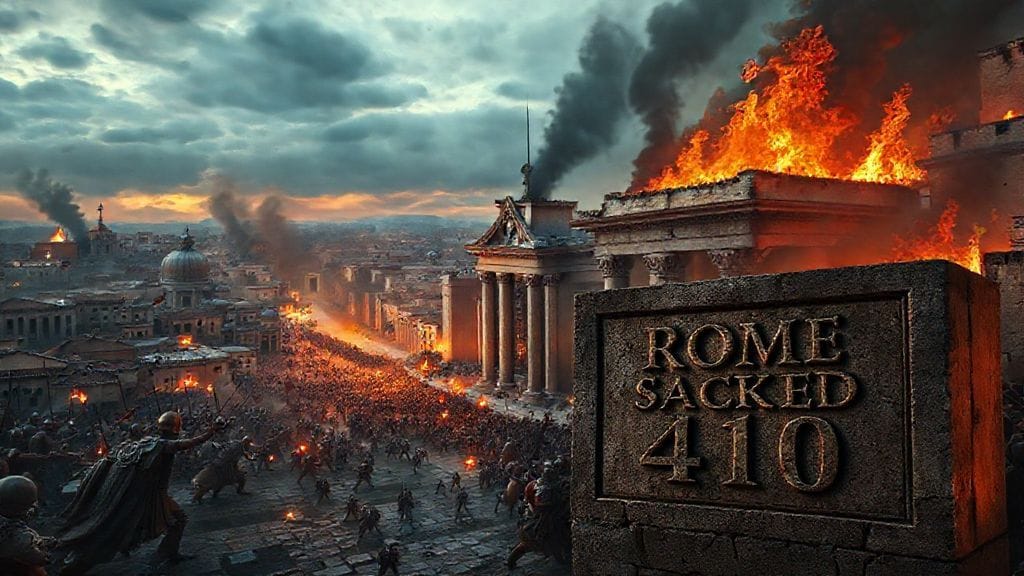
When the first shadows of dawn crept over the ancient rooftops of Rome on August 24, 410, an unease hung in the air, almost palpable like a prelude to a storm. The Eternal City, cradle of empires and the symbol of world dominion, was about to face an unprecedented ordeal—a sack by a barbarian horde led by Alaric, king of the Visigoths. It was a day that shattered illusions, a day where centuries of Roman grandeur seemed to teeter on the brink of oblivion. The sounds that echoed through the streets were not triumphant parades or the chants of citizens celebrating empire; instead, they carried the terror of gates broken, homes plundered, and the roar of a civilization in crisis.
This was no mere raid; it was the fall of a symbol that had stood undefeated for nearly eight centuries. The sack of Rome in 410 was more than a military event—it was a seismic rupture in the fabric of Western civilization.
The Eternal City's Heart in Fear: Setting the Scene
For centuries, Rome had been the epicenter of power, civilization, and culture. By 410, however, the city's splendor had faded to an echo of its former self. The grandeur of marble forums, temples, and basilicas contrasted starkly with the growing disrepair of the urban landscape and the fractured political order.
Citizens, nobles, soldiers, and slaves alike sensed the unease. Rumors whispered in the bakeries and marketplaces told of Alaric’s approach, of armoured men cutting through Italy's countryside, and of alliances shifting like sands. The once impregnable city now found itself battered by forces it had underestimated for decades.
Roots of Ruin: Rome’s Political and Social Fragility
The sack did not occur in a vacuum. Rome’s decline was rooted in complex political mismanagement, economic strain, and societal fractures. The Western Roman Empire, fragmented and besieged by internal corruption and external pressures, staggered under the weight of failed reforms, relentless warfare, and a decline in civic pride.
At the same time, the empire faced escalating tension with the so-called “barbarian” tribes—groups often recruited into Roman armies as mercenaries but increasingly asserting their own agendas. The Visigoths themselves were once allies turned adversaries, illustrating Rome’s perilous dependency on these outsiders.
Alaric the Visigoth: From Mercenary to King
To understand the sack, we must first understand Alaric. Born around 370 AD, Alaric embodied the complexity of his era—a man forged within the Roman military machine yet forever linked to his Gothic heritage. Rising to kingship among the Visigoths, he possessed strategic brilliance and a singular drive: to secure a homeland and dignified role for his people within the imperial order.
His life was defined by negotiations, betrayals, and battles—moving fluidly between commander and rebel, ally and enemy. Alaric’s growing frustration with Roman duplicity and broken promises set the stage for the fateful march on Rome.
The Gothic Foothold: From Ally to Adversary
The Visigoths were not initially foes. Enslaved or recruited into Roman ranks following horrific invasions by the Huns, Gothic warriors became indispensable in defending imperial borders. Yet, their demand for land and respect clashed with Rome's inability to reconcile these needs with its tenuous grasp on power.
Repeated failed treaties and unmet demands bred resentment. The Visigoths lingered as a powder keg at the empire's edges. Their resentment found a leader in Alaric, whose ambition to deliver justice and survival for his people fueled the drive towards confrontation.
Rome’s Waning Power: A Republic Lost in Transition
By the early 5th century, Rome no longer ruled as a republic nor as the autocratic empire it once was. The political center had shifted to Ravenna, home to the Western emperor Honorius, leaving Rome vulnerable. The city had become a shadow of past glory, governed by bureaucrats and plagued by factionalism and intrigue.
Military power was fragmented. Garrisoned troops could scarcely defend the walls, and local militias were erratic and uncoordinated. This political and military vacillation was a perilous invitation to outside forces hungry for influence.
A Thread Frays: Relations Between Rome and the Visigoths
Tensions escalated over years of broken treaties, mistreatment of Gothic soldiers, and the refusal of land settlements that might integrate the Visigoths peacefully. Each negotiation felt like a fresh wound, each slur a crack in diplomacy.
Alaric sent envoys, demanded titles, and sought inclusion within the imperial hierarchy. But instead of alliance, he faced scorn and evasion. The brittle thread of peace frayed, unraveling into open conflict as Alaric’s patience wore thin.
The Siege Begins: Alaric’s March Toward the Heart of Empire
In 408 AD, Alaric and his forces moved with purpose through Italy, bypassing weaker targets to focus on the ultimate prize: Rome itself. The passage was a calculated campaign of pressure and intimidation, sparing some cities while devastating others.
The Roman population braced for what many believed impossible. How could the city's walls be breached after centuries of defense? What fate awaited its residents? The Visigoths encamped in the shadow of the empire’s greatest city, preparing for a siege that would change history.
The Walls of Rome: Defenses Tested and the City Vulnerable
Rome’s legendary walls had repelled countless sieges, but time and neglect had taken their toll. Maintenance was erratic due to funding shortages and political neglect, and the garrison was scattered thinly around the vast circumference.
Despite this, the city defenders rallied under generals who understood the catastrophic stakes. Yet, internal divisions and limited manpower weakened the defense. The Visigoths, experienced in siege warfare, exploited every weakness.
Inside the City: Anxiety, Chaos, and the People’s Plight
Fear gripped Rome’s diverse population. Senators and patricians debated evacuation; merchants shuttered shops; common folk sought refuge in churches or hidden cellars. The urban cacophony was pierced by cries of desperation and muted prayers.
Amid the chaos, stories flourished—mothers holding children close as fires broke out, priests administering last rites, soldiers preparing for a final, desperate stand. The city transformed into an emotional crucible, where hopes flickered and despair deepened.
The Fall of August 24: The Sacking Unfolds
On that sweltering August day, the Visigoths breached portions of the walls. The exact moment remains obscured by time and legend, but what followed was a carefully controlled yet ruthless ransacking. Unlike earlier barbarian raids characterized by unrestrained slaughter, Alaric had imposed discipline, restricting bloodshed largely to military and political targets.
Still, the destruction was vast: temples desecrated, homes looted, art and treasures seized. The shockwave rippled through the empire, a vivid symbol of Rome’s vulnerability.
Voices from the Ruins: Chroniclers and Witnesses Speak
Few records capture the sack’s full horror, but surviving sources paint a raw picture. St. Jerome lamented the “weeping and gnashing of teeth.” The poet Rutilius Namatianus mourned his city “spattered with the blood of its defenders.” Augustine of Hippo, in his Confessions, contemplated the spiritual implications.
These voices reveal a city not just physically wounded but spiritually and psychologically shaken.
The Impact on the Roman Psyche: Bearers of Shock and Despair
The sack triggered a crisis of confidence. For centuries, Romans believed their city’s walls and divine favor made them invincible. Now, this myth lay shattered. Anxiety spread across the known world, from Constantinople to Carthage.
The sack became a metaphor for empire’s fragility, prompting soul-searching among intellectuals, clergy, and rulers alike. The event pressed a deeper question: was Rome’s destiny truly over?
When the Empire Stumbled: Political Fallout and Power Shifts
Rome’s political order trembled. Emperor Honorius, secluded in Ravenna, was unable to prevent the sack and gained a reputation of impotence. Factions within the empire jockeyed for power, and barbarians like the Visigoths gained territories and legitimacy.
The sack weakened imperial authority but also revealed new dynamics of power—where former enemies became federated allies and foreshadowed medieval realignments.
Economic Reverberations: The Cost of Invasion
Economically, the sack wrought ruin. Trade routes were disrupted, wealth drained through plunder, and the local economy collapsed under the weight of destruction and population displacement.
Rome’s role as a commercial and administrative hub diminished sharply; its granaries emptied, artisans fled, and tax revenues dwindled. This economic shock accelerated the Western empire’s decline.
Cultural Memories: Art, Religion, and Literature After the Sack
Yet, out of destruction arose cultural reflection. Christian thought gained momentum, interpreting the sack as divine judgment and a call for spiritual renewal. Artistic expressions grew more somber, focused on themes of transience and redemption.
Literature mourned a lost golden age but also sought to reinterpret history, setting the foundation for the early medieval worldview rooted in faith rather than imperial power.
Alaric’s Legacy: The Visigoths’ New Dominion
Alaric did not long survive the sack. He died shortly afterward, his burial surrounded by legend and secrecy. His successors, however, transformed the Visigoths from transient marauders into rulers, establishing a kingdom within the ruins of the empire.
This new order would influence Mediterranean politics for centuries, blending Roman institutions with Gothic traditions.
The Sack as a Turning Point: End of an Era, Dawn of Another
The 410 sack was not the end of Rome, but a symbolic turning point. It marked the definitive collapse of Roman omnipotence in the West and heralded the transition to a medieval world where power was fragmented and identities redefined.
Historians view it as a warning and a pivot—loss and transformation intertwined.
Remnants of Rome: Survival and Transformation in the Fifth Century
Despite devastation, Rome endured. Its survivors adapted, mixing barbarian and Roman customs, the city shrinking yet maintaining symbolic importance.
Church leaders rose as civic defenders. The city became a place where old traditions waned but new foundations took hold—a microcosm of Europe’s transformation.
Historical Debate: Myth and Reality of the 410 Sack
For centuries, debate swirled around the sack’s meaning and magnitude. Some viewed it as catastrophic decline; others as a necessary catalyst for renewal.
Recent scholarship has nuanced understandings of the event, emphasizing complexity over simple narratives of ruin.
Lessons Learned: Rome’s Fall in Modern Perspective
The sack prompts reflection on resilience, decline, and cultural adaptation. How societies respond to crisis, rebuild identity, and negotiate new realities remains relevant.
Rome’s fall offers caution and insight into the cycles of power and civilization.
Conclusion
The sack of Rome in 410 was a moment that transcended military conquest. It unveiled the vulnerability of even the mightiest empires and heralded profound transformations in the political, social, and cultural fabric of Europe. Alaric’s Visigoths tore through walls fashioned by centuries but also through illusions of invincibility. Yet, amid ruins and despair, the seeds of renewal were sown—where faith, adaptation, and resilience would redefine what Rome meant to the world.
This event reminds us that history is never merely about collapse; it is a story of endurance, rebirth, and the human spirit’s capacity to find meaning in the darkest hours.
FAQs
Q1: Why did Alaric and the Visigoths sack Rome in 410?
A1: The Visigoths sought recognition, land, and security within the Roman Empire. After repeated failed negotiations and betrayals, Alaric resorted to military action to assert his people's demands, culminating in the sack.
Q2: Was the sack of Rome by Alaric a total destruction of the city?
A2: No. The sack involved looting and some destruction but was more controlled than later ‘barbarian’ raids. Alaric reportedly imposed discipline to limit unnecessary violence.
Q3: How did the sack of Rome affect the Western Roman Empire politically?
A3: The sack further weakened already fragile imperial authority and accelerated the fragmentation of the Western Empire's political structure.
Q4: What was the reaction of the Roman people and Christian leaders to the sack?
A4: Many saw the sack as a divine punishment and a sign of moral and spiritual decline, prompting increased Christianization and reflections on the empire’s fate.
Q5: Did Alaric’s death occur immediately after the sack?
A5: Yes. Alaric died shortly after the sack, around 410 or 411, marking the end of his personal ambitions though his successors carried on Visigothic influence.
Q6: How does history view the 410 sack today?
A6: Modern historians view it as a complex turning point—a great shock but also a symbol of transition rather than absolute collapse.
Q7: What long-term impact did the Visigoths have after sacking Rome?
A7: They established kingdoms in parts of former Roman territory, particularly in Gaul and Hispania, influencing medieval European political and cultural landscapes.
Q8: Was Rome ever sacked again after 410?
A8: Yes, notably by the Vandals in 455 and later by other groups, but the 410 sack remains the most symbolic for marking the decline of ancient Rome.

