Table of Contents
- A Night of Unseen Fury: The Ryukyu Islands Tsunami of April 24, 1771
- Setting the Stage: Life and Landscape of 18th-Century Ryukyu
- The Geological Theater: Tectonics Beneath the Pacific
- The Earth Moves: The Great Earthquake that Shook the Ryukyus
- Dawn Delivers Disaster: The Arrival of the Killer Wave
- The Unimaginable Force: Tsunami’s Rampage Across Islands and Reefs
- Human Stories in the Wake of Catastrophe: Survivors and Loss
- The Response of Old Ryukyu Kingdom: Governance and Relief Efforts
- The Historical Significance: Bridging Myth and Reality
- Scientific Insights from a Pre-Modern Disaster
- The Long Shadow: How the 1771 Tsunami Shaped Ryukyu’s Cultural Memory
- Comparative Tragedies: The Ryukyu Tsunami Within Global Contexts
- Seismic Lessons: Evolving Understanding of Tsunami Risk in Okinawa
- Modern Day: Preserving Memory and Preparing for the Future
- Conclusion: The Enduring Echo of the 1771 Ryukyu Islands Tsunami
- Frequently Asked Questions
- External Resource
- Internal Link
1. A Night of Unseen Fury: The Ryukyu Islands Tsunami of April 24, 1771
On a tranquil spring evening, under skies brushed with the soft colors of dusk, the people of the Ryukyu Islands felt the earth shudder beneath their feet. Many paused, puzzled. But this tremor was only the harbinger — minutes later, a monstrous wall of water surged relentlessly toward their shores, swallowing whole villages, reshaping coastlines, extinguishing lives. It was April 24, 1771, an evening that would etch itself indelibly into the memory of Okinawa and its neighboring isles. This was the day when nature’s untamed fury revealed the Ryukyu Islands’ vulnerability to the unyielding forces of the Pacific Ocean.
From the vantage point of history, the 1771 tsunami stands as one of the deadliest and most significant natural disasters in the region’s past. Yet this event is often overshadowed by more recent tragedies in Japan and across the globe. To grasp its magnitude, we need to look not only through the lens of raw destruction but also through the prism of culture, response, and legacy.
2. Setting the Stage: Life and Landscape of 18th-Century Ryukyu
The Ryukyu Islands in the late 18th century formed an independent kingdom, politically and culturally distinct but deeply connected through trade and diplomacy with both Japan and China. Stretching over 1,200 kilometers in the East China Sea, these islands hosted a vibrant society built on fishing, agriculture, and a flourishing maritime trade network.
Villages clustered around coral reefs and sandy beaches framed by the gentle sway of palm trees and the chorus of cicadas. Houses made of wood, thatch, and coral stones stood testament to a community harmoniously adapted to its island environment. Life was interconnected, emphasizing communal resilience, spiritual reverence for nature, and a delicate balance with the ocean’s gifts and dangers.
Yet, this idyll concealed a latent peril. The Ryukyus sit astride a zone of intense tectonic activity, where the Philippine Sea Plate grinds against the Eurasian and Pacific plates. To these islanders, the mountains and sea were both protector and threat — a duality seething beneath daily existence.
3. The Geological Theater: Tectonics Beneath the Pacific
The Ryukyu archipelago owes its rugged form and fragile stability to the forces deep beneath the Earth’s crust. Nestled along the Ryukyu Trench, this subduction zone is where a descending tectonic plate plunges beneath the overriding continental plate, creating immense pressure and tension over centuries.
When released, this tension manifests as powerful earthquakes and, inevitably, tsunamis. The 1771 disaster originated from a massive undersea earthquake, whose magnitude modern science estimates between 7.4 and 8.0 on the Richter scale. The fault shaking the seafloor triggered a colossal displacement of ocean water that rushed toward the inhabited shores with horrifying speed.
Understanding this complex geology is vital to comprehend how nature’s slow-motion mechanisms can unleash sudden, devastating fury. The invisible forces beneath the ocean floor are memory keepers of millennia, and their release ripples across human history and geography.
4. The Earth Moves: The Great Earthquake that Shook the Ryukyus
On that fateful evening of April 24, 1771, the earth trembled violently beneath the Ryukyu Islands. Contemporary chroniclers recorded ground shaking so intense that trees were uprooted, stone walls collapsed, and many homes were rendered uninhabitable.
Eyewitness accounts, passed down through generations, described the ominous rumble growing into a roar that swallowed the night’s natural sounds. The quake lasted long enough to set nerves on edge and force entire communities outdoors, scanning the horizon in confusion and dread.
This seismic event was not just a geological occurrence; it was a pivotal moment that ruptured not only the land but the social fabric — setting the stage for an even more terrifying force to arrive.
5. Dawn Delivers Disaster: The Arrival of the Killer Wave
Before the shaken islanders could begin to comprehend the quake’s damage, an even deadlier visitor emerged with the dawn. The ocean, typically a giver of life, withdrew far from the shoreline—a macabre silence preceding the storm of floodwater.
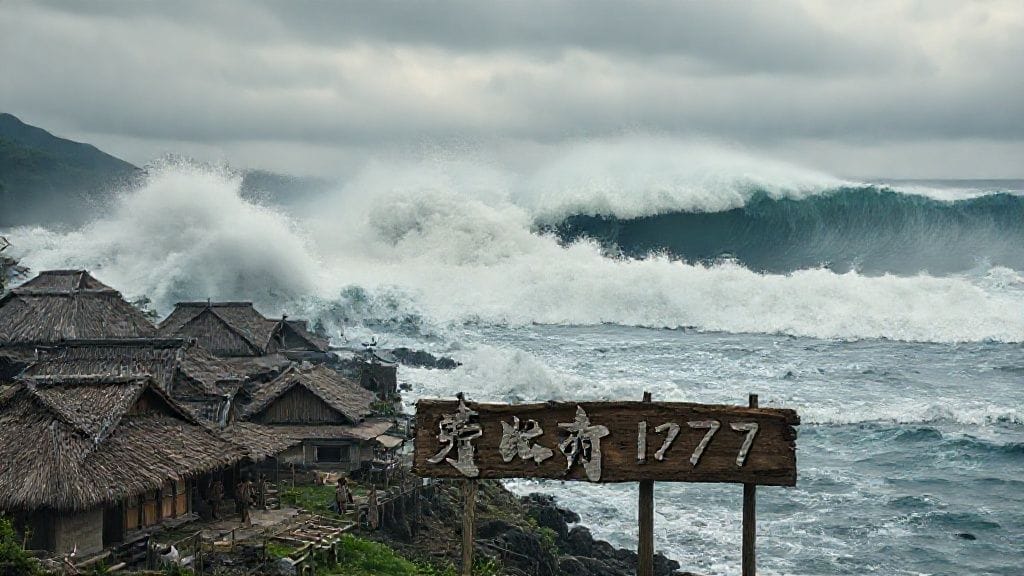
Then, with a silence broken only by crashing waves, a towering tsunami bore down. Estimates suggest waves reached heights of 30 meters in places—an overwhelming surge that obliterated everything in its path. Villages perched along the coastlines were swept away. Boats, homes, crops, and precious relics vanished beneath the surging waters.
The tsunami’s speed left little room for escape. For many, the sea transformed from a source of livelihood into a grave. The ocean rose and fell repeatedly, battering shores for hours, as if nature itself was venting a centuries-long pent-up rage.
6. The Unimaginable Force: Tsunami’s Rampage Across Islands and Reefs
The geographical makeup of the Ryukyu Islands — a chain of small islands, coral reefs, and narrow coastal plains — magnified the tsunami’s devastation. Coral reefs, usually protective barriers, amplified the force of the water in some areas, funneling waves into narrow inlets and amplifying destruction inland.
Entire communities on islands such as Ishigaki and Miyako faced annihilation. Crops and forests were destroyed, contaminating freshwater sources and leaving survivors to face hunger and disease. The relentless waterway erased generations of built heritage, including religious shrines, marketplaces, and ancestral homes.
This physical devastation was mirrored by a traumatic psychological impact. Oral histories describe how villagers watched the sea devour their elders, friends, and kin, instilling a profound collective grief that would persist across time.
7. Human Stories in the Wake of Catastrophe: Survivors and Loss
Among the ruins, individual stories of survival emerged — a child clinging to driftwood, a fisherman who escaped by swimming against the current, a mother shielding her infant with her body. These human snapshots reveal the depth of tragedy beyond numbers.
Contemporary estimates suggest more than 13,000 people perished, representing roughly one-third of the Ryukyu population at the time. Entire families vanished; some communities were decimated to the point of near-erasure.
But out of this mass suffering rose stories of resilience. Survivors regrouped, shared scant resources, and led community rebuilding efforts. Oral traditions passed down their experiences as warnings and as testaments to human endurance in the face of nature’s indifference.
8. The Response of Old Ryukyu Kingdom: Governance and Relief Efforts
The Ryukyu Kingdom’s leadership faced a monumental challenge. Without modern communication or disaster relief mechanisms, officials sought to organize aid, manage scarce supplies, and maintain social order.
The King reportedly ordered an assessment of affected areas, directing the collection of food reserves and coordination of shelter for the displaced. Tax relief measures were enacted, and religious ceremonies held to appease spiritual forces believed to influence the calamity.
These efforts underscored a society striving to blend practical governance with cultural traditions, seeking solace and recovery amid the ruins. Yet, the scale of the disaster overwhelmed the kingdom’s limited resources, leaving scars visible for decades.
9. The Historical Significance: Bridging Myth and Reality
Like many natural disasters in pre-modern societies, the 1771 tsunami entered the realm of myth alongside factual chronicles. Folklore developed around “Namazu,” the giant catfish believed to cause earthquakes in Japanese mythology, and spiritual interpretations of the tsunami as divine retribution or warnings.
By weaving together eyewitness accounts and later historiography, scholars have sought to disentangle myth from history, restoring the tsunami to its rightful place as a pivotal event in Ryukyu’s narrative and Japanese natural disaster history.
This duality reveals how societies interpret catastrophe — not merely as an isolated event but as part of their existential dialogue with nature, fate, and the divine.
10. Scientific Insights from a Pre-Modern Disaster
Retrospective scientific study of the 1771 Ryukyu tsunami has offered valuable insights into seismic hazard assessment in the region. Geological surveys, sediment analysis, and historical records allow modern seismologists to reconstruct the event’s parameters.
Recognizing the earthquake as a “megathrust” event has informed understanding of local tsunami generation mechanisms and helped refine early warning systems. The disaster highlights the critical role of cross-disciplinary research incorporating history, geology, and archaeology in reducing future risks.
Such knowledge bridges centuries — reminding us how past tragedies enlighten present and future disaster preparedness.
11. The Long Shadow: How the 1771 Tsunami Shaped Ryukyu’s Cultural Memory
Memories of the 1771 tsunami endured through oral tradition, ritual, and community practice. Annual memorial ceremonies and prayers for the dead became fixtures in local calendars, linking generations to their ancestors’ suffering and resilience.
Artistic expressions, including songs, poems, and woodblock prints, have preserved the vivid imagery and emotional weight of that day. The tsunami became a symbol of both nature’s terrifying power and the islanders’ unyielding spirit.
In this way, history lived not only in books but in hearts and culture, shaping identity and fostering a shared sense of vulnerability and hope.
12. Comparative Tragedies: The Ryukyu Tsunami Within Global Contexts
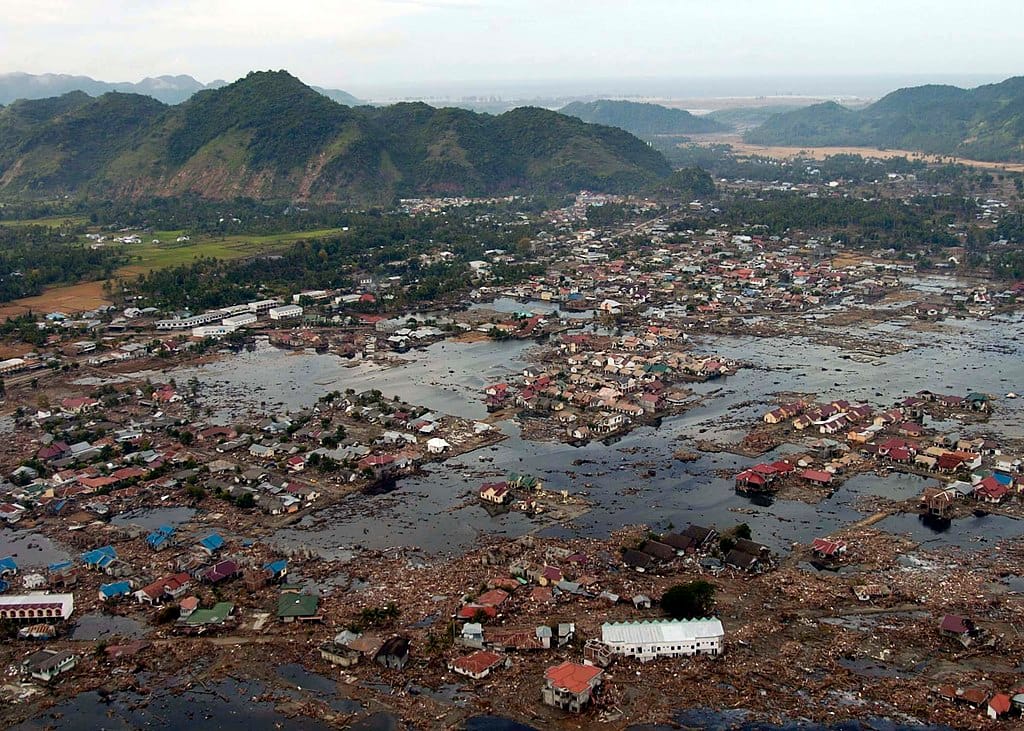
When viewed alongside other historic tsunamis—such as the 1700 Cascadia event in North America or the 2004 Indian Ocean tsunami—the Ryukyu disaster emerges as a critical point of comparison for understanding the universal human response to natural catastrophes.
Its relatively early documentation, blend of empirical observations, and myth make it a rich case study for disaster historians. Lessons drawn resonate far beyond the Pacific, underscoring the shared fragility of coastal communities worldwide.
13. Seismic Lessons: Evolving Understanding of Tsunami Risk in Okinawa
In modern Okinawa, a region restless with seismic activity, the 1771 tsunami remains a touchstone. It prompted generations of cautious respect for geological threats and informed the design of infrastructure and community planning.
Emergency drills, tsunami evacuation maps, and education programs all trace a lineage back to this historic event. Scientists and policymakers collaborate to mitigate risks through early warning systems and public engagement — a testament to learning from history to safeguard the future.
14. Modern Day: Preserving Memory and Preparing for the Future
Today, the story of the 1771 Ryukyu tsunami is preserved in museums, archives, and public consciousness across Okinawa. Educational programs recount the disaster, integrating local knowledge and scientific rigor.
Contemporary issues—rising sea levels, climate change, population growth—give new urgency to these lessons, blending history with the future-oriented goals of disaster resilience. Memorials stand not just as relics of tragedy but as beacons of preparedness and community solidarity.
15. Conclusion: The Enduring Echo of the 1771 Ryukyu Islands Tsunami
The Ryukyu Islands tsunami of 1771 was more than a catastrophic moment; it was a profound turning point in human-nature relations for centuries to follow. It revealed the delicate balance between island life and oceanic forces, showing both vulnerability and remarkable resilience.
As waves sculpt landscapes and memories, the event continues to echo in the collective consciousness. Its lessons — scientific, cultural, and human — remind us that even in the face of overwhelming disaster, communities endure, adapt, and remember. The spirit of the Ryukyu Islanders, tested by waves of unimaginable power, remains an enduring testament to humanity’s capacity to confront nature’s extremes with courage and hope.
Conclusion
The 1771 Ryukyu Islands tsunami was a defining catastrophe that tested the very fabric of island life. Beneath the tranquil seas of the Pacific, geological pressures simmered, culminating in a night of earthquake and unprecedented waves that extinguished thousands of lives and transformed the Ryukyus forever. Yet, from the depths of loss emerged a narrative rich in resilience, cultural memory, and scientific insight—one that continues to inform and inspire.
History’s power lies not only in the recounting of past sufferings but in the illumination of human endurance and adaptation. The story of the Ryukyu tsunami beckons us to listen carefully to the lessons held in the silent depths beneath the sea and to honor the spirit of communities bound by place, memory, and survival.
FAQs
Q1: What caused the 1771 Ryukyu Islands tsunami?
The tsunami was triggered by a massive undersea megathrust earthquake along the Ryukyu Trench, where the Philippine Sea Plate subducts beneath the Eurasian Plate.
Q2: How many people were affected by the tsunami?
Approximately 13,000 people died, which was about one-third of the Ryukyu population at the time, with many more displaced and injured.
Q3: How did the Ryukyu Kingdom respond to the disaster?
The kingdom organized relief efforts including resource distribution, tax reductions, and spiritual ceremonies, although limited means hampered the scale of aid.
Q4: What is the historical importance of this tsunami?
It stands as one of the deadliest natural disasters in Japanese history, shaping local culture, disaster awareness, and scientific study of seismic risks in the Pacific.
Q5: How is the 1771 tsunami remembered today?
Through cultural traditions, memorial ceremonies, educational programs, and scientific research, especially in Okinawa where the disaster is a key part of regional heritage.
Q6: Did this tsunami influence modern disaster preparedness?
Yes, it helped inform early warning practices and risk management strategies in tsunami-prone regions, contributing to contemporary safety protocols.
Q7: Are there geological records that confirm the 1771 event?
Yes, sediment deposits and geological surveys corroborate historical accounts, allowing scientists to reconstruct the earthquake and tsunami’s impact.
Q8: How does the Ryukyu tsunami compare with other historic tsunamis?
Its devastating loss and cultural imprint render it an important case study, comparable to other major tsunamis such as the 1700 Cascadia or 2004 Indian Ocean events.