Table of Contents
- The Siege That Changed the Holy Land Forever
- Jerusalem on the Brink: A City Divided and Desperate
- Saladin: The Man Behind the Crescent and the Sword
- The Build-Up to October 1187: From Hattin to Holy City
- The Defenders of Jerusalem: Crusaders in Their Last Stand
- The Road to Jerusalem: Saladin’s Strategic Mastery
- The Siege Begins: Tension Mounts in the Holy City
- The Month of Fear and Faith: The Siege in Full Fury
- Negotiation Amidst Siege: Saladin’s Diplomacy and Mercy
- The Fall of Jerusalem: October 2, 1187, a Day Etched in History
- The Fate of the Crusaders and Citizens: Pardons, Captivity, and Ransom
- Saladin’s Victory: A Triumph of Strategy and Compassion?
- The Reaction in Christendom: Shockwaves Across Europe
- The Call for the Third Crusade: A New Chapter of War
- Jerusalem under Muslim Rule: Shifts in Culture and Society
- The Myth and Memory of 1187: How the Fall Still resonates
- Legacy of Saladin: The Chivalrous Sultan in History and Legend
- Jerusalem’s Eternal Struggle: A City at the Crossroads of Faith and Empire
- Lessons from 1187: War, Religion, and Power in the Medieval World
- Conclusion: Saladin’s Jerusalem—A Chapter Closed, A Story Unending
- FAQs: Everything You Wanted to Know about the Fall of Jerusalem
- External Resource: Discover More through Wikipedia
- Internal Link: Explore More at History Sphere
1. The Siege That Changed the Holy Land Forever
The early October sun hung low over Jerusalem’s ancient skyline, casting long shadows over the city’s walls. On October 2, 1187, a turning point in history unfolded—not through the clash of endless armies but through the silent fall of a fortress that had symbolized the Christian Crusader states for nearly a century. The city’s gates were opened to the forces of Saladin, the legendary Sultan of Egypt and Syria, a man whose name would echo through ages as both a fierce warrior and a magnanimous ruler.
For weeks, the air was thick with anticipation, fear, and the prayers of thousands—Christians clinging to hope, while Muslim soldiers and inhabitants looked toward a new dawn. Beyond the siege towers and battlements, the destinies of empires and religions hung in balance. This was not just a military conquest. It was a moment where faith, politics, and humanity collided.
2. Jerusalem on the Brink: A City Divided and Desperate
Jerusalem, the "City of Peace," was anything but peaceful in the decades leading to 1187. Since its capture by the First Crusade in 1099, it had been a prize coveted and contested, a symbol of divine destiny for both Christians and Muslims in an era where faith often dictated the fate of kings and commoners alike.
By the late 12th century, Jerusalem found itself a fragile jewel caught between the waning power of the Crusader Kingdom of Jerusalem and the rising tides of Islamic unity under Saladin. The city was a melting pot of pilgrims, soldiers, merchants, and refugees, but one scarred by recent defeats, internal divisions, and dwindling resources.
3. Saladin: The Man Behind the Crescent and the Sword
Born Yusuf ibn Ayyub in Tikrit around 1137, Saladin rose from the swirling chaos of the Seljuk Turks and Fatimid Egypt to create an empire that spanned Egypt, Syria, and much of the Levant. His name, Salah ad-Din (Righteousness of the Faith), would soon become synonymous with courage, strategy, and unexpected mercy.
Unlike many rulers of his time, Saladin was both a devout Muslim and a pragmatic leader. Combining religious zeal with political acumen and military prowess, he won loyalty not just by sword but through diplomacy and fairness—a fact that complicated the simplistic portrayal of “enemy” found in many contemporary Christian chronicles.
4. The Build-Up to October 1187: From Hattin to Holy City
The seeds of Jerusalem’s fall were sown months before when Saladin’s forces annihilated the Crusader army at the Battle of Hattin in July 1187. The Christians, led by King Guy of Lusignan, suffered one of their most crushing defeats, losing much of their fighting force and the legendary True Cross, a sacred relic.
This victory shattered the fragile Crusader presence in the region and cleared the way for Saladin’s march toward key fortresses and, ultimately, Jerusalem itself. Yet, the city’s siege was not a simple operation; it required patience, preparation, and the management of a city teetering on collapse.
5. The Defenders of Jerusalem: Crusaders in Their Last Stand
Inside the city walls, the beleaguered defenders, led by Balian of Ibelin, faced an impossible dilemma. Survivors of Hattin and refugees flooded Jerusalem seeking shelter, swelling the population but draining already scarce supplies. Disease and starvation haunted the streets as desperate families and soldiers prepared for a siege they could barely comprehend.
Balian, a noble and capable leader, represented the last hope for the Crusaders. Despite having little military experience, his courage and negotiations during the siege would become legendary—demonstrating how sometimes the pen and voice could balance the sword.
6. The Road to Jerusalem: Saladin’s Strategic Mastery
Saladin’s campaign was not merely a series of battles; it was a masterclass in medieval warfare. Understanding the symbolic and practical significance of Jerusalem, he avoided unnecessary cruelty or destruction that would harden enemy resistance and alienate local populations.
From capturing strategic castles to securing supply lines and forging alliances, his approach ensured that by the time his forces reached Jerusalem, they were prepared not just to fight but to impose control that would last.
7. The Siege Begins: Tension Mounts in the Holy City
As September 1187 wore on, the walls of Jerusalem rang with the clash of siege engines and the cries of watchmen. The city’s inhabitants braced for the inevitable onslaught, with prayers echoing through the streets and the Cathedral of the Holy Sepulchre.
The psychological warfare was as intense as the physical—rumors of merciless massacre spread, feeding dread. Yet, Saladin, mindful of the city’s religious importance, tempered his forces’ fury, sending messages that hinted at mercy, complicating both the defenders’ and the inhabitants’ responses.
8. The Month of Fear and Faith: The Siege in Full Fury
The siege unfolded over several weeks, marked by intermittent attacks and cautious pushes. Lives were lost on both sides; tunnels were dug, walls battered, and supplies exhausted.
For the besieged, every day was a cruel test of endurance, faith, and leadership. For Saladin’s army, it was a demonstration of discipline and resolve. The faithful from both religions saw this as a decisive moment—a clash not only of soldiers but of wills and divine favor.
9. Negotiation Amidst Siege: Saladin’s Diplomacy and Mercy
In an unusual move for the period, Saladin received emissaries from Balian proposing surrender terms to avoid wholesale slaughter. Rather than impose harsh ultimatums, Saladin offered relatively lenient terms; those unable to pay ransom would be freed, and Christian holy sites would be respected.
This act of mercy—whether genuine or strategic—was remarkable in an era often marked by brutal reprisals. Chroniclers on both sides noted the humanity Saladin displayed, painting a complex picture of a conqueror who also knew restraint and politics.
10. The Fall of Jerusalem: October 2, 1187, a Day Etched in History
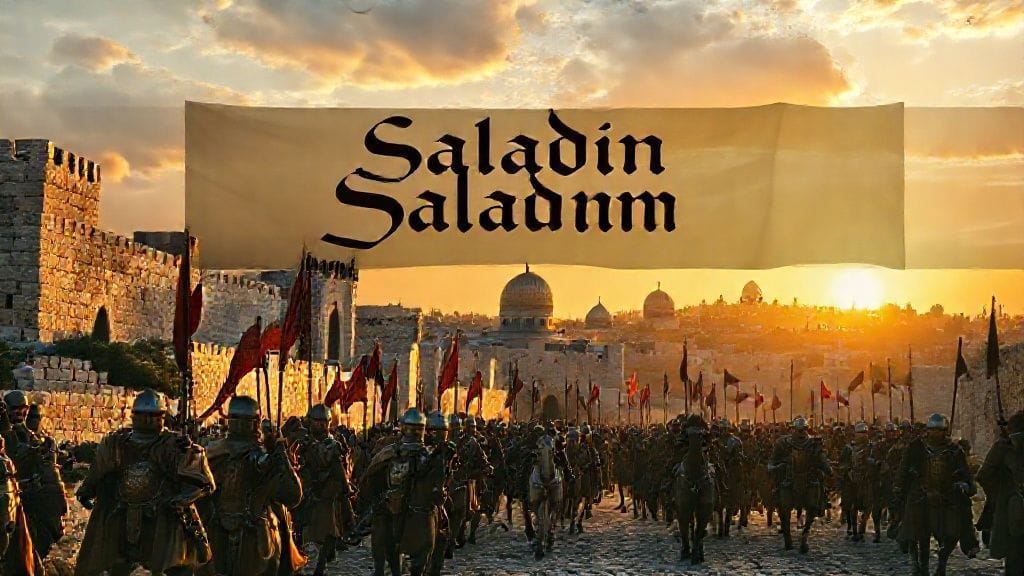
On the morning of October 2, the gates of Jerusalem were opened. Saladin’s banners waved as his troops entered, not as marauders but as victors mindful of the city’s place in Islam, Christianity, and Judaism.
Rather than an immediate massacre, the transition was marked by a solemn sense of history turning its page—a city reconquered, but one that inspired awe in the chivalrous manner of its leader.
11. The Fate of the Crusaders and Citizens: Pardons, Captivity, and Ransom
Saladin’s magnanimity extended to the treatment of prisoners and citizens. Many Crusaders were ransomed, sometimes with aid from European merchants or the Church. Others who could not pay were freed. Christian holy sites were left intact and respected.
Still, the fall was painful—thousands were displaced, futures uncertain. Stories emerge from this period of personal sacrifice, negotiation, and the intertwining of mercy and harsh necessity.
12. Saladin’s Victory: A Triumph of Strategy and Compassion?
Saladin’s capture of Jerusalem was not just a military conquest; it was a political and religious statement. He had united the Muslim world behind him and dealt a blow to Crusader pride.
Yet, beyond the battlefield, his treatment of Jerusalem demonstrated a vision rare for his age—one where victory did not necessitate utter destruction but could coexist with mercy and respect for rival faiths.
13. The Reaction in Christendom: Shockwaves Across Europe
News of Jerusalem’s fall sent tremors through Europe. The Crusader states seemed vulnerable, and the loss of the “Holy City” was perceived as a divine setback for Christendom.
Calls for a new crusade spread quickly, eventually culminating in the launch of the Third Crusade led by figures such as Richard the Lionheart. Letters and sermons from this time reveal desperation, faith, and determination intertwined in European hearts.
14. The Call for the Third Crusade: A New Chapter of War
The loss of Jerusalem ignited what many historians term the Third Crusade (1189-1192). The crusade aimed not only to reclaim Jerusalem but to reassert Christian dominance in the Levant.
Richard I of England, Philip II of France, and Frederick Barbarossa of the Holy Roman Empire became central players. Yet, despite several military successes, the Third Crusade would fail to retake Jerusalem, cementing Saladin’s legacy.
15. Jerusalem under Muslim Rule: Shifts in Culture and Society
With the city under Ayyubid control, Jerusalem saw renewed integration into the Islamic world. Religious tolerance, economic revitalization, and architectural development marked this era.
Christian pilgrimage continued, albeit under Muslim oversight, and the city became a symbol of Islamic resurgence and the complexity of coexistence across faiths.
16. The Myth and Memory of 1187: How the Fall Still Resonates
Through centuries, the story of Jerusalem’s fall became legend. Crusader and Muslim chroniclers alike recounted tales of bravery, honor, and sacrifice.
Saladin’s image morphed into that of a chivalrous knight, admired even by his enemies. The event profoundly shaped Christian-Muslim relations and the cultural imagination of multiple civilizations.
17. Legacy of Saladin: The Chivalrous Sultan in History and Legend
Saladin’s legacy is inseparable from his conquest of Jerusalem. His reputation as a warrior who balanced faith, mercy, and pragmatism survives in history books, films, and literature.
Modern scholarship continues to explore the man behind the myth, revealing a leader deeply shaped by his time yet far ahead in his approach to power.
18. Jerusalem’s Eternal Struggle: A City at the Crossroads of Faith and Empire
The 1187 siege was one episode in Jerusalem’s long history of contention. A city sacred to Judaism, Christianity, and Islam, it has endured countless sieges, rulers, and religions.
Saladin’s capture opened a chapter that would influence the struggles for centuries to come—a testament to the city’s enduring power and fragility.
19. Lessons from 1187: War, Religion, and Power in the Medieval World
The fall of Jerusalem reveals complex intersections of faith, warfare, politics, and human morality. It challenges simplistic narratives of “good” and “evil” and offers insights into leadership, diplomacy, and cultural friction in medieval geopolitics.
It reminds us how profoundly religion and identity shaped the medieval world—and, indeed, still echo in modern conflicts.
20. Conclusion: Saladin’s Jerusalem—A Chapter Closed, A Story Unending
Saladin’s capture of Jerusalem was more than a military victory; it was a testament to the power of strategy, faith, and humanity entwined. The day the city gates opened to the crescent banner marked the end of one era and the beginning of another.
In the shadow of those ancient walls, one sees not just conquest, but a reminder that history’s deepest conflicts are also stories of people—their hopes, fears, and capacity for mercy amid war.
Conclusion
The fall of Jerusalem to Saladin on October 2, 1187, stands as one of the most defining moments of the medieval world. It was a turning point not just in the Crusades but in the shared history of civilizations bound by faith and ambition. In the quiet dignity with which Saladin conducted his conquest, we glimpse a rare harmony between the harsh realities of war and the enduring capacity for mercy and respect.
The siege and subsequent surrender of Jerusalem foreground timeless dilemmas of religious conflict and coexistence—not simply a story of battlefield might but a narrative rich with human complexity. It reminds us that behind great historical events are leaders and peoples capable of both cruelty and compassion.
Even today, as Jerusalem remains a city at the heart of spiritual devotion and political unrest, the echoes of 1187 resonate—a historical chapter that continues to inspire reflection on peace, power, and the profound meanings of conquest.
FAQs
1. Why was the Battle of Hattin so crucial to the fall of Jerusalem?
The Battle of Hattin decisively destroyed the Crusader forces in July 1187, leaving Jerusalem vulnerable and defenseless. Its defeat removed the primary obstacle to Saladin’s advance, directly enabling the siege of the city.
2. Who was Balian of Ibelin, and what role did he play during the siege?
Balian of Ibelin was a nobleman and leader who organized the defense of Jerusalem and negotiated the city’s surrender. His leadership was instrumental in securing terms that spared many lives.
3. How did Saladin treat the citizens and defenders after the city fell?
Saladin showed uncommon mercy, allowing many Christians to ransom themselves or freeing those who could not pay. He protected holy sites and avoided the massacres common in warfare at the time.
4. What was the immediate impact of Jerusalem’s fall on Europe?
The fall shocked European Christendom, leading to a renewed call for crusades, particularly the Third Crusade, mobilizing armies under Richard the Lionheart and others to reclaim the city.
5. Did Saladin’s conquest permanently end Christian control over Jerusalem?
While Saladin’s capture shifted control for decades, Jerusalem would change hands multiple times in subsequent crusades and conflicts, reflecting the city’s ongoing contested status.
6. How is Saladin remembered today across different cultures?
Saladin is celebrated as a symbol of chivalry, leadership, and respect even among his enemies. He remains a towering figure in Middle Eastern history and a legendary character worldwide.
7. What were the religious implications of Saladin’s conquest for Jerusalem?
The conquest reaffirmed Jerusalem’s significance in Islam while maintaining respect for its Christian and Jewish heritage, creating a complex coexistence that shaped the city’s religious landscape.
8. How did the Third Crusade unfold following Jerusalem’s fall?
Launching in 1189, the Third Crusade achieved military victories but ultimately failed to retake Jerusalem. It ended with treaties allowing Christian pilgrimage but Muslim political control.

