Table of Contents
- A Dawn of Defiance: The Morning of March 12, 1930
- The Seeds of Rebellion: India Under British Rule
- Gandhi’s Vision: The Philosophy Behind the March
- The Salt Tax: A Symbol of Imperial Oppression
- Preparing for the Journey: Mobilizing a Nation
- The First Step from Sabarmati Ashram
- The March Through Villages: Encounters and Emotions
- Growing Momentum: The People’s Response
- The Role of Women and Youth in the March
- British Authorities in Alarm: Surveillance and Strategy
- The Arrival at Dandi: The Moment of Historic Defiance
- Making Salt: From Protest to Act of Civil Disobedience
- The Arrest of Gandhi and Leaders: Silence or Catalyst?
- The Spread of Salt Satyagraha Across India
- International Reactions: Sympathy and Support
- Repercussions: Imprisonments, Riots, and Suppression
- The Salt March in the Global Context of Anti-Colonial Movements
- Legacy of the Salt March: Civil Rights and Nonviolence
- Remembering the March: Monuments and Narratives
- Conclusion: A Journey that Changed the World
- FAQs
- External Resource
- Internal Link
A Dawn of Defiance: The Morning of March 12, 1930
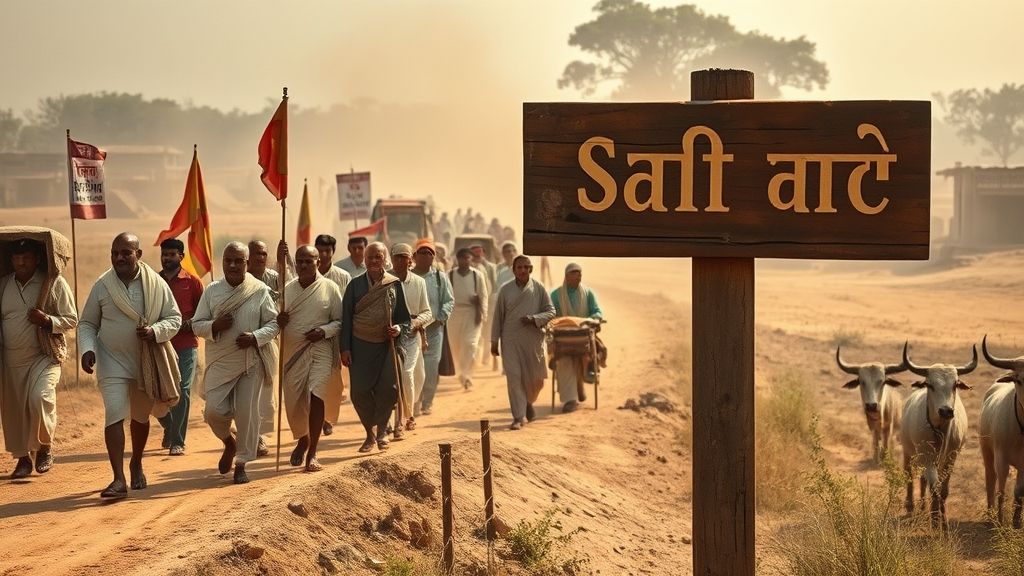
As dawn broke over Ahmedabad, the Sabarmati Ashram stirred to life with an unusual vibrancy. There was a solemn energy in the air—a cocktail of hope, determination, and unshakable calm before a storm that would roar across an empire. Mahatma Gandhi, serene yet resolute, stepped onto the dusty path outside the ashram’s gates. Alongside seventy-eight committed satyagrahis, barefoot and clad in simple homespun khadi, he set foot on a journey that would etch itself indelibly into the annals of history—the Salt March to Dandi.
The sun rose over the western horizon, casting long shadows, marking the beginning of a 24-day trek spanning some 240 miles (390 kilometers). It was not merely a physical journey but a symbolic walk of resistance, an act of rebellion woven with threads of deep meaning — challenging the British colonial monopoly on salt, a necessity so basic it underscored the injustice of imperial rule.
The Seeds of Rebellion: India Under British Rule
To truly understand March 12, 1930, we must peer back into the tangled roots of India’s colonial subjugation. By the early 20th century, British imperialism had firmly grasped the Indian subcontinent for nearly two centuries, shaping its economy, politics, and society. The British Raj was an extractive regime, where taxes and monopolies drained the wealth and spirit of India while fostering stark poverty for millions.
Salt, a staple of the Indian diet and livelihood, was emblematic of this exploitation. The British imposed a heavy salt tax, regulating production and sale, forbidding Indians from collecting or producing their own salt. This tax was particularly cruel because salt was an essential mineral, vital for everyday life — making the tax a cruel emblem of colonial domination.
Indian dissent had bubbled long before 1930. The Indian National Congress had championed self-rule (Swaraj), mass protests had erupted previously, but progress was slow and often fractured. Into this milieu stepped Gandhi, who envisioned not only political independence but a moral revolution led by nonviolent resistance.
Gandhi’s Vision: The Philosophy Behind the March
Mahatma Gandhi was no ordinary man. His philosophy of satyagraha — adherence to truth and nonviolent protest — reimagined resistance not as violent upheaval but as a morally pure confrontation with injustice.
The Salt March was meticulously conceived as a keystone in this approach. By focusing on salt, Gandhi targeted an issue that transcended class, caste, and religion. It was a unifying cause that could awaken the masses from political apathy, channeling their frustration into constructive civil disobedience.
Gandhi famously said, “With your freedom and mine, we must be ready to pay any price.” Salt, inexpensive and everyday, became the weapon of choice in this struggle—a weapon accessible to the humblest of Indians.
The Salt Tax: A Symbol of Imperial Oppression
The salt tax was more than an economic burden. It was symbolic of British arrogance and insensitivity. By monopolizing salt production and imposing harsh penalties on those who defied the law, the British declared to Indians that even the earth beneath their feet belonged to their colonial rulers.
The British collected enormous revenue from the salt tax, which was regressive—falling hardest on the poor. Peasants in coastal regions were forbidden from producing salt; inland communities had to purchase it at inflated prices. This injustice epitomized the colonial state's exploitation and struck a nerve among millions.
Breaking this law, therefore, was not a mere act of theft; it was a deliberate and public repudiation of foreign rule and its moral bankruptcy.
Preparing for the Journey: Mobilizing a Nation
In the weeks leading to March 12, 1930, the Sabarmati Ashram buzzed with preparations. Gandhi and his followers fasted, meditated, and discoursed. The marchers prepared themselves physically and spiritually.
Yet, the movement was not confined to the ashram. Across India, Congress leaders and volunteers canvassed support, educated the public about the salt laws’ cruelty, and called for constructive participation. The movement attracted an unprecedented cross-section of society: students, peasants, businessmen, women, and laborers.
The government was aware of the brewing insurgency, but hoped to intimidate the protestors into silence. The level of organization and grassroots enthusiasm surprised them.
The First Step from Sabarmati Ashram
On March 12, Gandhi’s departure was a quiet but momentous act. The 78 followers—many of whom were seasoned activists—walked out with their leader, their faces etched with unwavering resolve.
As they marched, villagers greeted them with flowers and blessings. The group’s attire—simple white homespun cloth—signified a rejection of imported British textiles and an embrace of Swadeshi, or indigenous pride.
This walk was slow and deliberate, a daily rhythm of 10 to 15 miles, allowing Gandhi to engage with people on the road, distributing leaflets and explaining the campaign’s aims.
The March Through Villages: Encounters and Emotions
The route from Ahmedabad to Dandi passed through small villages and towns where British rule often felt remote, but its effects were tangible—poverty, hunger, and repression were daily realities.
Gandhi's presence electrified the air. Villagers lined the roads, waving, offering food, or tearfully expressing their hardships. Though the marchers were few, their impact was immense. News spread by word of mouth, newspapers, and telegraphs.
These encounters knit the movement’s fabric tighter, establishing emotional bonds between the satyagrahis and the people. “It was not just a march, but a pilgrimage of hope,” recalled one participant decades later.
Growing Momentum: The People’s Response
By the time the march neared Dandi, thousands had joined or followed mentally, if not physically. Volunteers across India began producing salt illegally, breaking the law en masse.
The Salt March inspired an unparalleled surge in political engagement. Literacy, caste, gender—the usual barriers diminished in the face of this unifying struggle.
The British administration found itself unable to contain the swelling tide. Newspapers reported mass gatherings, chants of “Inquilab Zindabad”—Long live the revolution—became common.
The Role of Women and Youth in the March
While Gandhi and his close male followers led the march, women and young people played crucial roles behind the scenes and in towns and villages along the way.
Women such as Sarojini Naidu and Kasturba Gandhi mobilized support, organized protests, and took leadership roles later in the movement. They faced police repression and imprisonment but remained resolute.
The youth, inspired by Gandhi’s example, began to participate in civil disobedience acts, spreading the message in schools and rural areas. This intergenerational commitment revitalized the freedom struggle.
British Authorities in Alarm: Surveillance and Strategy
The British colonial government faced a dilemma—how to respond without igniting full-scale rebellion? Initially, surveillance tightened. Police shadowed the marchers, attempting to intimidate locals sympathetic to them.
Plans for mass arrests were underway. The colonial press sought to portray Gandhi as a dangerous agitator, warning of unrest.
Yet, repression only strengthened resolve; the government’s heavy-handed tactics exposed their fears and galvanized more Indians to join the cause. For many, Gandhi became a living symbol of resistance.
The Arrival at Dandi: The Moment of Historic Defiance
On April 6, 1930, after 24 grueling days and countless miles, Gandhi reached the coastal village of Dandi. Thousands gathered to witness the symbolic moment.
At dawn, Gandhi bent down, scooped a small pinch of natural salt from the shore, and held it aloft. This act—simple, peaceful, defiant—was explosive in meaning. The salt was a claim not only to physical rights but to India’s sovereignty.
“What I have said here today is still not an end, but a beginning,” Gandhi proclaimed. This was a palpable turning point, a spark lighting the hope for India’s liberation.
Making Salt: From Protest to Act of Civil Disobedience
Following Gandhi’s act, salt production and consumption of illegal salt multiplied across the country. Villages began making salt by evaporating seawater or extracting it from the earth, deliberately breaking British law.
This mass civil disobedience challenged the legitimacy of British authority and showcased the power of nonviolent resistance in practice—breaking unjust laws openly, prepared to accept punishment.
The government responded with arrests and crackdowns. Political prisoners swelled, and yet the movement's moral force grew.
The Arrest of Gandhi and Leaders: Silence or Catalyst?
In May 1930, Gandhi was arrested, sparking national and international attention. Far from silencing the movement, his imprisonment turned him into a global icon of peaceful resistance.
The British underestimated the resilience of the Indian people. Leaderless, the movement spilled into riots, boycotts, and strikes.
Gandhi’s arrest also exposed the contradictions of British claims to justice and democracy—a colonial power suppressing calls for basic fairness.
The Spread of Salt Satyagraha Across India
The Salt March ignited spontaneous acts of civil disobedience nationwide. In coastal areas from Gujarat to Bengal, salt was made illegally and consumed proudly.
Cities like Bombay and Calcutta witnessed mass demonstrations. Workers refused to pay taxes, students boycotted schools, and peasants staged protests.
This wave of rebellion lasted months, laying bare the pressures forcing the British government to reconsider its grip on India.
International Reactions: Sympathy and Support
Gandhi’s march received wide coverage in the international press. Movements for civil rights, anti-colonialism, and social justice around the world saw in Gandhi a source of inspiration.
Figures from W.E.B. Du Bois to Albert Einstein praised the moral clarity and courage of the campaign.
The Salt March influenced later struggles in the United States, South Africa, and beyond, imprinting a legacy of nonviolent protest strategies on global history.
Repercussions: Imprisonments, Riots, and Suppression
The British did not yield easily. The crackdown involved widespread arrests of leaders and participants, often accompanied by violence, beatings, and imprisonment.
Riots broke out in some areas, testing Gandhi’s commitment to nonviolence. Balancing mass mobilization with peaceful discipline became an ongoing challenge.
Economically, the boycott of British salt and goods caused strain, both for colonial authorities and Indian industries dependent on imperial trade.
The Salt March in the Global Context of Anti-Colonial Movements
The Salt March was part of a wave of global resistance during the interwar period. Colonized peoples in Africa, Asia, and the Caribbean observed and learned from Gandhi’s approach.
It challenged the notion that imperial authority was invincible and inspired a new generation of activists who envisioned liberation through nonviolent methods.
The March unfolded at a time when the world was awakening from the shadows of World War I to confront issues of freedom, justice, and self-determination.
Legacy of the Salt March: Civil Rights and Nonviolence
The Salt March remains a powerful symbol of civil disobedience and grassroots political mobilization. It demonstrated that ordinary people, united by conscience and courage, could challenge an empire.
Its influence extended beyond India’s independence in 1947, inspiring civil rights leaders like Martin Luther King Jr. and Nelson Mandela.
Today, the march is remembered as a beacon of hope—proof that injustice can be confronted without hatred, by the steadfast light of nonviolence.
Remembering the March: Monuments and Narratives
Across India, sites along the Salt March route have become places of pilgrimage and reflection. Museums preserve artifacts, and schools teach the stories of the marchers’ sacrifices.
Annually, commemorations recall that unassuming beginning in Ahmedabad, connecting present generations to the relentless spirit of freedom fighters.
The march’s imagery—simple sandals, rolled-up pants, handfuls of salt—remain etched in collective memory.
Conclusion: A Journey that Changed the World
The Salt March to Dandi did not merely alter the course of India’s struggle for independence; it transformed the very art of resistance worldwide. The image of an elderly man walking hundreds of miles to make salt reframed power dynamics between ruler and ruled.
The march distilled the complexity of colonial injustice into a single act of profound moral clarity—an act that awakened a nation and inspired movements far beyond its borders.
March 12, 1930, was not just a day of departure—it was the dawn of a new political language, one where nonviolence became a force mightier than the sword.
FAQs
Q1: Why did Gandhi choose salt for his protest?
Salt was chosen because it was essential to all Indians regardless of social class or religion, making it a unifying issue. It symbolized the injustice of British taxation on a basic necessity.
Q2: How long did the Salt March last?
The march lasted 24 days, from March 12 to April 6, 1930, covering approximately 240 miles from Ahmedabad to Dandi.
Q3: What was the British government’s initial reaction?
The British responded with surveillance, arrests, and attempts to suppress the movement but underestimated its popularity and moral force.
Q4: Did the Salt March immediately lead to Indian independence?
No, but it significantly intensified the freedom struggle, raising national and international awareness, and laying groundwork leading to independence in 1947.
Q5: Who were some notable figures involved besides Gandhi?
Leaders such as Sarojini Naidu, Vallabhbhai Patel, and Kasturba Gandhi played important roles in the broader civil disobedience movement.
Q6: How did the Salt March influence global movements?
It inspired nonviolent resistance worldwide, including the U.S. civil rights movement and anti-apartheid struggles, showcasing the power of peaceful civil disobedience.
Q7: Were women involved in the Salt March?
Yes, women actively participated in supporting roles and protests, and some led local acts of civil disobedience.
Q8: Is the Salt March commemorated today?
Absolutely—through anniversaries, museums, and educational curricula throughout India and beyond, honoring the courageous marchers and their ideals.