Table of Contents
- The Fiery Dawn: San Salvador on the Brink, June 1917
- The Sleeping Giant: Historical Context of Boquerón Volcano
- El Salvador in the Early 20th Century: Society on Edge
- Scientists and Seers: Predicting a Disaster Before Its Time
- The First Tremors: Signs of an Awakening
- June 1917: When Boquerón Roared to Life
- The Clouds of Ash: A City Engulfed
- Flames and Fear: Human Stories from the Eruption
- Government Response and Emergency Measures
- The Role of Media: Eyewitness Accounts and Global Perception
- The Aftermath: Destruction and Devastation
- Economic Fallout: Agriculture and Trade in a Volcanic Shadow
- Humanitarian Efforts: Relief and Reconstruction
- Volcanic Legacy: How San Salvador’s Landscape Was Changed Forever
- The Psychological Impact: Trauma and Myth in Popular Memory
- Comparing 1917 to Later Eruptions: Lessons Learned
- Modern Scientific Understanding of Boquerón’s Activity
- The 1917 Eruption in Salvadoran Culture and Identity
- Volcanoes as Nation-Makers: The Role of Disaster in Shaping El Salvador
- Environmental Changes and Long-Term Ecological Aftermath
- The Political Climate Before and After the Eruption
- Personal Testimonies: Voices from Survivors and Witnesses
- Memorializing Tragedy: Monuments, Literature, and Oral Traditions
- Conclusion: The Flames that Forged a City’s Resilience
- FAQs: Key Questions on the 1917 San Salvador Eruption
- External Resource
- Internal Link
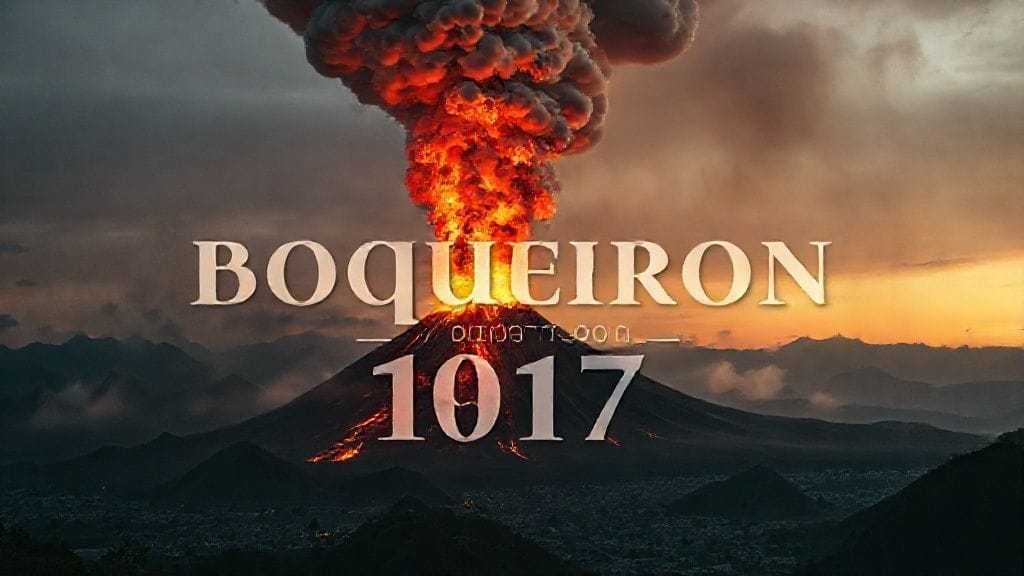
The early morning of June 25, 1917, whispered nothing of the horror to come. San Salvador, nestled beneath the watchful eye of the Boquerón volcano, awoke to a day much like any other, its streets alive with the routine clamor of merchants, children, and laborers. Yet, beneath the surface—the very ground beneath their feet—an ancient force was stirring. Moments later, the city would be darkened not by night, but by plumes of ash and smoke, and its people would confront a natural fury that would scar both the land and their souls for generations. The San Salvador (Boquerón) eruption of 1917 is not merely a tale of geological upheaval, but a profound chapter in the human drama—a testament to resilience amid devastation.
The Fiery Dawn: San Salvador on the Brink, June 1917
The morning of June 25 was deceptive in its calmness. From a distance, the sacred volcano Boquerón—part of the larger San Salvador volcano complex—loomed, its summit cloaked in a thin veil of clouds. There was no rumble, no warning shout from the earth. Then, without the gentle prelude that modern seismology might have detected, a violent blast ripped through the basalt rock. The mountain exhaled a massive column of ash and gas, blotting out the sunlight.
Within minutes, a chromatic hell descended over the city. Ash rained down like a sinister snowfall, coating rooftops and choking airways. The eruption was swift, relentless, and complete in its fury. Streets vanished beneath layers of gritty dust, cries echoing between trembling walls. This was the moment when the human spirit was tested against the indomitable force of nature.
The Sleeping Giant: Historical Context of Boquerón Volcano
Boquerón volcano itself is a giant with a long history of slumber and sudden bursts of violence. Part of the Pacific volcanic chain, its origins trace back thousands of years, formed by tectonic activity along the Central American Volcanic Arc. Over centuries, it had carved and recarved the landscape around San Salvador, frequently reminding its inhabitants that beneath their feet lay an unpredictable power.
However, by the early 20th century, Boquerón was considered dormant. Many locals regarded the volcano as a protective guardian rather than a threat, a silent observer watching over their livelihoods. This perception would soon be shattered as the eruption unfolded, exposing the precarious balance of life and earth in this region.
El Salvador in the Early 20th Century: Society on Edge
At the time, El Salvador was a nation grappling with political instability, social inequality, and economic hardship. Largely agrarian, the country relied heavily on coffee exports, with the land owned predominantly by a small elite. The common people—farmers, laborers, and indigenous communities—lived modestly, often under harsh conditions.
San Salvador, the capital, was growing but still limited in infrastructure and emergency preparedness. Medical facilities were sparse, and the local government lacked resources for large-scale disaster response. Yet the spirit of the Salvadoran people remained vibrant: a mosaic of cultures, traditions, and dreams, standing at the crossroads of modernization and tradition.
Scientists and Seers: Predicting a Disaster Before Its Time
The understanding of volcanology in 1917 was still rudimentary by today’s standards. While some early seismic observations had taken place, the scientific community in El Salvador was young and underfunded. Informants and observers—ranging from local priests to foreign engineers—had noted signs of restlessness in Boquerón in the weeks preceding the eruption.
Interestingly, indigenous oral traditions also spoke of terrible eruptions and warnings passed down through generations, understood as omens in their own spiritual languages. The disconnect between modern science and native knowledge was palpable but unheeded until the mountain finally roared.
The First Tremors: Signs of an Awakening
Weeks before the eruption, residents reported faint tremors, strange smells of sulfur in the air, and occasional rumblings from the volcano. Even these subtle phenomena stirred unease but did not prompt evacuation or serious concern. Newspapers carried cautious reports, some skeptical, others anxious.
In hindsight, these initial seismic signs foreshadowed the imminent eruption—a ticking clock on a scale vastly beyond human control.
June 1917: When Boquerón Roared to Life
The eruption began with a sudden explosive burst, sending ash and rock fragments hundreds of meters into the sky. Lava flows started carving through the landscape, while pyroclastic flows raced down the volcano's slopes, sparking fires and destruction.
For the people of San Salvador, the event was catastrophic. Ash fell so thickly and fast that daylight turned to an eerie twilight. Eyes stung, airways burned, and the city was quickly engulfed in chaos. Panic spread as residents tried to flee or seek shelter, many trapped under falling debris or overwhelmed by toxic gases.
The Clouds of Ash: A City Engulfed
Ashfall descended relentlessly, a blanket covering homes, farms, and streets. Layers of volcanic dust suffocated crops and animals, contaminated water supplies, and collapsed fragile buildings. The blanket of gray seemed endless, a suffocating veil cutting off communication and hope.
Children cried for lost parents; families clung together in darkness. The city’s pulse slowed as infrastructure failed and desperation took hold.
Flames and Fear: Human Stories from the Eruption
Among the countless personal stories emerging from this tragedy, the tale of Maria López stands out. A young mother, she was separated from her family amid the smoke and chaos but survived by guiding neighbors through hidden paths to safety.
Military officers, local leaders, and everyday citizens became heroes, risking their own lives to rescue those trapped in the ash. Their bravery in the face of overwhelming odds became a beacon of hope amidst despair.
Government Response and Emergency Measures
The Salvadoran government, initially unprepared, scrambled to organize relief efforts. Makeshift hospitals were established, food supplies distributed, and temporary shelters constructed as survivors took refuge in the outskirts.
International aid trickled in, including donations from neighboring Central American countries and European consulates. Yet the scale of destruction challenged logistical capacities, and many victims remained homeless and destitute for months.
The Role of Media: Eyewitness Accounts and Global Perception
Newspapers and telegraphs carried reports of the disaster beyond El Salvador’s borders, sparking international interest and sympathy. Journalists documented the event with a mix of scientific curiosity and human drama, capturing the world's attention.
Photographs—rare for the time—showed the ash-covered streets and the devastated skyline, immortalizing the eruption in public memory.
The Aftermath: Destruction and Devastation
When the skies finally cleared, a transformed landscape lay beneath. Entire neighborhoods had been razed, farmland buried, and economic lifelines disrupted. Casualty numbers—while debated—indicate hundreds had died, with thousands more injured or displaced.
The volcanic winter that followed caused crop failures, food shortages, and a regional economic crisis whose effects would reverberate for years.
Economic Fallout: Agriculture and Trade in a Volcanic Shadow
El Salvador’s economy, heavily dependent on coffee and subsistence farming, suffered dramatically. Fertile soils were blanketed in volcanic ash, rendering fields useless for seasons. Coffee plantations, the backbone of export revenues, faced ruin.
Trade routes were disrupted as infrastructure crumbled or became unsafe. Recovery required investments and reforms that the nation struggled to enact amid ongoing political turmoil.
Humanitarian Efforts: Relief and Reconstruction
Amid the rubble, communities rallied to rebuild. Local and international NGOs, churches, and philanthropic groups mobilized resources. Basic necessities—food, water, shelter, medicine—became immediate priorities.
Reconstruction efforts sparked debates over land redistribution and disaster preparedness, sowing seeds of future policy shifts within the Salvadoran government.
Volcanic Legacy: How San Salvador’s Landscape Was Changed Forever
Geologically, the 1917 eruption reshaped the summit crater of Boquerón and surrounding terrains. New lava domes formed; ash layers altered river courses and soil composition.
Urban planners and geologists began to understand the need for hazard zoning, although modernization and urban sprawl would later challenge these early lessons.
The Psychological Impact: Trauma and Myth in Popular Memory
The eruption inflicted deep psychological scars. Stories of loss, survival, and the sheer unpredictability of nature were passed down as part of family lore and collective identity.
Folklore arose, attributing the eruption to divine wrath or ancestral warning—a blend of history and myth that continues to shape Salvadoran cultural consciousness.
Comparing 1917 to Later Eruptions: Lessons Learned
While Boquerón and the San Salvador volcano complex have erupted sporadically since, none matched the scale of 1917. Each subsequent event drew on the memory of that day, enhancing scientific monitoring and emergency planning.
Yet, the 1917 eruption remains a stark reminder of humanity’s vulnerability and the importance of respecting natural forces.
Modern Scientific Understanding of Boquerón’s Activity
Today, volcanologists employ advanced equipment to monitor seismic activity, gas emissions, and ground deformation around Boquerón. The 1917 eruption serves as a case study for hazard prediction and risk mitigation in volcanic regions worldwide.
El Salvador has invested in early warning systems but must balance economic growth with volcanic risk management.
The 1917 Eruption in Salvadoran Culture and Identity
The event occupies a powerful place in Salvadoran history, remembered in literature, music, and public commemoration. It symbolizes both danger and resilience, a formative moment when the nation confronted nature’s ruthless face and chose to endure.
Artistic depictions capture ash-stained streets and fleeing families, while annual memorials honor the victims and heroes of that dark day.
Volcanoes as Nation-Makers: The Role of Disaster in Shaping El Salvador
In a broader sense, the eruption contributed to shaping national policies and identity. The disaster highlighted social inequalities, catalyzed political debate, and spurred infrastructure development.
It also forged a collective spirit—a recognition of shared fate amid environmental challenge—that underpins Salvadoran society today.
Environmental Changes and Long-Term Ecological Aftermath
Extensive ash deposits transformed local ecosystems, forcing species adaptation or migration. Rivers carried volcanic sediment downstream, affecting aquatic habitats. Reforestation efforts eventually helped restore balance.
Environmental studies emphasize volcanoes as agents not just of destruction, but of renewal and change.
The Political Climate Before and After the Eruption
The disaster exposed weaknesses in governance and social structure. The ruling authorities faced criticism for delayed responses and inequitable aid distribution.
Political factions used the crisis to advance agendas, complicating reconstruction but also stimulating reforms that aimed to modernize the state apparatus.
Personal Testimonies: Voices from Survivors and Witnesses
Diaries, letters, and oral histories from survivors bring humanity to the event. Their accounts reveal fear, grief, compassion, and hope—a mosaic of human experience that statistics cannot convey.
One survivor recalled, “The sky was on fire, but so was our determination to live.”
Memorializing Tragedy: Monuments, Literature, and Oral Traditions
Memorials erected in San Salvador honor those lost and the courage shown. Poems and novels recount the eruption, while songs preserve its memory.
These cultural artifacts ensure the event remains alive in collective remembrance, educating new generations about the bond between people and their land.
Conclusion
The 1917 eruption of San Salvador’s Boquerón volcano stands as a monumental moment in the history of El Salvador. It revealed the fragility of human life in the face of nature’s might, while simultaneously illuminating an enduring strength rooted in community, courage, and hope. The ash that blanketed the city may have obscured the sun that day, but it also sparked a fiery resolve—a commitment to rise from ruin and forge a future informed by the hard-learned wisdom of the past. This eruption was more than a geological event; it was a catalyst that shaped the identity of a nation, a somber reminder that beneath every sleeping giant lies a story waiting to be told.
FAQs
Q1: What caused the 1917 eruption of Boquerón volcano?
The eruption resulted from tectonic activity along the Central American Volcanic Arc, where subduction of the Cocos Plate beneath the Caribbean Plate generates magma that fuels volcanic activity. Boquerón’s eruption was triggered by a buildup of pressure under the earth’s crust that finally exploded in June 1917.
Q2: How severe was the damage caused by the eruption?
The eruption destroyed large parts of San Salvador and surrounding rural areas, killed hundreds, displaced thousands, and devastated agriculture and infrastructure, leading to prolonged economic and social hardship.
Q3: Were there any early warnings or predictions?
Some faint seismic activity and sulfur emissions were noted weeks before, but the scientific understanding and emergency infrastructure were insufficient to prompt evacuation, resulting in heavy casualties.
Q4: How did the government respond to the disaster?
The government established emergency relief efforts, including temporary shelters and medical care, but struggled with limited resources. International aid contributed to recovery, although challenges remained for years.
Q5: Has Boquerón erupted since 1917?
Boquerón and the broader San Salvador volcano complex have shown periodic activity since 1917, but none as explosive or destructive as the 1917 eruption.
Q6: What is the cultural significance of the eruption in El Salvador today?
The eruption is a powerful symbol of resilience and the relationship between people and nature, remembered through literature, commemorations, and oral histories that shape national identity.
Q7: What lessons were learned regarding natural disaster preparedness?
The tragedy highlighted the need for better scientific monitoring, emergency planning, and social equity in disaster response—lessons that have influenced modern policies in El Salvador and beyond.
Q8: How did the eruption affect the environment long-term?
The eruption altered the local landscape, caused ecological disruptions, and initiated natural cycles of destruction and renewal, affecting soil fertility, river courses, and biodiversity.

