Table of Contents
- Awakening Fire: The Sudden Fury of Sangeang Api
- The Context of an Island Volcano: Geological and Cultural Backdrop
- A Chain of Tremors: Early Signs and Warnings
- May 30, 2014: The Sky Painted in Ash
- Life Interrupted: The Human Experience during the Eruption
- Aviation in Turmoil: Chaos in the Skies over Southeast Asia
- The Science of Explosion: Understanding Sangeang Api’s Eruption Mechanics
- Government Response: Crisis Management amid Uncertainty
- The Volcano’s Roar and the Global Ripple Effect
- Cultural Reflections: Volcanoes in Indonesian Tradition
- Environmental Aftershocks: The Landscape Transformed
- Media Frenzy: Reporting Disaster in Real-Time
- Sangeang Api in the History of Indonesian Volcanism
- Stories of Survival and Resilience
- Lessons Learned: Preparedness and Volcanic Monitoring Post-2014
- The Volcano That Didn’t Sleep: Activity beyond May 2014
- The Human Narrative: How Communities Recovered
- Comparing Eruptions: Sangeang Api and Global Volcano Disasters
- The Role of Technology: Satellites and Volcanic Tracking
- Around the World: How Global Aviation Adapted
- Scientific Debates and Discoveries Sparked by the Eruption
- Environmental Rebirth: Flora and Fauna after the Ashfall
- The Memory of Fire: How Sangeang Api Shapes Future Generations
- Sangeang Api Today: Dormant or Defiant?
Volcanoes are nature’s most imposing and unpredictable forces, their fury an unsettling blend of creation and destruction. On the morning of May 30, 2014, the Indonesian island of Sangeang Api erupted dramatically, casting a towering column of ash and smoke into the sky. In an instant, the daily rhythms of island life, the precision of international flight paths, and the scientific community’s understanding of volcanic activity were jolted by one spectacular event. Yet beneath the headline-grabbing ash clouds and flight cancellations was a narrative of human resilience, geological wonder, and the persistent tension between life and fire.
Awakening Fire: The Sudden Fury of Sangeang Api
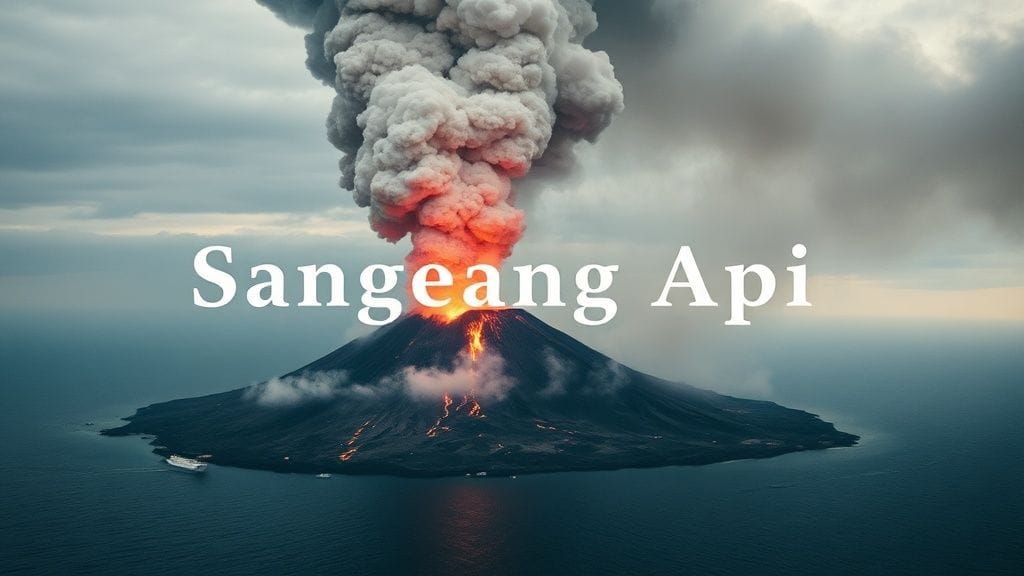
At the break of dawn, the sun rose over the Flores Sea, illuminating the island of Sangeang—a small volcanic outcrop nestled in the Lesser Sunda Islands of Eastern Indonesia. The air was thick and humid, the ocean calm but deceptive. Then, the earth shuddered. A colossal plume of ash erupted violently from the volcano’s summit, rock fragments and gases billowing upward as if the mountain itself was breathing fire after centuries of relative calm.
Villagers gathered, faces upturned and eyes wide with terror and awe as ash darkened the sky and drifted hundreds of kilometers away. Air traffic was halted; flights were canceled or rerouted. The eruption was not just a local disaster—it became a regional crisis, a vivid reminder that the Indonesian archipelago, often called the “Ring of Fire” for its countless volcanoes, remains perilously alive.
The Context of an Island Volcano: Geological and Cultural Backdrop
Sangeang Api, rising 1,949 meters above sea level, is a stratovolcano formed by the intense subduction zone beneath the eastern part of Indonesia. This tectonic interaction—where the Indo-Australian Plate dives beneath the Eurasian Plate—has shaped the Indonesian landscape for millions of years, creating a chain of islands, mountains, and deep ocean trenches.
But Indonesia’s volcanoes are more than geological phenomena: they are interwoven with culture, mythology, and the livelihoods of millions. Sangeang Api had been an active volcano for centuries, its last major eruption before 2014 occurring in 1988. The island’s inhabitants live in close contact with the mountain, farming its fertile slopes and respecting its wrath through local customs and rituals.
A Chain of Tremors: Early Signs and Warnings
In the weeks leading up to May 30, geological instruments detected increased seismic activity around Sangeang Api. Minor tremors and gas emissions hinted at an impending event. Observatories, despite limited resources, began tracking the volcano’s restlessness. Fishermen and farmers reported unsettling rumbles and changes in the taste of water.
Yet, predicting volcanic eruptions with precision remains an elusive art. Despite monitoring, the scale and timing of the May 2014 eruption caught residents and authorities off guard. This precarious balance between anticipation and surprise colors the human story of living alongside fire.
May 30, 2014: The Sky Painted in Ash
At approximately 9 a.m. local time, Sangeang Api’s volcanic crater unleashed one of its most violent eruptions in recent memory. A towering ash column surged upward—estimates suggest it reached altitudes of more than 15 kilometers, penetrating the stratosphere.
Ash, pumice, hot gases, and volcanic bombs were expelled with tremendous force, blanketing the island and drifting on the prevailing winds toward Australia’s northern coast. Satellite images captured the plume stretching across the sky, darkening the afternoon sun for hundreds of miles.
To the islanders, the eruption was both spectacle and menace. Homes were smothered beneath layers of ash, infrastructure damaged, and daily life brought to a sudden standstill. Emergency evacuations began, while scientific teams scrambled to assess the unfolding disaster.
Life Interrupted: The Human Experience during the Eruption
The eruption shattered the fragile routine of local communities. Families fled their homes, clutching possessions and livestock, toes sinking into the ashy terrain. Schools closed; markets emptied. The air turned acrid, eyes stung and lungs struggled beneath the choking haze.
Interviews with survivors recounted tales of fear tempered by solidarity. “We ran because the mountain was angry,” said one villager. But despite the chaos, the community exhibited a profound resilience. Aid workers distributed food and masks, helping mitigate the eruption’s humanitarian impact.
Human stories here echo across volcano-stricken regions worldwide—fear intertwined with hope, loss balanced by endurance.
Aviation in Turmoil: Chaos in the Skies over Southeast Asia
Air travel bore the brunt of Sangeang Api’s eruption beyond Indonesia’s borders. The massive ash cloud disrupted major flight routes between Australia, Southeast Asia, and beyond. Airports in Darwin and Bali temporarily closed, and hundreds of flights were canceled or diverted, stranding thousands of passengers.
Volcanic ash poses a severe threat to aircraft—engines can fail if they ingest ash particles, and visibility drops dramatically. The response to the eruption highlighted the increasing challenge of ensuring safety in an age of global connectivity confronted by natural calamities.
Air traffic control agencies collaborated quickly, implementing new safety protocols and adjusting flight paths as the cloud drifted over international waters.
The Science of Explosion: Understanding Sangeang Api’s Eruption Mechanics
Volcanologists studying Sangeang Api’s 2014 eruption emphasized the complex interplay of magma chemistry, gas pressure, and tectonic stress. The sudden release was typical of stratovolcanoes characterized by viscous magma that traps gas until pressure builds dangerously high.
Explosive eruptions, such as this, are often preceded by detectable signs: seismic swarms, ground uplift, increased gas emissions. However, the exact timing and magnitude remain notoriously difficult to predict with precision.
Sangeang Api’s eruption contributed valuable data to the scientific community, offering insights into eruption precursors and ash plume behaviors vital for hazard mitigation worldwide.
Government Response: Crisis Management amid Uncertainty
Indonesian authorities acted swiftly, albeit within the limits of local capacity. Evacuation orders were issued, and exclusion zones established to minimize casualties. The National Disaster Management Agency coordinated relief efforts, while military units helped transport evacuees and distribute supplies.
International aid was mobilized, reflecting the recognition that natural disasters often transcend borders. However, the scale of preparation and the capacity for volcanic early warning systems revealed gaps that Indonesia has since sought to address.
The Volcano’s Roar and the Global Ripple Effect
Though isolated geographically, the eruption’s impact extended far beyond Indonesia’s shores. Ash falling into the ocean affected marine ecosystems; the high-altitude plume had short-term climatic effects, slightly cooling regional temperatures.
The eruption also underscored global vulnerability to natural hazards in an interconnected world—supply chains, travel, commerce, and communication all susceptible to such sudden disruptions.
Cultural Reflections: Volcanoes in Indonesian Tradition
Volcanoes like Sangeang Api are deeply woven into the spiritual and cultural fabric of Indonesia. They are often revered as sacred sites or the abodes of gods and spirits. In local lore, eruptions are interpreted as messages, reminders of nature’s power and humans’ fragility.
These beliefs imbue volcanic events with meaning beyond mere disaster, influencing how communities react and recover. Rituals and ceremonies often accompany eruptions, reinforcing collective identity and resilience.
Environmental Aftershocks: The Landscape Transformed
The eruption reshaped Sangeang’s topography—ash layers suffocated vegetation, altered river courses, and deposited nutrients enriching soils in the longer term. Landslides and lahars (volcanic mudflows) posed additional hazards during and after the eruption.
Explorations in subsequent months documented how ecosystems adapted and evolved, offering a vivid example of nature’s resilience and cyclical regeneration fueled by volcanic activity.
Media Frenzy: Reporting Disaster in Real-Time
As images of the ash plume traveled swiftly across social media and news outlets, Sangeang Api’s eruption became a worldwide story. Live coverage captured human drama, scientific analysis, and the surreal spectacle of a blackened sky.
The role of media in shaping public perception—both informative and sensational—was evident. Journalists balanced urgency with accuracy, striving to convey the eruption’s scale without inciting undue panic.
Sangeang Api in the History of Indonesian Volcanism
Indonesia is home to over 130 active volcanoes, more than any other country. Its history has been marked by some of the most devastating eruptions, from Krakatoa in 1883 to Mount Merapi’s recent activity.
Sangeang Api stands among these giants as a reminder of volcanic activity’s ongoing presence in shaping the archipelago’s destiny. Its 2014 eruption is now a key chapter in Indonesia’s volcanic annals.
Stories of Survival and Resilience
Amid destruction are countless stories of courage and determination. Farmers returned to rebuild fields buried beneath ash. Schoolchildren adapted to new realities, often helping clear debris. Community leaders advocated for improved disaster preparedness.
These narratives humanize the event, portraying individuals as more than victims—agents of recovery and hope.
Lessons Learned: Preparedness and Volcanic Monitoring Post-2014
The eruption exposed weaknesses in monitoring and emergency response. In the aftermath, investments increased in seismic stations, satellite surveillance, and evacuation planning.
Public education campaigns enhanced awareness of volcanic hazards. The Sangeang Api episode thus catalyzed advances critical to protecting lives and property in this volatile region.
The Volcano That Didn’t Sleep: Activity beyond May 2014
Though the major eruption subsided, Sangeang Api remained restless, periodically venting gas and smaller ash clouds. Scientists maintained vigilance, aware that volcanic dormancy is often just a pause.
Continued surveillance helps to anticipate future eruptions and reduce risks.
The Human Narrative: How Communities Recovered
Rebuilding took years. Efforts included restoring homes, infrastructure, and agriculture. Psychosocial support helped residents cope with trauma.
The eruption’s legacy is not only physical but also psychological—reminding us of our complex relationship with nature’s power.
Comparing Eruptions: Sangeang Api and Global Volcano Disasters
Sangeang Api in 2014 may lack the fatalities of Krakatoa or Mount Pelee, yet its impact resonates similarly in aviation disruption and local displacement.
Comparisons help frame it within a broader context of volcanic hazards worldwide.
The Role of Technology: Satellites and Volcanic Tracking
New technologies proved indispensable—satellite imagery tracked ash plumes, drones surveyed the crater, and seismic arrays offered early warnings.
These tools exemplify the union of human ingenuity and environmental vigilance.
Around the World: How Global Aviation Adapted
Airlines worldwide refined protocols for volcanic ash detection and response. The Sangeang eruption accelerated this learning curve, contributing to safety improvements that ripple globally.
Scientific Debates and Discoveries Sparked by the Eruption
Research inspired by the eruption sharpened understanding of eruption triggers, ash dispersion, and eruption forecasting.
It intensified discussions about volcanic hazard preparedness in densely populated regions.
Environmental Rebirth: Flora and Fauna after the Ashfall
Life returned. Ash deposits eventually nourished plants; animals returned in cycles, demonstrating nature’s remarkable ability to rejuvenate.
These cycles embody the paradox of volcanoes—as destroyers but also life-givers.
The Memory of Fire: How Sangeang Api Shapes Future Generations
The 2014 eruption remains vivid in collective memory, passed down through stories and education. It shapes how future generations view their environment and their place within it.
Sangeang Api Today: Dormant or Defiant?
Years later, Sangeang Api sleeps uneasily, a mountain still alive beneath the clouds. Its presence serves as a constant reminder—a sentinel of fire and warning for those who call the archipelago home.
Conclusion
The eruption of Sangeang Api in May 2014 stands as a testament to the complex interplay between earth’s inner forces and human life. It was a moment suspended between terror and wonder—a sudden breath of fire that disrupted skies, redefined lives, and echoed through science and culture alike. More than a geological event, it was a human story: of communities confronted with nature’s raw power, of adaptability in the face of uncertainty, and of the continuous dialogue between human resilience and volcanic might.
As the ash settled, so too did lessons emerge—about prediction, preparation, and respect for the volatile ground beneath our feet. The tale of Sangeang Api reminds us that in the heart of destruction lies the pulse of renewal, and that volcanoes, though fearsome, are also guardians of the earth’s eternal cycles.
FAQs
Q1: What caused the 2014 eruption of Sangeang Api?
A1: The eruption was caused by increasing magma pressure beneath the volcano’s crater, driven by tectonic subduction. Gas buildup in viscous magma eventually forced a violent explosion.
Q2: How did the eruption affect local communities?
A2: Residents were forced to evacuate, suffering damage to homes, farmland, and infrastructure. The eruption disrupted daily life, but communities showed resilience in recovery efforts.
Q3: Why was the eruption significant for aviation?
A3: The ash plume disrupted major flight routes, as volcanic ash poses severe hazards to aircraft engines, leading to cancellations and rerouting in Southeast Asia and Australia.
Q4: How well was the eruption predicted?
A4: While increased seismic activity was detected beforehand, the exact timing and scale were difficult to forecast, highlighting challenges in volcanic prediction.
Q5: What scientific advances resulted from studying this eruption?
A5: The event provided critical data on ash plume dynamics, eruption precursors, and monitoring techniques, informing future hazard mitigation strategies.
Q6: How does Sangeang Api fit into Indonesia’s volcanic history?
A6: It is one of the many active stratovolcanoes in the “Ring of Fire,” with a history of periodic eruptions impacting local communities and environments.
Q7: What role do volcanoes play in Indonesian culture?
A7: Volcanoes are viewed as sacred forces, integrating spiritual beliefs, rituals, and community identity, influencing how people perceive and respond to eruptions.
Q8: Is Sangeang Api likely to erupt again soon?
A8: The volcano remains active with intermittent activity, requiring ongoing monitoring. It remains potentially dangerous but not predictable in exact timelines.

