Table of Contents
- The Unseen Fury Beneath the Waves: Setting the Scene for Sanriku, 1896
- Japan at the Turn of the Century: A Nation in Transition
- The Geological’s Silent Tremor: Understanding Earthquakes in the Sanriku Region
- June 15, 1896: The Day the Earth Trembled – The Great Sanriku Earthquake
- From Rupture to Tsunami: The Dual Catastrophe Unfolds
- The First Waves: Witness Accounts and Immediate Aftermath
- The Tsunami’s Wrath: Coastal Devastation Along the Sanriku Coast
- Human Tragedy in Numbers: Casualties, Losses, and Displacement
- Government Response and Relief Efforts: Struggling Against Natural Force
- The Role of Early Seismology: How Scientists Interpreted the Disaster
- Sanriku’s Cultural Memory: Myths, Memoirs, and Local Narratives
- Economic and Social Impact on the Tohoku Region
- Lessons Learned: The Disaster’s Influence on Japan’s Disaster Preparedness
- Comparative Analysis: Sanriku 1896 and Later Tsunamis in Japan
- Global Implications: How Sanriku Shaped International Understanding of Tsunamis
- The Legacy of the 1896 Earthquake in Modern Japan
- Scientific Advances Spurred by the Catastrophe
- Survivor Stories: Voices from the Edge of Destruction
- Rebuilding Lives and Communities: Resilience in the Face of Nature
- Sanriku Today: Remembering Through Memorials and Education Programs
- Conclusion: The Eternal Dialogue Between Nature’s Power and Human tenacity
- FAQs: Understanding the Sanriku Earthquake and Its Enduring Impact
- External Resource
- Internal Link
The Unseen Fury Beneath the Waves: Setting the Scene for Sanriku, 1896
In the early morning of June 15, 1896, the coastal communities of the Sanriku region of northeastern Japan were jolted awake by a sudden, earth-shattering intensity beneath their feet. The very land itself seemed to groan and shudder as a powerful earthquake unleashed its hidden fury. Yet, it was not just the ground that moved; it was what rose from the sea—invisible at first—that would prove deadlier still. For the people of Sanriku, this was not simply a natural event; it was a catastrophe woven into the fabric of their lives, altering the landscape, shattering communities, and carving a somber chapter in Japan’s history.
Japan at the Turn of the Century: A Nation in Transition
To fully grasp the enormity and the aftermath of the Sanriku earthquake, one must first understand Japan's socio-political landscape in 1896. The Meiji era (1868–1912) had transformed Japan into an industrial power, fostering rapid modernization and an expanding sense of national identity. Cities buzzed with railways and factories, yet rural and coastal regions like Sanriku clung to traditional fishing livelihoods shaped by the unpredictable ocean.
This duality—between the old and new—set the backdrop for the tragedy. The coastal communities were tightly knit, dependent on the sea’s bounty, and culturally intertwined with myths and practices honoring both respect and fear for natural forces. This made the disaster not just a physical event but a profound psychological rupture that echoed through generations.
The Geological’s Silent Tremor: Understanding Earthquakes in the Sanriku Region
Japan's entire archipelago rests on the volatile “Ring of Fire,” a circum-Pacific belt notorious for its seismic activity. The Sanriku coast, particularly, lies near a complex junction of tectonic plates—the Pacific, North American, and Okhotsk Plates—that continuously grind, subduct, and pressure one another.
In geological terms, the Sanriku earthquake stemmed from a megathrust event—a massive rupture along a subduction zone where one tectonic plate slides beneath another. These earthquakes are infamous not only for ground shaking but for triggering tsunamis, as enormous volumes of displaced seafloor send towering waves crashing toward the shore.
Yet, in 1896, the science of seismology was nascent. Many in the world, and in Japan itself, understood little about earthquake mechanisms or tsunami dynamics. The Sanriku earthquake would become a painful lesson in both seismology and disaster preparedness.
June 15, 1896: The Day the Earth Trembled – The Great Sanriku Earthquake
At approximately 7:30 a.m. local time, the earth beneath the Sanriku coast ruptured violently. The shaking lasted around three minutes—a long, agonizing interval that shattered homes, cracked cliffs, and toppled trees. Buildings constructed primarily of wood and paper, common in rural Japan, suffered widespread damage.
Eyewitnesses described the earth’s roar as "a dragon awake beneath the sea," a metaphor capturing the terror and the primal nature of the event. Communities from Miyako to Rikuzentakata stood frozen, either fleeing to higher ground or seeking shelter where they could.
But this earthquake was only the herald of the larger calamity. As the shaking subsided, deep underwater upheaval sent vast ocean waves surging toward the coast—some reaching heights of 38 meters (125 feet). These were the deadly tsunamis that defined the disaster.
From Rupture to Tsunami: The Dual Catastrophe Unfolds
Tsunamis, often mistakenly called “tidal waves,” are not caused by tides at all but by underwater disturbances such as earthquakes. The Sanriku tsunami exemplified this deadly phenomenon.
Survivors recalled a bizarre moment after the earthquake: the sea suddenly appeared to recede dramatically, exposing reefs and seabed usually hidden beneath the waves. This eerie withdrawal warned those who recognized it—but many were caught unprepared.
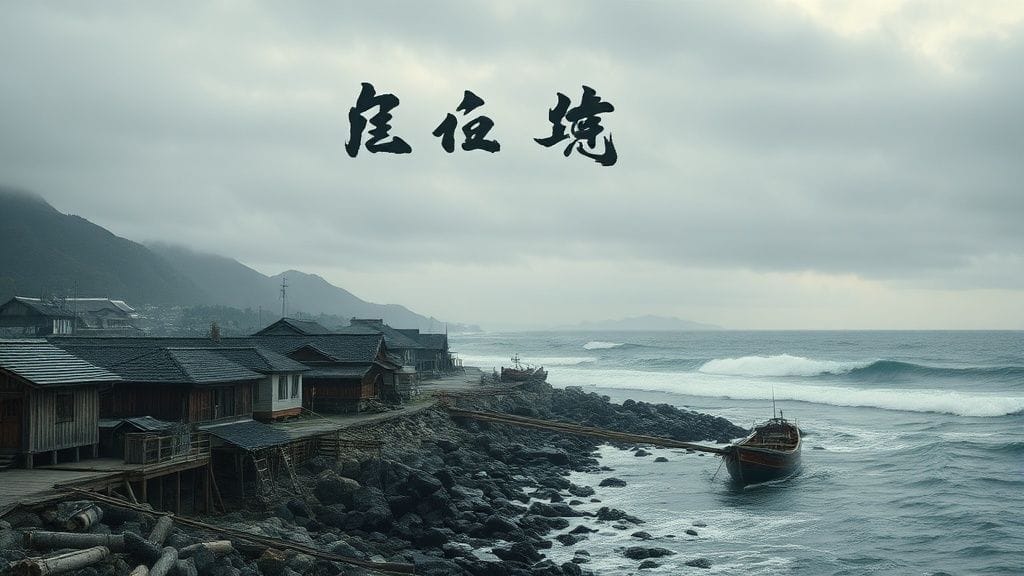
Within minutes, massive walls of water swept in with thunderous force. Entire villages were engulfed; fishing boats were hurled inland, and wooden homes were shattered as if built of paper.
The First Waves: Witness Accounts and Immediate Aftermath
Local fishermen, who at dawn were setting sail or preparing nets, became some of the first to witness the catastrophe. One survivor, a fisherman from Kesennuma, later recalled: “The water pulled away like a giant breath, then it came back with the fury of a thousand dragons.”
For those left on land, the tsunami was instantaneous punishment. Narrow valleys along the jagged Sanriku coast channeled the waves with amplified power. Residents scrambled for hills; others found no escape.
In the immediate aftermath, the scene was one of devastation: overturned boats, shattered homes, and, heartbreakingly, the strewn bodies of neighbors and loved ones.
The Tsunami’s Wrath: Coastal Devastation Along the Sanriku Coast
The Sanriku coastline, with its rias—deeply indented bays and inlets—became a terrifying amplifier for the tsunami’s force. Waves funneled into these narrow channels rose higher and struck harder, transforming fishing villages into scenes of complete ruin.
In towns like Yamada, Kamaishi, and Ofunato, entire communities were wiped out. Tens of thousands of homes were obliterated, and vital fishing infrastructures including boats, piers, and drying racks vanished overnight.
The death toll eventually climbed to estimates of over 22,000 lives lost, one of the deadliest natural disasters in modern Japanese history. This grim figure, however, only captures part of the human cost—countless families were torn apart, livelihoods extinguished, and centuries-old traditions shaken to their core.
Human Tragedy in Numbers: Casualties, Losses, and Displacement
The scale of destruction defies easy comprehension. Official records suggest approximately 22,000 people perished, but the true number may have been higher due to isolated hamlets lost beneath the waves or unrecorded deaths.
Around 9,000 households were destroyed, displacing tens of thousands. The economic loss was staggering as well, with the fishing industry—the backbone of the Sanriku economy—devastated.
Disease and starvation soon followed the physical destruction, as survivors struggled to find shelter, clean water, and food. The trauma left psychological scars, illustrated in contemporary accounts of survivor despair and helplessness.
Government Response and Relief Efforts: Struggling Against Natural Force
The Meiji government found itself challenged as it mobilized relief efforts amidst limited resources and communications. Relief teams were dispatched, and funds raised, but the remoteness of affected areas slowed assistance.
Local leaders organized food and shelter for survivors. Reports of community solidarity mingled with stories of desperation, theft, and despair in refugee camps.
Despite its limitations, the government response marked an early step toward institutionalizing disaster relief, setting precedents for future crises.
The Role of Early Seismology: How Scientists Interpreted the Disaster
While seismology as a science was only emerging, the Sanriku earthquake compelled researchers to rethink their understanding of earthquakes and tsunamis. Pioneering Japanese scientists such as Bunjiro Koto analyzed the event carefully.
Koto proposed that the tsunami was linked to “undersea earthquake fault movements,” a theory that challenged earlier views attributing tsunamis mainly to landslides or volcanic eruptions.
This disaster thus marks a turning point in seismological thought, prompting more systematic earthquake observation and tsunami research in Japan and worldwide.
Sanriku’s Cultural Memory: Myths, Memoirs, and Local Narratives
In the decades following, the Sanriku earthquake embedded itself deeply into local culture. Folk songs, poems, and oral histories memorialized the event, blending grief with reverence for nature’s overwhelming power.
Local museums showcase artifacts and testimonies, ensuring that memories persist beyond statistics. Survivor accounts, published and preserved, offer poignant insights into human endurance and loss.
This cultural memory acts as both mourning and warning—signaling respect for the sea and its volatile nature.
Economic and Social Impact on the Tohoku Region
Beyond immediate destruction, the disaster inflicted long-lasting economic hardship. The fishing fleets took years to rebuild, and many families left ancestral homes in search of new beginnings.
Agricultural lands suffered from saltwater intrusion. Social structures frayed as young men perished and women and elders bore the brunt of recovery.
Yet, resilience endured. Over time, new communities formed, inspired by hope to rebuild stronger and better.
Lessons Learned: The Disaster’s Influence on Japan’s Disaster Preparedness
Sanriku’s tragedy shaped Japan’s evolving disaster preparedness policies. The government began advocating for better building standards, early warning systems, and public education about tsunamis—measures that would prove critical in future disasters.
This event laid the groundwork for modern tsunami awareness programs, including evacuation drills still observed today.
Comparative Analysis: Sanriku 1896 and Later Tsunamis in Japan
Sanriku would tragically foreshadow future disasters—such as the 1933 Sanriku earthquake and tsunami, and the 2011 Tōhoku earthquake. Each event uncovered new vulnerabilities but also demonstrated how lessons from 1896 informed responses.
Comparing these events reveals advances in technology and preparedness, yet underscores the unchanging human vulnerability to nature’s raw force.
Global Implications: How Sanriku Shaped International Understanding of Tsunamis
The 1896 Sanriku tsunami became a reference point for global seismic science. It contributed to the broader recognition that underwater megathrust earthquakes could cause devastating tsunamis worldwide—from Indonesia to Chile.
International scientific collaboration in tsunami research traces roots in part to lessons learned along Japan’s rugged northeastern coast.
The Legacy of the 1896 Earthquake in Modern Japan
More than a century later, the 1896 Sanriku earthquake remains a solemn marker in Japanese history. Memorials dot the coast, commemorating victims and serving as reminders of nature’s power.
The disaster embodies the duality of tragedy and resilience, shaping national narratives about coexistence with a volatile environment.
Scientific Advances Spurred by the Catastrophe
Post-1896 advancements include the establishment of Japan’s first seismic observatories and more rigorous mapping of fault lines. These scientific strides underscored the importance of continuous monitoring to safeguard lives.
Survivor Stories: Voices from the Edge of Destruction
Personal testimonies collected years after the disaster reveal profound human spirit. Whether recounting the rush to high ground, miraculous escapes, or grief at lost kin, survivors’ voices transform statistics into lived reality.
Rebuilding Lives and Communities: Resilience in the Face of Nature
The recovery process galvanized communities, blending traditional knowledge with emerging technologies. Fishing methods adapted, and architecture evolved to better withstand future quakes.
Sanriku Today: Remembering Through Memorials and Education Programs
Today, Sanriku commemorates the event through museums, monuments, and annual remembrance days. Education programs instill awareness in younger generations, ensuring the lessons endure.
Conclusion: The Eternal Dialogue Between Nature’s Power and Human Tenacity
The Sanriku earthquake of 1896 was far more than a natural disaster; it was an elemental narrative of human fragility and determination. The earth’s sudden rupture and the tsunami’s monstrous waves shattered lives, yet from the devastation rose renewed resolve.
As we reflect on this tragedy, it stands as a timeless reminder: humanity’s survival depends not only on science and engineering but on respect, memory, and resilience against nature’s unpredictable tides.
FAQs
Q1: What caused the 1896 Sanriku earthquake and tsunami?
A1: The disaster resulted from a megathrust earthquake along the tectonic plate subduction zone beneath the Sanriku coast. The sudden seafloor displacement triggered the tsunami.
Q2: How many people died during the Sanriku tsunami?
A2: Estimates suggest over 22,000 people perished, making it one of Japan’s deadliest natural disasters.
Q3: How did the Japanese government respond to the disaster?
A3: The Meiji government mobilized relief efforts, providing food and shelter while initiating scientific study and disaster policy development.
Q4: What was the impact of the disaster on Japanese seismology?
A4: The event spurred significant advances in understanding tsunamis and earthquake mechanics, leading to the establishment of seismic observatories.
Q5: How is the Sanriku earthquake remembered today?
A5: Through memorials, museums, and education programs in the Tohoku region, preserving the memories and lessons of the catastrophe.
Q6: Did the 1896 disaster influence later emergency preparedness?
A6: Yes, it catalyzed improvements in early warning systems, building codes, and public tsunami awareness in Japan.
Q7: Are there survivor accounts from the Sanriku earthquake?
A7: Several memoirs and oral histories exist, offering poignant, personal perspectives on the tragedy.
Q8: How does the 1896 tsunami compare with the 2011 Tōhoku tsunami?
A8: Both were caused by megathrust earthquakes and produced massive tsunamis, but advances in warning systems and infrastructure have since improved Japan’s resilience.