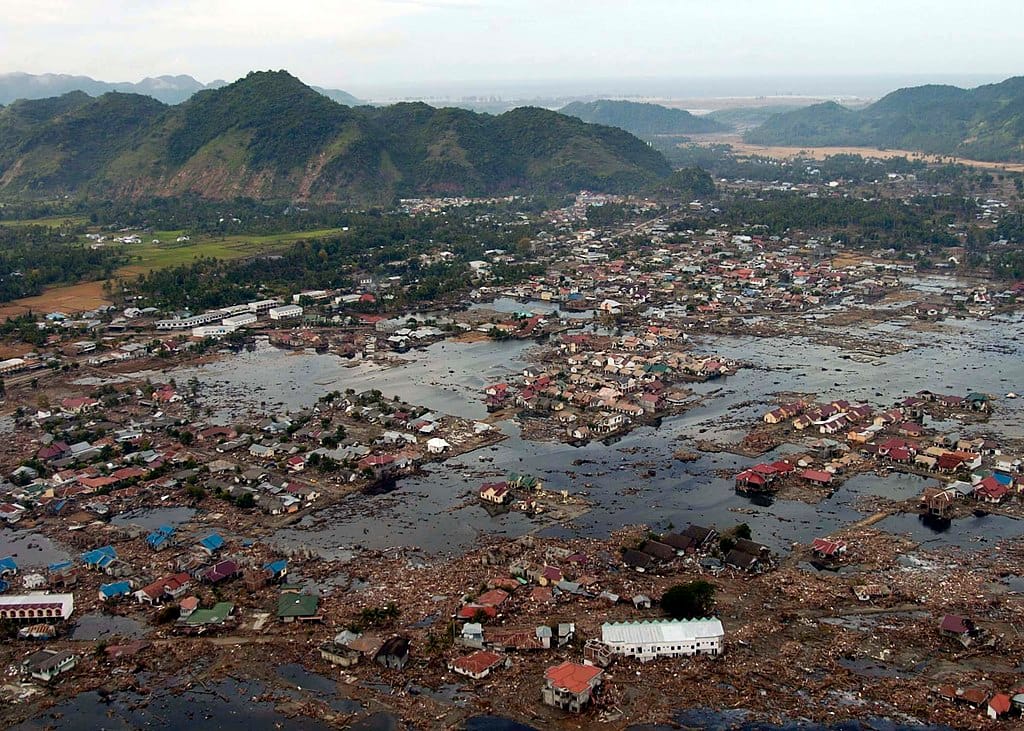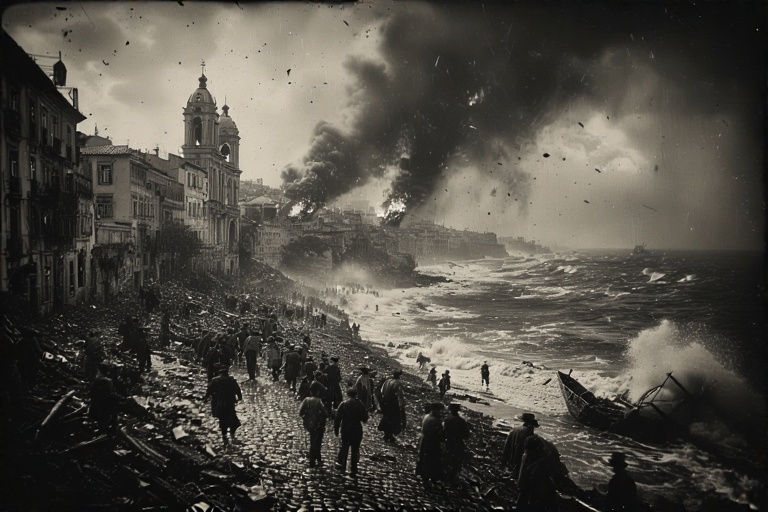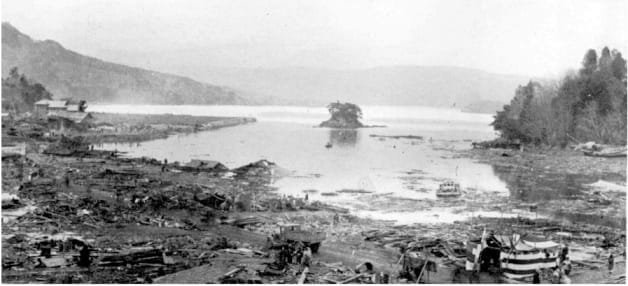
The 1933 Sanriku Tsunami is considered one of the most serious natural disasters to hit Japan in the 20th century. This tsunami occurred on March 3, 1933, after a powerful earthquake measuring about 8.4 on the Richter scale, with its epicenter off the coast of Sanriku, an area located on the northeastern coast of Japan’s Honshu Island. This disaster greatly affected many coastal villages, resulting in significant human and material losses, making it one of the worst tsunamis to hit Japan up until that time.
The beginning of the disaster:
At approximately 2:30 a.m., the Sanriku area was hit by a massive earthquake. Although the earthquake was devastating, it was not the main cause of the destruction that befell the area. Minutes after the earthquake, seawater began to recede, serving as a clear sign that a tsunami was approaching. Soon, giant waves formed and swept across the coast, submerging villages and residential areas.
Power of the tsunami and waves:
The waves reached 28.7 meters (94 feet) in some areas, which is roughly the height of a ten-story building. These giant waves swept away everything in their path, including houses, buildings, and boats. The people of Sanriku were not prepared for a tsunami of this magnitude, and did not have enough time to evacuate before the waves arrived.
The town of Ofunato was one of the hardest hit areas, with most of the buildings and infrastructure destroyed. Many small villages along the coast were completely wiped out by the waves.
Human and material losses:
The Sanriku tsunami killed more than 3,000 people and injured hundreds. Many families lost their homes and loved ones, and the material destruction was enormous. Thousands of homes were destroyed, leaving many survivors homeless. In addition, the tsunami caused significant damage to local industries, including the fishing and agricultural sectors, negatively impacting the economy of the region for many years after the disaster.
Government Response
Following the disaster, the Japanese government launched extensive rescue operations to help those affected. Rescue teams were sent to the affected areas to provide food and medical assistance, as well as treat the injured. However, teams had great difficulty reaching some villages due to the extensive destruction and road closures.
Long-term impact:
The 1933 Sanriku tsunami was not the first of its kind to hit the area, as another devastating tsunami hit Sanriku in 1896, killing more than 22,000 people. However, the 1933 disaster prompted Japan to step up its efforts to improve early warning systems and raise awareness of tsunami risks. Steps were taken to strengthen infrastructure along the coast and increase the resilience of buildings and facilities to the effects of natural disasters.
Lessons Learned and Warning Systems:
The 1933 Sanriku tsunami highlighted the importance of dealing with natural disasters. Following the event, earthquake and tsunami prediction methods were improved, and Japan began constructing barriers and wave barriers to protect its coastline from future tsunamis. Awareness programs have also been developed to teach local residents how to react in the event of a tsunami.
Legend of the disaster:
The 1933 Sanriku tsunami remains etched in the collective memory of the Japanese people, and is a symbol of the power of nature and its ability to change the course of life in an instant. Today, Japan is a leader in earthquake and tsunami preparedness, thanks to advanced technologies developed after disasters such as the Sanriku tsunami.
image link : wikipedia