Table of Contents
- The Awakening Giant: Early Morning at Sarychev Peak
- The Kuril Islands: Remote Land of Fire and Ice
- Geological Origins: The Making of Sarychev Peak
- The Calm Before the Storm: Signs of Impending Eruption
- June 11, 2009: Sarychev Peak Bursts to Life
- A Volcanic Symphony: Explosive Eruptions and Pyroclastic Flows
- Eyewitness Accounts: Stranded Sailors and Compelled Scientists
- From Space to Earth: Capturing the Eruption from Above
- The Immediate Aftermath: Ash Clouds and Aviation Hazards
- The Environmental Toll: Effects on Flora and Fauna
- Local Communities: Isolation and Resilience in the Kurils
- The Global Impact: Volcanic Ash and Atmospheric Changes
- Scientific Revelations: What Sarychev Taught Volcanologists
- Comparing Giants: Sarychev and Other Pacific Eruptions
- Legacy of the 2009 Eruption: Monitoring and Preparedness
- The Kuril Islands Today: Living on the Edge of Fire
- Myth, Memory, and Meaning: How the Eruption Resonates
- Conclusion: The Timeless Dialogue Between Earth and Humans
- FAQs: Understanding the Sarychev Peak Eruption
- External Resource
- Internal Link
The Awakening Giant: Early Morning at Sarychev Peak
In the brittle chill of a June morning, the air around the Kuril Islands bore an unnerving stillness. Sarychev Peak, a towering stratovolcano cloaked in ice and snow for much of the year, began to grumble, rupturing the fragile silence. From its summit, black smoke and ash rapidly ballooned into the sky, twisting and thickening until the sun itself was obscured. The volcanic roar echoed across the jagged ridges and dark sea, a primal cadence that traced back to the birth of Earth itself.
That day, June 11, 2009, marked the resurgence of a sleeping titan. For decades, Sarychev Peak had slumbered quietly, a monolithic guardian of the Kuril chain. But in a magnificent display of nature's might, it erupted with such ferocity that it commanded attention from scientists, sailors, and satellites worldwide. The unfolding drama was as visually spectacular as it was terrifyingly unpredictable — a natural spectacle where fire met ice, where the world’s edge was reshaped once more.
The Kuril Islands: Remote Land of Fire and Ice
The Kuril Islands stretch like broken shards between Russia’s Kamchatka Peninsula and Japan’s northernmost island, Hokkaido. This remote archipelago, shrouded by relentless mists and harsh oceanic winds, is a land of profound contrasts—soaring cliffs warmed by seasonal blooms, harsh volcanic landscapes dotted with geothermal springs, and an ecosystem resilient to extremes.
Within this cluster of islands, many are volcanic in origin, fertile fields of fire forged beneath turbulent tectonic plates. The people here have long known awe and dread of their fiery neighbors. For centuries, Ainu settlers and Russian explorers navigated uncertain waters, knowing too well the ever-present threat—volcanoes could awaken without warning, reshaping the environment and lives within hours.
Sarychev Peak, named after the explorer G. Sarychev, stands as one of the most imposing and active volcanoes in this chain. Rising over 1,500 meters, with steep flanks and a crater that absorbs winter snow, it commands both respect and caution.
Geological Origins: The Making of Sarychev Peak
Understanding the eruption of 2009 demands a look back tens of thousands of years. Sarychev Peak is the product of relentless geophysical forces. It straddles the convergent boundary where the Pacific Plate dives beneath the Okhotsk Plate—an active subduction zone that intensifies seismic activity in the region. This tectonic dance channels magma upwards, accumulating reservoirs of molten rock beneath the volcano.
Over millennia, successive eruptions built up the massive cone, layer upon layer of lava and ash fused together. Its distinctive shape, marked by steep slopes and a visible summit crater, reveals a violent but cyclical life. Early geological surveys exposed a pattern—while not the most frequent, the eruptions can be explosive, sending ash columns soaring tens of kilometers.
Most importantly, this geological context explained, in part, why the 2009 event was so monumental. It wasn’t just a simple eruption; it tapped into a deep reservoir of energy that had been silently mounting for decades.
The Calm Before the Storm: Signs of Impending Eruption
Long before the iconic June 11 eruption, Sarychev gave subtle signals of its restlessness. In the months leading up to summer 2009, seismographs recorded increased tremors and minor earthquakes with unusual frequency. Volcanologists monitoring the region noted swelling of the mountain’s flanks, measurable changes in gas emissions, and subtle temperature rises around fumaroles.
Local seamen, often the first witnesses in these isolated territories, spoke of strange smells—sulfurous and acrid—piercing the winds that usually carried crisp sea air. Historical records demonstrate how such early warnings often precede eruptions, but the challenge remained acute: predicting exactly the scale, timing, and impact.
Meticulous monitoring became paramount. Scientists from the Institute of Volcanology and Seismology in Petropavlovsk-Kamchatsky intensified surveillance, while international partners prepared to track the eruption via satellite technology. Yet, even with these precautions, the suddenness and scale of Sarychev’s awakening still stunned many.
June 11, 2009: Sarychev Peak Bursts to Life
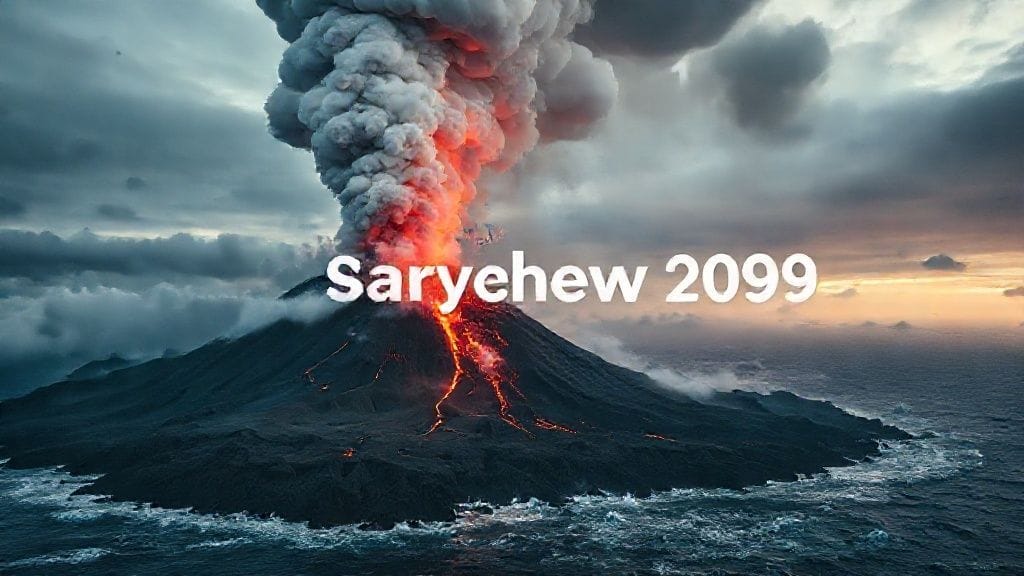
At dawn on June 11, a low rumble grew rapidly into a tremendous explosion. The summit crater, cloaked in snow just hours before, erupted violently. A towering column of ash and volcanic gases blasted upward—reaching an altitude exceeding 12 kilometers—swiftly darkening the skies above the Kuril Islands. Glowing incandescent lava fountains illuminated the plume sharply against the disturbing grey morning.
Caught between awe and danger, local fishermen halted their boats, straining to witness the spectacle. The eruption was not a mere puff; it was a cataclysmic reassertion of geological force, releasing pressure that had built up in the Earth’s crust. Ash and lapilli rained down on nearby islands, while pyroclastic flows surged within the mountain’s flanks.
Incredibly, a Russian scientific team stationed on Matua Island—just 20 kilometers away—recorded the event in real time, capturing ash fallout and strategic seismic data. Their observations would become critical for understanding Sarychev’s motivations and future behavior.
A Volcanic Symphony: Explosive Eruptions and Pyroclastic Flows
The 2009 eruption’s intensity was characterized by a series of explosive events. Sarychev exhibited classic Strombolian and Vulcanian behaviors: intermittent blasts, rhythmic pulses of ash, and blocky lava ejections. Distinct pyroclastic flows—the dense, scorching avalanches of ash and gas—raced down the volcanic flanks with devastating momentum, reshaping the landscape by scorching vegetation and depositing fresh volcanic material.
A continuous sequence of eruptions followed for several days, punctuated by quieter pauses that allowed the volcano to accumulate pressure anew. This cyclical pattern underscored the complex internal plumbing of Sarychev, where shifting magma chambers and rising gases chased one another in a heated contest.
One remarkable dimension was the interaction of hot volcanic material with thick layers of snow perched on the crater’s edge—a meeting that generated explosive steam-driven eruptions, adding a striking dynamic to the event.
Eyewitness Accounts: Stranded Sailors and Compelled Scientists
The harsh isolation of the Kurils means few outsiders witness such eruptions—and when they do, the experience is unforgettable. Fishermen from neighboring seas described the surreal scene: molten rock glowing against a stormy sky, plumes blotting out sunlight, and the smell of brimstone thick in the air. One sailor recalled, “I felt the heat even from miles away, and the sea was littered with ash like snowflakes.”
Meanwhile, scientists stationed nearby braved harsh conditions to collect invaluable data. One volcanologist later wrote, “We were at the mercy of nature’s raw power—every rumble was a note in the symphony of creation and destruction.”
The eruption’s vivid imagery and tangible threat brought the volcano’s reality close to many, shrinking the emotional distance between humans and this titanic force of Earth.
From Space to Earth: Capturing the Eruption from Above
In an extraordinary convergence of technology, the 2009 Sarychev eruption was among the most comprehensively documented volcanic events in history. NASA’s Earth-observing satellites—such as Terra and Aqua—captured high-resolution images showing the ash column’s rapid development and drift patterns. These images, breathtaking in scale and clarity, revealed the plume’s structure: a colossal mushroom cloud morphing above the island chain.
Meanwhile, satellites equipped with thermal sensors tracked heat emissions across the volcanic edifice, while global positioning systems charted deformation of the volcanic cone. This wealth of data allowed scientists not only to monitor the eruption’s immediate effects but also to model the potential hazards it presented to aviation and climate.
Such satellite imagery transformed what would otherwise have been a remote disaster into a story seen and studied worldwide.
The Immediate Aftermath: Ash Clouds and Aviation Hazards
One of the eruption’s most disruptive consequences was the massive ash cloud that spread rapidly across the North Pacific airspace. Volcanic ash poses grave risks to flight—abrasive particles can damage engines and instruments, leading to sudden failures.
Air traffic regulators responded instantly, issuing no-fly zones that disrupted commercial routes between Asia and North America. Airlines were forced to reroute or cancel flights, with millions of passengers affected. The eruption’s ash cloud was tracked as far as the west coast of the United States, underlining the global reach of this isolated volcanic event.
These disruptions spotlighted the delicate balance between human technology and nature’s uncontrollable forces, demanding improved monitoring strategies in remote volcanic regions.
The Environmental Toll: Effects on Flora and Fauna
While volcanoes are often seen as destructive, ecosystems rely on them to renew soils and foster biodiversity. Yet, the 2009 eruption dealt a harsh blow to the Kuril’s fragile habitats. Thick ash blankets smothered vegetation, disrupted bird nesting grounds, and compromised marine life through ash-laden runoff.
Field studies conducted in the months that followed noted substantial die-offs of alpine plants and temporary displacements of seabirds. However, these were balanced by longer-term processes—the infusion of minerals into soils that would eventually revitalize growth.
Understanding these cycles of destruction and renewal is critical for ecological studies in volcanic zones, where life continually adapts against extremes.
Local Communities: Isolation and Resilience in the Kurils
Though sparsely populated, the Kuril Islands are home to indigenous people and regional settlers whose lives follow rhythms shaped by nature’s unpredictability. The 2009 eruption tested these rhythms anew. Isolated by harsh weather and geography, communities dealt with ash-fall impacts, water contamination, and temporary communication breakdowns.
Emergency response was complicated by logistical challenges, but mutual aid and traditional knowledge helped mitigate damages. Stories passed within these small societies reflect resilience and respect for volcanic power, embodying a worldview reminded constantly of Earth’s majestic volatility.
The Global Impact: Volcanic Ash and Atmospheric Changes
While massive eruptions can inject particles into the stratosphere that alter climate, Sarychev's 2009 event offers a nuanced case. The ash plume’s volume was substantial but short-lived, producing measurable but modest effects on atmospheric composition.
Scientists tracked increased aerosols that reflected solar radiation temporarily, causing a subtle cooling effect over the Northern Hemisphere. This phenomenon underscored the interconnectedness of remote eruptions with global climate systems, reinforcing the importance of volcano monitoring in climate models.
Yet, unlike historic giants such as Tambora or Pinatubo, Sarychev’s impact was intense but contained—another reminder of Earth's complex, layered workings.
Scientific Revelations: What Sarychev Taught Volcanologists
The eruption became a case study for understanding stratovolcano behaviors in subduction zones. Data from ground and space instruments refined models of eruption dynamics, magma chamber processes, and ash plume dispersal.
One key insight was the role of mixed eruption styles—Sarychev’s simultaneous lava ejection and violent ash blasts challenged earlier assumptions that such volcanism followed a single pattern. This led to improved hazard forecasting for similar volcanoes worldwide.
Moreover, the eruption bolstered international cooperation between researchers, satellites agencies, and aviation authorities—a legacy of preparedness born from nature’s lesson.
Comparing Giants: Sarychev and Other Pacific Eruptions
In the Pacific Ring of Fire, Sarychev stands among many legendary volcanoes: Mt. St. Helens, Krakatoa, Sakurajima. Each has its personality and scale, but Sarychev’s 2009 event reminds us that even “lesser-known” peaks can unleash awe-inspiring power.
Unlike the catastrophic scale of Mt. St. Helens in 1980, Sarychev’s eruption focused more on sustained explosive activity and widespread ash dispersal. Its eruption adds nuance to the volcanic narrative—a reminder of the diversity of volcanic phenomena.
Legacy of the 2009 Eruption: Monitoring and Preparedness
The eruption forced a leap forward in volcanic risk assessment in the Kuril region. Enhanced seismic networks, real-time satellite data integration, and rapid aviation hazard alerts emerged as direct outcomes.
Sarychev Peak became a model for balanced monitoring, bridging remote natural phenomena and global technological response. Lessons learned continue to shape disaster readiness not only in Russia but worldwide.
The Kuril Islands Today: Living on the Edge of Fire
More than a decade later, the scars and signs of Sarychev’s 2009 eruption remain visible. Vegetative regrowth has healed much of the affected landscapes, but ongoing seismicity reminds locals and scientists: the region sleeps lightly.
Communities continue to adapt, scientific teams still study the mountain, and satellites orbiting Earth watch vigilantly. It is a constant negotiation between the forces that build and those that destroy, a dance as old as the planet itself.
Myth, Memory, and Meaning: How the Eruption Resonates
In the cultures surrounding the Kurils, volcanic eruptions carry deep symbolic meanings—forces of creation, destruction, and renewal intertwined. Oral traditions speak of fire mountains as gods or spirits; the 2009 eruption reaffirmed these ancient links.
Today, the event is remembered not only by numbers and science but as a dramatic chapter in humanity’s encounter with Earth’s elemental realities—where awe, fear, and respect blend into something transcendent.
Conclusion
The 2009 eruption of Sarychev Peak was more than a geological event; it was a vivid testament to Earth’s living, breathing nature. In a remote corner of the world, fire from within the planet reached the surface and reshaped the landscape with explosive grandeur. Through the eyes of sailors, the lenses of satellites, and the instruments of volcanologists, we witnessed a powerful dialogue between human beings and the relentless forces beneath their feet.
This eruption is a reminder: our world is dynamic and fragile, vibrant and unpredictable. Sarychev’s explosion of ash and lava was a dramatic punctuation mark in an ongoing story — one where science, nature, and humanity converge on the shifting edges of our planet.
FAQs
Q1: What caused the 2009 eruption of Sarychev Peak?
The eruption was caused by the subduction of the Pacific Plate beneath the Okhotsk Plate, which generated magma accumulation beneath the volcano. Pressure build-up led to the explosive release on June 11, 2009.
Q2: How long did the eruption last?
The most intense explosive activity lasted several days, with smaller eruptions and ash emissions continuing intermittently afterward.
Q3: Were there any casualties?
Due to the remote location and effective monitoring, no casualties were reported during the eruption.
Q4: How did the eruption affect air travel?
Ash clouds dispersed across the North Pacific created hazardous flying conditions, forcing cancellations and rerouting of flights between Asia and North America.
Q5: What scientific advancements came from studying this eruption?
The event provided insights into mixed eruption styles, ash plume dynamics, and improved hazard forecasting in subduction zone volcanoes.
Q6: Do local communities still feel the impact of the eruption today?
While immediate effects have faded, local populations maintain heightened awareness, and ongoing monitoring helps ensure preparedness for future events.
Q7: How does Sarychev compare to other volcanoes in the Pacific Ring of Fire?
Sarychev is less famous internationally but remains one of the most active and explosive volcanoes in the Kuril Islands, offering important lessons distinct from larger eruptions like Mount St. Helens.
Q8: What is the long-term environmental impact of the eruption?
The eruption initially devastated local flora and fauna, but over time contributed to soil fertility and ecosystem renewal, demonstrating nature’s resilience.

