Table of Contents
- The Twilight of Empires: Setting the Stage for Nahavand
- Persia on the Brink: Society and State in the Early 7th Century
- The Rise of the Rashidun Caliphate: A New Power Emerges
- The Battle of Qadisiyyah: The First Major Clash
- The Fall of Ctesiphon: Losing the Sasanian Heartland
- The Resilience of the Sasanians: Initial Attempts at Recovery
- The Gathering Storm: Prelude to Nahavand
- The Battle of Nahavand: The Decisive Encounter
- Commanders and Soldiers: Faces of Both Armies
- The Battle Unfolds: Strategy, Sacrifice, and Surrender
- Beyond the Battlefield: The Immediate Fallout
- The Collapse of the Sasanian Political Order
- The End of a Dynasty: Yazdegerd III’s Flight and Death
- Transformation of Persian Society Under Caliphate Rule
- Cultural and Religious Shifts Post-Nahavand
- Economic Consequences: Trade, Taxation, and Land
- The Sasanian Legacy in Islamic Persia
- Memory and Myth: How Persians Remember Nahavand
- Lessons from the Empire’s Fall: Reflections on History
- Conclusion: The Phoenix Before the Fire
- FAQs
- External Resource
- Internal Link
1. The Twilight of Empires: Setting the Stage for Nahavand
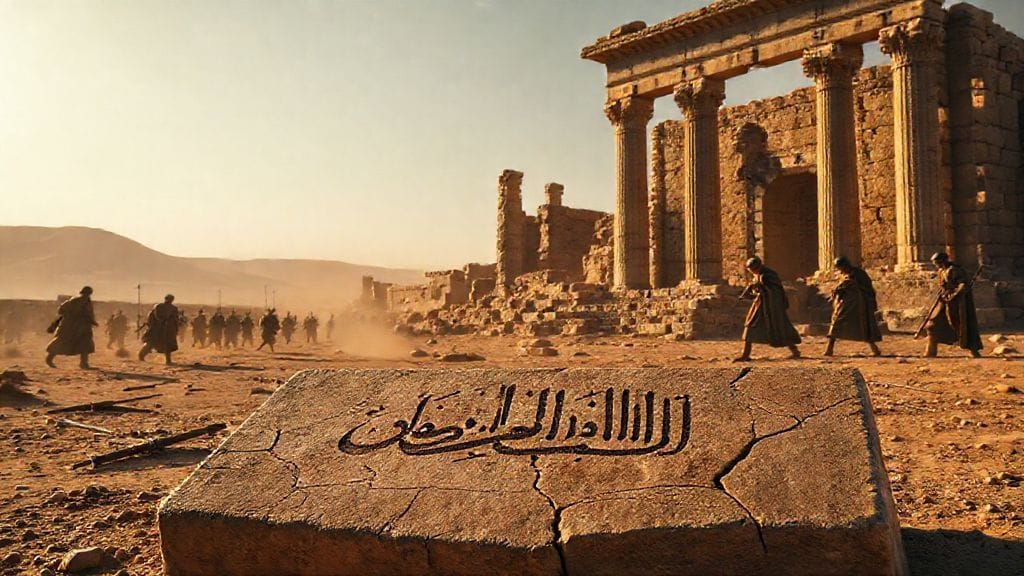
In the parched hills and fertile plains around Nahavand, in the heart of what is now western Iran, an empire’s fate was sealed in a battle whose echoes would reverberate through centuries. The year was 642, a time when the relentless sun bore down on the bloodied fields, where the remnants of a once-mighty power fought desperately for survival. The Sasanian Empire, the last great bastion of pre-Islamic Persia, stood on the precipice of extinction. From the bustling markets of Ctesiphon to the mountainous gardens where poets once recited odes, the once-glorious empire flickered like a dying flame.
The Battle of Nahavand, often termed “the Victory of Victories” by the victorious Rashidun forces, was more than a military engagement; it was a cataclysmic moment when centuries of political, cultural, and religious history converged and fractured. To understand the collapse of the Sasanian Empire is to journey beyond the clash of swords and arrows — into the heartbeats of empires, the struggles for identity, and the whirlwinds of change that reshaped a whole civilization.
2. Persia on the Brink: Society and State in the Early 7th Century
The Sasanian Empire, at the dawn of the 7th century, was a realm built on grandeur and complexity, yet riddled with deep internal fissures. Spanning from the Euphrates in the west to the Indus in the east, its vast territories sheltered a mosaic of peoples, cultures, and religions. Zoroastrianism was the state religion, yet Christians, Jews, Buddhists, and a host of pagan traditions thrived within its borders. The Empire's capital, Ctesiphon, resonated with a cosmopolitan energy—ornate palaces, bustling bazaars, and vibrant intellectual life marked its streets.
Yet the empire was no stranger to conflict. Generations of warfare with the Byzantine Empire had drained resources and morale. Political intrigue was rife within the royal court, where noble houses vied for influence, and the young King Yazdegerd III ascended a throne shadowed by loss and uncertainty. Economic challenges, social unrest, and factionalism eroded the Sasanian unity, leaving it vulnerable to new and unforeseen threats.
3. The Rise of the Rashidun Caliphate: A New Power Emerges
Meanwhile, to the southwest, a movement born from the deserts of Arabia had ignited a fervor that would reshape the ancient world. The nascent Muslim community, galvanized by faith and a vision of divine justice, had transformed under the leadership of the Rashidun Caliphs after Prophet Muhammad’s death in 632. The tribes of Arabia united, and the newly consolidated Caliphate turned its gaze outward.
Driven by religious zeal, economic necessity, and political ambition, the early Muslim armies swept through Byzantine and Sasanian lands with astonishing speed. Their tactical mobility, religious dedication, and adaptability on the battlefield were formidable. The rapid conquests stunned contemporaries across the region, and the Sasanian Empire soon found itself the prime target of this unstoppable force.
4. The Battle of Qadisiyyah: The First Major Clash
The clash that signaled the beginning of the end came in 636 near the banks of the Euphrates River at Qadisiyyah. The battle pitched the seasoned, heavily armored Sasanian forces against the agile Muslim cavalry. Despite superior numbers and equipment, the Sasanians suffered a crushing defeat. The loss was catastrophic—a blow not only to military might but also morale.
The Battle of Qadisiyyah shocked the Sasanian world. Their hitherto invincible reputation shattered, the empire’s capital, Ctesiphon, was vulnerable. The fresh Rashidun armies now pressed relentlessly into Sasanian heartlands, compelling the Persians to make desperate choices.
5. The Fall of Ctesiphon: Losing the Sasanian Heartland
Ctesiphon, long the jewel of the empire, a city whose arches and cypresses had witnessed the rise of kings and centuries of Persian grandeur, fell in 637. The capture of this symbolic city by Muslim forces marked a psychological as well as strategic turning point. The Sasanian government was not exterminated but forced into flight.
However, this loss was not the surrender of Persia itself. Internal struggles and regional loyalties fragmented control, and local governors continued resistance, keeping hopes alive that the empire could reclaim its lands. Yet the balance of power had irrevocably shifted.
6. The Resilience of the Sasanians: Initial Attempts at Recovery
In the aftermath of military disasters, the young King Yazdegerd III rallied scattered forces, retreating to the eastern provinces where Sasanian authority was more intact. Despite limited resources and waning support, he attempted to reorganize the military and revive a faltering administration.
For years, desperate battles were fought across Persia—at Jalula, Nihawand, and elsewhere—with varying fortunes. Yet the momentum steadily favored the Rashidun Caliphate. No longer was this a simple border skirmish but an existential struggle for survival.
7. The Gathering Storm: Prelude to Nahavand
By 642, the stage was set for a confrontation that would decide Persia’s fate. Nahavand, strategically located in the Zagros mountain region, became the rallying point for Sasanian resistance. The Sasanians gathered their best troops under the command of General Farrukhzad Pirozan, determined to halt the Arab advance once and for all.
At the same time, the Muslim forces, now confident and battle-hardened, led by the charismatic General Nu’man ibn Muqarrin, prepared for a decisive engagement. Both sides understood that the outcome would resonate far beyond the battlefield.
8. The Battle of Nahavand: The Decisive Encounter
The Battle of Nahavand, fought over several days, was a brutal and exhausting clash. Both armies deployed heavy infantry, cavalry charges, and archers amidst the rugged terrain. Eyewitness accounts describe the deafening clamor of swords and screams echoing through the mountains—a symphony of desperation and valor.
The Sasanians initially held strong, leveraging their knowledge of the terrain and heavy armor. But as resources dwindled and the Arab cavalry’s ferocity intensified, the tide turned. The Sasanian lines began to falter, and in a critical moment, the Muslim forces surrounded their remaining opponents, forcing a surrender or annihilation.
9. Commanders and Soldiers: Faces of Both Armies
Farrukhzad, the Sasanian general, was known for his relentless courage and tactical mind, embodying the empire’s resilience. On the opposing side, Nu’man ibn Muqarrin was a rising star of the Rashidun Caliphate—an inspiring leader whose charisma and devotion galvanized his troops.
For the soldiers, from Persian horsemen clad in mail to the Arab infantry carrying the scars of endless conquests, Nahavand was both a crucible and a nightmare. Letters and later chronicles speak of fear, hope, despair, and determination tightly woven together beneath the spattered dust of the battlefield.
10. The Battle Unfolds: Strategy, Sacrifice, and Surrender
Accounts tell of Sasanian forces arranging a defensive posture meant to repel the more mobile Arab cavalry. Skirmishes began at dawn, evolving into full-scale waves of attack. Despite fierce resistance, the Sasanians lacked reinforcements and supplies.
The Muslim forces used encirclement tactics masterfully, cutting off retreat paths. The final stages of the battle saw the breaking of Sasanian morale. Reports suggest Sasanian losses were staggering, and many chose death over capture. Nahavand ended as a resounding victory for the Rashidun Caliphate—yet at a cost of countless lives.
11. Beyond the Battlefield: The Immediate Fallout
The defeat at Nahavand shattered the last organized Sasanian military resistance in the west. Remaining provinces were left vulnerable to Rashidun incursions. Local authorities swore allegiance to the Caliphate, and new administrative systems were introduced.
However, the empire’s fall was not instantaneous political dissolution but a protracted unraveling. The trauma inflicted by the battle rippled through Persian consciousness as a tragic but transformative moment.
12. The Collapse of the Sasanian Political Order
In the year following Nahavand, Yazdegerd III found himself reduced to a fugitive king, wandering through the eastern fringes of his former realm. Without an army or wealth, imperial governance dissipated into regional warlordism. The aristocracy fractured, and loyalty became a scarce commodity.
The old institutions that had governed Persia for centuries evaporated. The Sasanian administrative machinery—its bureaucracy, tax structures, and court rituals—crumbled, giving way to new modes of rule under the Caliphate.
13. The End of a Dynasty: Yazdegerd III’s Flight and Death
Yazdegerd III’s tragic flight symbolizes the end of the last Persian empire before the Islamic age. Pursued relentlessly by enemies, betrayed by nobles, he wandered through Khorasan and Central Asia until his assassination in 651.
His death marked not merely the fall of a monarch but the eclipse of an entire epoch. Yet even in defeat, the narrative of Yazdegerd continued to evoke themes of noble resistance and lost grandeur in Persian memory.
14. Transformation of Persian Society Under Caliphate Rule
With the fall of the empire, Persian society underwent profound changes. The imposition of Islamic rule introduced new religious, legal, and cultural norms. Yet, it was not a simple replacement but a fusion.
Zoroastrian temples declined, while mosques rose. Persian administrators gradually adapted and thrived under Muslim rulers, eventually revitalizing Persian culture within an Islamic framework. This synthesis would later bloom into the rich Persian-Islamic civilization.
15. Cultural and Religious Shifts Post-Nahavand
The collapse initiated shifts from Zoroastrian dominance toward Islam’s ascendancy. At first, many Persians resisted conversion; Zoroastrianism survived for centuries, yet Islam’s theological and administrative appeal gradually won hearts.
Persian language and literature, infused with Islamic themes, flourished in subsequent centuries. The fall of the Sasanians seeded the rise of Persianized Islamic caliphates, notably under the Abbasids.
16. Economic Consequences: Trade, Taxation, and Land
The Sasanian economy—once a complex network of trade routes, agriculture, and artisan guilds—experienced disruption, but also adaptation. The new rulers sought to integrate Persian lands into a wider Islamic economic system.
Land ownership patterns shifted, with the introduction of new tax systems (kharaj and zakat), irrigation improved under new regimes, and cities like Isfahan and Ray regained importance under Caliphate administration.
17. The Sasanian Legacy in Islamic Persia
Despite the empire’s fall, the Sasanian political and cultural legacy endured. Persian administrative expertise was essential to the Caliphate, influencing governance, art, coinage, and royal symbolism.
The Persian court traditions and ideas of kingship reemerged in Islamic Persia. This continuity laid the foundation for later dynasties such as the Samanids and Safavids.
18. Memory and Myth: How Persians Remember Nahavand
Nahavand entered Persian collective memory as a symbol of loss and transformation. Poets like Ferdowsi immortalized the final days of the empire in the Shahnameh, blending history with myth.
For centuries, Nahavand represented both the end of an age and the resilience of Persian identity under new paradigms. It is a narrative of mourning, pride, and subtle defiance.
19. Lessons from the Empire’s Fall: Reflections on History
The collapse of the Sasanian Empire reminds us that no power is eternal. The convergence of internal weakness and external force, ideological change, and the unstoppable currents of history can overturn great civilizations.
Yet the Persian example also shows how cultural identity adapts, survives, and eventually reinvents itself beyond the demise of political structures.
20. Conclusion: The Phoenix Before the Fire
The Battle of Nahavand was not merely a military defeat but the crucible from which a new Persian world emerged. The Sasanian Empire’s collapse closed one chapter of Iranian history but opened another—one where Persian culture and identity would blossom anew within the Islamic civilization.
Like a phoenix descending into ashes, Persia would rise again, nourished by its past and transformed by its fate. Nahavand stands as a testament to endings that make possible new beginnings.
FAQs
Q1: What was the main cause of the Sasanian Empire’s collapse?
A: The empire’s collapse resulted from a combination of internal weaknesses—including political fragmentation, economic troubles, and social unrest—and external pressures from the rapidly expanding Rashidun Caliphate.
Q2: Who was Yazdegerd III?
A: Yazdegerd III was the last ruler of the Sasanian Empire. Ascending to the throne as a teenager, he struggled to defend his crumbling empire before his assassination in 651 marked the dynasty’s end.
Q3: Why was the Battle of Nahavand so decisive?
A: Nahavand crippled the last organized Sasanian military resistance, allowing the Rashidun Caliphate to solidify control over Persia and effectively end Sasanian political power.
Q4: How did the fall of the Sasanians affect Persian culture?
A: While political power shifted, Persian culture adapted and merged with Islamic traditions, leading to a renaissance of Persian language, literature, art, and administration under Islamic rule.
Q5: Did Zoroastrianism disappear immediately after Nahavand?
A: No, Zoroastrianism persisted for centuries, especially in rural areas, but its dominance waned as Islam became the majority religion in Persia.
Q6: What was the lasting impact of the Sasanian Empire on the Islamic world?
A: The Sasanians influenced Islamic governance, art, architecture, and royal symbolism, providing administrative expertise and cultural foundations for later Islamic empires.
Q7: How is Nahavand remembered in modern Iran?
A: Nahavand is seen both as a symbol of tragic loss and of the resilience of Persian identity; it is commemorated in literature, historical narratives, and cultural memory.
Q8: Were there significant battles after Nahavand to resist Arab conquest?
A: Some resistance continued in eastern provinces and local strongholds, but no major, organized military opposition matched Nahavand’s scale after 642.

