Table of Contents
- The Calm Before the Storm: Europe on the Brink in 1848
- The Danish-Holstein Conflict: A Flashpoint of Nationalism
- The Schleswig-Holstein Question: Historical Grievances and National Identity
- The Rise of Revolutionary Tides Across Europe
- The Outbreak of the First Schleswig War
- Commanders and Key Figures: Leaders of a Fragmented Conflict
- Early Battles and Escalation of Hostilities
- The Human Cost: Civilians and Soldiers Amidst Chaos
- The Role of International Powers: Prussia, Austria, and the Danish Crown
- The Turning Point: Military Setbacks and Strategic Reassessments
- Malmö Becomes a Neutral Ground: The Setting for the Armistice
- Negotiations Under Strain: Diplomacy in the Shadow of War
- The Armistice of August 26, 1848: Terms, Conditions, and Immediate Effects
- Reactions Across Europe: Media, Public Opinion, and Political Discourse
- The Fragility of Peace: Resumption of Conflict and the Road to 1851
- Legacy of the 1848 Armistice: Nationalism and the Danish-German Question
- Cultural Reflections: Literature and Art Inspired by the Conflict
- Memory and Commemoration: How the War Lives On Today
- Conclusion: The Enduring Echoes of the Schleswig-Holstein Armistice
- FAQs: Understanding the Complexities of the 1848 Truce
- External Resources: For Further Exploration
- Internal Link: Visit History Sphere
The Calm Before the Storm: Europe on the Brink in 1848
On a sultry summer day in August 1848, Malmö—a serene Swedish port city separated from the Danish isles by narrow straits—prepared to host a fragile truce that would briefly halt the flames of a bitter, entangled conflict. The air was thick with unspoken tensions, relief mingled with uncertainty. Across the narrow waters, war-weary soldiers and diplomats assembled to engineer a pause, an armistice, that aimed to untangle a Gordian knot of nationalism, sovereignty, and identity tearing through the duchies of Schleswig and Holstein.
But this was no ordinary truce. It was the first significant ceasefire in a struggle that shaped the political landscape of northern Europe—a clash emblematic of the revolutionary fervor and national aspirations surging throughout the continent in 1848. To understand why Malmö became the stage for this delicate negotiation, one must delve deeper into the sequence of historical forces, alliances, and grievances that had brought Europe to this critical juncture.
The Danish-Holstein Conflict: A Flashpoint of Nationalism
The seeds of the Schleswig-Holstein War echoed back decades before 1848. The duchies of Schleswig and Holstein, situated on the southern border of Denmark, held a unique position—both culturally Danish and German, linguistically divided, politically ambiguous. The conflict was, at its heart, a clash between burgeoning Danish nationalism and the German nationalist movement rooted in the German Confederation.
The Danish Crown claimed authority over Schleswig, but both duchies held different legal statuses and allegiances, and Holstein was part of the German Confederation. It was a powder keg waiting for a spark, and that spark would come during the revolutionary waves sweeping over Europe in 1848.
The Schleswig-Holstein Question: Historical Grievances and National Identity
The so-called Schleswig-Holstein Question had confounded European diplomats and monarchs for decades—a complex tangle of feudal rights, ethnic claims, and political reforms. The German-speaking populations in Holstein and parts of Schleswig yearned for independence or unification with German states, particularly Prussia.
Meanwhile, Danish nationalists, emboldened by the wave of liberal uprisings, sought to incorporate Schleswig more firmly into the Danish kingdom, threatening the delicate balance. This situation exposed both Denmark and the German Confederation to simmering tensions propelled by competing identities and the revolutionary zeitgeist.
The Rise of Revolutionary Tides Across Europe
1848 was a watershed year—“The Springtime of Nations”—with revolutions igniting from Paris to Vienna, Budapest to Berlin. Liberal and nationalistic ambitions challenged the conservative order, demanding constitutional governments, national unification, and political rights.
In this climate, the Schleswig-Holstein duchies became a focal point, as local populations—and their German and Danish sympathizers—rose to contest territorial claims. The revolutionary zeal threatened to shatter old alliances and force European powers into new conflicts.
The Outbreak of the First Schleswig War
By early 1848, armed conflict erupted. The insurgent German-speaking Schleswig-Holsteiners, supported by segments of the German Confederation—most notably Prussia—mounted a rebellion against Danish rule. The Danish army, despite internal political struggles, mobilized swiftly, determined to maintain the integrity of the monarchy’s holdings.
Battles were fierce yet fluid, with neither side securing decisive advantages. The war quickly took on the character of a broader struggle between Danish sovereignty and German nationalism, reflecting the continent-wide upheaval.
Commanders and Key Figures: Leaders of a Fragmented Conflict
The war was influenced not only by large political forces but by a cast of determined individuals. Among the Danish ranks, General Frederik Rubeck and King Christian VIII’s successor, the liberal-minded Frederick VII, played pivotal roles in shaping military and political responses. On the German side, Count Friedrich von Wrangel and other Prussian officers were instrumental in organizing the insurgents and maintaining momentum despite political hesitations in Berlin.
Moreover, local leaders such as Count Friedrich of Augustenburg became symbolic of the nationalist cause, championing the German identity of the duchies.
Early Battles and Escalation of Hostilities
Spring and early summer 1848 saw a series of skirmishes, sieges, and engagements across the landscapes of Schleswig and Holstein. Each clash bore the imprint of a war fought not only with weapons but with identities. Villages found themselves caught between armies; allegiances fractured along linguistic and cultural lines.
Though decisive victories were scarce, both sides alternately gained and lost ground, leaving the conflict in a state of exhausting stalemate.
The Human Cost: Civilians and Soldiers Amidst Chaos
Beyond strategies and politics, the war was a human ordeal. Soldiers from varying backgrounds faced hardships—ill-equipped, conscripted, and often uncertain of their cause. Civilians endured displacement, economic disruption, and fear.
Diaries and letters from the period reveal poignant moments: a mother’s lament for a fallen son, a village priest’s attempts to console conflicting congregations, and the shared suffering that transcended nationalist divisions.
The Role of International Powers: Prussia, Austria, and the Danish Crown
While Denmark and the insurgents fought directly, the wider geopolitical stakes drew in powerful neighbors. Prussia had complex calculations: supporting German nationalism could strengthen its influence, yet risking war with Denmark was diplomatically sensitive.
Austria, wary of provoking a larger conflict and entangled in its own revolutionary challenges, sought to mediate. Meanwhile, Britain and Russia watched cautiously, concerned about stability in the Baltic region.
These conflicting interests shaped the diplomatic attempts that would culminate in the armistice.
The Turning Point: Military Setbacks and Strategic Reassessments
By August 1848, both sides faced war exhaustion. Danish forces had regained some initiative, but costs were high, and the conflict showed no clear winner. The insurgents suffered from internal divisions and lack of consistent support.
Amid mounting casualties and economic strain, the push for negotiation grew more pressing. It was in this context that Malmö, neutral and accessible, was chosen as the site for armistice talks.
Malmö Becomes a Neutral Ground: The Setting for the Armistice
Sweden’s role as a neutral neighbor provided a rare space for dialogue. Malmö, a bustling port city with connections across the region, offered diplomats and military representatives rooms removed from battlefields’ immediacy.
The city’s cobbled streets and harbor became an unlikely witness to the fragile dance of peace, where guns fell silent but tensions lingered palpably.
Negotiations Under Strain: Diplomacy in the Shadow of War
Negotiations began on August 24, 1848, under the watchful eyes of mediators from Sweden and other interested European powers. The discussions were fraught, balancing military realities with political ambitions.
Each side sought to secure advantageous terms: the Danish crown aimed to reinforce its sovereignty over the duchies, while the insurgents pushed for recognition and autonomy. The language was cautious, but stakes were high.
The Armistice of August 26, 1848: Terms, Conditions, and Immediate Effects
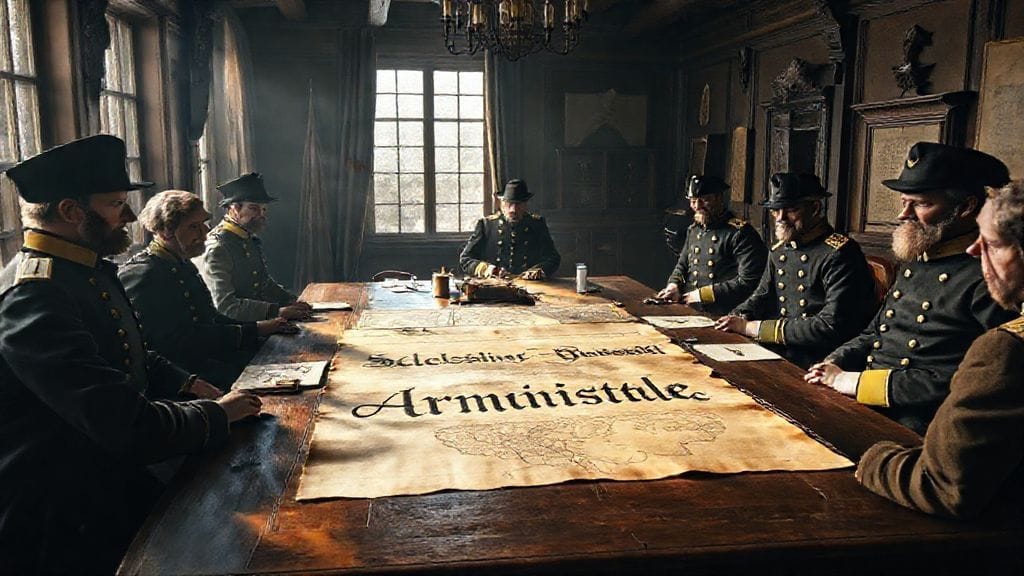
Finally, on August 26, the armistice was formally signed. The terms forbade further military actions, established withdrawal lines, and outlined provisional governance arrangements. Much hinged on maintaining neutrality in certain zones and disarming militia forces.
For the combatants, it was a respite—a chance to regroup, reassess, and perhaps prevent further bloodshed. For the wider continent, it was a reminder of the precarious balance between revolution and order.
Reactions Across Europe: Media, Public Opinion, and Political Discourse
News of the armistice rippled through European capitals with mixed reactions. German nationalists greeted it with disappointment, seeing it as a betrayal of their cause. Danish loyalists cautiously celebrated a temporary victory.
The European press debated the armistice’s implications, framing it variously as a hopeful peace or a pause in a broader struggle. Intellectuals and politicians considered its significance in the context of 1848’s tumultuous transformations.
The Fragility of Peace: Resumption of Conflict and the Road to 1851
However, the Malmö armistice was not a lasting peace. By the following year, hostilities reignited, culminating in further campaigns and diplomatic interventions. The First Schleswig War would drag until 1851, with shifting alliances and bitter confrontations.
Yet the armistice’s legacy endured as a crucial moment when both sides recognized war’s limits—even amid fervor and nationalism.
Legacy of the 1848 Armistice: Nationalism and the Danish-German Question
The conflict over Schleswig and Holstein remained a defining feature of 19th-century European politics. The unresolved tensions foreshadowed later wars, including the Second Schleswig War in 1864, which dramatically reshaped the region’s map.
The 1848 armistice revealed both the power and limits of nationalist aspirations and the complex diplomacy required to navigate them—a lesson resonating beyond the Baltic shores.
Cultural Reflections: Literature and Art Inspired by the Conflict
The war and the armistice found expression in literature, poetry, and art of the period. Danish and German writers grappled with themes of identity, sacrifice, and exile.
Romanticized depictions of the duchies’ landscapes, elegies for lost lives, and tragic narratives enriched the cultural memory of the conflict, keeping it alive in the hearts of populations divided yet intertwined.
Memory and Commemoration: How the War Lives On Today
Today, the Schleswig-Holstein conflict and its armistice are commemorated in museums, monuments, and academic studies across Denmark and Germany. They serve as reminders of the painful birth of modern national identities and the enduring challenge of reconciliation.
Historic sites, battlefields, and archives preserve this shared heritage, inviting reflection on nationalism’s promises and perils.
Conclusion
The armistice signed in Malmö on August 26, 1848, stands as a poignant chapter in European history—a moment when hope for peace kindled amid the fires of war. It encapsulated the turbulent pulse of an age torn between revolutionary dreams and the harsh realities of politics.
Though temporary, the ceasefire illuminated the deep-rooted complexities that nationalist movements faced: the fine line between liberation and conflict, identity and exclusion. It also highlighted the crucial role of diplomacy and the fragile human bonds that can persist even amidst division.
As the reverberations of the Schleswig-Holstein question continued well beyond 1848, the Malmö armistice remains a symbol—an evocative reminder that history is shaped not only by battles won or lost but by the moments when adversaries dare to lay down arms and envision a different path.
FAQs
1. What caused the Schleswig-Holstein conflict in 1848?
The conflict stemmed from competing claims over the duchies of Schleswig and Holstein, heightened by rising Danish and German nationalism, and complicated by their political status within Denmark and the German Confederation.
2. Why was Malmö chosen as the site for the armistice negotiations?
Malmö, in neutral Sweden, was geographically close and politically neutral, providing a safe and accessible environment for peace talks between the warring sides.
3. Who were the key figures involved in the Schleswig-Holstein War?
Key figures included Danish leaders like King Frederick VII and General Frederik Rubeck, German commanders such as Count Friedrich von Wrangel, and local nationalist leaders like Count Friedrich of Augustenburg.
4. What were the main terms of the August 26, 1848 armistice?
The armistice called for a cessation of hostilities, withdrawal of troops from contested areas, and the temporary establishment of neutral zones to prevent further fighting.
5. Did the armistice end the conflict permanently?
No, the armistice was a temporary pause. Fighting resumed later, and the conflict continued until 1851, with further wars over the region occurring subsequently.
6. How did the Schleswig-Holstein War influence European nationalism?
It underscored the complexities of nationalist movements, demonstrating that ethnic and political identities could both unite and divide populations, influencing other national struggles in Europe.
7. How is the Schleswig-Holstein conflict remembered today?
It is commemorated through museums, historical sites, and scholarship in Denmark and Germany as a significant episode in the development of national identities and regional history.