Table of Contents
- The Final Days of a Hero: Scipio Africanus at Liternum
- A Legacy Forged in Battle: The Rise of Scipio Africanus
- The Punic Wars: The Stage of Destiny
- From Rome to Carthage: The Man Who Changed History
- The Retreat to Liternum: A Quiet Exile
- The Roman Republic in Transition: Politics and Power Plays
- Life in Liternum: Solitude of a Warrior
- Scipio’s Death: Circumstances and Speculations
- The Tomb at Liternum: Memory in Stone
- The Aftermath: Politics Beyond Africanus’ Death
- Africanus’ Influence on Roman Military Doctrine
- The Cultural Reverberations: Heroism and Myth
- The Family of Scipio: Continuity and Challenge
- Later Historiography: Africanus in Ancient Sources
- Africanus’ Place in Modern Memory and Scholarship
- The Site of Liternum: Archaeological Discoveries
- From Legend to Legacy: Africanus’ Enduring Inspiration
- Conclusion: The Final Chapter of Rome’s Greatest General
- FAQs: Understanding Scipio Africanus’ Death and Legacy
- External Resource: Scipio Africanus on Wikipedia
- Internal Link: Visit History Sphere
1. The Final Days of a Hero: Scipio Africanus at Liternum
It was at Liternum, a quiet Roman colony by the gentle waves of the Bay of Naples, where Publius Cornelius Scipio Africanus, one of Rome’s most celebrated generals, chose to spend his final days. The once-mighty conqueror of Carthage, whose triumph at the Battle of Zama resounded across the Mediterranean, had become a shadow of his former self. There, surrounded by the serene countryside, Africanus faced the twilight of a life filled with both glory and contention. The long shadows cast by sunset seemed to mirror the fading light of a legendary figure whose name was still whispered among the homes of Rome’s elite — yet whose personal fate was quietly fading from the annals of power.
The year was approximately 183 BCE, a time when Rome had settled into dominance after decades of warfare, yet inside its marble palaces simmered politics fierce enough to eclipse the battlefield. Africanus’ retreat from public life was no mere retirement; it was exile, prompted by bitter rivalries and accusations that stained even his magnificent career. In his villa at Liternum, the general lived in solitude — a testament to the complexity of fame, loyalty, and the price paid by those who wield sword and senate with equal fierceness.
This article journeys through that final chapter, embracing vivid narratives and critical analyses to explore not only Africanus’ death but the rich tapestry of history surrounding it. Africanus was more than just a warrior; he was a symbol of Rome’s rise, a figure torn between the demands of honor and the perils of politics.
2. A Legacy Forged in Battle: The Rise of Scipio Africanus
Publius Cornelius Scipio Africanus’ story began in the crucible of the Roman Republic’s fierce expansion. Born into the noble Cornelii family around 236 BCE, Africanus quickly distinguished himself through a combination of military genius, bold strategy, and a demeanor that blended aristocratic calm with undisguised ambition. His rise coincided with Rome’s deadly struggle against Carthage — a contest of empires that shaped Mediterranean geopolitics for generations.
The Second Punic War, in particular, defined his early life. Rome’s darkest hours seemed to give birth to his most luminous achievements. While Hannibal’s elephants thundered through the Italian Alps, bringing destruction and dread to Roman hearts, Scipio emerged as a young firebrand unfaltering in resolve. His early campaigns in Spain, culminating in victories such as the Battle of Baecula, showcased a tactical mind beyond his years.
3. The Punic Wars: The Stage of Destiny
The Punic Wars were more than mere conflicts. They were existential battles for identity and supremacy. For Rome, the fear of losing ground to Carthage—a rival with vast naval strength and wealth—became a driving anxiety. Africanus’ leadership shifted the course of these wars, notably with his brilliant and decisive victory at the Battle of Zama in 202 BCE.
At Zama, Africanus’ forces outmaneuvered Hannibal’s seasoned army in a display of flexibility and innovation. This triumph not only ended the Second Punic War but also inaugurated Rome’s ascendancy as a Mediterranean superpower. Africanus was lauded as “Africanus” — a cognomen immortalizing his conquest of Africa and sealing his place in history forever.
4. From Rome to Carthage: The Man Who Changed History
Scipio Africanus was more than military prowess; he was an emblem of Roman virtues — gravitas, pietas, and virtus. Yet his story held contradictions. He was a celebrated general who became a controversial figure in Rome. His return from Africa was met with both jubilant praise and suspicion.
Politically savvy, Africanus navigated a complex landscape filled with jealous rivals, most notably factions who resented his popularity and influence. His refusal to always bow to political pressure hinted at the tensions that would later drive him from the public eye.
5. The Retreat to Liternum: A Quiet Exile
After years of political struggles, including charges of corruption and inappropriate conduct that were likely fueled by envy and factionalism rather than evidence, Africanus withdrew from Roman politics. Around 184 BCE, he took refuge in Liternum, a modest coastal town in Campania, far from the marble corridors of power.
His choice to live in relative obscurity, away from the Senate and his family’s traditional stronghold, underscores the price exacted by Roman political life. There, Africanus lived in a villa overlooking the sea — a retreat shadowed by past triumphs and personal betrayals alike.
6. The Roman Republic in Transition: Politics and Power Plays
The years following the Punic Wars were turbulent for the Republic, undergoing social, political, and military transformations. Africanus’ retreat was emblematic of a broader shift — the rising dominance of new political factions, the erosion of old aristocratic consensus, and the foreshadowing of turmoil that would culminate centuries later in civil wars.
Africanus’ enemies, eager to strip him of his honors and recall him from public favor, represented the fragility of Roman politics where yesterday’s hero could swiftly become today’s scapegoat.
7. Life in Liternum: Solitude of a Warrior
The landscape around Liternum was pastoral, marked by olive groves and vineyards sloping toward the Tyrrhenian Sea. Here, Africanus lived in peaceful isolation, tending to his estate and reflecting on a tumultuous life. The serenity may have contrasted sharply with the turbulent emotions of a man wrestling with exile and fading glory.
Contemporary accounts, though sparse, suggest a dignified withdrawal peppered with intellectual engagement — a man who, despite political exile, remained stoic and respected by those around him.
8. Scipio’s Death: Circumstances and Speculations
The exact date of Scipio Africanus’ death is uncertain, estimated around 183 BCE, but the conditions and motivations surrounding his demise evoke deep curiosity. Ancient historians like Livy suggest illness and old age dictated his final moments, yet rumors circulated about the psychological toll of political disgrace.
His death was not marked by pomp but by quiet dignity; a hero who died away from Rome yet remained immortalized in memory. The contrast between his magnificent victories and humble end created an aura of tragic nobility.
9. The Tomb at Liternum: Memory in Stone
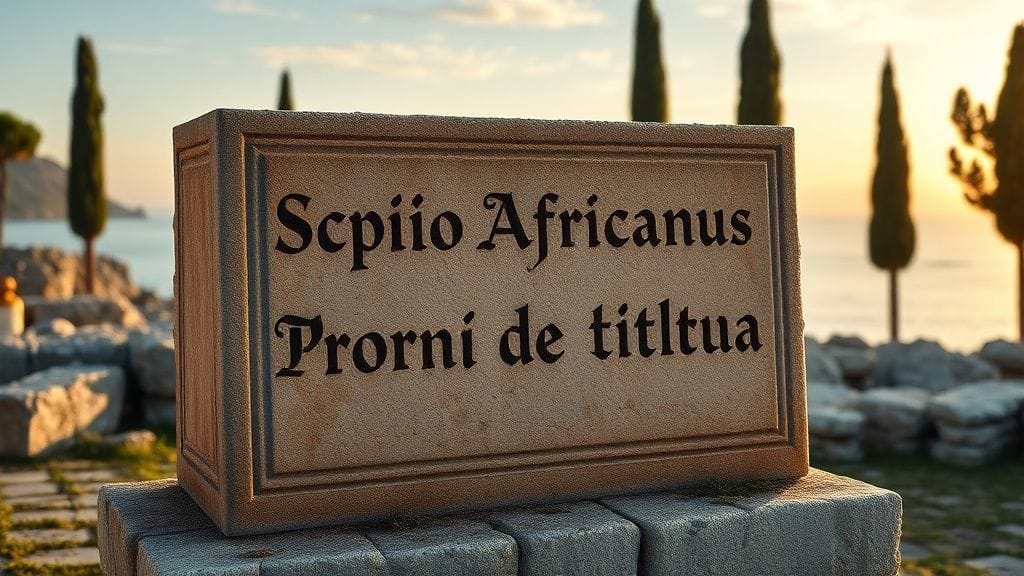
Perhaps the most enduring symbol of Africanus’ final chapter is his tomb at Liternum. Described by ancient writers like Seneca and Cicero, the monument was deliberately unadorned, modest in design — a quiet testament to humility and an embrace of death’s inevitability.
The Latin inscription, reportedly stating that Africanus wished his epitaph to remind the living that all glory is fleeting, resonates as a poignant reflection on fame and mortality. The tomb became a pilgrimage site not just for admirers but for Romans contemplating the nature of power and legacy.
10. The Aftermath: Politics Beyond Africanus’ Death
Africanus’ passing did not end the political struggles he embodied. His heirs and allies continued to influence the Republic’s course, yet none could match his stature. The delicate balance of Roman power shifted towards new generals and politicians, setting Rome on a path toward internal conflicts and empire-building.
His death symbolized the closing of a heroic era; a Rome still proud of its military conquests, but increasingly riven by political strife and social change.
11. Africanus’ Influence on Roman Military Doctrine
Beyond politics and legacy, Scipio Africanus revolutionized the art of war. His blending of Roman discipline with flexible tactics borrowed from enemies displayed a visionary approach. His innovations at Zama — including the use of cavalry and manipular formations — influenced generations of Roman commanders, laying the groundwork for imperial expansion.
Scipio’s strategic thought became a cornerstone of Roman military identity, studied by soldiers and scholars alike.
12. The Cultural Reverberations: Heroism and Myth
Scipio Africanus quickly transcended the historical record to become a mythic figure. His life inspired Latin poets, playwrights, and politicians who invoked his image as a paragon of virtue and courage. Throughout the Republic and the Imperial era, Africanus was a symbol of Rome’s greatness and moral ideals.
His name echoed in literature, public speeches, and even coinage, reinforcing his status beyond mere mortal fate.
13. The Family of Scipio: Continuity and Challenge
The Cornelii Scipiones family remained influential after Africanus’ death, but internal divisions and external pressures beset his descendants. His sons and nephews sought to uphold the family name, yet none matched his military brilliance or political savvy.
The family’s trajectory reflected the vicissitudes of Roman aristocracy in a republic increasingly strained by broader socio-political currents.
14. Later Historiography: Africanus in Ancient Sources
Ancient historians such as Livy, Plutarch, and Polybius provide invaluable but sometimes conflicting accounts of Africanus’ life and death. Their portrayals blend admiration, critical analysis, and anecdotal recollections, each shaping the image of Africanus for future generations.
This historiographical legacy is complex, balancing hero worship with recognition of his human frailties.
15. Africanus’ Place in Modern Memory and Scholarship
Modern historians continue to study Africanus not only as a paramount military figure but as a symbol of Roman Republican values and political drama. Debates about his political exile, motives, and leadership style enrich our understanding of ancient Rome’s complexities.
Africanus remains a subject of fascination in military history, political science, and cultural studies alike.
16. The Site of Liternum: Archaeological Discoveries
Excavations at Liternum have uncovered remnants of Roman villas, mosaics, and structures dating from Scipio’s time. While the precise location of Africanus’ tomb remains debated, these discoveries illuminate the daily life and milieu of a Roman exile turned legend.
Archaeology lends tangible texture to the narratives preserved in texts, deepening appreciation for this quiet corner of Roman history.
17. From Legend to Legacy: Africanus’ Enduring Inspiration
The story of Scipio Africanus' lonely death at Liternum transcends history, teaching timeless lessons about leadership, humility, and the fleeting nature of fame. His legacy has inspired warriors and statesmen, reminding us that behind every conqueror lies a human story of struggle and solitude.
His name remains etched not just on monuments but in the collective memory of civilizations that admire the interplay of glory and grace.
18. Conclusion: The Final Chapter of Rome’s Greatest General
Scipio Africanus’ death around 183 BCE marked the end of an extraordinary chapter in Rome’s ascension from regional power to Mediterranean titan. His life epitomized the paradoxes of greatness — triumph shadowed by political downfall, public acclaim balanced with private retreat.
At Liternum, in quiet dignity, Africanus faced mortality on his own terms, leaving behind a legacy as enduring as the empire he helped forge. His story is a profound reminder that history is made not just by victories but by the humanity of those who live and die in their wake.
FAQs
Q1: What were the main causes of Scipio Africanus’ political exile?
A1: Africanus faced political exile mainly due to rivalries and accusations of corruption fueled by jealousy and factionalism in Rome’s Senate, especially after his immense popularity following the Second Punic War threatened established powers.
Q2: How did Scipio Africanus influence Roman military tactics?
A2: Africanus innovated by integrating flexibility regarding troop deployment, using cavalry effectively, and adopting tactics inspired by enemies such as Hannibal, significantly influencing Roman military doctrine and future campaigns.
Q3: Why did Africanus choose Liternum as his place of retirement?
A3: Liternum offered Africanus a tranquil, remote environment away from the political arena of Rome, allowing him to live in solitude and reflect, while still retaining some connection to Roman society.
Q4: What is known about Africanus’ death and burial?
A4: Although the exact details are unclear, Africanus likely died of natural causes in circa 183 BCE at Liternum. His tomb was modest, emphasizing humility, and served as a symbol for the impermanence of human glory.
Q5: How was Africanus remembered by later Roman generations?
A5: Later Romans remembered Africanus as a paragon of Roman virtues and military genius. He was celebrated in literature, public memory, and official commemorations, symbolizing Roman greatness for centuries.
Q6: What role did Africanus’ family play after his death?
A6: His family, the Cornelii Scipiones, remained prominent politically but struggled to match his extraordinary achievements, highlighting the challenges of dynastic continuity in Roman aristocracy.
Q7: What do archaeological findings at Liternum reveal?
A7: Findings include remains of Roman villas and artifacts that offer insights into the lifestyle of Roman elites, supporting historical accounts of Liternum as a place of residence for figures like Africanus.
Q8: How has modern scholarship revised understandings of Africanus?
A8: Modern historians analyze Africanus’ career within broader political and social contexts, challenging myths while emphasizing the complexities of his leadership and personal struggles.