Table of Contents
- Dawn of a New Era: Scotland in the Early 12th Century
- The Rise of David I: An Ascendant Crown
- Feudal Winds from across the Sea: Anglo-Norman Influence
- The Birth of the Scottish Royal Burghs: Stirling and Perth as Pioneers
- Trading Thrones: How Commerce Reshaped Scottish Power
- The Davidian Revolution: State Reforms that Transformed a Kingdom
- Stirling: The Strategic Bulwark and Economic Gateway
- Perth: From Pictish Settlement to Royal Burgh
- Craftsmen, Merchants, and Kings: Social Changes in the Burghs
- Administration and Law: Foundations of Scottish Governance
- The Role of the Church in the Revolution
- Façades of Stone and Power: Urban Architecture as Royal Statement
- Conflict and Consolidation: Nobles, Clans, and Crown
- The Anglophile Court: David’s Allies and Advisors
- Economic Growth and Currency Reform
- Cultural Transformations: Language, Identity, and Law
- Women in the Burghs: Silent Participants of Change
- The Long Legal Arm: The Evolution of Scottish Jurisprudence
- Standing at the Crossroads: Stirling’s Military and Political Significance
- Perth’s Market Magic: Growth of Trade Networks
- The Revolutions’ Legacy: From Medieval Roots to Modern Scotland
- Conclusion: The Ripple Effects of David’s Vision
- FAQs: Unraveling the Scottish Royal Burghs and Davidian Revolution
- External Resource
- Internal Link
1. Dawn of a New Era: Scotland in the Early 12th Century
The early 1100s in Scotland was a land caught between shadows and dawn. The misty highlands and turbulent lowlands bore the scars of centuries-old tribal struggles, fragmented kingdoms, and a patchwork of laws and allegiances. Yet, beneath this seemingly archaic veneer, the forces of change stirred. It was a time when the very idea of what it meant to be Scottish was evolving, shaped by kingship, conquest, commerce, and law. The kingdom was about to embark on a dramatic transformation that would leave a deep and lasting imprint on its political and social fabric.
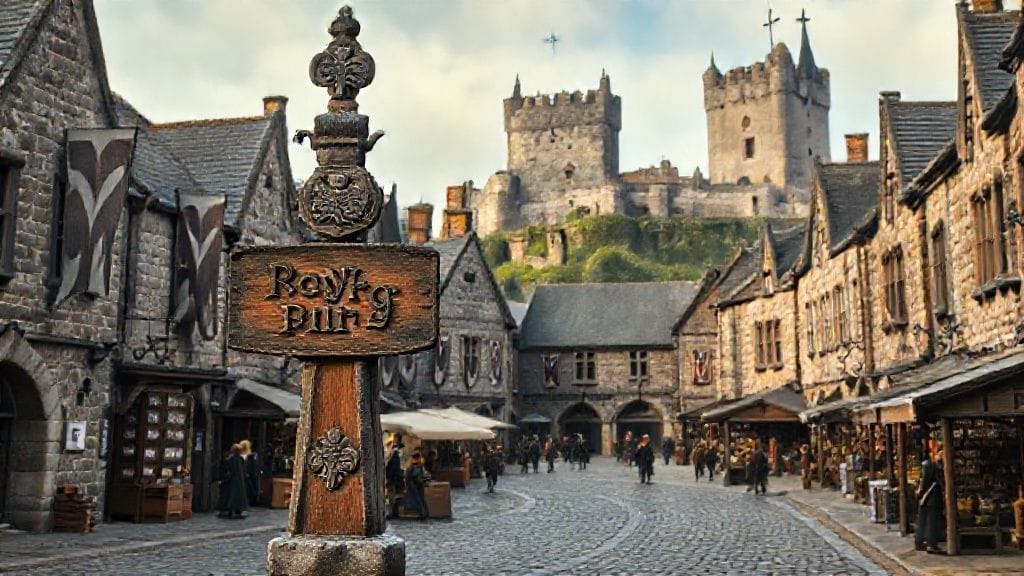
Imagine standing in the bustling market squares of Stirling and Perth, watching traders from Norway, England, and France barter their wares; the clang of smithies mingling with the cries of street vendors; the distant sound of knights drilling in courtyard arenas. This was no mere provincial backwater—this was the crucible of Scotland’s future, fueled by the far-reaching reforms of one extraordinary monarch: David I.
2. The Rise of David I: An Ascendant Crown
David I, crowned in 1124, was unlike his predecessors. A prince shaped profoundly by exile and education in the Anglo-Norman courts, David returned to his native land armed not only with a royal title but with fresh ideas of governance, feudal order, and economic modernization. Unlike the somewhat fragmented and clan-based leadership of the past, David envisioned a strong, centralized monarchy that could integrate Scotland into the broader European world.
David’s heritage was complex. Younger brother to Alexander I but forged in the crucible of English influence, David balanced loyalty to his Gaelic roots with an Anglo-Norman vision of kingship. His reign marked a turning point—ushering in systematic reforms, legal codification, and the establishment of royal burghs designed to knit together the kingdom’s diverse and often fractious populations through commerce and law.
3. Feudal Winds from across the Sea: Anglo-Norman Influence
David I’s transformative agenda owed much to the cultural and political ideas emanating from Normandy and England. While Scotland had long been a rugged, tribal realm ruled by kin and clan, David imported feudalism as a framework for loyalty and governance. Land was parceled out to Norman knights and nobles, who in return owed allegiance to the king. Castles sprouted like artificial mountains—symbols of authority and control.
This feudal framework paved the way for the emergence of royal burghs—chartered towns directly answerable to the crown. These burghs became centers of trade, justice, and administration. The anglicization of language, law, and customs came hand in hand with the introduction of feudal hierarchy, altering the very foundation of Scottish society.
4. The Birth of the Scottish Royal Burghs: Stirling and Perth as Pioneers
It is no accident that Stirling and Perth stand out in this sweeping transformation. As carefully chosen royal burghs, they embodied David’s vision of a centralized, economically vibrant kingdom. Royal burghs were more than towns: they were legal entities with special privileges, including the rights to hold markets, mint coins, and administer local justice.
Stirling, with its commanding position over the river Forth, became a lynchpin connecting the Highlands to the Lowlands. Perth, nestled on the River Tay, was no less strategic, functioning both as a royal seat and as a trade hub linking northern Scotland to broader European networks.
These were the new urban centers around which Scotland’s commercial life and royal authority would gravitate.
5. Trading Thrones: How Commerce Reshaped Scottish Power
The rise of royal burghs was not an isolated administrative maneuver; it was an economic revolution. By granting privileged trading rights and fostering a climate conducive to merchants and craftsmen, David I catalyzed Scotland’s integration into broader medieval trade networks.
Markets blossomed, fairs attracted buyers not only from Scotland but from continental Europe, and ports opened to the flow of goods, ideas, and wealth. The burghs became melting pots, their streets alive with the hustle of commerce—wool, timber, fish, and precious metals all changing hands. This wealth enriched the crown but also solidified a new urban middle class with vested interests in stability and legal protections.
6. The Davidian Revolution: State Reforms that Transformed a Kingdom
Historians often refer to David I’s sweeping changes as the “Davidian Revolution,” a phrase that captures the tectonic shifts in Scotland’s political and administrative landscape. Beyond urban development, royal burghs functioned as nodal points in a centralized system of governance and justice.
David introduced written charters establishing burgh privileges, built royal castles as strongholds of power, and codified laws that reached even into remote areas. His reforms balanced respect for indigenous customs with imported feudal institutions, creating a hybrid system uniquely Scottish.
It wasn’t just about power—these reforms sought to weave a cohesive identity, binding nobles, merchants, clergy, and commoners into a shared vision of the kingdom.
7. Stirling: The Strategic Bulwark and Economic Gateway
Perched on a formidable rock overlooking the confluence of vital waterways, Stirling was more than a royal burgh—it was Scotland’s keystone. The impressive Stirling Castle emerged as a symbol and tool of David’s authority, a fortress designed to command loyalty and repel invaders.
Stirling’s markets bustled, but the city’s real importance lay in its position as a gateway between Highland and Lowland Scotland, and between Scotland and England. Controlling Stirling meant controlling movement, trade routes, and military incursions, making it central to the kingdom’s unity and security amid turbulent times.
8. Perth: From Pictish Settlement to Royal Burgh
Perth’s history stretches back to Pictish times, but its transformation under David I was revolutionary. Elevated to royal burgh status, Perth grew into a lively urban center, fostering artisans, merchants, and clerics.
The royal charters granted privileges that encouraged long-distance trade and municipal self-governance, transforming an ancient settlement into a medieval economic powerhouse. The growth of Perth reflected the crown’s broader ambition: to replace clan fragmentation with urban order.
9. Craftsmen, Merchants, and Kings: Social Changes in the Burghs
With the new burgh system emerged new social layers. Merchants and craftsmen formed guilds and collectives, asserting their rights and shaping civic life. The rise of these urban classes challenged the dominance of rural aristocracy and even among clans.
Kings and nobles found new partners—and occasional rivals—in the burgh bourgeoisie. These social changes caused frictions but also enriched Scotland’s cultural tapestry with new ideas about governance, rights, and economic opportunity.
10. Administration and Law: Foundations of Scottish Governance
David’s reign saw the introduction of administrative reforms that laid foundations still echoed in modern Scottish governance. Burgh courts provided localized rule of law; royal officials like sheriffs enforced the king’s will, replacing clan-based justice.
Written charters articulated burgess rights and duties, codifying practices hitherto dominated by oral tradition. This system encouraged predictability, stability, and central authority, crucial to integrating disparate regions into one kingdom.
11. The Role of the Church in the Revolution
No medieval transformation could occur without the church’s central role. David I was a devout patron, reforming the Scottish church by introducing continental monastic orders such as the Augustinians and Cistercians. These religious houses became centers of learning, economic activity, and social welfare.
The church was an ally to the crown’s vision, offering spiritual legitimacy to kingship while participating in economic growth—owning lands, hosting markets, and influencing legal matters.
12. Façades of Stone and Power: Urban Architecture as Royal Statement
The stone-built castles and churches of Stirling and Perth were not mere constructions; they were bold political statements, monuments to a new vision of power. Castles symbolized order replacing chaos, while cathedrals and abbeys broadcast the kingdom’s piety and wealth.
This tangible architecture defined the burghs’ identities and bolstered royal prestige, shaping how people experienced power physically as well as politically.
13. Conflict and Consolidation: Nobles, Clans, and Crown
Yet the path to reform was neither smooth nor uncontested. Feudal lords, traditional clan chiefs, and neighboring powers often resisted David’s encroachments. Tensions erupted into skirmishes, alliances shifted, and loyalty was earned as much by military might as by political skill.
The king’s ability to consolidate power depended on deft handling of this factional turbulence, balancing force with diplomacy to secure his reforms.
14. The Anglophile Court: David’s Allies and Advisors
David’s court gathered an intriguing mix of Anglo-Norman knights, Scottish nobles, and ecclesiastical figures. This anglicized court was both a center of policy innovation and a flashpoint for cultural tensions but nonetheless instrumental in advancing the founder’s program.
These advisors helped design the burgh system, administer justice, and nurture urban economies, linking Scotland more tightly with European politics and trade.
15. Economic Growth and Currency Reform
The burghs thrived economically, but David also advanced reforms in currency and taxation critical to state-building. Coinage was standardized, facilitating trade and royal revenues.
These measures helped extend royal influence into daily life and commerce, transforming Scotland from a patchwork of petty realms into a coherent kingdom with fiscal power.
16. Cultural Transformations: Language, Identity, and Law
Parallel to political reforms, Scotland witnessed subtle cultural shifts. Gaelic was increasingly supplanted by Scots and Anglo-Norman languages in official and urban contexts. This linguistic change reflected—and shaped—transformations in identity.
Law evolved too, drawing from Celtic custom and Continental codes, producing a hybrid system that balanced traditional rights with centralized authority.
17. Women in the Burghs: Silent Participants of Change
While often overlooked, women played vital roles as merchants, craftsmen’s assistants, or noble patrons within burgh society. Records hint at widows managing estates or businesses, challenging modern assumptions about medieval gender roles.
The burgh environment offered some openings for female agency, though still constrained by broader patriarchal structures.
18. The Long Legal Arm: The Evolution of Scottish Jurisprudence
David’s reforms accelerated the emergence of a royal legal system. Burgh courts handled property disputes, contracts, and criminal offenses with greater regularity and fairness than clan justice had allowed.
This codification of law helped stabilize society and forge loyalty to the king rather than to local warlords—a profound political development.
19. Standing at the Crossroads: Stirling’s Military and Political Significance
Stirling’s fortifications were tested repeatedly as Scotland confronted threats from England and rebellious nobles. The castle served as a royal residence, military base, and symbol of sovereignty.
Control of Stirling meant control of central Scotland, making it a prize of intense strategic importance throughout medieval history.
20. Perth’s Market Magic: Growth of Trade Networks
Perth’s markets expanded beyond local necessities to become international trade centers. Foreign merchants arrived with textiles, salt, fish, and luxury goods, creating vibrant hubs of economic life.
This prosperity enriched the crown and urban dwellers alike, knitting Scotland into the economic web of medieval Europe.
21. The Revolutions’ Legacy: From Medieval Roots to Modern Scotland
David I’s reforms and the creation of royal burghs like Stirling and Perth planted seeds that later blossomed into Scotland’s distinctive medieval identity. A stronger monarchy, vibrant towns, a more codified legal system, and broader cultural connections all emanated from this transformative era.
These innovations underpinned Scotland’s resilience and political evolution through centuries of upheaval and union with England.
Conclusion
The Scottish Royal Burghs and the Davidian Revolution represent one of the most profound reshaping moments of medieval Scotland. David I, a king forged by exile and ambition, harnessed feudal principles and urban innovation to bind a fractured land into a kingdom both resilient and connected to Europe’s pulsating pulse.
The royal burghs of Stirling and Perth stand as monuments—not just of stone and commerce, but of vision and change, mosaic pieces of a kingdom carving its identity amidst tumultuous medieval currents. The echoes of this revolution reverberate through Scotland’s legal traditions, urban landscapes, and cultural self-understanding, reminding us how a single monarch’s ideas can ripple across centuries.
To walk today through Stirling’s venerable castle or Perth’s historic streets is to trace the footsteps of that radical transformation, to breathe the air of a Scotland reborn in the fires of reform, ambition, and resilient hope.
FAQs
Q1: What exactly were the “royal burghs” established by David I?
Royal burghs were chartered towns granted special rights by the king, including the ability to hold markets, trade freely, and self-govern through burgh courts. They helped centralize royal authority and stimulate the economy.
Q2: Why did David I introduce feudalism to Scotland?
David, influenced by his upbringing in Anglo-Norman courts, introduced feudalism as a means to stabilize and centralize power, replacing clan allegiances with more formalized, hierarchical bonds of loyalty to the crown.
Q3: How did the reforms affect everyday people in burghs like Stirling and Perth?
Merchants, craftsmen, and townsfolk gained greater economic opportunities and legal protections, allowing social mobility and fostering a new urban middle class, though noble and clan tensions persisted.
Q4: Did the church benefit from the Davidian reforms?
Yes, David reformed and expanded the church’s role, patronizing monastic orders and integrating ecclesiastical authority with the crown’s governance, reinforcing his legitimacy and fostering education and welfare.
Q5: How did these reforms influence Scotland’s later history?
They laid foundations for a centralized monarchy, legal system, and urban culture that sustained Scotland through medieval challenges and shaped its distinct national identity.
Q6: Were Stirling and Perth the only royal burghs?
No, David I founded several royal burghs across Scotland, but Stirling and Perth were among the earliest and most strategically vital, setting models for others.
Q7: Did the introduction of Anglo-Norman customs cause resistance?
Yes, some traditional clans and nobles resisted these changes, fearing loss of autonomy, leading to intermittent conflicts, though ultimately David’s political skill prevailed.
Q8: How did language and culture shift during this period?
Gaelic’s dominance waned in royal and urban contexts, replaced by Scots and Anglo-Norman languages, reflecting the broader cultural and political integration with European systems.