Table of Contents
- The Dawn of Disaster: October 13, 1963
- A Quiet Morning Shattered: The Arrival of the Tsunami
- Geological Context: The Unseen Forces Beneath the Sea of Okhotsk
- The Tectonic Theatre: Plates, Faults, and the Source of the Tsunami
- Mesmerizing Waves: The Mechanics of the 1963 Tsunami
- Early Warnings and Missed Signs: The State of Science in 1963
- Impact on the Coastal Communities: Stories of Loss and Survival
- The Soviet Response: Emergency Operations and Rescue Efforts
- Japan’s Vigilance and the Tsunami’s Reach to Its Shores
- The Human Faces Behind the Numbers: Eyewitness Accounts
- Scientific Investigations: From Shock to Understanding
- International Reactions and the Dawn of Oceanic Cooperation
- The Tsunami in Cultural Memory: Art, Literature, and Legacy
- Lessons Learned: Evolution in Tsunami Preparedness Post-1963
- The Sea of Okhotsk Today: Monitoring an Active Hazard Zone
- Conclusion: Reflecting on the Power and Fragility of Nature
- FAQs: Answering the Most Common Questions
- External Resource
- Internal Link
The Dawn of Disaster: October 13, 1963
On a crisp October morning in 1963, the world above the Sea of Okhotsk stirred with routine activity. Fishermen set out from the harbors of the remote Russian Far East, children hurried to school, and towns along the coast basked in the muted glow of autumn. Underneath the tranquil surface, however, a violent drama was unfolding—a drama carried by forces so immense that they would forever change the lives of thousands. At precisely 9:30 am local time, the Sea of Okhotsk unleashed a monstrous tidal wave. The tsunami of October 13, 1963, remains one of the most powerful and mysterious natural disasters of the 20th century.
What exactly happened on that day? How did the seemingly placid sea transform into a deadly force? And what legacy did this event leave on science and coastal communities? This article dives deep into the heart of the 1963 Sea of Okhotsk tsunami — from the tectonic roots hidden beneath icy waters to the human stories etched along the shorelines.
A Quiet Morning Shattered: The Arrival of the Tsunami
The day began like any other, but shortly after 9:00 am, instruments detected a strong earthquake, its epicenter resting somewhere in the underwater trenches of the northwest Pacific. Within mere minutes, long waves began racing toward the coasts, climbing and swelling ominously. In the nearby fishing villages, the first signs of distress—a sudden recession of the sea—prompted confusion and fear.
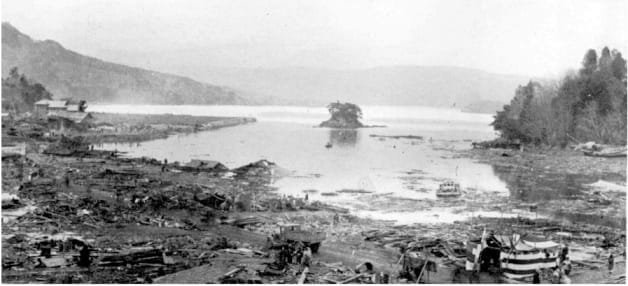
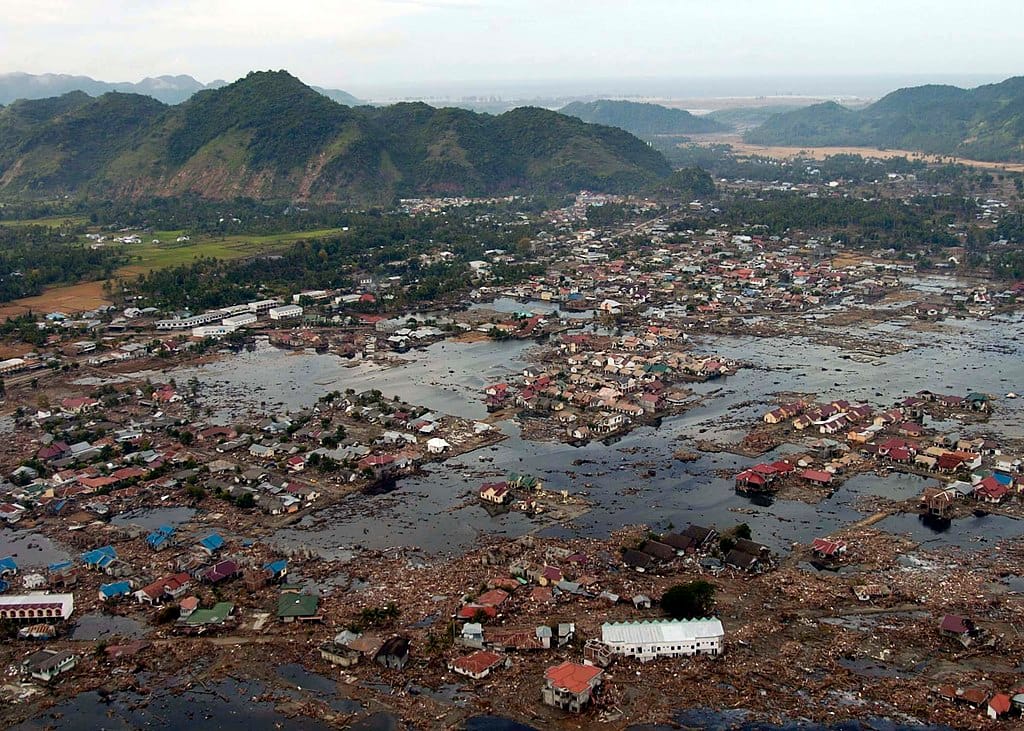
The tsunami’s arrival was swift and merciless. In some locations, the waters surged inland dozens of meters, inundating homes, docks, and streets in an instant. Early reports vary, but it is estimated that waves reached heights between 5 and 12 meters along the most affected shores. Entire settlements were swept away, while others barely escaped with their lives.
Witnesses recall a deafening roar, like the sky itself tearing apart, and the surreal sight of the ocean retreating drastically before its ferocious return. The human drama was intense: families scrambled for high ground, fishermen tried desperately to save their boats, and emergency signals flickered amidst the chaos. But this was just the beginning.
Geological Context: The Unseen Forces Beneath the Sea of Okhotsk
To comprehend the 1963 tsunami, one must peer deep beneath the surface—not merely the waves but the ancient geology of the region. The Sea of Okhotsk is a marginal sea, bounded by Russia’s Kamchatka Peninsula, the Kuril Islands, Sakhalin Island, and the northeastern coast of Siberia. It sits astride several tectonic boundaries, where the Pacific Plate grinds relentlessly against the Eurasian and North American Plates.
This dynamic and volatile region is part of the infamous “Ring of Fire”—a fiery circle of volcanoes and earthquake zones encircling the Pacific Ocean. Subduction zones here, where one tectonic plate dives beneath another, generate both frequent seismic activity and an undersea topography primed for tsunami generation.
But the Sea of Okhotsk is not just a geological curiosity; it is a natural barrier and corridor for oceanic currents, rich fisheries, and vibrant coastal communities. Its seabed hides faults capable of sudden rupture, and the 1963 tsunami was born precisely from one such violent geologic event.
The Tectonic Theatre: Plates, Faults, and the Source of the Tsunami
The earthquake that triggered the 1963 tsunami originated near the Kuril-Kamchatka Trench, a boundary where the Pacific Plate is subducted beneath the Okhotsk microplate—often considered part of the larger North American Plate. This subduction zone is responsible for some of the largest and most powerful earthquakes ever recorded.
Seismologists studying the 1963 event later identified it as a magnitude 8.3 megathrust earthquake. During such rupture events, a portion of the ocean floor abruptly shifts upward or downward, displacing colossal volumes of seawater. This displacement pushes a ripple outward in every direction—the tsunami.
The earthquake’s focus lay unusually deep but its rupture was extensive, causing widespread undersea landslides and fault slippage. Complex interactions between the earthquake fault dynamics and underwater slopes amplified the tsunami’s size rather than diminished it. This synergy between tectonic motion and sediment slumping rendered the 1963 tsunami especially unpredictable and destructive.
Mesmerizing Waves: The Mechanics of the 1963 Tsunami
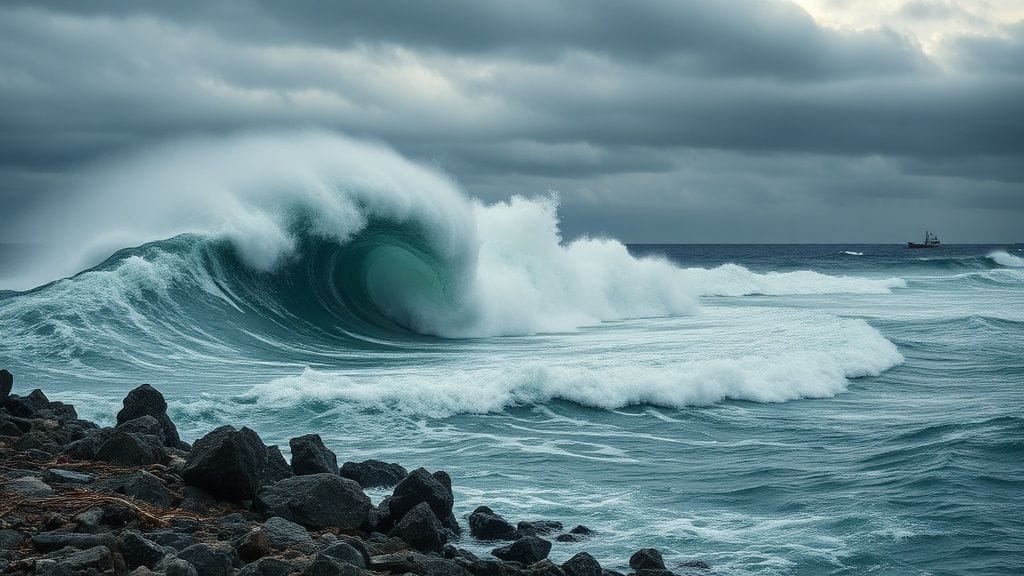
Tsunamis are not ordinary waves; they are a series of long-wavelength ocean waves produced by sudden vertical motion of the seafloor. Unlike familiar wind-driven waves that crash and foam on the shore, tsunami waves can travel at jetliner speeds—up to 800 km/h in deep ocean—with wavelengths often exceeding 100 kilometers.
The 1963 Sea of Okhotsk tsunami began as a series of massive waves radiating outwards from the earthquake epicenter. As these waves approached shallower coastal waters, their speed decreased but their height increased dramatically due to wave shoaling. Eventually, towering walls of water slammed against the coastlines, sweeping far inland.
Scientists later reconstructed the tsunami through wave gauges scattered across the Pacific and Soviet oceanographic data. They revealed a multi-wave train, with the first devastating pulse followed by additional surges over several hours. The sea’s surface became a churning cauldron, confusing early warning efforts and amplifying fears among coastal communities.
Early Warnings and Missed Signs: The State of Science in 1963
In 1963, tsunami science and warning infrastructures were nascent, especially in the Soviet Far East. There were no satellite systems, minimal seismic networks, and only rudimentary ocean buoys. As a result, the initial earthquake was recorded but not immediately linked to tsunami generation.
Communication barriers and the remote geography delayed warnings. Citizens who might have had minutes or even hours to evacuate often received no notice, or too little time to act. This tragic failure underscored the urgent need for better detection and response mechanisms, lessons absorbed slowly but profoundly in the decades that followed.
Meanwhile, Japan and the United States had begun developing tsunami warning protocols, especially after the devastation of previous Pacific tsunamis. However, the Sea of Okhotsk's unique geography and political isolation slowed international information exchange.
Impact on the Coastal Communities: Stories of Loss and Survival
The tsunami's wrath was most cruel to the villages and towns lining the northern and western shores of the Sea of Okhotsk. Fishing hamlets, some accessible only by boat, were inundated by sudden surges. Communication lines were severed, leaving survivors isolated and desperate.
Reported casualties ranged from dozens to potentially several hundreds, though precise figures remain elusive due to restricted Soviet-era reporting. Many lost everything: homes, livelihoods, and loved ones. Yet amid the wreckage, stories of resilience emerged.
One fisherman recounted how his family fled to the hills just moments before the water engulfed their home—saving their lives but leaving only memories behind. Another survivor painted a vivid picture of children watching, frozen in terror, as the waves receded and returned, wave after wave.
These human tales give voice to a disaster otherwise obscured by time and political silence.
The Soviet Response: Emergency Operations and Rescue Efforts
Though constrained by Cold War secrecy, the Soviet authorities mobilized swiftly once the scale of the disaster became clear. Naval vessels, scientific teams, and emergency responders were dispatched to the region. They conducted damage assessments, provided aid to displaced populations, and began rebuilding efforts.
Recovery was hampered by harsh weather, remote geography, and infrastructural limitations. However, the event spurred the Soviet Union to invest more in seismic monitoring and coastal defenses along the Pacific coast.
The disaster also exposed challenges in disaster communication and coordination, contributing to policy changes that prioritized improved emergency preparedness—though much of this remained classified at the time.
Japan’s Vigilance and the Tsunami’s Reach to Its Shores
Though the epicenter lay far from Japan itself, the tsunami’s waves did not halt at Soviet borders. Some swells crossed the Sea of Okhotsk, reaching Hokkaido and northern Japan. Fortunately, wave heights there were significantly smaller—usually below two meters—which caused localized flooding but no major damage.
Japan observed the event closely, synthesizing data to refine their own tsunami monitoring systems. The 1963 Sea of Okhotsk tsunami, while overshadowed by other Pacific events like the 1960 Chile and 1964 Alaska tsunamis, reinforced Japan’s role as a leading nation in tsunami science.
The Human Faces Behind the Numbers: Eyewitness Accounts
Among the few surviving records are testimonies from survivors and rescuers. A woman from a coastal settlement described the primal horror: “The sea disappeared as if swallowed by the earth, then came back with the fury of a thousand storms. Trees, boats, even entire houses—I saw them torn apart before my eyes.”
A Soviet marine biologist, involved in post-disaster assessments, noted the chilling quiet between waves, an eerie calm that preceded catastrophic surges. Another fisherman, recounting his near-death experience, said: “I thought the world had ended that day.”
These voices connect the raw statistics to the lived human experience, making the history tangible.
Scientific Investigations: From Shock to Understanding
In the years following, Soviet and international scientists pieced together the tsunami’s genesis using seismic records, bathymetric maps, and eyewitness reports. The event became a case study in megathrust earthquakes and undersea landslide interactions.
Important findings revealed that tsunamis can arise not only from direct fault rupture but from complex sediment displacement, challenging earlier simpler models. This led to improved predictive simulations and hazard maps.
Moreover, the event underscored the need for multi-national collaboration to share data quickly and transparently—an ideal achieved only decades later.
International Reactions and the Dawn of Oceanic Cooperation
While the Cold War limited direct cooperation at the time, the global scientific community paid close attention to the Sea of Okhotsk tsunami. The sheer power and scale reminded policymakers worldwide that nature pays no heed to borders.
In the years that followed, international frameworks for tsunami warning systems expanded. UNESCO’s Intergovernmental Oceanographic Commission launched the Pacific Tsunami Warning Center and subsequently other regional initiatives to detect and warn about such disasters.
Thus, a tragedy nestled in the remote Far East played its subtle part in catalyzing global cooperation on natural hazards.
The Tsunami in Cultural Memory: Art, Literature, and Legacy
Unlike the more renowned Pacific tsunamis, the 1963 Sea of Okhotsk wave did not find as large a place in popular culture, largely due to geographic remoteness and political opacity. Still, local folklore preserved the memory of the disaster through poems, oral histories, and folk songs recounting the sea’s fury.
In recent decades, Russian writers and artists have revisited the event, drawing from archival materials and survivor stories to shed light on its human and environmental impact. Films and documentaries have begun to introduce the tragedy to wider audiences.
These cultural echoes preserve the tsunami’s lessons and honor the lives forever changed.
Lessons Learned: Evolution in Tsunami Preparedness Post-1963
The 1963 Sea of Okhotsk tsunami underscored critical vulnerabilities in early warning and response mechanisms. It highlighted how scientific limitations and political barriers could amplify human costs.
In the ensuing decades, seismic networks improved dramatically; ocean-bottom pressure sensors were developed; international protocols for tsunami alerts took shape. Countries bordering the Pacific, including the Soviet Union’s successor states, invested in better coastal defenses, evacuation plans, and public education.
Today, while the risk remains, these advances save lives—a testament to resilience born from catastrophe.
The Sea of Okhotsk Today: Monitoring an Active Hazard Zone
Fast forward to the present: the Sea of Okhotsk is closely monitored by satellites, seismic stations, and research vessels. Its dynamic geology continues to generate moderate earthquakes and occasional tidal waves, reminding us that beneath its cold surface lies a restless earth.
Scientific collaborations now transcend old divides, with Russian, Japanese, American, and international teams sharing data openly. Advanced models predict tsunami behavior with increasing accuracy.
The legacy of 1963 lingers in maps, instruments, and policies—a silent guardian against nature’s unpredictable might.
Conclusion
The Sea of Okhotsk tsunami of October 13, 1963, was more than a natural catastrophe; it was a stark reminder of human vulnerability in the face of Earth’s powerful forces. From the subterranean clash of tectonic plates to the terrified cries of coastal villagers, this event weaves a tapestry of geological drama and human endurance.
It exposed gaps in scientific knowledge, communication, and preparedness but also spurred advances that have saved countless lives since. The waves that crashed on that autumn morning continue to ripple through history—not just as a story of destruction, but as a beacon urging vigilance, cooperation, and respect for nature’s awesome power.
Remembering this tsunami honors those lost and inspires us to build a future where such tragedies can be anticipated and mitigated, reminding us always of the fragile beauty of life by the sea.
FAQs
Q: What caused the Sea of Okhotsk tsunami in 1963?
A: The tsunami was triggered by a massive megathrust earthquake along the Kuril-Kamchatka subduction zone, where the Pacific Plate is forced beneath the Okhotsk microplate, uplifting the seafloor and displacing ocean water.
Q: How strong was the earthquake that caused the tsunami?
A: It registered approximately magnitude 8.3, a very powerful seismic event capable of generating large tsunamis.
Q: How many people were affected by the tsunami?
A: Exact casualty figures are uncertain due to limited Soviet-era reporting, but the disaster caused significant loss of life and property in fishing villages along the Sea of Okhotsk’s coast.
Q: Did the tsunami affect countries other than the Soviet Union?
A: Smaller waves were observed reaching northern Japan, causing minor flooding but no significant damage.
Q: What were the main failures in the response to the tsunami?
A: Lack of early warning systems, limited seismic monitoring, and delayed communication due to geographic remoteness and political conditions contributed to high casualties.
Q: How did the 1963 tsunami influence tsunami science and policy?
A: It highlighted the need for expanded monitoring, better international data sharing, and comprehensive tsunami preparedness programs, leading to improved warning systems globally.
Q: Has the Sea of Okhotsk experienced other tsunamis?
A: Yes, the region is tectonically active and has experienced multiple tsunamis, though the 1963 event remains one of the most significant in modern history.
Q: Is the 1963 tsunami remembered in local culture?
A: While less known internationally, it survives in local oral histories, literature, and art, increasingly recognized and studied in recent decades.