Table of Contents
- The Dawn of Controversy: Setting the Stage for the Second Council of Constantinople
- Religious Tensions in the Byzantine World
- Emperor Justinian I: The Architect of Theological Harmony
- The Legacy of the Council of Chalcedon and Ongoing Doctrinal Divisions
- The Rise of Monophysitism and Its Challenge to Orthodoxy
- The Political and Ecclesiastical Stakes in Mid-6th Century Byzantium
- Opening Day in Constantinople: Atmosphere and Expectations
- The Key Figures: Emperors, Patriarchs, and Theologians Gather
- The Accusation Against the “Three Chapters” and its Symbolism
- Fierce Debates and Theological Arguments: The Battle for Orthodoxy
- The Role of Pope Vigilius and the Complex Relationship with Rome
- Women and the Council: The Unsung Influences
- The Council’s Edicts and Their Immediate Impact
- Reactions from the Monophysite Communities
- Political Reverberations: East vs. West After the Council
- The Council’s Influence on Byzantine Imperial Policy
- The Long Shadow: Subsequent Councils and Theological Developments
- The Second Council’s Place in Ecumenical History
- Cultural and Social Ripples Across the Christian World
- The Enduring Debate: Unity and Division in Christian Theology
- Conclusion: The Human Story Behind Doctrinal Decrees
- Frequently Asked Questions on the Second Council of Constantinople
- External Resource
- Internal Link
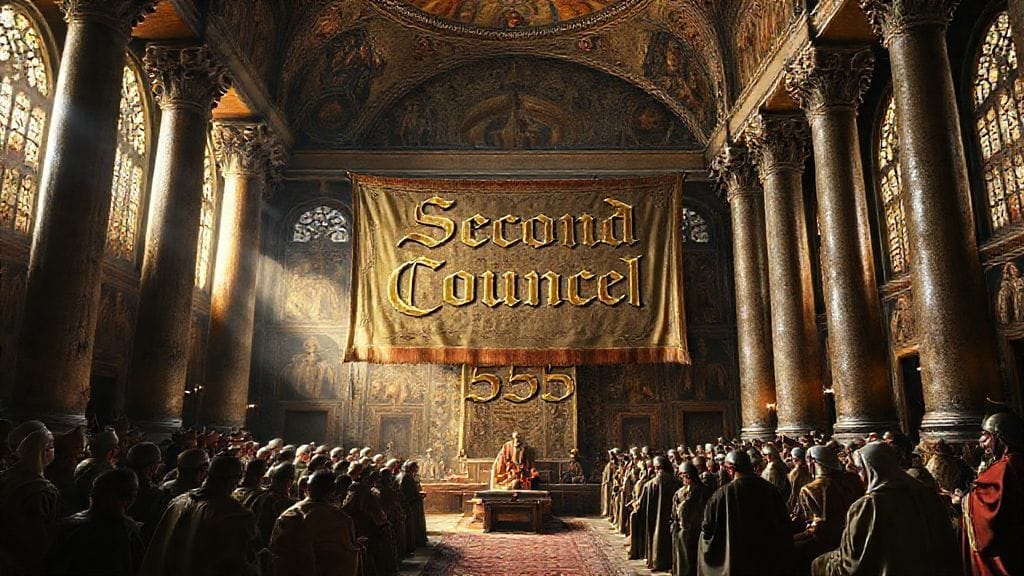
The cathedral dome of Constantinople glowed faintly under the early morning sun, as bishops, theologians, and imperial officials gathered in the great capital’s hallowed halls. The air was thick with anticipation—and anxiety. The city, a crucible of political intrigue and religious fervor, was about to host one of the most decisive religious councils in Christendom’s turbulent history: the Second Council of Constantinople, convened in 553 CE. This convocation promised to unpick tangled threads of doctrine and to attempt a fragile reconciliation of faiths that had been divided for decades.
It was a moment charged with emotion: hope tinged with suspicion, faith shadowed by political calculation. The echoes of earlier councils lingered, as did the heavy weight of schisms and heresies. Delegates whispered in hushed tones, aware that their debates would ripple far beyond the marble walls—touching the lives of millions. The very soul of Christian orthodoxy hung in the balance.
But this was no mere religious gathering. It was a crucible where theology was entwined with empire, where emperors sought divine authority and bishops wielded spiritual power. The Second Council of Constantinople was an event that would define Christian doctrine for centuries—and one whose reverberations would be felt both within Byzantium and across the wider world.
The Dawn of Controversy: Setting the Stage for the Second Council of Constantinople
By the early 6th century, the Christian church was grappling with deep theological fissures that threatened not only religious unity but imperial stability. The roots of these conflicts reached back decades, tangled in a web of doctrinal definitions, imperial interventions, and competing religious factions. The Council of Chalcedon in 451 had attempted to clarify Christ’s nature, asserting the doctrine of two natures — divine and human — embodied in one person. Yet, this solution, rather than healing the church, sowed new seeds of discord.
Monophysitism—a belief in Christ’s single divine nature—was gaining ground, especially in Egypt, Syria, and parts of Asia Minor. The imperial courts, keenly aware of the destabilizing effects of religious disputes on fragile frontiers, were desperate to find a middle ground. Emperor Justinian I, who rose to power in 527, embarked on a campaign to restore order—both political and theological.
Religious Tensions in the Byzantine World
The Byzantine Empire, successor to the Roman world, was a mosaic of peoples and faiths. Religious identity was more than personal conviction; it was a cornerstone of civic life and imperial unity. The monophysite controversy symbolized deeper social and cultural divisions—between the Greco-Roman elite and their Egyptian and Syriac subjects, between Chalcedonian orthodoxy and local traditions.
By the time Justinian took the throne, these tensions had festered for decades, repeatedly erupting into violence and dissent. The emperor’s vision was clear: unity under a single, orthodox Christian doctrine backed by imperial authority. This meant confronting those viewed as heretics—and addressing the controversial texts and theologians whose teachings fanned the flames of division.
Emperor Justinian I: The Architect of Theological Harmony
Justinian was no passive ruler. Brilliant and determined, he saw theological uniformity as the key to imperial stability. His role in orchestrating the Second Council of Constantinople was as much political as religious. Historian Procopius even noted Justinian’s involvement in ecclesiastical affairs as a form of “caesaropapism,” where the emperor wielded influence over the church's hierarchy.
Seeking to resolve lingering disputes, Justinian issued edicts condemning certain writings—collectively called the “Three Chapters”—that had been associated with theological controversies threatening Chalcedonian definitions. While aiming to appease monophysite factions and maintain empire-wide unity, these moves stirred fierce opposition in the western church.
The Legacy of the Council of Chalcedon and Ongoing Doctrinal Divisions
Chalcedon’s declaration—that Christ was fully divine and fully human, in two distinct natures united in one person—remained the official creed of the Byzantine church. However, it alienated many in the eastern provinces who felt the council undermined their inherited theological traditions. The ripples of Chalcedon’s decisions continued to create fault lines, feeding into a wider debate about the nature of Christ and the authority of councils themselves.
The Second Council of Constantinople was convened, in part, to reaffirm Chalcedon’s principles while addressing new theological disputes and condemning dissident writings that complicated the Christian landscape.
The Rise of Monophysitism and Its Challenge to Orthodoxy
Monophysitism, the belief in Christ’s single nature, was far from monolithic. Various interpretations abounded, with some emphasizing the divine nature to the exclusion of the human, while others sought a synthesis. This theological nuance mattered deeply to communities whose identity and resistance to Byzantine centralization intertwined with their beliefs.
The monophysite Churches—Coptic, Syriac, Armenian—found themselves increasingly marginalized yet persistent. Justinian’s strategy aimed to marginalize extreme positions by condemning texts perceived as exacerbating divisions while attempting to present an orthodox doctrine encompassing the diversity within Christian belief.
The Political and Ecclesiastical Stakes in Mid-6th Century Byzantium
The council was not merely a scholastic exercise; it was a battleground for power. The emperor’s desire for control over the church, the patriarchs’ struggle for authority, and the bishops’ theological fidelity all meshed in a complex dance. The outcome would shape imperial policy, ecclesiastical hierarchy, and the relationship between east and west.
At stake was the legitimacy of Justinian’s regime itself, in a time when external pressures from Persian armies and internal fracturing threatened the empire’s survival. Religious unity was seen as essential to imperial stability.
Opening Day in Constantinople: Atmosphere and Expectations
June 5, 553 marked the formal opening of the council in Constantinople’s Hagia Sophia. The basilica, a masterpiece of architecture and symbol of Byzantine power, was filled with the hum of anticipation. Delegates from across the empire, and even representatives from the papacy, gathered beneath its soaring dome.
Historical records describe a solemn yet tense atmosphere. The air was thick with incense, prayers, and murmurs. Delegates exchanged cautious greetings, aware that the council’s decisions could unleash profound consequences.
The Key Figures: Emperors, Patriarchs, and Theologians Gather
Emperor Justinian, though not physically present, was the driving force urging the council forward. Patriarch Eutychius of Constantinople presided over proceedings, his influence crucial in steering debates. From the West, Pope Vigilius was represented, although his position was delicate—enmeshed in political and doctrinal conflicts.
Prominent theologians such as Theodorus of Mopsuestia and others debated fiercely, their rhetoric a blend of philosophical nuance and spiritual fervor. The interactions exposed the fault lines and the passionate convictions underpinning the assembly.
The Accusation Against the “Three Chapters” and its Symbolism
One of the council’s pivotal moments came with the condemnation of the “Three Chapters”—writings and authors linked to Nestorianism, a doctrine emphasizing the disunion of Christ’s divine and human natures, perceived as heretical. These documents were seen as offensive to monophysite groups and were blamed for perpetuating divisions.
This condemnation was controversial, especially in the Western Church, which viewed it as an attack on Chalcedon’s authority. Yet, Justinian saw it as a pragmatic move to bridge theological divides.
Fierce Debates and Theological Arguments: The Battle for Orthodoxy
Discussions ranged from theological treatises to impassioned pleas for unity. Arguments dissected scripture, the writings of the Church Fathers, and the authority of previous councils. Delegates invoked rhetoric that could sway crowds or seal fates.
Despite occasional moments of harmony, hostility persisted—particularly regarding the authority of the pope and the validity of condemning revered theological figures. These debates underscored the complex interplay between dogma, politics, and personal convictions.
The Role of Pope Vigilius and the Complex Relationship with Rome
Pope Vigilius’s role was emblematic of the council’s wider tensions. Initially resistant to condemning the Three Chapters, Vigilius faced pressure both from Justinian and factions within the church. His eventual reluctant acceptance was fraught with political risk.
The event highlighted the growing divergence in ecclesiastical relations between East and West—a schism that would deepen over centuries.
Women and the Council: The Unsung Influences
Though historically marginalized in accounts of such councils, women—imperial wives, noble patrons, and female religious figures—played subtle but significant roles. Empress Theodora, Justinian’s formidable spouse, was known for her sympathy toward monophysite Christians and her influence on court politics.
Their impact, while indirect, shaped the environment in which theological debates unfolded.
The Council’s Edicts and Their Immediate Impact
The council issued 17 anathemas condemning the Three Chapters and affirming Chalcedonian doctrine. These declarations sought to unify the church yet also alienated various factions, especially in the West, where the response was mixed.
Populations in Egypt and Syria remained resistant. The council’s decisions catalyzed further disputes but also clarified the boundaries of Byzantine orthodoxy.
Reactions from the Monophysite Communities
Monophysite Christians largely rejected the council, perceiving it as an imperial imposition suppressing their beliefs and traditions. This hardened divisions and contributed to ongoing schisms.
The persistence of these groups despite imperial pressure testified to the limits of political power in matters of faith.
Political Reverberations: East vs. West After the Council
Relations between Constantinople and Rome became strained, as Western bishops and laity resisted perceived overreach. The council highlighted differences in ecclesiastical culture and theological emphasis.
This divergence would set the stage for continuing conflicts culminating centuries later in formal schisms.
The Council’s Influence on Byzantine Imperial Policy
The Second Council strengthened Justinian’s hand in asserting control over religious affairs, reinforcing the model of imperial oversight linked with theological leadership.
It marked a step toward a centralized, unified religious identity deemed essential for Byzantine resilience.
The Long Shadow: Subsequent Councils and Theological Developments
Though the Second Council of Constantinople remains one of the seven Ecumenical Councils recognized by many, debates it sought to settle resurfaced in later centuries. Its decrees influenced subsequent councils and ecumenical dialogues.
Christian theology continued to evolve, shaped by, but also challenging, these foundations.
The Second Council’s Place in Ecumenical History
The council occupies a critical juncture in the history of Christian doctrine—an effort to consolidate orthodoxy and contain schism. Its legacy is a testament to the complex relationship between faith, politics, and identity.
Cultural and Social Ripples Across the Christian World
Beyond ecclesiastical circles, the council’s decisions affected art, literature, and social cohesion in communities. Themes of unity and division permeated cultural expressions and identity formation in subsequent centuries.
The Enduring Debate: Unity and Division in Christian Theology
The Second Council of Constantinople remains a symbol of the persistent human struggle to define truth and community in the face of difference. The rifts it tried to mend are echoed in ongoing theological and ecclesial conversations worldwide.
Conclusion
The Second Council of Constantinople stands as a vivid, complex chapter in the grand narrative of Christian history—a moment when the imperatives of empire, faith, and identity collided under the great dome of Hagia Sophia. The desire for unity, the struggle for truth, and the frailty of human institutions all played out on this stage, leaving a legacy rich with lessons.
It was not merely a council of doctrines, but a human story of conviction and conciliation, power and persuasion. Through its triumphs and tensions, we glimpse the enduring challenges of reconciling diversity with unity—a question that transcends centuries and speaks to the heart of human coexistence.
FAQs
Q1: What were the main causes leading to the Second Council of Constantinople?
The council was convened primarily to address persistent divisions following the Council of Chalcedon, especially concerning Monophysitism and to condemn writings known as the Three Chapters, which complicated the church’s doctrinal unity.
Q2: Who was the key political figure behind the council and why?
Emperor Justinian I was the main architect. He aimed to restore theological unity across the Byzantine Empire to strengthen imperial stability and consolidate his authority.
Q3: What were the “Three Chapters” condemned at the council?
They were writings and certain theologians associated with Nestorianism, seen as undermining Chalcedonian definitions and alienating monophysite Christians.
Q4: How did the Western Church, particularly Rome, react to the council?
Reactions were mixed and often resistant. Pope Vigilius was initially reluctant, with some Western bishops viewing the condemnation as an attack on Chalcedon and their tradition.
Q5: What impact did the council have on monophysite communities?
Most rejected the council, deepening schisms and highlighting the limits of imperial influence over religious diversity.
Q6: Why is the Second Council of Constantinople considered ecumenical?
Because it was recognized by many Christian traditions as authoritative in defining doctrine and maintaining church unity, being one of the seven great councils of early Christianity.
Q7: Did the council resolve the theological controversies it addressed?
Not entirely. While it clarified certain doctrines and condemned problematic texts, divisions persisted long after, continuing to shape Christian theology and ecclesiastical relations.
Q8: How is the council remembered in contemporary Christianity?
It is respected as a landmark in doctrinal development, though some branches, especially those descending from monophysite traditions, do not accept all its conclusions.

