Table of Contents
- The Fateful Morning in Canton: A City on the Brink
- Opium and Empire: The Seeds of Conflict
- Britain's Expansionist Appetite and Chinese Resistance
- The Arrow Incident: Spark to the Powder Keg
- Diplomatic Failures and Rising Tensions
- The British Ultimatum: Demand, Defiance, and Decline
- The First Shots and the Escalation of War
- Naval Bombardments and the Siege of Canton
- The Role of Local Chinese Authorities: Between Order and Chaos
- International Players: France Joins the Fray
- The Impact on Canton’s Civilians: Fear, Disruption, and Survival
- The War on the Water: Gunboats and River Battles
- Negotiations and Broken Promises: The Unfolding Tragedy
- The Broader Context: Myanmar, India, and Global Trade Routes
- The Aftermath in Canton: Destruction and Recomposition
- The Treaty of Tientsin Seeds: What Canton Lost and Gained
- How the Second Opium War Reshaped Sino-Western Relations
- The Human Cost: Soldiers, Merchants, and Families
- Opium’s Dark Legacy: Addiction and Empire
- Canton in Memory: Historical Narratives and Modern Reflections
- Lessons Learned: Imperial Ambitions Versus Sovereignty
- Conclusion: The Echoes of 1856 in Today’s World
- FAQs about the Second Opium War’s Opening
- External Resource
- Internal Link
1. The Fateful Morning in Canton: A City on the Brink
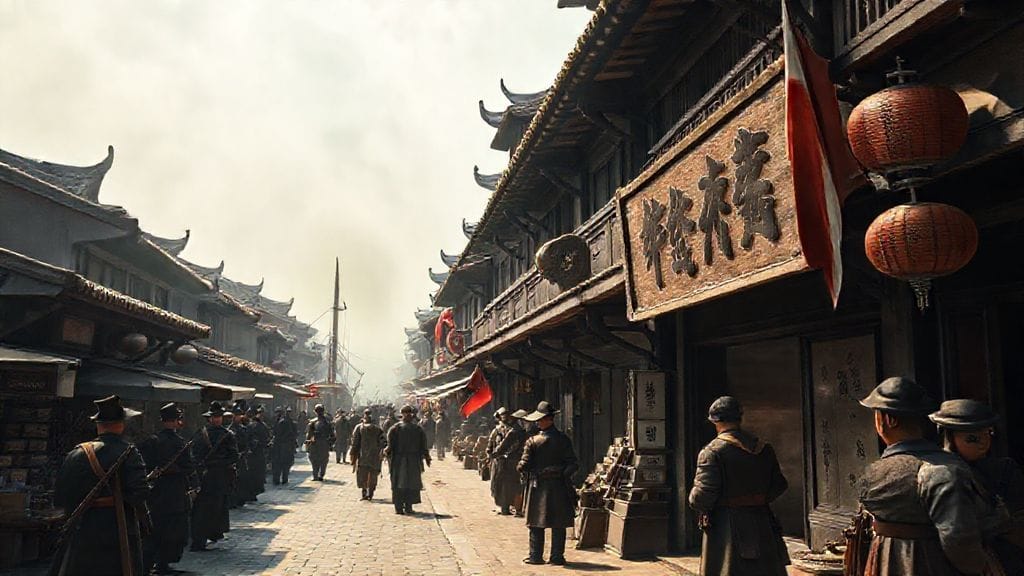
October 1856, in the restless port city of Canton—today’s Guangzhou—woke to an uneasy dawn. Mists curled over the Pearl River, shrouding the city’s bustling docks where junks and steamships jostled for space. Inside the labyrinthine alleyways and jade-green teahouses, tension simmered beneath acts of everyday life. British traders, emboldened by their imperial government and the empire’s relentless thirst for opium profits, prepared for another confrontation with Chinese authorities steadfast in their resistance. An incident that day—seemingly minor yet profoundly symbolic—would ignite a conflict destined to redefine power, sovereignty, and suffering on both sides.
2. Opium and Empire: The Seeds of Conflict
The story of the Second Opium War is inseparable from the larger narrative of the opium trade, imperial ambitions, and Chinese sovereignty. For decades, British merchants had trafficked Indian-grown opium into China, fueling addiction and draining the nation’s silver reserves. The Qing Dynasty, painfully aware of the social and economic damage, repeatedly attempted to suppress the trade. The First Opium War (1839–1842) had ended with humiliating treaties and ceded territory, yet it did not bring peace. Instead, it planted deep resentment.
By 1856, Britain sought to expand privileges won after the earlier war—access to more ports, legalized opium trade, and diplomatic immunity. For China, the erosion of sovereignty was existential. The struggle around Canton thus was a microcosm of a larger existential crisis, a clash between a declining empire defending its traditions and a rising empire forcing open doors with cannons and commerce.
3. Britain's Expansionist Appetite and Chinese Resistance
Britain’s industrial revolution had unleashed new ambitions. Beyond securing raw materials and markets, the Crown eyed China’s vast internal market and strategic ports along the South China coast. Canton, a vibrant hub on the Pearl River Delta, was the focal point of much of this interaction.
But the Chinese authorities in Canton clung to their law, culture, and mandate for the realm. The city had long been the stage for exchanges, but also stand-offs between Western merchants and Chinese officials increasingly frustrated with foreign impunity. This tension defined daily life and foreshadowed the violent spark that was to come.
4. The Arrow Incident: Spark to the Powder Keg
At the heart of the eruption was a seemingly trivial event: the seizure of the Arrow, a Chinese-owned but British-registered vessel suspected by Qing officials of piracy and smuggling. On October 8, 1856, Chinese authorities boarded the Arrow in Canton’s harbor, arresting crew members and raising the Chinese flag on board.
This act enraged the British consul, who claimed the vessel was under British protection. The Qing government, trying to enforce law, saw no justification for foreign interference. The incident quickly escalated into a diplomatic imbroglio, becoming the immediate casus belli for Britain to declare hostilities. Yet, beneath this spark lay deeper unresolved tensions and grievances.
5. Diplomatic Failures and Rising Tensions
Efforts to defuse the crisis faltered amid mutual suspicion and nationalist fervor. British demands for apology, release of prisoners, and restoration of the British flag on the Arrow met Chinese resistance steeped in centuries of imperial pride.
Meanwhile, local merchants, foreign residents, and Chinese commoners watched anxiously. The diplomatic theater spilled into the streets, inflaming nationalism and anti-foreign sentiment. Canton thus became not only a military hotspot but a psychological battlefield where notions of honor, sovereignty, and survival clashed.
6. The British Ultimatum: Demand, Defiance, and Decline
Britain issued an ultimatum with a chilling backdrop: comply or face naval bombardment. When Qing officials steadfastly refused, confident in their sovereignty and the limitations of British might, the die was cast.
The British navy—modern, industrialized, and ruthless—prepared to bring its firepower to bear. This was not merely a trade dispute but a full-throated assertion of imperial will, with Canton as its testing ground.
7. The First Shots and the Escalation of War
In late October, British warships opened fire on Canton’s forts and docks, shattering the fragile peace. The blast of cannons tore through the morning air, and the city’s skyline was soon marked by smoke and flames. The Qing military was ill-prepared for the modern weaponry raining down on them.
Despite desperate counterattacks, the Chinese defenses were overwhelmed. The battlefields stretched from the riverbanks to the narrow streets, transforming homes and marketplaces into battlegrounds. For many residents, the war was not a distant policy but a terrifying, immediate experience.
8. Naval Bombardments and the Siege of Canton
The British fleet’s dominance on the water was decisive. Gunboats patrolled the Pearl River, enforcing blockades that strangled trade and isolated the city. British forces landed troops who pushed into the city with brutal efficiency.
The siege tested the endurance of Canton’s defenders and civilians alike. Food shortages, destruction of infrastructure, and constant danger reshaped life. Yet, amid this chaos, the determination to resist foreign domination intensified.
9. The Role of Local Chinese Authorities: Between Order and Chaos
Amid the conflict, local officials walked a perilous line. Some sought to negotiate and protect the civilian population; others retreated or engaged in acts of resistance. The Qing central government, distant and weakened by internal rebellion, struggled to support Canton adequately.
This dynamic underscored the fractured Chinese response and highlighted the difficulties of governing a sprawling empire under siege from within and without.
10. International Players: France Joins the Fray
France, motivated by its own colonial ambitions and the desire to support Catholic missionaries in China, soon joined Britain in the war. The Franco-British alliance heightened pressure on the Qing and broadened the conflict.
French forces contributed naval firepower and troops, making the siege of Canton and other operations more lethal and geographically extensive.
11. The Impact on Canton’s Civilians: Fear, Disruption, and Survival
For the people of Canton—from wealthy merchants to rural farmers spilling into the city—the war wrought havoc. Homes were destroyed, markets shattered, and lives uprooted.
Many fled to the countryside, while others stayed and faced shortages and violence. The psychological scars of bombardment, displacement, and the rupture of normal life left deep marks on local memory.
12. The War on the Water: Gunboats and River Battles
The Pearl River was the lifeline of Canton and a strategic battlefield. British and French fleets dominated these waters, turning rivers into death zones.
Chinese river defenses, including junks and shore batteries, tried valiantly to resist but were subjected to relentless bombardment. Naval warfare marked a pivotal element of the conflict, demonstrating technological gaps and the geography’s strategic importance.
13. Negotiations and Broken Promises: The Unfolding Tragedy
Even as battles raged, intermittent diplomatic efforts continued. Yet, talks were marred by mistrust, cultural misunderstandings, and incompatible goals.
Treaty proposals offered by Western powers demanded openings of ports, legalization of opium, and extraterritorial rights—unacceptable to Qing leadership. These failed talks prolonged suffering and stoked hatred.
14. The Broader Context: Burma, India, and Global Trade Routes
Though centered on Canton and southern China, the war’s reverberations crossed borders. British interests in India and Burma connected to the conflict’s broader imperial strategy.
Control over sea lanes and trade routes in Asia underscored the war’s significance as a chapter in global power struggles of the 19th century.
15. The Aftermath in Canton: Destruction and Recomposition
By 1857, Canton was scarred but not yet subdued. The city bore the marks of shellfire, burned buildings, and disrupted social order.
Yet, recovery efforts began even amid occupation and ongoing conflict. Canton’s spirit of commerce and diplomacy persisted, highlighting the city’s resilience.
16. The Treaty of Tientsin Seeds: What Canton Lost and Gained
The war paved the way for the Treaty of Tientsin (1858), which formalized many demands of the British and French. Canton, like other treaty ports, saw its autonomy diminished and foreign presence entrenched.
Opium trade gained legal sanction; missionaries and merchants secured unprecedented rights, and Chinese sovereignty was compromised deeply.
17. How the Second Opium War Reshaped Sino-Western Relations
The war marked a turning point, ushering in a new era of unequal treaties and Western domination. China’s “Century of Humiliation” found another brutal chapter in these years.
Western powers expanded political, economic, and cultural influence, leading to long-term transformations and tensions still echoing today.
18. The Human Cost: Soldiers, Merchants, and Families
Beyond politics and trade, the war exacted heavy human costs. Thousands of soldiers on both sides perished.
Civilians endured displacement, starvation, and destruction. Families were fractured, and the social fabric strained under weight of imperial ambition and resistance.
19. Opium’s Dark Legacy: Addiction and Empire
At the heart of the conflict was opium, a scourge that affected millions and symbolized exploitative imperialism.
Despite bans and moral debates within Britain and China, the trade flourished, entrenching addiction and enabling broader foreign control.
20. Canton in Memory: Historical Narratives and Modern Reflections
Canton’s experience during the war has been remembered and reinterpreted in China and abroad.
From nationalist narratives to contemporary scholarship, the city remains a symbol of resistance and suffering, and a testament to a turbulent era.
21. Lessons Learned: Imperial Ambitions Versus Sovereignty
The Second Opium War’s opening teaches us about the brutal clash of cultures, power, and ideology.
It underscores the dangers of imperial greed and the resilience of those defending their homeland.
22. Conclusion: The Echoes of 1856 in Today’s World
The events in Canton in October 1856 were more than a battle over a single ship. They heralded a new phase of global imperial power and resistance.
The stories of conflict, suffering, and negotiation reverberate still, reminding us how history shapes modern geopolitics and cultural memory.
FAQs about the Second Opium War’s Opening
Q1: What caused the outbreak of the Second Opium War in Canton?
The immediate cause was the Arrow Incident—Chinese authorities boarding a ship registered under British protection, leading Britain to demand apologies and concessions that China refused. Underlying this was Britain’s insistence on expanding trade rights and legalizing opium.
Q2: Why was Canton so strategically important?
Canton was a vital port on the Pearl River, serving as a major trade hub between China and foreign merchants. Controlling it meant access to southern China and its vast markets.
Q3: How did local Chinese authorities react to the British demands?
They largely resisted, emphasizing sovereignty and legal norms. Some tried to negotiate moderations, but the overall stance was defiant against perceived foreign intrusion.
Q4: What was the role of France in the conflict?
France allied with Britain, motivated by protecting missionaries and expanding its own imperial interests in Asia, significantly increasing pressure on China.
Q5: What were the long-term consequences of the war for Canton?
The city suffered physical destruction and loss of autonomy, becoming one of several treaty ports with entrenched foreign privileges. Social and economic changes followed.
Q6: How did the opium trade influence the war?
Opium was central—its illegal trade was the spark, and the legalization demanded by Britain was a key war objective, thus deeply entwining imperial commerce with military confrontation.
Q7: How is the war remembered in China today?
It is often viewed as a symbol of foreign aggression and Chinese resilience, part of a “Century of Humiliation” narrative stressing national struggle for sovereignty.
Q8: Did the war have global impacts beyond China?
Yes, it influenced global trade routes, colonial policies in Asia, and contributed to shifting balances of power in the 19th century.