Table of Contents
- The Calm Before the Storm: Schleswig in the Mid-19th Century
- Historical Roots: The Schleswig-Holstein Question Unveiled
- Nationalisms Rising: Danish Dreams and German Ambitions
- The European Chessboard: Powers Watching Closely
- February 1, 1864: The Outbreak of War
- The Opening Moves: Battles and Sieges in Schleswig
- The Role of Prussia and Austria: A Dual Alliance in Action
- Danish Defenses and the Reality of Modern Warfare
- Civilians Caught in the Crossfire: The Human Face of Conflict
- The Strategic Importance of the Danevirke Fortifications
- International Reactions: Sympathy, Indifference, and Diplomacy
- The Shift in Military Technology and Tactics
- Von Moltke’s Master Plan and Prussian Military Efficiency
- Denmark’s Struggle: Morale, Leadership, and Setbacks
- The Impact on German Nationalism and Unification
- Winter Hardships and the March of Battles
- The Siege of Dybbøl: Blood and Fire in Southern Denmark
- How the War Reshaped the Danish Kingdom
- Consequences for Schleswig and Holstein: Divided Lands
- The War’s Legacy: Seeds of Future Conflicts in Europe
- The Human Toll: Deaths, Displacement, and Memories
- Cultural Reflections: Art, Literature, and Memory of the War
- Conclusion: From Battlefields to Borders – The Enduring Echo of 1864
- FAQs About the Second Schleswig War
- External Resource
- Internal Link
The Calm Before the Storm: Schleswig in the Mid-19th Century
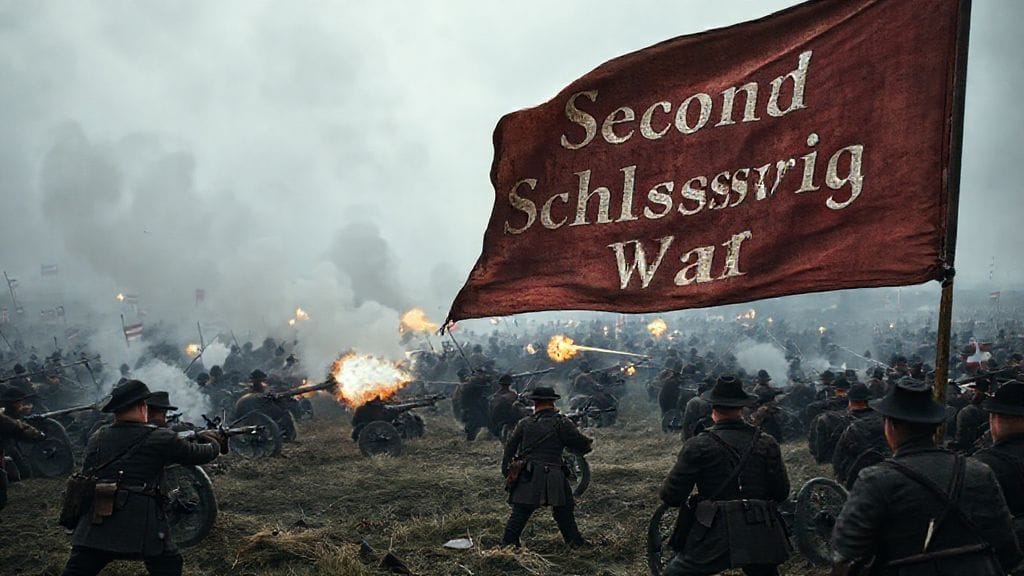
On a cold winter morning on February 1, 1864, the muted quiet of the Schleswig countryside was shattered by the first cannon shots between Danish forces and the combined armies of Prussia and Austria. The air, sharp with frost, carried more than the smoke of muskets and artillery—it carried the weight of future specters: of national identity, sovereignty, and modern warfare. The frozen landscape bore witness to a collision of histories, ambitions, and lives that would reshape borders, identities, and mentalities in Northern Europe. But what had brought these armies to the gates of a small Danish duchy named Schleswig? What hidden tensions had erupted into open fire?
The story of the Second Schleswig War is a tale infused with nationalism, diplomatic failures, and the emergence of a new military order. It is a conflict often overshadowed by the Napoleonic wars on one side and the Franco-Prussian War a few years later on the other, but its ripples transformed Denmark, the German states, and indeed the course of European politics.
Historical Roots: The Schleswig-Holstein Question Unveiled
To understand the conflict of 1864, one must first delve into the long entanglement known famously—by those who tried to unravel it—as the Schleswig-Holstein Question. This was not merely a dispute over territory, but a clash of cultures, languages, dynasties, and ideas about sovereignty.
The duchies of Schleswig and Holstein lay astride a cultural fault line. Schleswig was a fief of the Danish crown but had a mixed Danish and German population; Holstein was a member of the German Confederation and predominantly German-speaking. Historically tied together by personal unions and shifting allegiances, the region’s status had been a thorn in the side of both Danish and German nationalists throughout the 19th century.
Throughout the 1830s and 40s, waves of political agitation surged. The German-speaking populations in Holstein, encouraged by rising German nationalism and the thought of unification under Prussia, sought greater autonomy or even integration into a Greater Germany. Simultaneously, Danish nationalists, inspired by romantic nationalism and constitutional reforms, aimed to incorporate Schleswig firmly into the Danish kingdom.
The international community, dominated by European powers wary of upsetting the delicate balance post-1815 Congress of Vienna, had kept the status quo fragile but intact. Yet the pressures mounted like a fault line waiting for a final tremor.
Nationalisms Rising: Danish Dreams and German Ambitions
The 19th century was an era of surging national consciousness. Germany, fragmented into myriad states and principalities, found its nationalistic heart in Prussia. Under leaders like Otto von Bismarck and military minds like Helmuth von Moltke, the dream of a unified Germany seemed within reach—but the path was fraught with conflict.
For Denmark, the issue of Schleswig was deeply personal. Many Danes saw Schleswig not only as a piece of land but as a symbol of cultural unity and historical destiny. The 1849 Danish Constitution sought to integrate Schleswig more closely into the Danish realm, alienating German speakers and stirring unrest.
At the same time, German states, principally Prussia and Austria, saw control over Schleswig and Holstein as strategic and symbolic. These duchies held gateways to the Baltic Sea, control over the Jutland Peninsula, and great significance for the German Confederation’s cohesion.
The competing nationalisms—German on one side, Danish on the other—passed from heated parliaments to the sharpened bayonets along shared borders.
The European Chessboard: Powers Watching Closely
Europe's great powers watched anxiously. Britain, Russia, France, and the Austrian Empire itself had interests in the region but were wary of direct involvement. Maintaining the fragile balance of power was paramount.
Austria, although wary of Prussian ambitions, was bound into a temporary alliance with Prussia against Denmark, a move partly motivated by the weakness of Danish diplomacy and the desire to assert dominance within the German Confederation.
France and Britain issued warnings and calls for peace but were reluctant to intervene militarily. In truth, the greater European conflict was yet to come; these powers calculated their moves in the face of Prussia’s rising influence.
February 1, 1864: The Outbreak of War
The guns at the Danevirke—ancient fortifications hallowed in Danish myth and history—thundered on that winter morning, marking the beginning of a brief but brutal war.
The Prussian and Austrian armies crossed into Schleswig, quickly confronting Danish outposts. Despite Danish hopes for foreign intervention or diplomatic breakthrough, war was inevitable. The opening engagements set the tone: fierce, often desperate, yet dominated by the better-equipped and better-led German forces.
The Opening Moves: Battles and Sieges in Schleswig
The initial battles focused on seizing control of key transit points and fortifications. The Danes, though outnumbered, fought tenaciously at places like Missunde and the lines around Schleswig town.
Yet, the war was not a mere series of smaller engagements; it took the form of sieges and maneuvers that drained morale and resources. For the Danes, controlling the Danevirke—an ice-cold, snow-covered series of fortifications stretching across the peninsula—was both tactical and symbolic.
The Role of Prussia and Austria: A Dual Alliance in Action
The unfamiliar cooperation between Prussian and Austrian forces revealed the shifting alliances within the German Confederation. Prussia, with its efficient military reforms and rail system, could mobilize and supply its troops rapidly, while Austria lent vital manpower and traditional legitimacy.
Their coordinated assaults outpaced Danish defenses, laying bare the vulnerabilities of Denmark’s smaller, less equipped army. This fragile unity among German states foreshadowed future conflicts that would pit them against each other but for now represented an overwhelming force.
Danish Defenses and the Reality of Modern Warfare
Modern weaponry and altered tactics defined the battles. Rifled artillery and breech-loading rifles increased the range and lethality of combat. Defensive fortifications such as the ice-hardened Danevirke, once impregnable, were exposed to modern siege artillery.
The Danish army faced logistical challenges; their supplies were stretched, and harsh winter conditions compounded their difficulties. The war turned from swift clashes to a grinding contest of endurance as soldiers froze and starved alongside their opponents.
Civilians Caught in the Crossfire: The Human Face of Conflict
Beyond strategy and battles, the war’s most enduring legacy lay in the suffering of civilians. The borderlands of Schleswig saw villages caught between armies, homes commandeered, and populations displaced or impoverished.
Families divided by language and loyalty lived in uncertainty. Stories of endurance mixed with tragedy; children grew up with the sounds of gunfire as background noise, and towns bore the scars of shells long after the guns fell silent.
The Strategic Importance of the Danevirke Fortifications
The Danevirke was more than stone and earth—it was a symbol of Danish endurance stretching back over a millennium. But by 1864, this ancient fortification, once sufficient against Viking raiders and medieval foes, was less suitable against the tactics and firepower of modern warfare.
Danish commanders debated fiercely whether to hold the line or retreat. Ultimately, the decision to abandon the Danevirke under pressure marked a turning point, both practically and psychologically, fracturing Danish morale.
International Reactions: Sympathy, Indifference, and Diplomacy
Throughout the war, diplomatic interventions largely failed to halt the fighting. Britain and France attempted to mediate, but neither was willing to risk war with Prussia or Austria.
Public opinion in Europe was divided. German nationalists celebrated, while Danish sympathizers rallied funds and moral support. The war highlighted the limits of the Concert of Europe’s once-sturdy framework.
The Shift in Military Technology and Tactics
1864 was a watershed moment in military history. The Prussian army’s use of railways for troop movement, combined with the needle gun’s rapid fire capability, gave Germany a decisive edge.
The war was lived in trenches, under artillery barrages, and in the bitter cold—foreshadowing the attritional conflicts of the 20th century.
Von Moltke’s Master Plan and Prussian Military Efficiency
Helmuth von Moltke, the Prussian Chief of Staff, orchestrated the war effort with precision. His emphasis on speed, coordination, and supply lines demonstrated the ascendancy of modern military planning.
Despite the enemy’s determination, Moltke’s operational genius in coordinating Prussian and Austrian forces ensured quick, overwhelming advances.
Denmark’s Struggle: Morale, Leadership, and Setbacks
Though outgunned and outnumbered, Danish soldiers fought with fierce patriotism. But divisions at the political level, poor infrastructure, and leadership struggles hindered their capacity to resist.
King Christian IX’s government faced criticism for diplomatic failings, and war weariness slowly took hold back home.
The Impact on German Nationalism and Unification
The war served as an important prelude to German unification under Prussian leadership. Victory in Schleswig bolstered Prussian prestige and weakened Austria’s influence in German affairs.
The annexation of Schleswig and Holstein sent reverberations across Europe, laying groundwork for the Austro-Prussian War of 1866 and ultimately German unification.
Winter Hardships and the March of Battles
Soldiers endured freezing conditions that few prepared for adequately. Frostbite, disease, and exhaustion added to casualties wrought by combat.
The hardships forged a grim solidarity among men, even as hope waned.
The Siege of Dybbøl: Blood and Fire in Southern Denmark
The siege of Dybbøl in April 1864 became emblematic of Danish resistance. Despite heroic defense, Prussian artillery pulverized the fortifications, culminating in a devastating assault.
The fall of Dybbøl was a death knell for Danish hopes of victory and remains etched in Danish memory as a symbol of sacrifice.
How the War Reshaped the Danish Kingdom
By war’s end, Denmark ceded Schleswig, Holstein, and Lauenburg to Prussia and Austria. The loss of these duchies was a national trauma that reshaped Denmark’s national identity and political trajectory.
The kingdom turned inward, emphasizing cultural resilience and eventual neutrality in future European conflicts.
Consequences for Schleswig and Holstein: Divided Lands
For Schleswig and Holstein, the war meant new rulers and divided loyalties. German administration brought integration into the German states, but many locals lamented the loss of autonomy.
The duchies became flashpoints in future Franco-German conflicts, and their status remained disputed well into the 20th century.
The War’s Legacy: Seeds of Future Conflicts in Europe
The Second Schleswig War, brief though it was, sowed seeds that would grow into the conflicts transforming Europe. It exposed the rising power of Prussia and the fragility of smaller nations in a continent increasingly dominated by nationalists and empire-builders.
It prefigured the Franco-Prussian War and the shifting alliances that would culminate in World War I.
The Human Toll: Deaths, Displacement, and Memories
Over 8,000 combatants perished within weeks, with thousands more wounded or displaced. For civilians, the cost was unmeasurable—lost homes, fractured communities, and broken lives.
Centuries later, descendants still remember the war not only as history but as a lineage of resilience and loss.
Cultural Reflections: Art, Literature, and Memory of the War
Artists and writers captured the war’s grim realities and heroism. Swords clashed not only on battlefields but in cultural memory, expressed in poetry, paintings, and song that lamented and celebrated a vanished world.
Museums and monuments in Denmark and Germany preserve this heritage, inviting new generations to reflect on the cost of nationalism and war.
Conclusion: From Battlefields to Borders – The Enduring Echo of 1864
The Second Schleswig War was more than a territorial dispute; it was a crucible where modern nationalism, military innovation, and geopolitical ambition collided. It redrew maps and identities with lasting impact.
But beyond politics and strategy, it told human stories: of courage, sacrifice, failure, and hope. In remembering those frozen battlefields and the bitter winter of 1864, we glean lessons about the fragility of peace and the resilience of nations. The war’s shadows stretch far into Europe’s complex tapestry, reminding us why history, in all its vivid drama, matters still.
FAQs About the Second Schleswig War
Q1: What triggered the outbreak of the Second Schleswig War?
A: The war erupted largely due to conflicting national claims over Schleswig and Holstein, exacerbated by Danish efforts to fully integrate Schleswig and the refusal of German Confederation states to accept this. When Denmark attempted to enforce the November Constitution on Schleswig, Prussia and Austria intervened militarily in February 1864.
Q2: Who were the main combatants in the conflict?
A: Denmark on one side faced the combined forces of Prussia and Austria on the other. These two German powers allied to enforce German claims over the disputed duchies.
Q3: What was the significance of the Danevirke fortifications?
A: The Danevirke was a centuries-old defense line symbolic of Danish heritage. Though strategically important, it was obsolete against modern artillery, and its eventual abandonment marked a turning point in the war.
Q4: How did this war affect Danish national identity?
A: The loss of Schleswig, Holstein, and Lauenburg was a profound national trauma for Denmark. It led to a reorientation of Danish politics and culture, fostering a sense of resilience and eventually neutrality in international affairs.
Q5: What role did Helmuth von Moltke play?
A: As Prussian Chief of Staff, von Moltke planned and executed effective military campaigns. His leadership in coordinating Prussian and Austrian forces was key to German victory.
Q6: How did the war influence German unification?
A: The victory enhanced Prussia’s position among German states, weakened Austria’s control in the region, and set the stage for the Austro-Prussian War (1866), ultimately contributing to German unification under Prussian dominance.
Q7: Were there any international interventions during the war?
A: While Britain, France, and other powers expressed concern and called for peace negotiations, none intervened militarily, constrained by diplomatic interests and reluctance to face Prussia and Austria.
Q8: What was the human cost of the war?
A: The war resulted in approximately 8,000 military deaths, numerous wounded, and significant civilian suffering due to displacement and hardship in the contested territories.