Table of Contents
- The Dawn of a New Era: The Birth of the Self-Driving Car Prototype, 2009
- The Visionaries Behind the Wheel: Pioneers of Autonomous Driving
- From Science Fiction to Reality: The Cultural Context of Self-Driving Cars
- Engineering the Future: The Technology Underlying the Prototype
- The DARPA Influence: Military Beginnings of Autonomous Vehicles
- The 2009 Reveal: Unveiling the Prototype to the World
- Challenges on the Road: Tech Hurdles and Public Skepticism
- Regulatory Sparks: Government Response and Legal Quandaries
- Testing the Limits: Field Trials and Real-World Experiments
- The Human Factor: Drivers, Designers, and the Debate on Control
- The Media Storm: Public Reaction and the Shape of Narratives
- Silicon Valley Enters the Race: Tech Giants and New Stakes
- Ethical and Social Questions: Trust, Safety, and Autonomy
- Economic Ripples: How the Prototype Shook Industry Giants
- The Legacy in Motion: Impact on Transportation and City Planning
- Global Echoes: International Reactions and Developments
- Lessons Learned: Successes, Failures, and Unexpected Insights
- The Road Ahead: From 2009 to Today’s Autonomous Vehicles
- Conclusion: Charting Humanity’s Journey Towards Self-Driving Mobility
- FAQs: Answering Your Most Pressing Questions on the 2009 Prototype
- External Resource Link: Dive Deeper into the History of Self-Driving Cars
- Internal Link: Explore More with History Sphere
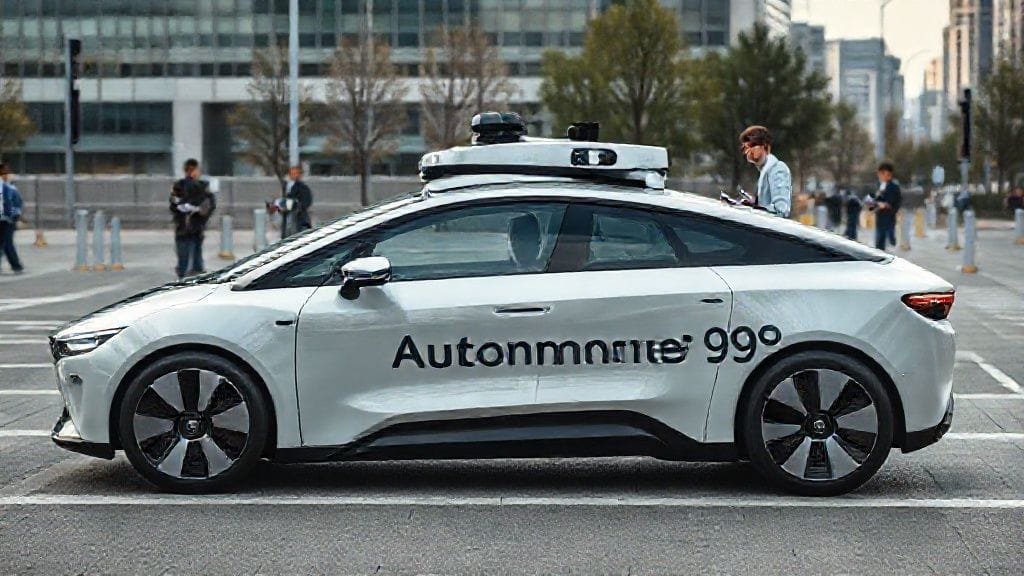
In the cool, crisp air of a Californian morning in 2009, the world witnessed something extraordinary. A sleek, unassuming vehicle began to move—without a driver gripping the wheel or guiding its pedals. It glided forward, not with the chaotic hesitations of a novice, but with a precision and grace that astonished all onlookers. This was no mere machine; it was a self-driving car prototype, heralding the future of mobility and promising to rewrite the rules of transportation.
The year 2009 stands as a landmark in the unfolding saga of autonomous vehicles. This was a moment where imagination met engineering, where a dream often relegated to science fiction chapters took its first tangible steps toward reality. Yet, behind the smooth motion of this prototype lay decades of scientific effort, untold challenges, and a new social contract between humans and machines waiting to be negotiated.
The Dawn of a New Era: The Birth of the Self-Driving Car Prototype, 2009
The self-driving car prototype that emerged in 2009 wasn’t just a technological experiment; it was the phoenix rising from decades of innovation and trial. Its genesis was embedded in the early ambitions of computer scientists, engineers, and visionaries frustrated by the limits of human error in transportation. America, the land of ambitious pioneers, became the crucible for this revolution.
Far from an overnight phenomenon, this vehicle synthesized lessons learned from long-running efforts dating back to the 1980s. With sensors, algorithms, and cutting-edge processors working in unison, the 2009 prototype became a symbol of progress—both technological and philosophical. It marked a departure from reliance on human reflexes toward machine precision in navigating the unpredictable dance of roads.
The Visionaries Behind the Wheel: Pioneers of Autonomous Driving
Behind the prototype were storied figures whose names would soon pepper the annals of automotive history. Engineers, computer scientists, and business minds joined forces, driven by a shared vision: to remove humanity’s most dangerous overseer—driver error—from the equation. Names like Sebastian Thrun, who led the Stanford Racing Team, became synonymous with dedication to the cause.
Thrun’s earlier triumph in DARPA Grand Challenges, federal competitions designed to advance autonomous vehicle tech, created the scaffolding on which the 2009 vehicle was built. His team was not just assembling hardware and code; they were constructing a new paradigm of transportation.
But Thrun was just one among many. At companies like Google, created only a year earlier with an eye on expanding beyond search engines, the seeds of the self-driving revolution were being planted. The 2009 prototype was an amalgamation of military-inspired research, academic brilliance, and entrepreneurial daring.
From Science Fiction to Reality: The Cultural Context of Self-Driving Cars
It is fascinating to remember how the concept of driverless cars once belonged exclusively in the realms of futurism and movies. From “Knight Rider” to “Total Recall,” self-driving cars were the emblem of an imagined tomorrow. Yet, by 2009, public imagination was catching up with engineering reality.
This cultural shift was crucial. For years, the popular skepticism about autonomous vehicles hinged on fears of technology replacing the “human touch” behind the wheel. But as accidents and traffic mortalities persisted, questions arose: Could machines not do better? Was the dream of safer roads feasible?
The prototype was a tangible answer—it reflected not only technological potential but emerging societal appetites for innovation. The convergence of digital culture, environmental concern, and the burgeoning Silicon Valley ethos imbued self-driving cars with the aura of inevitable progress.
Engineering the Future: The Technology Underlying the Prototype
Delving into the architecture of the 2009 prototype reveals a marvel of integration. LIDAR sensors, radar arrays, cameras, and GPS systems combined to create a detailed map of the car’s surroundings. Sophisticated software then processed this torrent of data, enabling real-time decisions on speed, curves, and obstacle avoidance.
One vivid anecdote from trials recounts the prototype’s ability to detect a pedestrian suddenly stepping onto the road, braking smoothly when a human would either panic brake or swerve unpredictably. It was “a mechanical dance partner,” as one engineer put it, reacting with consistency that defied its artificial nature.
The vehicle’s computer brains ran on what was then bleeding-edge machine learning algorithms—far less advanced than today’s neural networks but revolutionary in their own right. The prototype was not infallible; it required extensive calibration and faced daunting computational challenges onboard. Yet it was a step into the unknown.
The DARPA Influence: Military Beginnings of Autonomous Vehicles
Much of the technological foundation lay deep within DARPA—the Defense Advanced Research Projects Agency—where, in the early 2000s, the U.S. military recognized the potential of autonomous vehicles for logistics and reconnaissance. The DARPA Grand Challenges of 2004 and 2005 spurred intense competition among teams to create vehicles that could navigate deserts and urban worlds.
The 2009 self-driving car prototype was arguably a direct descendant of this innovation pipeline. What began as military speculations on battlefield robotics spilled into civilian applications. The transition from warzones to city streets seemed almost poetic—the tools of defense transformed into instruments of everyday convenience and safety.
The 2009 Reveal: Unveiling the Prototype to the World
When the prototype was unveiled to public and media in 2009, it created waves that rippled far beyond immediate observers. Journalists described a strange mix of awe and disbelief as the car navigated courses with uncanny precision, with many in the room whispering about the dawn of “the end of driving as we know it.”
This unveiling was not merely a product demonstration but a cultural statement. The event was peppered with speeches about innovation, safety, and the future of humanity’s relationship with machines. Tech enthusiasts hailed it as the first true glimpse at the future; skeptics voiced concerns about the technical and ethical pitfalls.
Challenges on the Road: Tech Hurdles and Public Skepticism
However, the path was strewn with obstacles. Early prototypes of self-driving cars faced numerous issues: sensor limitations in poor weather, lapses in decision-making algorithms, and computing lag times. These technological hiccups fed public wariness—how much could a machine really be trusted with human lives?
Moreover, the prototype challenged ingrained habits and social norms. For a society deeply attached to the freedom and control of driving, giving up the wheel was inconceivable to many. Insurance industries, automobile manufacturers, and even labor unions representing drivers looked on the technology with alarm.
The tension was palpable—embrace the new at the risk of disrupting millions of livelihoods, or cling to the old ways at the peril of stagnation and safety.
Regulatory Sparks: Government Response and Legal Quandaries
With technology speeding ahead, policymakers scrambled. The 2009 prototype was the first to trigger serious governmental debates on regulation. How would liability be assigned in the case of autonomous vehicle accidents? Were existing traffic laws sufficient?
Several states began drafting legal frameworks to accommodate self-driving vehicles, but the process was tortuous. The debate invoked questions about privacy, cybersecurity, and the limits of machine decision-making. Could an autonomous car abide by the letter and spirit of the law? This legal uncertainty slowed widespread deployment but also underscored the transformative nature of the technology.
Testing the Limits: Field Trials and Real-World Experiments
Following its debut, the prototype entered a rigorous stage of field testing. On closed tracks, then public roads under supervision, the vehicle faced dynamic environments—other drivers, pedestrians, unexpected obstacles. It was a baptism by fire, testing the interplay between code, hardware, and human unpredictability.
Each completed mile forged new insights. Engineers iterated tirelessly on software updates and hardware improvements. While the machine’s basic capabilities held firm, these trials revealed nuances of real-life driving impossible to simulate perfectly.
Remarkably, some reporters accompanied the vehicle during road tests, weaving narratives around the experience of “riding shotgun” with a computer at the wheel—a wrenching yet mesmerizing experience that challenged their understanding of control and trust.
The Human Factor: Drivers, Designers, and the Debate on Control
While the prototype was autonomous in name, humans remained deeply embedded in the picture. Designers grappled with questions of how much intervention should be permitted. Should a human driver override the computer in emergencies? Would dual control systems foster safety or confusion?
At a societal level, the prototype reignited philosophical debates: What does it mean to drive? Is it a fundamental human freedom or a risky habit to be replaced by automation? This tension between progress and preservation colored the discourse around the 2009 prototype, underscoring that technological change always carries emotional and existential weight.
The Media Storm: Public Reaction and the Shape of Narratives
Media coverage was electric, ranging from breathless praise to cautious skepticism. Headlines alternated between utopian predictions—“The Car That Drives Itself: Science Fiction No Longer”—and dystopian warnings about losing autonomy or risking privacy.
The prototype’s revelations infused the public imagination with hope and fear. Stories abounded about the potential to reduce accidents, save lives, and transform urban living. Yet the voices of doubt—fear of malfunction, hacking, or loss of jobs—resonated as well.
This complex media reaction foreshadowed the societal debates that would continue for decades.
Silicon Valley Enters the Race: Tech Giants and New Stakes
The prototype spurred increased interest from Silicon Valley heavyweights, reshaping the landscape of automotive innovation. Not content to watch from the sidelines, companies like Google accelerated research, channeling billions into the pursuit of fully autonomous vehicles.
This influx redefined the competition—no longer just a carmaker’s race, but a technology battle with profound implications on data control, software supremacy, and economic power. The 2009 prototype had cracked open a door; many were eager to walk through it.
Ethical and Social Questions: Trust, Safety, and Autonomy
At the heart of the prototype’s saga were profound ethical dilemmas. In a scenario often called the “trolley problem,” who does an autonomous car prioritize in an impossible accident situation? How transparent should machine decision-making be? Can algorithms be trusted to weigh human lives?
Dr. Peter Stone, one ethicist engaged with the project, argued, “Introducing autonomy means we must grapple not only with what machines can do, but what machines ought to do.” These were not simple engineering challenges but questions about humanity’s values encoded into code.
Economic Ripples: How the Prototype Shook Industry Giants
The unveiling didn’t just rattle engineers; automotive manufacturers and suppliers felt tremors through their business models. Self-driving cars threatened to upend entire sectors—insurance, taxis, trucking, even car ownership models.
Legacy carmakers scrambled to adapt or partner with tech firms, aware that failing to embrace autonomy meant risking irrelevance. The 2009 prototype, in this light, was the clarion call to the industry that revolution was inexorable.
The Legacy in Motion: Impact on Transportation and City Planning
Beyond cars, the prototype’s influence spilled into urban planning. Cities began contemplating roads designed for autonomous vehicles, new traffic laws, and changes in parking infrastructure.
Environmentalists noted that optimized driving could reduce emissions and congestion, offering hope in the battle against climate change. The 2009 prototype was thus more than a car; it was the seed of a new mobility ecosystem.
Global Echoes: International Reactions and Developments
Countries worldwide watched closely. Nations like Germany, Japan, and China launched their own programs inspired by American breakthroughs. The self-driving car prototype sparked a global race, with implications for economic competitiveness and national prestige.
International regulatory bodies pondered harmonization of laws, while a global dialogue on ethics and technology began to take shape—a dialogue whose origins trace back to 2009.
Lessons Learned: Successes, Failures, and Unexpected Insights
Looking back, the 2009 prototype was a mix of stunning achievement and humbling lessons. It succeeded in proving feasibility, but also revealed limits of technology, human acceptance, and infrastructure readiness.
The project underscored the importance of incremental progress, cross-disciplinary collaboration, and transparent communication with the public—lessons that continue to guide autonomous vehicle development.
The Road Ahead: From 2009 to Today’s Autonomous Vehicles
More than a decade later, the promise of the 2009 prototype is unfolding—self-driving taxis, trucks, and shuttles now ply streets in several cities. Yet full autonomy remains a work in progress, challenged by technology, legislation, and culture alike.
The 2009 moment was not a conclusion but a beginning. It set in motion a journey toward a future where machines and humans coexist in new traffic symbiosis, navigating the complexities of speed, safety, and freedom together.
Conclusion
The self-driving car prototype of 2009 stands as a milestone in human ingenuity, a testament to our ceaseless quest to transcend limitations. It was more than metal and code—it was a mirror held up to society’s hopes and fears about technology and control. For all its challenges, this prototype invited us to imagine a world where roads are safer, cities cleaner, and mobility more inclusive.
But perhaps its greatest legacy lies not in the car itself, but in the conversation it sparked—a dialogue still unfolding about how humans choose to share the road with machines. In that sense, the 2009 prototype is both a technological innovation and a profound cultural landmark, guiding us toward a horizon where the journey matters as much as the destination.
FAQs
Q1: What was significant about the 2009 self-driving car prototype?
A: It marked the first demonstration of a vehicle capable of navigating real-world conditions autonomously with a high degree of precision, combining sensor arrays and early machine learning algorithms in a way previously unseen.
Q2: Who were the key figures behind the 2009 prototype’s development?
A: Among others, Sebastian Thrun, who led the Stanford team in DARPA challenges and Google’s early autonomous vehicle efforts, was pivotal in transforming military research into civilian applications.
Q3: What technological components made the prototype possible?
A: The vehicle integrated LIDAR, radar, GPS, cameras, and onboard computers running advanced algorithms for real-time processing and decision-making.
Q4: How did the public and media react to the prototype?
A: Reactions were mixed—ranging from excitement and optimism about safety and innovation to skepticism and fear over control, privacy, and job displacement.
Q5: What regulatory issues did the prototype raise?
A: Legal questions about liability, traffic laws, and safety standards emerged, prompting governments to start crafting new frameworks to accommodate autonomous vehicles.
Q6: What was the military’s role in developing autonomous vehicle technology?
A: DARPA funded and incentivized early research through competitions, which laid much of the groundwork for the civilian prototypes seen in 2009.
Q7: How did the prototype influence the automotive industry?
A: It accelerated the push among car manufacturers and tech firms to invest in autonomous technology, reshaping the industry’s priorities and collaborations.
Q8: What lasting impact did the 2009 prototype have on society?
A: Beyond technology, it sparked ethical debates, global innovation races, and new approaches to transportation and urban planning that continue to evolve today.