Table of Contents
- A Clash on the Balkan Horizon: The Prelude to Slivnitsa
- The Balkan Powder Keg: Political Context and National Aspirations
- The Unification of Bulgaria: A Nation’s Bold Gambit
- Serbia’s Calculated Response: Ambitions and Anxieties
- Mobilization and March Toward Slivnitsa
- The Battlefield Emerges: The Geography of War
- November 19, 1885: The Opening Salvo
- The Intensity of Combat: Strategy and Valor at Slivnitsa
- Leadership in the Heat of Battle: King Milan vs. Prince Alexander
- Bulgarian Resilience: Overcoming Unequal Odds
- The Role of Technology and Communication in the Battle
- Turning Points: From Skirmishes to Victor’s Claim
- Aftermath: The Immediate Military and Political Consequences
- The International Stage Reacts: Great Powers and Balkan Equilibrium
- Legacy of the Battle of Slivnitsa: National Myth and Memory
- The Battle’s Place in Balkan History and European Diplomacy
- Reflection on the Human Cost and the Soldiers’ Stories
- The Balkan Wars Reconsidered: Slivnitsa’s Foreshadowing
- Modern Perspectives: Historians Debate and Understand the Conflict
- Conclusion: Slivnitsa’s Enduring Echo in Balkan Consciousness
In the late autumn of 1885, as cold winds swept through the undulating plains west of Sofia, a moment of profound historical weight was crystallizing beneath the fading light of an embered sky. The village of Slivnitsa, a quiet crossroads amidst the rolling Bulgarian countryside, suddenly stood as the stage for a defining clash whose reverberations would shape the Balkan Peninsula’s turbulent future. Here, blood would be spilled, destinies forged, and national identities tested in a crucible of fire—this was no mere battle; it was a volatile symbol of a changing epoch.
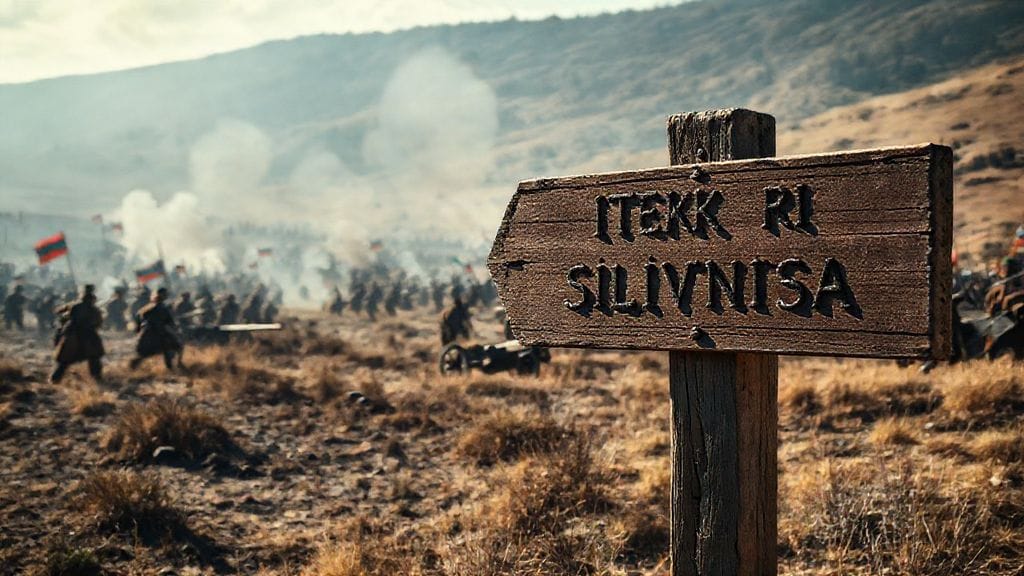
The resounding thunder of artillery and gunfire split the haughty silence of the dawn on November 19, 1885. On one side, the freshly united Bulgarian forces, brimming with the raw fervor of national rebirth, rallied under the youthful leadership of Prince Alexander of Battenberg. Opposite them, the Serbian army, led by King Milan Obrenović, stood ready with calculated resolve to curb Bulgaria’s expansion and assert Serbia’s own dominance in the Balkans. The Battle of Slivnitsa was more than a military engagement: it was an emotional apex of political passion, nationalist ambition, and the relentless struggle for sovereignty in a region long scarred by imperial intrigue and ethnic complexity.
1. A Clash on the Balkan Horizon: The Prelude to Slivnitsa
To understand the Battle of Slivnitsa is to enter a story punctuated by dreams of unity and the shadows of rivalry. The Balkan Peninsula in the late 19th century was an arena where empires waned, and new nations clawed for existence. Bulgaria, freshly emancipated from nearly five decades of Ottoman rule, dared to stitch together its fragmented territories, nudging the fragile balance of power and challenging friends and foes alike.
2. The Balkan Powder Keg: Political Context and National Aspirations
The Balkans were riddled with tension; an intricate weave of ethno-linguistic groups, religious factions, and historical grievances simmered just beneath the surface of diplomacy. The decline of the Ottoman Empire—referred to as “the sick man of Europe”—ignited hopes for independence but also fear of new dominations. Serbia, Bulgaria, Greece, and Romania all harbored national ambitions, their borders and claims overlapping like threads in a complex tapestry. The looming interests of Austria-Hungary and Russia further complicated matters, each pulling at different strands in pursuit of influence.
3. The Unification of Bulgaria: A Nation’s Bold Gambit
The spark that etched the Battle of Slivnitsa into history was undoubtedly the dramatic proclamation of Bulgarian unification in September 1885. The Principality of Bulgaria and the autonomous Ottoman province of Eastern Rumelia, previously administratively separate, united against the attitudes of the Great Powers and regional neighbors. Prince Alexander, youthful and charismatic, endorsed the union, which instantly disrupted the delicate balance in the Balkans and struck a nerve in Serbia, feeling encircled and sidelined.
4. Serbia’s Calculated Response: Ambitions and Anxieties
King Milan Obrenović’s Serbia saw in Bulgarian unification both a threat and an opportunity. Threatened by the prospect of a larger, more powerful Bulgaria potentially dominating their southern neighbor, but also eager to confirm Serbia’s own regional stature, the Serbian leadership resolved to act swiftly. War was declared on November 14, 1885—only days before the fateful battle that would unfold near Slivnitsa.
5. Mobilization and March Toward Slivnitsa
Serbian forces, confident in their numerical superiority and battle-hardened from previous conflicts, surged toward the western borders of Bulgaria. Bulgarian troops, hastily mobilized yet infused with patriotic zeal, readied themselves to defend their newfound unity. The logistical challenges—transporting men, ammunition, and food through rugged, often undeveloped terrain—were immense. But Bulgarian command, sharp and decisive, swiftly moved to fortify the small town of Slivnitsa, anticipating the Serbian advance.
6. The Battlefield Emerges: The Geography of War
Slivnitsa’s geography played a crucial role in the battle’s dynamics. Set amid rolling hills and paths hemmed by foliage and farmland, the battlefield favored defenders familiar with the landscape. Bulgarian commanders utilized the terrain intelligently, placing artillery on elevated positions to dominate the approach routes. The mixture of open fields and narrow defiles forced Serbian troops into vulnerable advances, heightening the tension and stakes of each attack.
7. November 19, 1885: The Opening Salvo
At the break of dawn, the Serbian artillery opened fire on Bulgarian positions, seeking to break their lines with bombardments. Prince Alexander, calm and commanding despite his youth, rallied his officers and troops, sending reinforcements exactly where the Serbian pressure mounted the most. The clash quickly escalated from artillery exchanges to brutal hand-to-hand combat as Serbian infantry attempted to storm fortified positions.
8. The Intensity of Combat: Strategy and Valor at Slivnitsa
Both sides fought with desperation and discipline. For Bulgaria, this was more than a battle—it was existential. The soldiers, many conscripts with limited experience, displayed astonishing determination against foes better equipped and trained. Serbian commanders continuously probed Bulgarian defenses, but were repeatedly repulsed by withering rifle and cannon fire. Tactics evolved rapidly, as both sides adapted to the fluidity of the fight.
9. Leadership in the Heat of Battle: King Milan vs. Prince Alexander
King Milan, personally involved in leadership at the front, was known for his fiery temperament and confidence. Yet, he underestimated Bulgarian resolve and the effectiveness of Alexander’s leadership. The prince, supported by capable staff officers like Stefan Stambolov, used inspiring speeches and clear directives to maintain morale and cohesion. This clash of leadership styles visibly influenced troop performance; where Serbian forces faltered under pressure, Bulgarian ranks held firm.
10. Bulgarian Resilience: Overcoming Unequal Odds
Outnumbered and recently assembled, Bulgarian soldiers found strength in a unifying cause—the preservation of their newly expanded homeland. The emotional weight of defending unification forged an esprit de corps rare in military history. Despite setbacks and casualties, Bulgarian units counterattacked with vigor, turning defensive lines into springboards for tactical incursions that destabilized Serbian plans.
11. The Role of Technology and Communication in the Battle
Though primitive by modern standards, the telegraph and field signals played critical roles. Bulgaria’s efficient use of these tools allowed Prince Alexander to maintain a dynamic command and respond to evolving conditions. Serbian communication, less coordinated and hampered by terrain, led to delayed orders and uncoordinated assaults. Moreover, the use of Krupp artillery pieces by Bulgarian forces provided a technological edge in range and firepower.
12. Turning Points: From Skirmishes to Victor’s Claim
By late afternoon on November 19, the tide clearly turned. Bulgarian counteroffensives pushed Serbian troops back, causing disruption and lowering enemy morale. The intensity of fighting lessened as Serbian units retreated in disarray, many exhausted and increasingly demoralized. Bulgarian victory at Slivnitsa was not only a tactical triumph but a decisive blow to Serbian ambitions.
13. Aftermath: The Immediate Military and Political Consequences
The Serbian army was forced onto the defensive, retreating with significant losses. The Bulgarian victory consolidated the unification, demonstrating that Bulgaria was no longer a fragmented entity but a country capable of defending its sovereignty. This success boosted internal cohesion and fueled national pride, while Serbia entered a period of political crisis and reflection.
14. The International Stage Reacts: Great Powers and Balkan Equilibrium
European powers watched anxiously as the conflict threatened to upset established alliances and spheres of influence. Austria-Hungary condemned Serbia’s aggression but also viewed Bulgaria’s rise with suspicion. Russia, Bulgaria’s traditional patron, was conflicted but later lent diplomatic support. The war underscored the fragility of peace in the region, a foreshadowing of coming greater conflicts.
15. Legacy of the Battle of Slivnitsa: National Myth and Memory
For Bulgarians, Slivnitsa became a symbol of unity, courage, and just cause. It was immortalized in literature, song, and public memory—a defining moment when a nascent nation defied external pressure through determination and strategic brilliance. Serbian memory, by contrast, grappled with defeat and the lessons of overreach.
16. The Battle’s Place in Balkan History and European Diplomacy
Slivnitsa signaled a new phase of Balkan statecraft, where emerging nations wielded greater influence, forcing the Great Powers to engage more deeply in the region’s complexities. Its echoes would resonate in subsequent conflicts, including the Balkan Wars and World War I, where unresolved tensions exploded on a larger scale.
17. Reflection on the Human Cost and the Soldiers’ Stories
Amidst grand strategy and nationalism, the human toll was profound. Thousands of soldiers faced death, injury, and despair. Letters home and recollections reveal tragedy alongside valor—a vivid reminder that history is woven from the lives of individuals caught in the storm.
18. The Balkan Wars Reconsidered: Slivnitsa’s Foreshadowing
Historians often see the Battle of Slivnitsa as a prelude to the Balkan Wars of the early 20th century, where alliances shifted and national aspirations flared anew. It embodied unresolved questions of identity, territorial claims, and the limits of diplomacy in this volatile region.
19. Modern Perspectives: Historians Debate and Understand the Conflict
Contemporary scholarship has expanded understanding beyond the narrow military narrative. Analyses include the socio-political dynamics within Bulgaria and Serbia, the role of Great Powers, and the impact on civilian populations. Slivnitsa thus emerges as a multidimensional episode of late 19th-century European transformation.
20. Conclusion: Slivnitsa’s Enduring Echo in Balkan Consciousness
The Battle of Slivnitsa stands as a testament to the turbulent birth of nations and the enduring cost of sovereignty. It reminds us that history is never merely about borders or battles but about the dreams and sacrifices of people who dared to imagine and build a future against daunting odds. Today, as Balkan countries continue to navigate their complex heritage, the echoes of November 19, 1885, still resonate—a chapter of courage, conflict, and hope etched deeply into the heart of a restless continent.
Conclusion
The reverberations of the Battle of Slivnitsa transcend the mere military victory that Bulgaria secured in those cold November days of 1885. It was a profound affirmation of a nation's right to self-determination and territorial integrity, marking a pivotal moment in the Balkans’ long search for identity and sovereignty. Prince Alexander’s leadership showcased the power of youth and vision, while the valor of Bulgarian soldiers underscored the immense human spirit behind nation-building.
Yet, Slivnitsa also highlighted the perils of nationalist fervor entwined with geopolitics, reminding us that the Balkan Peninsula was, and remains, a tapestry woven with complexity and contradiction. The battle set in motion currents that would surge violently in the decades ahead, shaping not just Bulgaria and Serbia, but the entire continent. Above all, it invites reflection on the costs borne by ordinary people — their lives forever changed amid the ambitions of empires and nations.
Today, Slivnitsa is remembered not only as a battle but as a symbol — of resilience, of the struggle for justice, and of the fragile yet unyielding aspiration for peace in a region too often shadowed by conflict. It is a story that resonates far beyond its time, urging future generations to understand history not merely as dates and outcomes, but as the living mosaic of human courage and consequence.
FAQs
Q1: What caused the Serbo-Bulgarian War and the Battle of Slivnitsa specifically?
The immediate cause was Bulgaria’s unification with Eastern Rumelia in September 1885, an act Serbia viewed as threatening its regional influence. Serbia declared war to counter Bulgaria’s expansion, leading to the Battle of Slivnitsa.
Q2: Who were the main leaders during the battle?
On the Bulgarian side, Prince Alexander of Battenberg played a pivotal leadership role, supported by commanders like Stefan Stambolov. Serbia was led by King Milan Obrenović, who also involved himself directly in military decisions.
Q3: How did the geography of Slivnitsa affect the battle?
The rolling hills and defensive positions gave the Bulgarians a strategic advantage, allowing them to repel Serbian advances and use their artillery more effectively in defensive operations.
Q4: What were the international reactions to the Serbo-Bulgarian War?
Great Powers like Austria-Hungary and Russia were deeply concerned. Austria-Hungary condemned Serbia’s aggression, while Russia was cautiously supportive of Bulgaria, reflecting the geopolitical contest for influence in the Balkans.
Q5: What was the significance of the battle for Bulgaria’s national identity?
The victory cemented Bulgarian unification and became a powerful symbol of national pride and determination, reinforcing Bulgaria’s status as an emerging state capable of defending its sovereignty.
Q6: How did the war impact Serbia internally?
Serbia faced political turmoil and reevaluated its military strategies and regional ambitions following the defeat, leading to shifts in its domestic and foreign policy.
Q7: Did the battle have an influence on later Balkan conflicts?
Yes, it foreshadowed the complex nationalistic and territorial disputes that fueled the Balkan Wars and contributed to the environment that eventually led to World War I.
Q8: How is the Battle of Slivnitsa remembered today?
It is commemorated in Bulgaria as a critical moment of national unity and courage, taught in schools and honored in monuments, symbolizing the resilience and spirit of the Bulgarian people.