Table of Contents
- A Shattering Morning: The Dawn of Devastation in Shaanxi, 1556
- The Quiet Before the Quake: Life in Ming Dynasty Shaanxi
- Understanding the Geography: Why Shaanxi was Vulnerable
- The Jiajing Emperor’s Reign: Political and Social Context
- The Day the Earth Split: Eyewitness Accounts and Initial Impact
- The Ground Trembles: Science and Sensations of the 1556 Earthquake
- Collapse and Chaos: The Human Tragedy Unfolds
- Aftershocks and Continuing Fear: The Quake’s Lingering Effects
- Rescue and Relief in the Ming Era: Attempts at Aid and Recovery
- Demographic Catastrophe: Estimating the Death Toll
- Architecture and Urban Planning Destroyed: Cultural and Material Losses
- Impact Beyond Shaanxi: How Neighboring Provinces Were Affected
- Historical Records and How the Earthquake Was Documented Over Centuries
- Comparing the Jiajing Earthquake to Other Great Quakes in History
- The Science of a Record-Breaking Seismic Event: What We Know Today
- Memory and Myth: How the Earthquake Entered Chinese Collective Consciousness
- Lessons Learned: The Earthquake’s Influence on Seismology and Disaster Management
- The Legacy of 1556 in Modern Shaanxi: Urban Renewal and Earthquake Preparedness
- Conclusion: The Endurance of a People Shaped by Trembling Earth
- FAQs: Exploring Deeper into the Shaanxi Earthquake
- External Resource
- Internal Link
1. A Shattering Morning: The Dawn of Devastation in Shaanxi, 1556
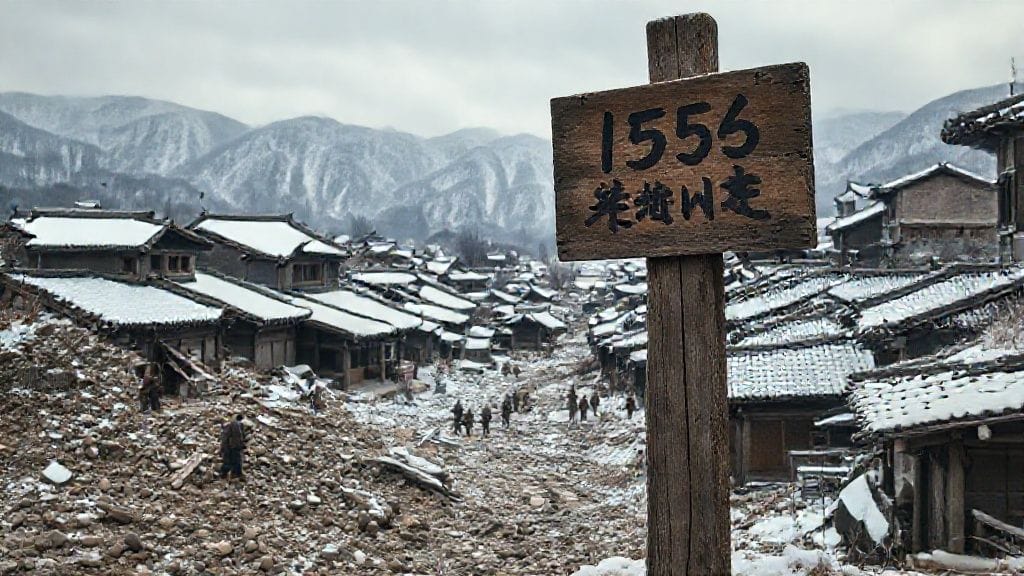
On the crisp winter morning of January 23rd, 1556, long before the world had any inkling of modern seismology, the earth beneath the heart of China’s Shaanxi province betrayed its steady silence. At the break of dawn, villages and cities nestled in the fold of the rugged Loess Plateau were violently torn apart by the most catastrophic earthquake ever recorded in human history. The ground rumbled and cracked, swallowing homes and lives with an unforgiving hunger. Panic and despair spread faster than the tremors themselves. In the dark winter hours that followed, the magnitude of human loss was unimaginable: entire families vanished, whole communities erased within minutes.
This was not merely a natural disaster; it was a trauma that redefined survival and resilience for generations to come. The Shaanxi (Jiajing) Earthquake remains etched in the annals of history as the deadliest seismic event ever, claiming an estimated 830,000 lives. But beyond the staggering numbers – which alone are hard to truly comprehend – this tragedy offers a window into the complex interplay of nature, society, and human endurance in a time when the world was yet to understand how or why such destruction could unfold from deep underground.
2. The Quiet Before the Quake: Life in Ming Dynasty Shaanxi
In the mid-16th century, Shaanxi was a region of contrasts: rugged landscapes draped in fertile valleys where farming communities thrived, juxtaposed with ancient towns and military outposts that had guarded China’s northern borders for centuries. The Ming Dynasty, under the rule of the Jiajing Emperor, was a vast empire grappling with internal governance and external pressures, yet still basked in relative peace and cultural flourishing.
Daily life for the average inhabitant was marked by routine rituals tied to agrarian cycles, Confucian values, and local folk customs. Farmers cultivated wheat, millet, and sorghum, while families lived in cave dwellings carved into the soft loess soil – a traditional form of housing that both provided insulation from the cold and stability in seismic events… or so they believed. These cave homes, called yaodongs, were unique but tragically vulnerable when the earth quaked beneath them.
The social fabric was tight-knit but hierarchical. Village elders and mandarins held sway, even as peasants and artisans struggled beneath the weight of taxation and labor demands from the Ming administration. Yet, in the chill of that January morning, none could have foreseen the invisible fault line that was about to unravel both soil and society in an instant.
3. Understanding the Geography: Why Shaanxi was Vulnerable
The Shaanxi province sits atop the Loess Plateau, a vast expanse of fine, wind-blown sediment accumulated over millennia. This thick, yellow soil was both a blessing and a curse: fertile enough to sustain dense populations, but incredibly prone to erosion and collapse. The very composition of the soil amplified the destructive power of seismic waves during the 1556 earthquake.
Beneath this seemingly stable land lay a complex network of faults, particularly the Weihe Basin fault system. Today, seismologists recognize this region as one of China’s most earthquake-prone zones. However, in the 16th century, geological science was nonexistent. The people of Shaanxi lived largely at the mercy of an earth that could violently betray their expectations.
Cave homes, carved directly into the loess walls and hillsides, while practical for insulation, lacked structural reinforcement. When the quake hit, the loess soil liquefied, causing whole hillsides to collapse like sandcastles in a storm. The collapse of thousands of these yaodongs transformed the day into a massacre by earth and stone.
4. The Jiajing Emperor’s Reign: Political and Social Context
The geopolitical scene in 1556 was shaped by the decade-long reign of the Jiajing Emperor, the 11th emperor of the Ming dynasty. His leadership was marked by religious obsession, political intrigue, and an empire grappling with threats from Mongol clans to the north. While imperial court attention lingered on maintaining power and religious rites, the plight of distant provinces such as Shaanxi was often secondary.
This detachment created challenges for disaster response. The centralized imperial system was ill-equipped to rapidly send aid to such remote and shattered regions. Moreover, bureaucracy slowed relief efforts, forcing survivors into prolonged suffering.
Internally, the Ming empire faced widespread inequality. Tax burdens squeezed peasants, and the rigid social order left little room for social mobility or communal support outside traditional village networks. The earthquake struck not only physical structures but the fragile balance of society’s underpinnings.
5. The Day the Earth Split: Eyewitness Accounts and Initial Impact
Historical records, notably from the Ming official History of Ming chronicles and local gazetteers, provide haunting glimpses of that morning. Descriptions speak of terrifying sounds—roaring and grinding deep beneath the earth—preceded by unnatural silence. Suddenly, the ground shuddered violently. Houses collapsed, hills split open, rivers shifted their courses.
One survivor detailed how the earth opened "like the maw of a giant beast," swallowing entire villages and hundreds terrified beyond comprehension. Elderly witnesses recalled seeing trees topple, mountains crumble, and the sky darkened by dust and debris.
Yet not all were immediately killed by the shaking. Many were crushed by subsequent landslides or trapped beneath collapsed dwellings. Fires ignited by broken lamps and stoves raged uncontrollably, threatening to consume entire settlements.
The initial quake destroyed a 520-kilometer-wide zone, affecting hundreds of towns and villages from Shaanxi’s capital, Xi’an, to surrounding counties. The scale was unprecedented—and the survivors faced a nightmare lined with rubble, cold, and despair.
6. The Ground Trembles: Science and Sensations of the 1556 Earthquake
Modern seismologists estimate the magnitude of the 1556 Shaanxi earthquake at approximately 8.0 on the Richter scale—a figure drawn from retrospective analysis of damage patterns and geographical spread. The epicenter was near Huaxian County, and the earthquake lasted several minutes—a lifetime for those caught in its grip.
Unlike contemporary earthquakes where advanced technology provides quick warnings, the Shaanxi quake struck without forewarning. The only indicators were subtle natural signs reported in folklore: animals fleeing, strange sounds from underground, and slight tremors days earlier. But none could predict the catastrophic rupture to come.
Interestingly, the loess soil conditions intensified seismic waves, increasing their reach and destructiveness. The shaking was so violent that it changed topography, redirected rivers, and even caused the collapse of the famous Huaqing Pool hot springs site near Xi’an, a place immortalized in Chinese cultural memory.
7. Collapse and Chaos: The Human Tragedy Unfolds
For the people of Shaanxi, the earthquake was nothing less than apocalyptic. Entire families were crushed in their sleep, communities were flattened overnight, and the social order disintegrated in the face of overwhelming loss.
The most vulnerable were peasants living in yaodongs, which collapsed as huge chunks of loess fell and buried inhabitants. The death toll in some villages approached total annihilation.
Harrowing stories persisted through generations: children saved by narrow escapes, women who carried the dead for miles before collapsing, elders who wept among ruins where their ancestors’ homes once stood.
The trauma was deepened by harsh winter conditions—freezing temperatures, scarce food, and damaged infrastructure. With roads destroyed, relief barely penetrated for weeks, condemning survivors to suffer frostbite, starvation, and illness.
8. Aftershocks and Continuing Fear: The Quake’s Lingering Effects
Even as the initial shock passed, the earth refused to settle. Numerous aftershocks rattled the region for months, shattering any fragile sense of security. Each tremor reignited fear and hampered rebuilding efforts.
For survivors, the psychological impact was profound. The trauma of unexpected destruction, combined with the physical hardship of isolation and loss, led to deep societal scars. Folk stories of vengeful spirits and divine wrath around the event proliferated, entwining cultural responses with superstition.
Natural features were irrevocably altered. The landscape remained broken, marked by new fissures and landslide scars—a visible reminder of nature’s power.
9. Rescue and Relief in the Ming Era: Attempts at Aid and Recovery
Given the limitations of 16th-century logistics and governance, disaster relief was slow and inadequate. The imperial court eventually dispatched officials and troops to assist, but distances and winter conditions hindered any swift action.
Local elites mobilized limited resources, organizing the construction of temporary shelters. Food aid distributed was often insufficient amid widespread famine.
Historians debate the effectiveness of Ming disaster response, noting that the central government’s preoccupation with internal court politics delayed more comprehensive relief measures.
Nevertheless, this crisis spurred some administrative reforms in provincial governance and disaster management, though these were nascent compared to later periods.
10. Demographic Catastrophe: Estimating the Death Toll
Most astonishing—and heartbreaking—is the scale of human loss. Contemporary historians estimate that roughly 830,000 people perished in this one earthquake—an unimaginably high figure that makes it the deadliest natural disaster on record.
Certain counties lost half or more of their populations. Villages ceased to exist; demographic recovery took generations.
Although exact figures are impossible to verify due to incomplete documentation, the recurring number anchored in Chinese historical texts is testament to this disaster’s scope. It underscored the catastrophic potential of seismic events in densely populated regions often overlooked in global accounts.
11. Architecture and Urban Planning Destroyed: Cultural and Material Losses
Architecturally, the earthquake decimated centuries-old structures. Wooden temples, government buildings, and private dwellings alike were reduced to rubble.
The use of loess for construction—a convenient local resource—was tragically inadequate against seismic waves. The traditional yaodongs were a literal deathtrap in this instance.
Artistic and cultural treasures housed in Xi’an and surrounding cities were damaged or lost. This material destruction impoverished the region’s heritage and disrupted cultural continuity.
12. Impact Beyond Shaanxi: How Neighboring Provinces Were Affected
While Shaanxi bore the brunt, neighboring provinces such as Shanxi, Henan, and parts of Gansu and Anhui also suffered damage. Shaking was felt hundreds of kilometers away.
Markets collapsed, trade routes were disrupted, and refugee flows strained adjacent regions. The effects rippled through local economies, adding to the hardship.
13. Historical Records and How the Earthquake Was Documented Over Centuries
Unlike many natural disasters from the era, the Shaanxi earthquake was recorded in unprecedented detail for its time. Ming historians, bureaucrats, and literati documented the event in official annals, local gazetteers, and personal memoirs.
These texts offer valuable insights into not just the earthquake itself but also Ming views on divine will, natural catastrophe, and governance.
Over subsequent centuries, the earthquake was referenced repeatedly in Chinese historiography, fueling debates on fate and human behavior when faced with overwhelming natural forces.
14. Comparing the Jiajing Earthquake to Other Great Quakes in History
When set against other great earthquakes—such as the 1906 San Francisco quake or the 2010 Haiti quake—the Shaanxi disaster remains unparalleled in terms of human fatalities.
Its combination of magnitude, population density, and vulnerable building styles created a perfect storm of devastation. No other recorded seismic event matches its death toll.
15. The Science of a Record-Breaking Seismic Event: What We Know Today
Modern geology recognizes the Shaanxi quake as a thrust fault event in a complex tectonic setting involving the collision of the Eurasian and Indian plates.
Research demonstrates how the thick loess soil amplified shaking, increasing destruction.
Seismologists study this quake as a cautionary tale in earthquake engineering and risk assessment—especially in areas with similar geological conditions.
16. Memory and Myth: How the Earthquake Entered Chinese Collective Consciousness
In the centuries following the event, folklore and local legend transformed the earthquake into a symbol of nature’s wrath and human humility.
Stories of survival and sacrifice passed orally alongside mythic explanations involving angry gods or spirits.
This blending of history and legend enriched Chinese cultural identity, reminding generations of the fragility of human life against geological time.
17. Lessons Learned: The Earthquake’s Influence on Seismology and Disaster Management
Though rudimentary, the 1556 event prompted philosophers and officials to rethink disaster preparedness.
Calligraphy and essays from the era urged better construction methods and moral governance as means to mitigate calamity.
Today, it stands as a foundational case for China's modern seismic safety codes and emergency planning.
18. The Legacy of 1556 in Modern Shaanxi: Urban Renewal and Earthquake Preparedness
Modern Shaanxi, including the vibrant city of Xi’an, thrives as a testament to resilience and renewal.
Earthquake monuments, museums, and education programs commemorate the disaster, ensuring it remains in public memory.
China’s increasing investment in earthquake monitoring and safe building practices echoes lessons inherited from this ancient tragedy.
Conclusion
The Shaanxi earthquake of 1556 stands as both an awe-inspiring natural event and a devastating human tragedy. Its sheer scale, the death toll of some 830,000 people, and the destruction it wrought on ancient Chinese society remain unparalleled in recorded history. Yet, beyond the numbers lies a profound story of human endurance—of communities shattered but not erased, of a civilization compelled to confront nature’s fury and rebuild.
This catastrophe transcended its era, influencing cultural identity, administrative reforms, and even early seismic science. It reminds us that beneath the surface of our lands, forces beyond human control can change destinies in an instant, urging humility and preparedness.
Perhaps its greatest legacy is a timeless testament to resilience—the capacity of humanity not only to survive devastation but to learn, adapt, and remember.
FAQs
1. Why was the Shaanxi region so vulnerable to the 1556 earthquake?
The region’s vulnerability primarily stemmed from its geology—thick loess soil on the plateau, which is loosely compacted and prone to collapse during strong shaking. Local cave dwellings carved into this soil were especially susceptible to destruction.
2. How reliable is the estimated death toll of 830,000?
While exact numbers are difficult to verify due to sparse records, multiple historical documents and scholarly consensus support this figure as a reasonable estimate, making it the deadliest earthquake ever recorded.
3. What role did the Ming dynasty government play in the aftermath?
The Ming government attempted relief and rescue but was hampered by distance, winter conditions, and bureaucracy. Their response was slow and limited, highlighting the challenges of disaster management then.
4. Did this earthquake influence Chinese architecture or urban planning?
Yes, the disaster highlighted the risks of building in loess soil and using certain construction methods, influencing later architectural practices and prompting some early ideas about risk reduction.
5. How is the Shaanxi earthquake remembered in Chinese culture?
It is remembered through folklore, historical writings, cultural narratives, and modern memorials, symbolizing human vulnerability and resilience against natural disasters.
6. Are there modern seismic risks in Shaanxi today?
Yes, Shaanxi remains seismically active. Modern monitoring and building codes aim to mitigate future risks informed by lessons from the 1556 quake.
7. What makes the Shaanxi quake unique in the history of earthquakes?
Its unparalleled death toll combined with the geological conditions and societal context that intensified its impact make it a singular event worldwide.
8. How have historians and scientists studied this earthquake over time?
Through examination of contemporary records, geological surveys, and advances in seismology, scholars have pieced together its magnitude, effects, and lessons for disaster science.