Table of Contents
- A Shattering Dawn: The Morning of June 12, 1897
- The Shillong Plateau: A Land of Mysteries and Mountains
- Tectonic Ultimatum: Understanding the Earth Beneath Northeast India
- The Great Assam Earthquake: Prelude to Catastrophe
- The Moment of Rupture: 8.1 on the Richter Scale
- The Earth’s Roar Echoes Across the British Raj
- The Immediate Aftermath: Panic, Ruin, and Resolve
- Stories from the Ground: Eyewitness Accounts and Personal Tragedies
- British Colonial Response: Aid, Science, and Governance
- Geological Revelations: How 1897 Transformed Seismology
- Reconstructing Lives and Landscapes: The Long Road to Recovery
- Socio-political Ripples in a Fractured Empire
- Echoes in Art and Literature: The Earthquake’s Cultural Footprint
- Lessons Engraved in Stone: Disaster Preparedness in the Northeast
- The Shillong Plateau Today: Remembrance and Resilience
- The Global Significance of the 1897 Assam Earthquake
- Conclusion: Earthquakes, Memory, and the Human Spirit
- FAQs
- External Resource
- Internal Link
On the crisp morning of June 12, 1897, the earth beneath the verdant hills of Northeast India groaned to life with a voice unlike any heard before. In an instant, the world changed for countless souls living on the Shillong Plateau and far beyond. This was no ordinary tremor; it was a monumental upheaval, a seismic outcry deep from the bowels of the planet, shaking the foundations of geoscience and imperial India alike. The Great Shillong Plateau Earthquake, registering an estimated magnitude of 8.1, remains one of the most powerful earthquakes ever recorded in the Indian subcontinent. But beyond the raw numbers and geological data lies a story richly textured with human courage, colonial tensions, scientific awakening, and enduring resilience.
The early morning sun rose over a land famed for its rugged beauty and cultural tapestry — a land quietly resting atop complex tectonic plates riven with tension. The Shillong Plateau, perched in what is today the state of Meghalaya, was a mosaic of hills, forests, and tribal communities intertwined with British colonial outposts. Yet, beneath this serene surface lurked the Indian tectonic plate grinding against the Burmese microplate, a restless giant waiting to unleash its fury.
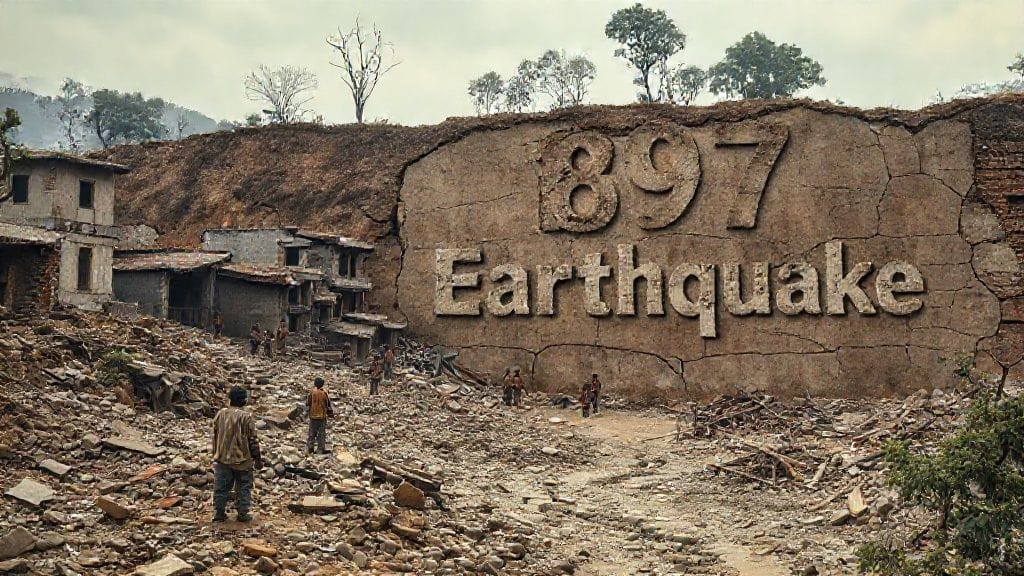
On June 12, the earth suddenly betrayed its quiet. The rupture beneath the surface sent shockwaves across a region spanning hundreds of miles. Homes crumbled, hillsides fractured, and mighty trees snapped like twigs. People were thrown from their beds; animals fled in terror. Villages lay in ruins, and the distant roar of the upheaval was heard even in Calcutta, nearly 600 miles away. For many, it was a day of unimaginable horror — yet also of remarkable human endurance.
The earthquake’s immediate impact was catastrophic: death tolls estimated in the thousands, widespread destruction of infrastructure, and profound psychological trauma. Yet what followed was a complex dance of colonial administration scrambling to respond, scientists racing to understand, and local populations navigating their shattered landscapes and futures.
In the years that followed, the 1897 earthquake became a crucial case study for geologists worldwide. It challenged existing theories, helped pioneer the fledgling science of seismology, and revealed the violent dynamism hidden beneath the earth in South Asia. Meanwhile, the people of Meghalaya and Assam rebuilt their lives, their societies forever marked by the earthquake's imprint.
But the story does not end with shattered stones and trembling ground. It reverberates through the political, cultural, and environmental narratives of the region even today, a haunting reminder of the fragile interface between nature’s power and human endeavor.
The Shillong Plateau is no stranger to mysteries. Rising abruptly from the plains, this isolated block of ancient rock forms the crest of a mountain range born from tectonic collision millions of years ago. Its peaks rise above rolling hills cloaked in dense forests, monsoon-fed valleys, and communities with deep cultural roots. In 1897, this land was under the direct influence of British colonial administration, a strategic foothold in the far reaches of the Raj, surrounded by tribal societies often outside full imperial control.
The geological origins of the Shillong Plateau lie in the complex convergence zone where the Indian subcontinent collides forcefully with the Eurasian and Burmese plates. This immense pressure, building inexorably over eons, created the Himalayas to the north and the fracture zones that define today's Northeast India. The plateau, in effect, floated precariously on a fault line sensitive to any sudden slip — a tectonic ticking time bomb.
Meanwhile, the British establishment viewed the region through both strategic and scientific lenses. The endemic tribal conflicts, the economic potential of tea plantations, and the rich biodiversity all marked the area as crucial to colonial ambitions. Geologists and surveyors, often associated with the Geological Survey of India, had begun studying the region’s features, yet the full extent of seismic risk was still uncharted territory.
Nature held its breath one fateful morning when the covert tensions hidden in the crust erupted. At 8:30 a.m., the earth beneath the plateau fractured suddenly along the Oldham Fault. The seismic energy unleashed was massive: the longest rupture ever recorded at the time, extending over 100 kilometers with a vertical displacement reaching as much as 11 meters in places. The ground shook violently for nearly two minutes, a relentless agitation that transported horror and destruction across a wide radius.
Villages atop hillsides were devastated as structures, many built of unreinforced local stone and timber, collapsed in throngs of dust and debris. Forests were laid low; rivers changed course; even the landscape itself appeared transformed. The tremors were felt as far afield as Calcutta and Dhaka, a testament to the earthquake’s stupendous reach.
The human toll was immense. Official estimates ranged up to 1,500 fatalities, but local accounts suggest higher numbers. Displacement was widespread, with thousands rendered homeless. The psychological shock was no less profound — people spoke of “the earth groaning” and the sky darkening with dust as the land convulsed.
Personal testimonies offer haunting glimpses into that dreadful day. One British officer recounted how his house shook violently: “I was thrown off my chair, the walls cracked, and the windows shattered in a terrifying crescendo.” For the tribal communities, whose homes were often more intimately connected to the landscape, the quake challenged their very understanding of the earth’s stability and their place within it.
The colonial government’s response was swift but complex. Calls for medical assistance, aid for the displaced, and rebuilding began almost immediately. Yet the infrastructure and logistical challenges were daunting; roads were damaged, communication lines severed. The administration also saw the disaster as an opportunity to expand scientific investigation.
The Geological Survey of India dispatched teams, including the eminent geologist Richard Dixon Oldham, whose work on the earthquake would become foundational to modern seismology. Oldham studied seismic waves and fault ruptures, eventually recognizing the occurrence of deeper, more complex mechanisms beneath the earth’s crust. His research on this event helped establish the classification of seismic waves—P-waves, S-waves, and surface waves—that underpin global earthquake science today.
Recovering from the catastrophe took years. Local economies, already fragile, suffered as plantation and trade activities stalled. Infrastructure like roads, bridges, and administrative buildings were rebuilt, sometimes redirected to increase colonial control over “unruly” hill tribes. The earthquake inadvertently accelerated some modernization efforts but also sharpened tensions between traditional communities and imperial agents.
The event also penetrated cultural consciousness. Local stories spoke of the earth’s fury as a divine or ancestral message, themes reflected in folk art and oral traditions. British writers and scientists, meanwhile, documented the landscape and consequences with a mixture of awe and colonial paternalism.
Over a century later, the Shillong Plateau earthquake remains a landmark in both geological and human history. It set in motion advances in earthquake science and disaster preparedness within the region. The scars it left in the hills and human memory underscore an eternal truth: beneath the surface of even the most serene landscapes lies a restless, unpredictable power that shapes human destinies.
This tale of rupture and resilience invites reflection on how we live with natural forces far beyond our control—and how, despite destruction, hope and community endure.
Conclusion
The Shillong Plateau Earthquake of June 12, 1897, stands as a monumental event where the raw forces of nature collided with the fragile fabric of human life. It was a moment that shattered rocks and homes, but also kindled the flames of scientific discovery and human empathy. This earthquake, frightening in intensity and vast in consequence, remains etched not just in geological strata but also in the stories, culture, and history of the people who live in Northeast India.
Such disasters demand more than scientific understanding or political response—they call for a human reckoning. How do communities rebuild their identity after the earth itself betrays them? How do nations prepare for the inevitability of nature’s next upheaval while honoring the memories of those lost?
The legacy of 1897 is complex and enduring. It teaches us humility before the planet’s restless tectonics and celebrates the resilience inherent in human societies. Today, this story reminds us that history is not just about dates and data but about the lives changed in an instant—a timeless narrative of survival, adaptation, and hope beneath trembling skies.
FAQs
1. What caused the Shillong Plateau Earthquake of 1897?
The earthquake resulted from a sudden rupture along the Oldham Fault, where the Indian tectonic plate interacts with the Burmese microplate. This tectonic boundary is highly active, and accumulated stress was released in an enormous seismic event.
2. How strong was the earthquake, and how far was it felt?
The earthquake had an estimated magnitude of 8.1, making it one of the strongest in Indian history. The tremors were felt over a vast area, including cities such as Calcutta (nearly 600 miles away), demonstrating its tremendous reach.
3. What were the immediate effects on the local population?
Thousands were killed or injured; homes and villages were destroyed, especially in the Shillong Plateau and Assam regions. Many people were displaced, and infrastructure collapsed, leading to chaos and hardship.
4. How did the British colonial government respond?
The British administration mobilized relief efforts, though hampered by damaged communication and roads. They also prioritized scientific investigation through the Geological Survey of India to study the quake, with researchers like Richard Dixon Oldham playing key roles.
5. Why is the 1897 Shillong Plateau Earthquake important for geology?
This earthquake helped advance the fledgling science of seismology. It allowed scientists to better understand fault dynamics and seismic waves, leading to the classification of wave types still used today.
6. Did the earthquake affect the socio-political landscape of Northeast India?
Yes, the disaster influenced colonial policies, accelerating infrastructure projects and intensifying the imperial grip on tribal areas. It also impacted local economies and social structures during reconstruction.
7. How is the earthquake remembered today in India?
The earthquake remains a significant historical event in Northeast India, commemorated in scientific literature and local folklore. It serves as a reminder of the geological risks in the region and the resilience of its people.
8. What lessons from the 1897 earthquake are relevant for today?
It emphasizes the importance of earthquake preparedness, resilient infrastructure, and scientific monitoring in seismically active regions to mitigate human and economic loss in future events.