Table of Contents
- A Fiery Awakening: Morning of the Shiveluch Eruption
- The Volcano’s Ancient Tale: Shiveluch’s Geological History
- Kamchatka’s Volcanic Landscape and Its Spiritual Legacy
- The Calm Before the Storm: Pre-eruption Signs in 1964
- Human Settlements in the Shadow of Shiveluch: The Local Communities
- The Day Earth Trembled: Chronology of the 1964 Eruption
- Pyroclastic Flows and Ash Clouds: The Forces Unleashed
- Struggle for Survival: Local and Scientific Responses
- The Soviet Scientific Expedition: Studying the Beast
- Communication Challenges in the Remote Kamchatka Peninsula
- The Ecology Transformed: Impact on Flora and Fauna
- The Aftermath: Destruction and Reconstruction Efforts
- Global Reactions: How the World Viewed the Eruption
- Culture, Memory, and Myths Renewed by Shiveluch’s Fury
- Lessons from Fire: Volcanology Advances Post-1964
- Shiveluch’s Continuing Legacy: A Watchful Giant
- Remembering Tragedy and Triumph in Kamchatka
- Conclusion: Nature’s Raw Power and Human Resilience
- FAQs: Unraveling the Mysteries of the 1964 Shiveluch Eruption
- External Resource
- Internal Link
A Fiery Awakening: Morning of the Shiveluch Eruption
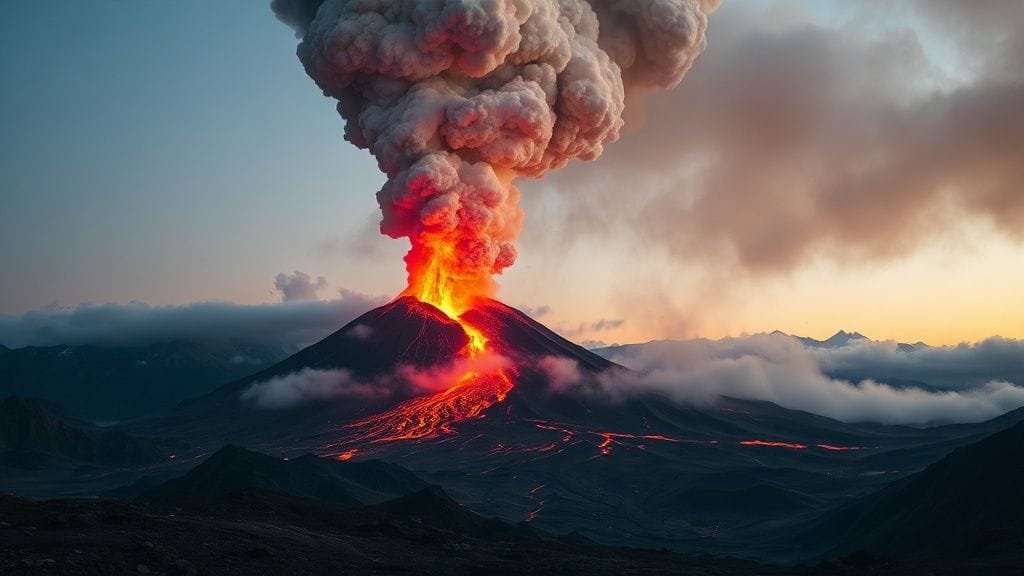
On the cold dawn of November 8, 1964, a hulking wall of flame and ash erupted without mercy from the snow-covered cone of Shiveluch volcano on Russia’s Kamchatka Peninsula. The bitter silence of a winter morning shattered under the roar of an explosive force that sent a towering plume of smoke nearly 20 kilometers into the sky. Fierce pyroclastic flows thundered down the volcano’s flanks, consuming everything in their incandescent path. Villagers miles away watched helplessly, smoke coursing above the frozen tundra like an ominous warning from the Earth itself. It was as if the very bones of the planet had been shaken awake, reminding all who witnessed that this desolate corner of the Soviet Union was home to one of the world’s greatest and deadliest natural spectacles.
But the 1964 eruption was no sudden caprice; it was the violent crescendo of a long geological symphony — a force shaped over centuries and experienced by generations who lived in the volcano’s shadow. What unfolded that day in Kamchatka was not merely an isolated disaster, but a profound story of nature’s untamed power, human vulnerability, and scientific exploration during an era marked by geopolitical tension and technological ambition.
The Volcano’s Ancient Tale: Shiveluch’s Geological History
Shiveluch, or “Sheveluch” as it is sometimes spelled, is one of Kamchatka’s oldest and most active stratovolcanoes. Towering at nearly 3,283 meters (10,771 feet), its massive summit dome dominates the northern part of the peninsula, a land sculpted by volcanic fury and glacial carving. This giant has a lineage stretching back hundreds of thousands of years, with eruptive cycles ebbing and surging through millennia.
Geologically, Shiveluch belongs to the Pacific Ring of Fire, where the Pacific Plate slides beneath the Eurasian Plate in a deadly subduction. This tectonic ballet forces molten rock upwards, birthing a chain of volcanoes like Shiveluch with frequent explosive eruptions fueled by andesitic and dacitic magma. The volcano’s eruption styles are notoriously violent — dome collapses, pyroclastic flows, and ash columns leaving a mark on the landscape and the human psyche alike.
What makes Shiveluch especially treacherous is its frequent extrusions of viscous lava, which form unstable domes prone to collapse. Cascading avalanches of hot rock and gas descend valleys in devastating flows capable of flattening everything in their path. Prior to 1964, significant eruptions were recorded periodically, each forewarning the next with seismic unrest and fumarolic activity.
Kamchatka’s Volcanic Landscape and Its Spiritual Legacy
Kamchatka is a land both haunted and revered. For centuries, indigenous peoples such as the Itelmen and Koryak lived alongside these volcanic giants, developing a mythology steeped in respect and fear. To them, Shiveluch was not merely a mountain but a living deity — an unpredictable spirit who could gift life through fertile soils—or snatch it away in fiery wrath.
The region’s volcanoes have shaped human settlement patterns, religious practices, and cultural identity. Folktales describe a fiery serpent or god residing within Shiveluch’s crater, whose rage manifested in eruptions. Shamans played vital roles as mediators, performing rituals to appease the spirits and protect their communities. This spiritual relationship underscored an intimate human connection to the land, deepened by dependence on its resources and forever shadowed by the threat of disaster.
The Calm Before the Storm: Pre-eruption Signs in 1964
By late 1963, subtle but escalating signs revealed Shiveluch’s restlessness. Local seismic monitoring stations, though sparse and rudimentary in the Soviet far east, recorded tremors increasing in frequency and intensity. Fumaroles — openings venting steam and volcanic gases — began to swell, releasing noxious clouds that stirred concern among volcanologists.
Villagers near the volcano noted minor ground shaking and strange smells, which the state authorities initially deemed inconsequential. Yet the scientists watching Shiveluch knew better. Past eruptions had taught that dormant periods are often deceptive preludes. The buildup of subterranean pressure was slowly but irrevocably writing a new chapter destined to shake Kamchatka’s frozen wilderness.
Human Settlements in the Shadow of Shiveluch: The Local Communities
The Kamchatka Peninsula’s sparse population was scattered across small villages and indigenous camps, often isolated by rugged terrain and harsh climate. The inhabitants were hardy, weaving traditional lifestyles of fishing, hunting, and reindeer herding into the volcanic landscape.
Many settlements such as Klyuchi and Ust-Kamchatsk lay within potential paths of volcanic destruction. The 1964 eruption threatened more than the physical environment — it imperiled livelihoods, cultural heritage, and fragile social fabrics. Yet knowledge about volcano preparation and evacuation was limited, and Soviet governmental communication was famously centralized and constrained, complicating swift and effective responses.
The Day Earth Trembled: Chronology of the 1964 Eruption
The eruption began abruptly pre-dawn on November 8 with a high-intensity explosive event. Seismic shocks quickly escalated, followed minutes later by a violent Plinian-style eruption column piercing the stratosphere and disgorging tons of volcanic ash. The column’s height and density cast an unnatural shadow over the landscape, turning day into twilight.
Within minutes, the most feared hazard emerged: pyroclastic flows. These searing avalanches of gas, ash, and rock barrels hurtled down Shiveluch’s flanks at speeds exceeding 100 kilometers per hour. Entire forests were incinerated; rivers boiled as the flows entered waterways, triggering acute flooding and mudflows.
Over several days, violent pulses continued, marked by dome collapses that sent further flows and ash clouds across vast distances. Ashfall blanketed villages kilometers away, contaminating water sources and toppling buildings. The eruption climaxed in a cycle of intense explosive activity before gradually subsiding weeks later — though seismic unrest persisted.
Pyroclastic Flows and Ash Clouds: The Forces Unleashed
Pyroclastic flows are among the deadliest volcanic phenomena, a cruel mixture of speed, heat, and weight. At Shiveluch, these incandescent clouds destroyed everything in their trajectory. The temperature often soared beyond 1000°C, volatilizing organic matter instantly and leaving behind charcoal landscapes and barren earth.
In addition to the flows, the eruption’s ash cloud created hazardous conditions for hundreds of kilometers. Fine volcanic ash infiltrated machinery, clogged airways, and posed severe risks to livestock and human health. Aviation was disrupted as planes altered paths to avoid the airborne fog.
The sheer scale of the eruption’s impact was staggering: tens of millions of cubic meters of material were ejected. This was a force of nature that transformed landscapes and tested human endurance.
Struggle for Survival: Local and Scientific Responses
In the immediate aftermath, local communities faced a brutal fight for survival. Evacuation orders trickled slowly from Soviet authorities, hampered by communication lines and logistic difficulties. Emergency shelters became crowded with displaced families battling cold, hunger, and illness.
Scientists dispatched from various Soviet research institutes scrambled to assess the volcano’s behavior. Teams gathered ash samples, monitored seismicity, and mapped collapsed terrains — working under hazardous conditions with limited technology. Their efforts laid groundwork for understanding Shiveluch’s periodic eruptive patterns.
Yet political realities of the Cold War meant many findings were classified, limiting international scientific exchange and delaying broader recognition of Shiveluch’s significance.
The Soviet Scientific Expedition: Studying the Beast
Soviet volcanologists treated the 1964 eruption as both a crisis and an opportunity. Led by luminaries such as Vladimir Obruchev and later researchers inspired by his legacy, expeditions drilled deeper into the mechanics of dome growth and collapse.
They innovated remote sensing techniques and seismic instrumentation to better forecast future eruptions. These early efforts contributed to the eventual establishment of the Kamchatka Volcanological Observatory, a crucial institution for continuous monitoring.
The data collected during and after the eruption formed some of the earliest comprehensive records of a Shiveluch event, advancing volcanology in ways that would influence eruption preparedness decades later.
Communication Challenges in the Remote Kamchatka Peninsula
Perhaps the most poignant tale of the 1964 eruption lies in how remoteness compounded tragedy. Kamchatka is a region so isolated that in the 1960s, transportation and communication were rudimentary at best.
Messages took days or weeks to traverse to central Soviet command centers. Poor weather hindered radios and aerial surveys. Many local villagers only partially understood the nature of the danger facing them, relying on oral warnings amid skepticism born of frequent false alarms.
These communication gaps resulted in delayed evacuations and heightened casualties. The eruption exposed systemic weaknesses in disaster management within the Soviet Far East, leading to reforms in response strategies in later years.
The Ecology Transformed: Impact on Flora and Fauna
The volcanic cataclysm wrought dramatic changes to Kamchatka’s fragile ecosystems. Vast swathes of taiga forests were leveled, animal habitats destroyed, and waterways choked by ash and debris.
Some species like the Kamchatka brown bear and sable faced immediate threats to survival, with food chains disrupted by habitat loss. Salmon spawning grounds, essential for local fisheries and indigenous diets, suffered severe contamination.
Yet paradoxically, nature also began a slow process of renewal. Volcanic soils, though initially barren, proved fertile substrates for pioneering plants. Over years, the charred landscape rebounded with new life—an enduring testament to nature’s resilience amid devastation.
The Aftermath: Destruction and Reconstruction Efforts
The human toll was severe but not fully documented due to Soviet secrecy. Estimates attribute dozens of deaths, hundreds injured, and thousands displaced. Infrastructure including roads, homes, and public buildings were damaged or destroyed.
Authorities embarked on rebuilding efforts against harsh climatic conditions and logistical obstacles. Reconstruction prioritized critical routes and communication networks. Relief supplies were distributed, though inequities and bureaucratic hurdles occasionally hampered outreach.
The eruption’s aftermath also sparked policy debates over settlement safety, disaster preparedness, and scientific monitoring — themes that resonated far beyond Kamchatka’s snowy wilderness.
Global Reactions: How the World Viewed the Eruption
In the mid-1960s, much of the Western world knew little about the Shiveluch eruption, overshadowed by larger geopolitical dramas of the Cold War. Official Soviet reports were sparse and guarded, with minimal media coverage.
However, scientific circles took note. Volcanologists in Japan, the United States, and Europe pieced together satellite imagery and ash dispersal data, gradually building a global understanding of Kamchatka’s volcanic hazards.
Over time, international collaboration on volcanic research deepened, even crossing ideological divides, turning Shiveluch’s eruption into a catalyst for knowledge-sharing in earth sciences.
Culture, Memory, and Myths Renewed by Shiveluch’s Fury
In Kamchatka, the 1964 eruption remains etched in collective memory and oral tradition. Survivors recount harrowing stories of firestorms and ashfalls, blending history and myth in narratives passed to younger generations.
Artistic expressions—paintings, poems, and songs—have memorialized Shiveluch’s wrath and the perseverance of local peoples. The eruption reinforced existing spiritual beliefs about the mountain’s power but also inspired a new reverence for scientific understanding as a shield against disaster.
Lessons from Fire: Volcanology Advances Post-1964
The 1964 Shiveluch eruption marked a turning point in Soviet and global volcanology. It underscored the need for improved monitoring of dome-building volcanoes, the dangers of pyroclastic flows, and the importance of early warning systems.
Instruments such as seismographs, tiltmeters, and gas analyzers became standard tools, while evacuation protocols and educational campaigns were enhanced. These lessons translated into saved lives in subsequent eruptions across Kamchatka and worldwide.
Furthermore, the eruption stimulated broader scientific inquiries into magma dynamics and eruption forecasting models, fields still evolving today.
Shiveluch’s Continuing Legacy: A Watchful Giant
Decades later, Shiveluch remains one of the most active and closely monitored volcanoes on earth. Its frequent eruptions continue to challenge scientists, authorities, and local populations.
Technological advancements, satellite monitoring, and international cooperation now provide more accurate forecasts and response capabilities. Yet the mountain’s unpredictability is a constant reminder that nature retains final authority.
Shiveluch’s story is far from complacent; it pulses still beneath its snow cap, a sentinel of geological forces shaping our planet’s restless surface.
Remembering Tragedy and Triumph in Kamchatka
The 1964 eruption stands as a symbol of calamity and courage in Kamchatka’s history. It revealed human fragility before elemental fury but also the indomitable will to survive, adapt, and learn.
Today, memorials and museums preserve the memory of those lost and celebrate community resilience. Scientific centers honor pioneering researchers who braved fire and ash to unlock secrets of the deep earth.
The tale of Shiveluch intertwines geology, culture, and humanity — a narrative that continues to unfold in the shadow of a volcano that refuses to remain silent.
Conclusion
Nature’s power can be both breathtaking and terrifying. The Shiveluch eruption of 1964 shattered the winter calm of Kamchatka, reminding a distant world of the raw forces shaping our planet. Through fire and ash, destruction and rebirth, it challenged inhabitants and scientists alike to confront fragility and resilience.
In this violent awakening, lessons were carved not just into the volcanic slopes but etched deep into human understanding. The legacy of that eruption endures—an emblem of earth’s restless spirit and mankind’s enduring quest to live with, rather than against, the mighty rhythms of the natural world.
FAQs
Q1: What caused the 1964 eruption of Shiveluch?
A1: The eruption was triggered by the subduction of the Pacific Plate beneath the Eurasian Plate, creating magma pressure that led to a violent explosive release from Shiveluch’s magma chamber.
Q2: How severe was the impact on local populations?
A2: While exact figures are limited due to Soviet-era secrecy, dozens of deaths and thousands displaced were reported. Local infrastructure and livelihoods suffered significant damage.
Q3: What are pyroclastic flows and why are they dangerous?
A3: Pyroclastic flows are fast-moving avalanches of hot gas, ash, and rock debris that incinerate and destroy anything in their path due to extreme heat and speed.
Q4: How did Soviet scientists study the eruption during that period?
A4: Despite limited technology and difficult conditions, scientists gathered seismic data, ash samples, and documented lava dome growth, laying groundwork for future monitoring.
Q5: Why was there limited global awareness of the eruption at the time?
A5: The Cold War context and Soviet secrecy meant information was tightly controlled, and Kamchatka's remote location hindered international access and reporting.
Q6: What lasting effects did the eruption have on the environment?
A6: Large areas of forest and wildlife habitat were destroyed, but volcanic soils also later supported ecological succession and renewal.
Q7: How has awareness and monitoring of volcanic hazards improved since 1964?
A7: Advances include better seismic and gas monitoring, satellite imagery, communication networks, and international scientific collaboration, improving early warning and response.
Q8: What cultural significance does Shiveluch hold for the indigenous peoples of Kamchatka?
A8: Shiveluch is viewed as a powerful spirit or deity, central to local mythology, rituals, and identity, symbolizing both creation and destruction.

