Table of Contents
- Awakening of a Sleeping Giant: The First Signs of Shiveluch’s Fury
- The Geology of Volcanic Terror: Understanding Shiveluch’s Power
- Kamchatka’s Volcanic Heritage: More Than Just Fire and Ash
- The Calm Before the Storm: Early Warnings and Scientific Vigilance
- April 2023: A Tremor in the Heart of Siberia
- The Day the Sky Turned Dark: The Eruption Unfolds
- Ash and Lightning: The Spectacle and the Danger Above
- The Human Response: Communities on Alert
- Navigating the Inferno: Scientists at the Brink of Discovery
- Airborne Threat: Aviation Warnings and Global Repercussions
- Volcanic Winter? Environmental Impacts Beyond Kamchatka
- The Cultural Resonance: Volcanoes in Kamchatka’s Indigenous Lore
- The Economic Toll: Fisheries, Tourism, and Transport Disrupted
- Shiveluch Through History: A Chronicle of Destruction and Renewal
- From Ruin to Recovery: The Long Road Ahead for Kamchatka
- Lessons from Shiveluch: Scientific Innovations and Preparedness
- The Global Perspective: Why Remote Eruptions Matter to Everyone
- Aerial Perspectives: Images That Captured Earth’s Fiery Awakening
- The Silent Watchers: Satellite Technology in Monitoring Eruptions
- Human Stories: Survival, Resilience, and the Spirit of Kamchatka
- Volcanoes, Climate, and Future Risks: The Shiveluch Legacy
- Conclusion: Shiveluch’s Echo in the Age of Climate Change
- FAQs: Unraveling the Mysteries of the 2023 Shiveluch Eruption
- External Resource: More About Shiveluch on Wikipedia
- Internal Link: Visit History Sphere
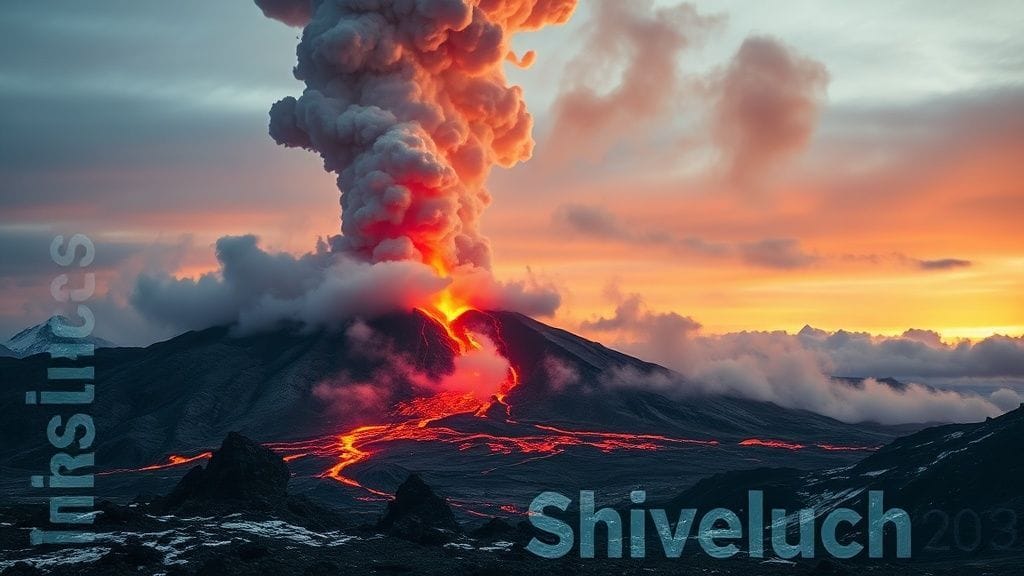
The eastern horizon is ablaze with a lurid hue—a deep, ominous red that seems to set the entire sky on fire. It is April 2023, and in the desolate, wild expanses of Kamchatka, Russia, one of the Earth’s most volatile giants, Shiveluch volcano, has awakened with a cataclysmic roar. Thunderous explosions ripple through the crisp Siberian air, and towering columns of ash spiral upward like colossal smoke plumes birthed from the underworld. Villages tens of kilometers away watch in breathless silence, while scientists scramble to decode the volcanic tempest threatening not just a region, but potentially the wider world. This is not merely an eruption—it is a vivid reminder of our planet’s raw, uncontrollable power.
1. Awakening of a Sleeping Giant: The First Signs of Shiveluch’s Fury
For months prior to its spectacular eruption in April 2023, Shiveluch had been stirring quietly beneath its icy crust. Seismic instruments recorded subtle tremors; gas emissions fluctuated in mysterious patterns. These signals, while noted by volcanologists, seemed almost routine for a volcano with a history as temperamental as Shiveluch’s. Yet, as spring thaws crept across Kamchatka, a sudden intensification of underground movements indicated that this slumbering giant was gearing up for an event that would leave an indelible mark on the annals of volcanic activity.
The early days saw an escalation of minor explosions and ash venting, releasing a steady plume that darkened the daylight. Residents of small settlements clutching stolid survival traditions watched nervously as the sky above them blackened. "We have always known Shiveluch could awaken, but we never imagined it with such fury,” recalled local elder Alexei Morozov. For scientists, it was a solemn call to prepare for the unpredictable.
2. The Geology of Volcanic Terror: Understanding Shiveluch’s Power
Shiveluch is one of Kamchatka’s most formidable stratovolcanoes, towering over 3,200 meters with a nearly thousand-year-old history of violent eruptions. Its geological structure is a complex composite of thick lava domes, chaotically layered pyroclastic flows, and remnants of past collapses. The volcano sits atop the convergent boundary where the Pacific Plate dives beneath the Eurasian Plate—a tectonic dance that unleashes unimaginable pressures deep within Earth’s crust.
This subduction zone funnels molten magma slowly toward the surface, where it accumulates in chambers beneath Shiveluch. Over centuries, these chambers fill, cool, and then catastrophically rupture, ejecting pyroclastic material and ash clouds tens of kilometers into the atmosphere. Shiveluch’s eruptions tend to be explosive and effusive, generating hot avalanches called pyroclastic flows, lahars, and sometimes volcanic lightning—a terrifying spectacle seen during the 2023 eruption.
3. Kamchatka’s Volcanic Heritage: More Than Just Fire and Ash
The Kamchatka Peninsula, often described as one of the most volcanically active landscapes on Earth, forms part of the Pacific "Ring of Fire." Home to over 160 volcanoes, 29 of which are active, this rugged wilderness is a testament to the restless forces shaping our planet. For millennia, indigenous communities such as the Koryak and Itelmen peoples have lived with the threat—and blessing—of fire from the Earth.
Volcanoes here are woven into spiritual beliefs and practical life. The eruptions are cosmic messages, manifestations of sacred energies that command respect and inspire storytelling. Modern scientists often find themselves balancing empirical rigor with the wisdom of local traditions, recognizing that human experience complements geological data.
4. The Calm Before the Storm: Early Warnings and Scientific Vigilance
In the months leading to April 2023, sensor arrays and satellite monitoring provided glimpses into Shiveluch’s restless psyche. Elevated sulfur dioxide emissions, coupled with ground deformation detected via GPS networks, hinted at magma rising closer to the surface. Local volcanologists, embedded within Russia’s Institute of Volcanology and Seismology, issued bulletins—urgent but cautious.
The research community grappled with uncertainties: Would the series of minor eruptions escalate? Could an imminent large-scale eruption be forecasted with precision? Time and again, these questions underscored the inherent unpredictability of volcanism. In preparation, emergency drills were conducted in nearby population centers, evacuation routes mapped, and airspace agencies alerted to potential disruptions.
5. April 2023: A Tremor in the Heart of Siberia
As spring firmly gripped Kamchatka, on the 12th of April, seismic activity surged to unprecedented levels beneath Shiveluch. The mountain’s sleeping depths erupted with violent energy, shattering hours of tense expectancy. Explosive blasts rattled the nearby villages as ash columns soared, piercing the sky with a black needle reaching over 15 kilometers.
Witnesses described the sudden burst: “It was like the mountain itself was breathing fire,” said a meteorologist stationed near the volcano. Thunderous booms echoed against the barren volcanic slopes, and the ground beneath trembled with an ominous rhythm. This eruption was not an isolated plume of smoke but a potent reshaping of the natural world.
6. The Day the Sky Turned Dark: The Eruption Unfolds
Throughout April, the eruption entered a volatile phase rarely seen in the modern era. Columns of ash thickened, blotting out the sun by midday, coating trees, rivers, and roads in a blanket of fine, gray dust. Intense pyroclastic flows barreled down Shiveluch’s flanks with the force of bulldozers, devastating untouched wilderness and threatening remote habitats.
Amidst this chaos, lightning dances flickered energetically within the ash clouds—a phenomenon born from friction among ash particles, electrical charges building and discharging in the atmosphere. The sky crackled with elemental fury; these eerie bursts illuminated the volcanic plumes with surreal flashes, witnessed by both locals and researchers alike.
7. Ash and Lightning: The Spectacle and the Danger Above
The volcanic lightning accompanying Shiveluch’s eruption became an iconic emblem of its spectacle. Rare yet powerful, this electrification underscores the immense energy unleashed. Ash particles carried within turbulent currents collide, generating static electricity, resulting in miniature lightning storms that peppered the volcanic clouds.
This phenomenon amplified the dangers posed by the eruption. Aircraft routes over the North Pacific were rerouted, as both the physical presence of ash and electrical activity can disable avionics and engines. Scientists hastened analyses of ash composition—fine glass shards mingled with chemicals that could have long-lasting environmental effects.
8. The Human Response: Communities on Alert
Though Kamchatka is sparsely populated, the eruption immediately triggered a cascade of human concern. Local authorities issued evacuation orders for several villages within a 30-kilometer radius. For indigenous elders and residents alike, it was a scenario they had feared but hoped to avoid.
Emergency shelters were established, and support teams mobilized to ensure the delivery of essentials amidst a landscape transformed overnight. Communications, although hampered by ash interference, connected teams assessing both immediate safety and longer-term impacts. The resilience and solidarity of Kamchatka’s people shone amid the darkness.
9. Navigating the Inferno: Scientists at the Brink of Discovery
Monitoring Shiveluch’s activity became a race against time and nature. Volcanologists braved hazardous conditions, collecting rock samples and deploying drones to map volcanic flows. Utilizing spectroscopy, gas chromatography, and remote sensing, they sought to understand magma chemistry shifts and forecast subsequent stages.
These efforts were not without risk. Ash storms impaired visibility; toxic gases posed health risks. Yet, the data gathered during April 2023 has since provided unprecedented insights into Shiveluch’s behavior, raising new questions about eruption triggers and magma chamber dynamics.
10. Airborne Threat: Aviation Warnings and Global Repercussions
Volcanic ash clouds are silent killers in the sky. The 2023 Shiveluch eruption forced immediate closure and rerouting of trans-Pacific flights between North America and Asia. The International Civil Aviation Organization swiftly issued volcanic ash advisories, as jet engines ingesting ash risk catastrophic failure.
This event served as a stark reminder of the interconnectedness of modern infrastructure and natural hazards. The ephemeral cloud of ash originating in Kamchatka temporarily became a global concern, threatening economic losses and underscoring the necessity of transnational coordination in monitoring volcanic risks.
11. Volcanic Winter? Environmental Impacts Beyond Kamchatka
Though no full-scale “volcanic winter” materialized, the eruption did inject significant particulate matter and sulfur dioxide into the stratosphere, affecting atmospheric chemistry and climate in subtle yet measurable ways. Scientists continue to analyze satellite data to gauge impacts on regional weather patterns and potential cooling effects in the Northern Hemisphere.
Closer to the volcano, rivers swollen with ash and debris altered aquatic ecosystems, endangering fish populations crucial for local livelihoods. Forests, cloaked in ash, faced die-offs and delayed regrowth, altering the delicate balance of Kamchatka’s ecosystems.
12. The Cultural Resonance: Volcanoes in Kamchatka’s Indigenous Lore
For Kamchatka’s indigenous peoples, volcanoes are more than physical landscapes; they embody ancestral spirits and sacred narratives. The eruption resonated deeply within cultural memory, inspiring both reverence and narrative reflection.
Elders recounted ancient stories tracing volcano activity to divine interventions or acts of spiritual will, interpreting Shiveluch’s 2023 fury as part of an ongoing dialogue with nature. This cultural context enriches contemporary understanding, reminding us that natural disasters are experienced through myriad human perspectives.
13. The Economic Toll: Fisheries, Tourism, and Transport Disrupted
In the wake of the eruption, Kamchatka’s fragile economy endured significant setbacks. Fisheries, vital to local food security and exports, faced temporary decline due to ash contamination of water bodies. Tourism, reliant on the peninsula’s wild charm and adventurous spirit, also took a hit as routes closed and fears persisted.
Road and air transport infrastructure suffered from ash buildup and visibility issues, delaying logistics and emergency operations. The economic ripple effect from this remote eruption illustrates the broader vulnerabilities of communities tied intimately to volatile landscapes.
14. Shiveluch Through History: A Chronicle of Destruction and Renewal
Shiveluch’s 2023 eruption is but the latest chapter in a saga extending over millennia. Historical records, augmented by geological stratigraphy, document numerous powerful eruptions—each reshaping the peninsula’s geography and socio-cultural fabric.
From ancient times to the modern era, Shiveluch has been a formidable force of both destruction and creation, rebuilding the land even as it obliterates parts. This dual nature of fire—destructive yet regenerative—imbues the volcano with an enigmatic character that fascinates humanity anew.
15. From Ruin to Recovery: The Long Road Ahead for Kamchatka
In the months following April 2023, Kamchatka began tentative steps toward recovery. Environmental remediation efforts targeted ash clearance, while scientific teams assisted local officials in rebuilding trust and safety frameworks.
Reforestation projects and ecological monitoring have been launched to study regeneration processes, while health services addressed respiratory and other ash-related ailments. Community resilience, bolstered by traditional knowledge and modern science, promises a gradual healing of land and spirit.
16. Lessons from Shiveluch: Scientific Innovations and Preparedness
The 2023 eruption accelerated technological and procedural advances in volcano monitoring. New drone mapping techniques, real-time satellite data integration, and improved eruption modeling have enhanced readiness for future events.
Furthermore, emergency response protocols have been revisited, emphasizing the importance of communication and community engagement. Shiveluch’s eruption underlines the imperative for ongoing vigilance in volcanic zones worldwide.
17. The Global Perspective: Why Remote Eruptions Matter to Everyone
Though Shiveluch lies in remote Kamchatka, its eruption demonstrates how localized natural phenomena can hold global consequences. From atmospheric chemistry shifts to aviation safety, the event connected local realities with international concerns.
In an era of climate complexity and technological interconnectivity, studying eruptions like Shiveluch’s becomes a matter of global scientific interest and human solidarity—reminding us that the Earth’s forces transcend borders.
18. Aerial Perspectives: Images That Captured Earth’s Fiery Awakening
Photography and satellite imagery of the eruption have captured breathtaking and haunting views—columns of black ash piercing the sky, lightning forks electrifying the volcanic plume, and vast ash blankets cloaking the terrain below.
These images offer not only scientific data but an artistic testament to nature’s unpredictability—reminding humanity of the fragile beauty entwined with destruction.
19. The Silent Watchers: Satellite Technology in Monitoring Eruptions
Modern satellites orbiting Earth provided critical eyes in the sky, tracking the evolving dimensions of the ash cloud and gas emissions. Technologies like Sentinel-5P and Himawari-8 enabled near-real-time observation, allowing rapid dissemination of information to authorities and airlines.
This high-tech vigilance reinforces the vital role of space-based tools in managing and mitigating volcanic hazards, in Russia and across the globe.
20. Human Stories: Survival, Resilience, and the Spirit of Kamchatka
Beyond the scientific and environmental dimensions, Shiveluch’s eruption is a story of human endurance. Families who evacuated to safety, scientists who worked around the clock, and indigenous communities drawing strength from ancestral faith exemplify resilience in the face of nature’s fury.
These narratives shape the human side of geological disasters—reminding readers that history is not solely events, but lived experiences marked by courage and hope.
21. Volcanoes, Climate, and Future Risks: The Shiveluch Legacy
As climate change alters weather patterns and glacial cover in Siberia, Shiveluch’s behavior offers a crucial case study. Warming trends could destabilize volcanic structures or alter eruption frequency, complicating predictions.
The 2023 event encourages a forward-looking dialogue on volcanic risk management in a shifting planetary context—illuminating the future challenges posed by geophysical transformations entwined with human activity.
Conclusion
The eruption of Shiveluch in April 2023 unfolded as a dramatic reminder of Earth’s untamed forces. In the shadow of this fiery mountain, humanity witnessed both the terrifying power and remarkable resilience woven into the natural world. Amid ash-choked skies and rumbling earth, communities held fast, scientists pushed boundaries, and the planet reminded all of its dynamic heartbeat.
This event, while localized in one of the world’s most remote regions, transcended geography to connect human experiences with planetary processes. It is a story of destruction and renewal, science and tradition, fear and hope—a timeless narrative that calls us to respect the Earth’s energy and prepare wisely for its next awakening.
FAQs
Q1: What caused the April 2023 eruption of Shiveluch volcano?
The eruption was triggered by magma rising from deep within the Earth’s mantle due to the ongoing subduction of the Pacific Plate beneath the Eurasian Plate, creating pressure that fractured the volcano’s magma chamber.
Q2: How dangerous was the 2023 Shiveluch eruption for local populations?
While remote, the eruption posed significant threats from ashfall, pyroclastic flows, and toxic gases. Evacuations and emergency responses minimized casualties, but the event disrupted lives and local economies significantly.
Q3: What role did satellite technology play during the eruption?
Satellites provided real-time monitoring of ash clouds, gas emissions, and thermal activity, enabling authorities to issue timely aviation warnings and guiding scientific analysis.
Q4: How does Shiveluch’s eruption affect global climate?
Though not large enough to provoke a volcanic winter, the injection of sulfur dioxide and ash into the stratosphere caused minor atmospheric cooling and altered local weather temporarily.
Q5: What makes Shiveluch volcano unique compared to other volcanoes?
Shiveluch’s immense size, history of catastrophic eruptions, and combination of explosive and effusive activity, including frequent pyroclastic flows and volcanic lightning, set it apart in global volcanology.
Q6: How have indigenous communities been affected by and responded to the eruption?
Indigenous peoples of Kamchatka view volcanic activity through spiritual lenses, combining traditional knowledge with modern preparedness measures. The eruption reinforced cultural narratives around respecting the Earth’s forces.
Q7: What is the future risk of eruptions in Kamchatka?
Kamchatka is volcanically active, with ongoing risks requiring continuous monitoring. Climate change and geophysical factors could influence eruption frequency and behavior, calling for heightened vigilance.
Q8: How does the 2023 eruption compare historically?
The 2023 event ranks among Shiveluch’s most powerful eruptions in recent decades, notable for its intensity and vivid volcanic lightning, continuing a pattern of destructive yet regenerative volcanic cycles.

