Table of Contents
- The Dawn of a Revolution: Palermo Awakens on March 30, 1282
- The Kingdom of Sicily under Angevin Rule: Seeds of Discontent
- The Flames of Rebellion: The Outbreak of the Sicilian Vespers
- Blood on the Bell Tower: The First Hour of Insurrection
- The Role of the French Garrison and Norman Nobility
- Mass Uprising: From Palermo to the Entire Island
- The Church and the Cross: Religious Tensions Intensify
- Peter III of Aragon: The Unexpected Champion
- The Siege of Messina and Strategic Alliances
- The Angevin Response: Charles I’s Struggle to Retain Sicily
- The War of the Sicilian Vespers: A Protracted Conflict
- The Naval Battles and Control of the Mediterranean
- The Treaty of Anagni: Attempts at Peace and Betrayal
- The Last Stand: How Sicily Solidified Its Autonomy
- The Cultural Aftershock: Identity, Language, and Legacy
- The Sicilian Vespers in the Memory of Europe
- Political Reverberations: Decentralization in the Mediterranean
- The Impact on Angevin Power and Aragonese Expansion
- The Human Toll: Lives Lost and Societies Transformed
- Symbolism of the Vespers: Rebellion, Freedom, and Justice
- Conclusion: The Enduring Spirit of Sicilian Resistance
- FAQs: Understanding the Sicilian Vespers Rebellion
- External Resource
- Internal Link
The Dawn of a Revolution: Palermo Awakens on March 30, 1282
The Mediterranean night hung heavy over Palermo like a cloak of tension and suppressed fury. The sharp clang of the vespers bell echoed through the ancient streets on the evening of March 30, 1282. To the casual passerby, it was the call to evening prayer, a routine in the daily rhythm of Sicilian life. But beneath the surface, beneath the shadows of Palermo’s limestone facades, a more urgent summons was stirring — the bursting of a powder keg long filled with resentment, injustice, and cultural friction.
On this particular evening, as the city’s people gathered for prayer, a single spark ignited a conflagration that would uproot centuries of foreign rule and alter the Mediterranean balance of power. The Sicilian Vespers — a brutal, swift, and spontaneous uprising — exploded in violence against the Angevin French rulers, leaving a legacy of bloodshed, rebellion, and independence still discussed centuries later. This was not just a revolt; it was a societal fracture, a story of a people’s desperate desire for freedom laden with complex political and cultural underpinnings.
The Kingdom of Sicily under Angevin Rule: Seeds of Discontent
To truly grasp the ferocity of this uprising, we must first step back to the complicated tapestry of Sicilian politics in the late 13th century. Sicily had long been a coveted jewel in the Mediterranean, prized for its strategic position, fertile lands, and wealth. Following the death of Emperor Frederick II in 1250, the island experienced growing instability, culminating in the defeat of the Hohenstaufen dynasty.
Enter Charles I of Anjou, brother to King Louis IX of France, who assumed control over Sicily in 1266 after the Battle of Benevento. Initially welcomed as a stabilizer, his rule quickly soured the Sicilian nobility and commons alike. Charles, with his French retinue, imposed harsh taxes, brutally suppressed dissent, and favored French administrators and soldiers over locals, igniting simmering tensions in a diverse society of Normans, Greeks, Arabs, and indigenous Sicilians.
Many locals perceived Angevin rule as a foreign occupation, exacerbated by cultural and linguistic differences. French soldiers were heavy-handed, often violent towards Sicilians, fueling resentment that ran deeper than political control — it was about identity itself. This volatile mix set the stage for rebellion, but what precisely triggered the explosion on that fateful spring evening would hinge on a far more personal affront.
The Flames of Rebellion: The Outbreak of the Sicilian Vespers
The story of the immediate cause is a tense, vivid tale—part historical fact, part folklore. On the evening of March 30, 1282, during vespers at the Church of the Holy Spirit in Palermo, a French soldier allegedly insulted a Sicilian woman, an incident emblematic of the everyday humiliations endured under Angevin occupation. The woman’s appeals to passersby escalated into a violent confrontation, spreading like wildfire through the crowd.
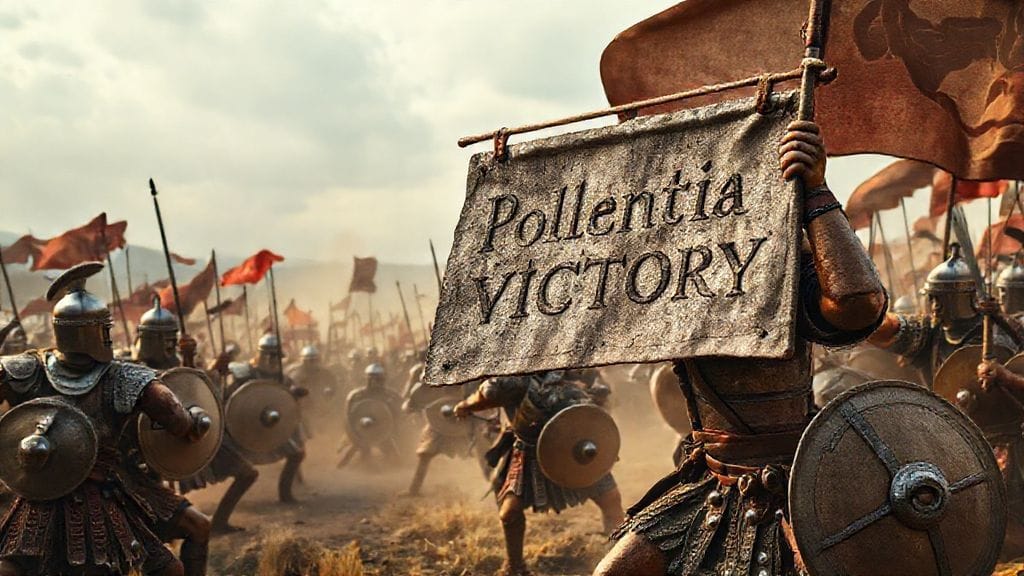
Within hours, what began as a localized street fight transformed into a full-scale uprising. Armed mobs attacked French garrisons, officials, and settlers with brutal efficiency. The French, unprepared and outnumbered, faced the wrath of a deeply united Sicilian populace whose rage had been long suppressed but clearly unextinguished.
Blood on the Bell Tower: The First Hour of Insurrection
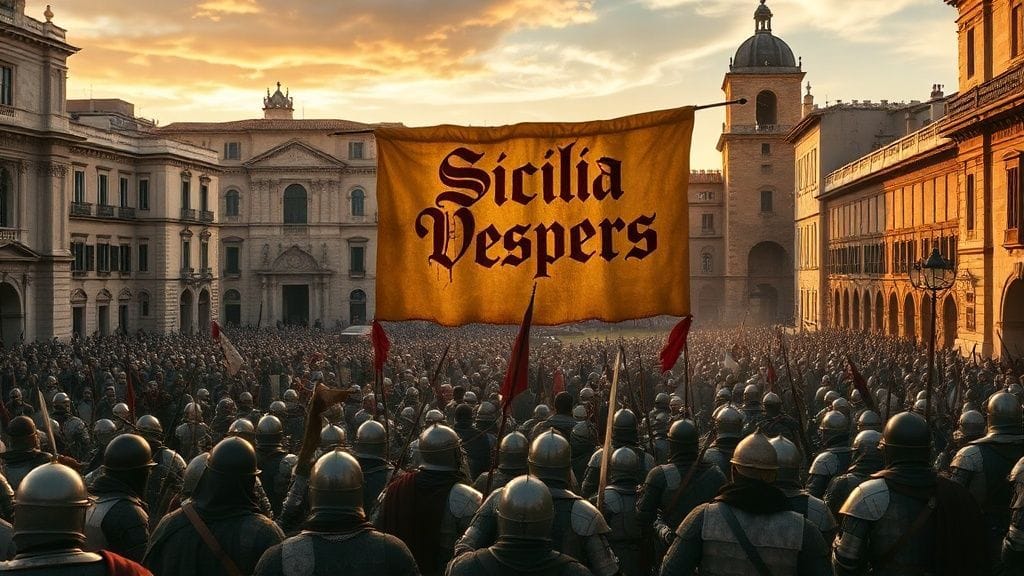
The violence that erupted was merciless. The narrow streets of Palermo became rivers of blood as insurgents struck with a ferocity born of years of repression. French inhabitants were slaughtered indiscriminately, some thrown from windows or hacked down in the alleys. Within hours, the French power in Palermo — the heart of Angevin administration — was all but shattered.
Yet, the uprising was more than an ethnically charged massacre; it was a calculated reclamation. Sicilian nobility, merchants, and peasants alike seized the moment to cast off the yoke of foreign rulers. The bell towers, once calling the faithful to prayer, now rang as catalysts for revolt and freedom.
The Role of the French Garrison and Norman Nobility
It is essential to recognize the fractured loyalties within Sicily’s own aristocracy. The Norman nobles, descendants of earlier conquerors and rulers before Angevin ascendance, were equally dissatisfied with Charles’ rule. Many of them were instrumental in organizing and supporting the insurrection, seeing an opportunity to restore their influence and autonomy.
The French garrison, although militarily superior in training and equipment, were vastly outnumbered and isolated in the urban labyrinth of Palermo. Lacking local knowledge and public support, they fell prey to guerrilla tactics and popular revolt. For many, the massacre of French soldiers was as much a political statement as a brutal act of revenge.
Mass Uprising: From Palermo to the Entire Island
The rebellion did not remain a confined event in Palermo. As dawn broke on March 31, news of the uprising spread like wildfire across Sicily. Towns and villages took up arms, driving out French officials, and destroying Angevin castles. The island united in a moment unprecedented in its history—a collective upheaval that transcended social classes, language barriers, and regional differences.
This mass uprising represented a profound statement—Sicily would no longer tolerate foreign rule. It was a popular revolution ensconced in the southern Mediterranean’s complex mosaic, blending cultural pride with a thirst for political sovereignty. The Angevin grip tightened nowhere; the flames of the Vespers spread irrepressibly.
The Church and the Cross: Religious Tensions Intensify
Religion was never far from power struggles in medieval Europe, and Sicily was no exception. Charles I and his French followers were Roman Catholic, but their relationship with the Sicilian Church was complicated. The island’s ecclesiastical authorities had long been tied to the Papacy, which had granted Charles the kingdom. Yet, many local prelates sympathized with the rebels or were caught between political submission and cultural allegiance.
The vespers themselves were church bells calling the faithful to prayer—a moment of quiet devotion turned battlefield signal. This paradox deepened the religious tensions that ran beneath the political ones, adding a spiritual dimension to the bloodshed.
Peter III of Aragon: The Unexpected Champion
As Sicily burned in revolt, a new figure emerged on the horizon: Peter III, King of Aragon. Through marriage to the daughter of Manfred of Sicily — the last Hohenstaufen ruler — Peter possessed a dynastic claim to the Sicilian throne. The rebels saw in Peter a liberator and an alternative to Angevin tyranny.
In a move that shocked many European courts, Peter landed in Sicily in August 1282, welcomed as a liberator, and crowned King of Sicily. His intervention did not just reinforce the rebellion; it internationalized the conflict, pitting the Mediterranean powers against one another in a struggle that combined dynastic ambition with local rebellion.
The Siege of Messina and Strategic Alliances
One of the first major tests of Peter’s campaign was the strategic port city of Messina. Control over Messina was vital for movement of troops and supplies. The city defended fiercely against Angevin siege tactics but ultimately fell into Aragonese hands, providing a critical logistical base.
This victory solidified alliances between Sicilians and Aragonese forces and demonstrated that the rebellion was no mere local affair but the opening salvo in a larger war for control of the central Mediterranean.
The Angevin Response: Charles I’s Struggle to Retain Sicily
Charles of Anjou was not a man to be cast aside lightly. Infuriated and humiliated, he mobilized an army and sought to crush the uprising. The subsequent decades were marked by brutal campaigns, sieges, and naval warfare as the Angevins attempted to reclaim their lost kingdom.
However, despite heavy investment of men and money, Charles could never fully reassert his authority. The resilience of the Sicilian people, the tactical genius of Peter III and his successors, and the geopolitical distractions of the Papacy and other European powers all conspired to prolong the conflict.
The War of the Sicilian Vespers: A Protracted Conflict
What began as a spontaneous city uprising spiraled into nearly two decades of conflict known as the War of the Sicilian Vespers. Battles raged on land and sea, with shifting alliances and intermittent truces.
This war reshaped the Mediterranean's political landscape, challenging Angevin dominance and expanding Aragonese influence. The conflict was a warning to monarchs that popular fury and national identity could not be ignored, even in an era dominated by dynastic claims and papal decrees.
The Naval Battles and Control of the Mediterranean
Naval power was a defining factor in this war. Control of the seas around Sicily meant controlling trade routes, reinforcements, and communication.
Aragon’s emerging naval strength, combined with Sicilian maritime knowledge, challenged the Angevin fleet and their allies repeatedly. Battles off the coasts of Sicily, Sardinia, and southern Italy became legendary for their technical precision and ferocity.
The Vespers rebellion catalyzed a shift toward the importance of naval supremacy in Mediterranean politics that would resonate for centuries.
The Treaty of Anagni: Attempts at Peace and Betrayal
In 1295, the Treaty of Anagni attempted to bring peace by recognizing Papal suzerainty over Sicily but conceding the island to Aragonese rule. However, the Sicilian populace and nobility rejected the treaty, viewing it as betrayal and abandonment by European powers.
This rejection led to continued resistance and solidified an independent Sicilian identity distinct from both Angevin and Aragonese crowns. The treaty marked the limits of diplomatic settlements divorced from popular will.
The Last Stand: How Sicily Solidified Its Autonomy
By the early 14th century, the Vespers rebellion had transformed Sicily into a self-governing entity under the rule of the Aragonese, but with considerable autonomy.
The island forged its path, new institutions emerged, and the sense of Sicilian identity — shaped by rebellion against foreign domination — became deeply institutionalized. It was a triumph of local power overcoming external imposition, but one rooted in bloodshed and sacrifice.
The Cultural Aftershock: Identity, Language, and Legacy
The Sicilian Vespers was not just a political event; it sparked cultural revival. Sicilian language and traditions flourished as symbols of resistance.
Artists, poets, and chroniclers infused the spirit of the Vespers into their works, embedding it in the collective memory. Even today, the rebellion is celebrated as a defining moment of Sicilian pride and resilience.
The Sicilian Vespers in the Memory of Europe
Beyond Sicily, the event resonated across Europe as a dramatic example of popular uprising challenging dynastic and papal authority.
Chroniclers from Genoa to Paris wrote of the rebellion’s ferocity and symbolism, shaping European perceptions of Sicily as a land of passionate resistance and Mediterranean crossroads of culture and conflict.
Political Reverberations: Decentralization in the Mediterranean
The upheaval caused by the Vespers rebellion contributed to a wider shift towards political decentralization in the medieval Mediterranean.
Monarchs realized that direct rule was vulnerable to local resistance, prompting a recalibration of control through vassal states, alliances, and negotiated autonomy—a legacy of the Sicilian experience.
The Impact on Angevin Power and Aragonese Expansion
For the Angevins, the loss of Sicily was a devastating blow, weakening their Italian ambitions and prestige. For Aragon, the acquisition marked the dawn of their rise as a Mediterranean maritime power.
This transfer of power altered the balance between France, the Papacy, and emerging Iberian kingdoms, setting the stage for centuries of rivalry.
The Human Toll: Lives Lost and Societies Transformed
The Sicilian Vespers and ensuing war caused widespread devastation: thousands died, families were torn apart, cities devastated.
But more than destruction, it reshaped society—power shifted from imposed rulers to local elites, communities forged new identities, and the island’s political structure was remade by fire and blood.
Symbolism of the Vespers: Rebellion, Freedom, and Justice
The rebellion came to symbolize the universal struggle for justice against oppression. The image of the bells ringing Vespers became an enduring metaphor for awakening, resistance, and the quest for liberty.
This symbolism resonates far beyond medieval Sicily, echoing in struggles for freedom throughout history.
Conclusion
The Sicilian Vespers was much more than an outbreak of violence on a warm March evening. It was a visceral manifestation of a people’s longing for dignity, autonomy, and justice amid the clashing empires and ambitions of medieval Europe. The uprising marked the rupture of Sicilian society with Angevin dominance, sparking a protracted war that would reshape the Mediterranean’s political contours for generations.
But beyond armies and treaties, the Vespers embodied the human impulse to resist subjugation, to reclaim identity, and to write one’s own destiny. The bloodshed and sacrifice were profound, yet from the ashes rose a newly forged Sicilian selfhood — vibrant, defiant, and enduring.
In our contemporary moment, when questions of sovereignty and cultural identity remain as potent as ever, the rebellion of 1282 reminds us that history is not simply the past but a living dialogue between peoples and their quest for freedom.
FAQs: Understanding the Sicilian Vespers Rebellion
Q1: What triggered the Sicilian Vespers uprising?
The immediate spark was an altercation during evening prayers where a French soldier allegedly insulted a Sicilian woman. This incident ignited long-simmering resentment against oppressive Angevin French rule.
Q2: Why were the Angevins unpopular in Sicily?
Their heavy taxation, favoritism toward French officials, cultural arrogance, and military repression alienated the Sicilian populace and nobility, who viewed Angevin rule as foreign occupation.
Q3: How did Peter III of Aragon become involved?
Through marriage, Peter had a dynastic claim to Sicily, and the rebels invited him to lead their cause against the Angevins, making the rebellion part of a larger geopolitical conflict.
Q4: What were the consequences of the Vespers for Sicily?
Sicily gained significant autonomy under Aragonese protection, developing a unique political and cultural identity distinct from French and northern Italian influences.
Q5: How long did the conflict last following the uprising?
The War of the Sicilian Vespers lasted about 20 years with intermittent fighting, sieges, and naval battles before a fragile peace was established.
Q6: How is the Sicilian Vespers remembered today?
It is celebrated as a symbol of Sicilian resistance and identity and studied as a key moment in medieval Mediterranean history, reflecting struggles against foreign domination.
Q7: What role did religion play in the conflict?
While both sides were Catholic, the conflict strained relations between the local Church and the Angevin rulers, with religious rites ironically becoming both moments of devotion and rebellion.
Q8: How did the rebellion affect broader Mediterranean politics?
It weakened Angevin influence in Italy, bolstered Aragonese power, and contributed to political decentralization, influencing how kingdoms balanced authority and local autonomy.