Table of Contents
- The First Tremors: A Silent Prelude Beneath Sierra Negra
- Nature’s Awakening: The Early Signs of a Looming Eruption
- Historical Shadows: Past Eruptions of Sierra Negra and Their Legacies
- The Galápagos Archipelago: A Fragile Eden Under Threat
- The Geology of Sierra Negra: A Giant Among Giants
- June 2018: When the Earth Roared to Life
- The Day the Sky Burned: A Narrative of the Eruption’s Onset
- Evacuations and Emergency Responses: A Community Under Siege
- Scientific Vigilance: Volcano Monitoring in Real-Time
- Lava Flows and Ash Clouds: Mapping the Destruction
- Flora and Fauna on Edge: Ecological Impacts of the Eruption
- Human Stories: Resilience, Fear, and Hope Amidst the Flames
- Tourism and Economy: Navigating Uncertainty in the Galápagos
- Comparing Sierra Negra’s 2018 Eruption to Previous Geological Events
- Post-Eruption Recovery: The Landscape’s Gradual Rebirth
- Scientific Insights: What Sierra Negra Taught Volcanologists
- Global Significance: Sierra Negra in the Context of Volcanic Activity Worldwide
- Cultural Memory: How the Eruption Shapes Galápagos Identity
- Environmental Protections and Preservation Strategies Post-2018
- Conclusion: The Immutable Dance Between Fire and Life
- FAQs on the Sierra Negra Eruption
- External Resource
- Internal Link
From the calm sea breezes to the emerald-green highlands, the Galápagos Islands have long been heralded as living museums of evolution and natural wonder. But beneath their serene veneer, the galaxies of stars above the Pacific mirror an explosive dynamism unfolding in the earth itself. The eruption of Sierra Negra volcano in June 2018 was not merely a geological phenomenon; it was a visceral reminder of the planet’s restless heart, pulsating and reshaping in raw, unforgiving force.
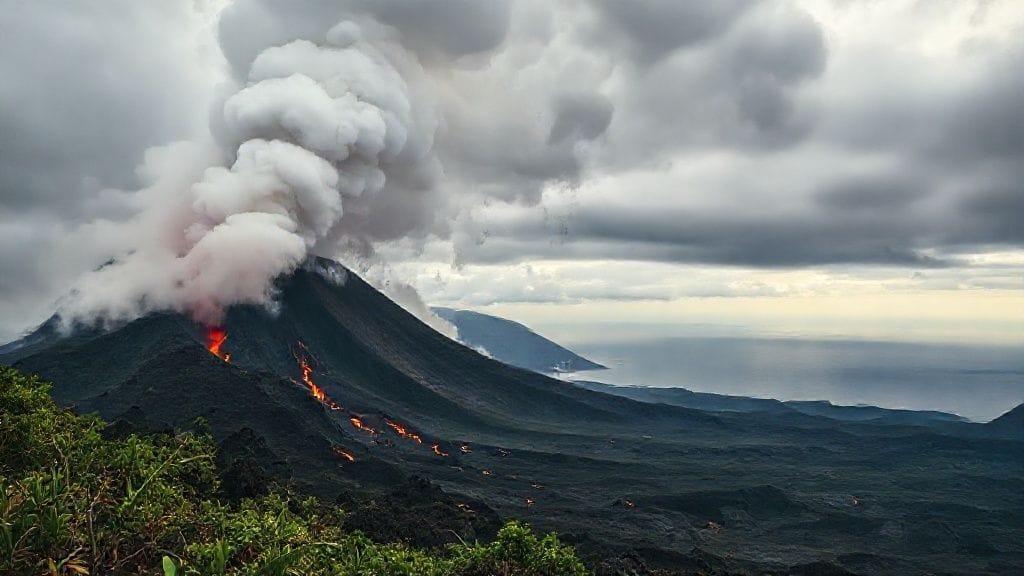
On the morning of June 26th, 2018, the sky over the western side of Isabela Island blackened with burgeoning ash clouds. For hours, fountains of molten lava scorched the rugged landscape, illuminating night and day alike with an eerie, mesmerizing glow. Local inhabitants and scientists alike stood transfixed, caught in the dichotomy between fear and awe. What followed was a story woven of fire and stone, disruption and resilience—one echoing the timeless tensions between human life and Mother Earth’s unpredictable temperament.
The First Tremors: A Silent Prelude Beneath Sierra Negra
Long before the volcano’s molten wrath surfaced, the earth beneath Sierra Negra was telling its story in subtle murmurings. For weeks, deep seismic tremors recorded beneath the volcano signaled rising magma and swelling pressure. These faint rumblings sent ripples across the scientific community, hinting at a possible tumult ahead. Yet, to the untrained eye, Sierra Negra—a colossal shield volcano dominating Isabela Island—remained deceptively tranquil amid the rolling waves and azure horizons.
The islanders themselves had grown accustomed to periodic grumbles from the ancient volcano. Still, seismic activity had been on the rise since early 2018, sparking heightened vigilance among Ecuador’s Instituto Geofísico. The anticipation was tangible—an uneasy watchfulness hung in the air as villagers and officials knew well the volcano’s past, where peace was often just the breath before the storm.
Nature’s Awakening: The Early Signs of a Looming Eruption
By mid-June 2018, tangible signs moved beyond faint tremors. Instruments recorded inflation of the volcano’s caldera—a broad collapse crater that stretches an astonishing 10 kilometers across—signaling the influx of magma into underground chambers. In tandem, gas emissions surged dramatically, pouring sulfur dioxide into the upper atmosphere, a chemical voice of subterranean unrest.
Yet, despite the emerging danger, the eruption’s timing remained uncertain. Volcanologists tracked hundreds of small earthquakes daily, each a seismic heartbeat echoing under Sierra Negra’s vast shield. Locals reported minor cracks and steam emanating from fissures, but life went on with cautious normalcy. Springing from centuries of dormancy, the volcano was preparing, slowly tightening its invisible grip.
Historical Shadows: Past Eruptions of Sierra Negra and Their Legacies
Sierra Negra’s current upheaval was not an isolated outburst. Its volcanic history stretches far into the geological past, with more than 20 eruptions documented in the last century alone. Notably, eruptions in 2005 and 1979 shaped both the physical island and local bonds to the volcano's mercurial temperament.
The 1979 eruption spanned weeks, blanketing communities in ash and devastating large tracts of farmland. These prior events laid a silent blueprint for 2018's crisis—a blueprint marked by survival and adaptation. Historically, eruptions at Sierra Negra have been characterized by modest explosive activity paired with expansive lava flows—slow-moving yet incessantly transformative. This legacy informed the expectations and emergency protocols in place when the 2018 eruption finally ignited.
The Galápagos Archipelago: A Fragile Eden Under Threat
Known as the cradle of evolutionary theory thanks to Darwin’s visit in 1835, the Galápagos Islands are a unique environmental treasure trove. Their isolated ecosystems nurture species found nowhere else on Earth—marine iguanas etching patterns beneath crystal waters, giant tortoises lumbering across volcanic soils, and flightless cormorants standing sentinel over shorelines.
The eruption’s timing was deeply significant. After decades of conservation efforts and burgeoning eco-tourism, the 2018 event threatened both biodiversity and livelihoods. Usually, these islands’ volcanic activity has played a pivotal role in shaping habitats, continuously sculpting the land upon which life evolves. Still, sudden eruptions carry inherent risks of destruction—destroying nesting sites, disrupting food chains, and altering freshwater supplies vital to wildlife and residents alike.
The Geology of Sierra Negra: A Giant Among Giants
To understand Sierra Negra’s eruption, one must first peer into its geological anatomy. Unlike stratovolcanoes with their steep, conical peaks, Sierra Negra is a broad shield volcano—a slow, sprawling titan made predominantly of fluid basaltic lava. Its caldera, one of the largest in the world, measures approximately 10 by 7 kilometers and runs 60 meters deep in places.
This immense volcanic cauldron acts as both cradle and crucible, storing vast quantities of magma before its eventual release. Beneath the surface, a complex network of magma chambers and fissures connect with the neighboring volcanoes Cerro Azul and Wolf, hinting at a deeply entwined geological relationship governing eruptions across Isabela Island.
June 2018: When the Earth Roared to Life
The morning of June 26th began tranquilly, with islanders rising to the familiar chorus of waves and birds. By early afternoon, seismometers detected intense tremors, and the first wisps of smoke appeared over Sierra Negra's rim. By evening, lava fountains were spurting dozens of meters into the sky, sending incandescent streams cascading downslope.
Emergency alerts were issued swiftly. Villagers in nearby Puerto Villamil watched anxiously as the glowing river approached. The eruption’s power was undeniable, etching a fiery scar through time and terrain. Yet, remarkably, the eruption was relatively effusive—lava oozing at a steady pace rather than exploding violently, a characteristic both perilous and somewhat predictable.
The Day the Sky Burned: A Narrative of the Eruption’s Onset
As night fell, the eruption transformed the landscape into a surreal tableau. The incandescent lava glows contrasted sharply against the inky blackness of the sky, illuminating ash clouds billowing upwards like plumes from a giant kiln. The air grew thick with the acrid scent of sulfur; stars dimmed behind volcanic haze.
One eyewitness recounted, “It felt like the earth itself was breathing fire, as if the planet was alive and angry.” Despite the intensity, evacuation orders were effective. Communities were moved to safety, and essential services established command centers to monitor developments. Mobile teams equipped with thermal cameras and gas analyzers tracked the eruption’s progression, relaying data back to Quito and the global scientific community.
Evacuations and Emergency Responses: A Community Under Siege
The government’s rapid mobilization prevented a potential humanitarian disaster. Over 1,200 residents were evacuated from areas at risk, with temporary shelters set up in neighboring villages and the provincial capital, Santa Cruz. Medical teams prepared for respiratory and injury cases stemming from ash inhalation and lava-related accidents.
Yet, the emotional toll was immense. Families left homes and fields behind without knowing if they would return. Livelihoods reliant on agriculture and tourism hung in the balance. Volunteer groups organized food supplies, psychological support, and logistical coordination—a testament to the resilience embedded within these island communities.
Scientific Vigilance: Volcano Monitoring in Real-Time
Sierra Negra’s eruption became a focal point for volcanologists worldwide. Ecuador’s Instituto Geofísico collaborated with international experts, using satellite imagery, drones, and seismic data to unravel the eruption’s mechanics. Ground deformation maps revealed significant caldera inflation and later subsidence as magma flowed outward.
Scientists also documented changes in gas emissions and lava composition, linking shifts to underground magma chemistry. These insights fed into predictive models attempting to forecast the eruption’s intensity and duration. Importantly, this real-time data stream contributed to safeguarding lives and advancing volcanology as a discipline.
Lava Flows and Ash Clouds: Mapping the Destruction
The 2018 eruption produced lava flows covering an estimated 12 square kilometers—reshaping coastlines and swallowing sections of highland ecosystems. Unlike swift pyroclastic flows seen in other volcanoes, Sierra Negra’s lava advanced relatively slowly but inexorably, destroying vegetation and reshaping habitats.
Ash plumes ranged up to 3 kilometers high, dispersing fine volcanic particles across Isabela and neighboring islands. This ashfall impacted air quality and water sources, forcing temporary restrictions on farming and fishing activities. Still, careful mapping and observations allowed authorities to prioritize areas needing emergency aid while also documenting volcanic landform evolution in real time.
Flora and Fauna on Edge: Ecological Impacts of the Eruption
The Galápagos’ isolated environment makes its ecosystems exceptionally sensitive. The eruption inflicted localized devastation—smothering endemic plants under meters of molten rock and ash. Particularly affected were species with limited ranges near the volcano, including certain cacti and endemic finches.
However, nature’s cycles also unfolded in parallel. Volcanic soils enrich the ground over decades, offering new substrates for plant succession. Some resilient animal populations retreated to safer zones or adapted to altered conditions. This interplay between destruction and renewal echoed Darwinian themes that echo so profoundly in the Galápagos.
Human Stories: Resilience, Fear, and Hope Amidst the Flames
Beyond geological facts and scientific data lie the deeply personal lives touched by Sierra Negra’s fury. Stories emerged of elderly islanders who chose to remain near their homes despite evacuation orders, rooted in decades of connection to their land. Farmers lamented the loss of crops but expressed determination to rebuild.
Children watched glowing skies with wide-eyed fascination mixed with apprehension—a rite of passage unique to living near a volcano. Volunteers shared meals and comfort in shelters, reinforcing community bonds. These human narratives remind us that history is not only what is recorded in charts but also what is lived in hearts and homes.
Tourism and Economy: Navigating Uncertainty in the Galápagos
Tourism reigns as the economic lifeblood of the Galápagos, drawing tens of thousands annually eager to witness pristine landscapes and rare wildlife. The eruption posed immediate challenges: flight disruptions, closure of visitor sites, and a palpable reticence among tourists unsure of safety.
However, the narrative swiftly shifted toward adaptation. Eco-tourism operators integrated volcanic sightseeing into itineraries, educating visitors about natural phenomena while emphasizing conservation. Economic recovery plans balanced short-term restrictions with strategies to revitalize tourism sustainably, recognizing the volcano’s dual role as both creator and disruptor.
Comparing Sierra Negra’s 2018 Eruption to Previous Geological Events
While Sierra Negra’s eruption was significant, it paled in comparison to the island’s more explosive predecessors globally, such as the 1883 Krakatoa eruption or the 1980 Mt. St. Helens blast. Yet, its scale and duration offered invaluable data on shield volcano dynamics—characterized by relatively gentle lava flows contrasting with violent plinian eruptions.
Comparisons with Sierra Negra’s past eruptions highlighted changes in magma viscosity and gas emissions, suggesting shifts in the volcano’s internal plumbing. These differences deepen our understanding of volcanic behavior in oceanic island settings, critical for hazard prediction and geological theory refinement.
Post-Eruption Recovery: The Landscape’s Gradual Rebirth
In the months and years following June 2018, the scorched terrain began a slow transformation. Pioneer plant species colonized fresh lava fields, forging the first green breaths from black stone. Scientists documented this ecological succession with fascination, noting parallels with primary succession events in other volcanic zones worldwide.
Human settlements gradually returned; fields were replanted; wildlife returned cautiously, reclaiming habitats. Conservationists worked to protect vulnerable species while balancing human economic needs. The eruption, though destructive, also wove a story of resilience and renewal—a testament to nature’s long, patient artistry.
Scientific Insights: What Sierra Negra Taught Volcanologists
The 2018 eruption was not merely an event of destruction but a living laboratory. Observations refined eruption forecasting tools, particularly in understanding deformation patterns linked to magma chamber inflation. The collaboration between local and international scientists showcased advancements in satellite remote sensing and geochemical monitoring.
Moreover, the eruption highlighted the importance of integrating social sciences with geophysics—emphasizing communication strategies, community preparedness, and multidisciplinary approaches essential in natural disaster management.
Global Significance: Sierra Negra in the Context of Volcanic Activity Worldwide
Though remote, Sierra Negra's eruption rippled far beyond the Pacific. It underscored the ongoing dance between human civilization and Earth's geologic forces—a reminder that even the most seemingly stable landscapes pulse with primordial energy.
In a world increasingly aware of natural risks exacerbated by climate change and population pressures, events like the 2018 eruption inform global disaster readiness. Furthermore, studying oceanic shield volcanoes like Sierra Negra contributes to understanding planetary geology—including analogous processes on other terrestrial bodies like Mars.
Cultural Memory: How the Eruption Shapes Galápagos Identity
Volcanoes in the Galápagos are woven into local folklore, legends, and collective memory. The 2018 eruption renewed this tradition, becoming a shared chapter etched into islander identity. Community gatherings, storytelling sessions, and educational programs have preserved oral histories, enshrining the event not only as disaster but as defining experience.
This cultural process underlines how human societies interpret and integrate natural phenomena, turning trauma into cohesive narratives that strengthen social fabric and connection to place.
Environmental Protections and Preservation Strategies Post-2018
In response to the eruption’s ecological impact, conservation organizations and government bodies intensified efforts to protect sensitive habitats. Strategies included reforestation, invasive species management, and water resource protection near ashfall areas.
Engagement with indigenous knowledge and local stewardship has played a key role in these initiatives, aligning modern scientific approaches with traditional environmental understanding. The 2018 eruption thus catalyzed both reflection and action aimed at safeguarding the Galápagos’ extraordinary biodiversity for future generations.
Conclusion: The Immutable Dance Between Fire and Life
The Sierra Negra eruption of June 2018 was more than a spectacle of nature’s might—it was a poignant narrative of Earth's duality as both destroyer and creator. For the people of the Galápagos, the molten rivers carved through stone and soil were harsh reminders of their precarious existence atop ancient forces.
Yet, embedded within the ash and lava lay the seeds of renewal. The eruption rekindled bonds within communities, galvanized scientific inquiry, and renewed respect for the fragile equilibrium sustaining one of the planet’s most unique ecosystems. In the eternal dialogue between fire and life, Sierra Negra’s 2018 awakening writhed as a reminder of nature’s power—and humanity’s enduring resilience to adapt, understand, and prevail.
FAQs on the Sierra Negra Eruption
Q1: What caused the 2018 eruption of Sierra Negra volcano?
The eruption was triggered by the movement of magma beneath Sierra Negra’s large magma chamber, causing pressure buildup, caldera inflation, and subsequent lava eruption. Earthquake swarms preceding the eruption reflected this subterranean activity.
Q2: How long did the Sierra Negra eruption last?
The eruption primarily occurred between June 26 and early August of 2018, with active lava flows tapering off over several weeks before the volcano returned to relative quiescence.
Q3: Were there any casualties or significant property damages?
No human casualties were reported due to effective early evacuation. Property and agricultural fields near the lava flow zones were damaged, but the impact on populated areas was minimized.
Q4: How did the eruption affect local wildlife?
Lava flows and ashfall temporarily disrupted habitats and food sources for several endemic species. However, many animals moved to safer zones, and ongoing ecological succession is helping ecosystems recover.
Q5: What measures were taken to protect the residents of Isabela Island during the eruption?
Authorities executed timely evacuation plans, established emergency shelters, and provided medical and logistical support to ensure safety and basic needs were met for displaced residents.
Q6: How has the eruption contributed to scientific knowledge?
It provided detailed insights into shield volcano eruption mechanics, magma chamber dynamics, and effective real-time monitoring techniques, advancing both local and global volcanology.
Q7: Is Sierra Negra still considered an active volcano?
Yes, Sierra Negra remains active and is closely monitored due to its history of frequent eruptions and ongoing seismic activity beneath Isabela Island.
Q8: What role does Sierra Negra play in the broader geology of the Galápagos Islands?
As one of the largest shield volcanoes in the archipelago, Sierra Negra is critical in forming the landscape, influencing ecosystems, and interacting with neighboring volcanoes through subterranean magma systems.

