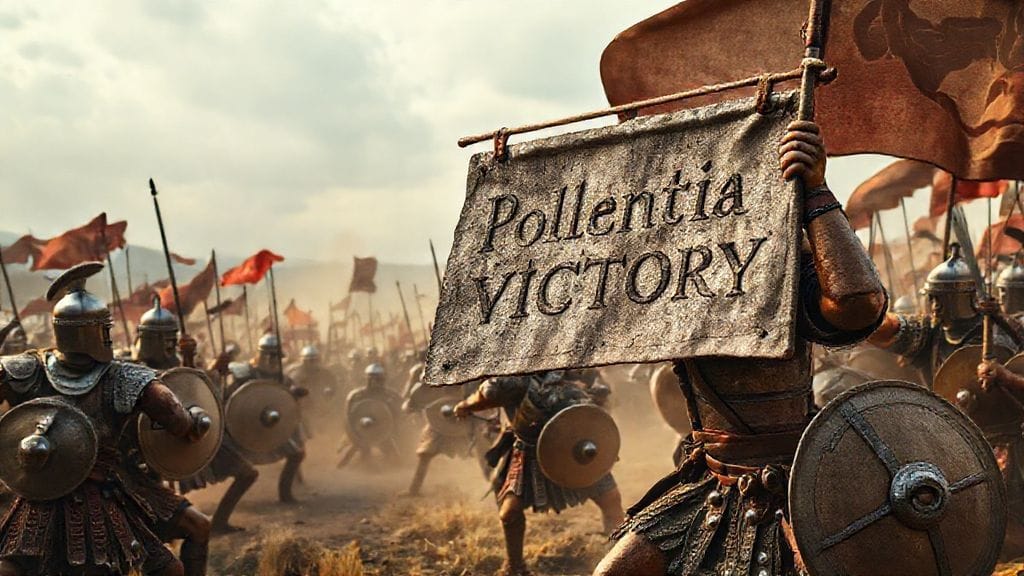
Table of Contents
- A Spring Morning in Rome: The Day an Emperor Was Made
- From Luxembourg to the Tiber: The Long Road to Imperial Authority
- Europe in Turmoil: Schism, Heresy, and the Fractured Empire
- The Man Behind the Crown: Sigismund’s Character and Ambitions
- Negotiating a Crown: Popes, Anti-Popes, and a Patient King
- Journey to the Eternal City: Processions, Perils, and Diplomacy
- Rome in 1433: A City Scarred Yet Still Sacred
- The Night Before: Vigil, Prayers, and Whispered Fears
- 31 May 1433: The Coronation Ceremony Unfolds
- Symbols of Power: Crown, Sword, and Orb in the Imperial Ritual
- Voices in the Crowd: How Ordinary Romans Saw the New Emperor
- An Empire of Many Frontiers: Hungary, Bohemia, and the Imperial Lands
- After the Applause: Politics, Promises, and Disappointments
- Faith, Reform, and the Shadow of the Council of Constance
- The Waning of Medieval Empire: How 1433 Marked an Ending and a Beginning
- Memory and Myth: How Historians Have Judged Sigismund
- Conclusion
- FAQs
- External Resource
- Internal Link
Article Summary: On 31 May 1433, in a Rome still bearing the scars of war and schism, sigismund crowned holy roman emperor became more than a ritual phrase; it was a fragile promise to hold a fractured Europe together. This article follows the long path that led Sigismund of Luxembourg from restless young prince to aging monarch seeking the final consecration of imperial authority in the Eternal City. It immerses the reader in the political intrigues of popes and princes, the ghostly echoes of the Great Schism, and the lingering tensions left by the burning of Jan Hus and the Hussite Wars. From the crowded streets of Rome to the quiet chapels where Sigismund prayed before his coronation, we explore both the grandeur and the anxiety behind the ceremony. We trace how the moment when sigismund crowned holy roman emperor was proclaimed in Latin resonated across Hungary, Bohemia, and the German principalities, yet could not entirely halt the drift toward a more fragmented Europe. The narrative blends eyewitness-style description with careful historical analysis, showing how this one day in 1433 both crowned a career and exposed the limits of medieval imperial power. In the end, the story of sigismund crowned holy roman emperor becomes a lens through which we see the twilight of the medieval Holy Roman Empire and the first glimmers of a changing age.
A Spring Morning in Rome: The Day an Emperor Was Made
On the final morning of May in the year 1433, the sun rose over Rome with a pale, uncertain light. The Tiber moved sluggishly between broken quays and half-ruined warehouses, carrying with it the dust and whispers of an imperial past that seemed almost as distant as myth. Yet on this day, the word “emperor” once again carried weight. Bells from a dozen churches, some half-repaired after decades of neglect, began to clash and ring, calling the people of the city toward a spectacle they had not seen in a generation. Somewhere beyond the uneven rooftops and the scattered ruins of ancient forums, men whispered a formula that would soon echo through Christendom: sigismund crowned holy roman emperor.
It was an image as carefully arranged as any liturgy. Processions of clerics in crimson and white would move through streets that had been swept with an almost obsessive rigor. The banners of the papacy and the imperial eagle would share the same currents of morning wind, a striking sight in a world that had only recently emerged from the nightmare of the Great Schism. Sigismund himself, no longer young, no longer the handsome cavalier of his early years, readied for a ritual he had chased for decades. He fasted, he prayed, and he wrestled with the weight of the crown he was yet to receive. Outside, the city buzzed with rumor. Would he prove a savior to Christendom, or merely another crowned figure in a long line of faltering rulers?
In the narrow streets, cobblers, bakers, washerwomen, and beggars jostled for a glimpse of the passage that would carry the king of the Romans to his final transfiguration. They knew little of councils or concordats, but they knew spectacle. They understood that Rome’s prestige rose with every emperor crowned beneath her vaults. Some had been children during the last such ceremony, while others had only heard their parents’ tales of imperial cortèges and golden processions. As the morning grew brighter, even the broken stones of the Forum seemed to stir, as if the ghosts of Augustus and Constantine were watching to see what this new emperor would mean.
Yet behind the carefully choreographed rituals, behind the Latin chants and solemn gestures, lay the bruised heart of a continent in crisis. The Turks pressed against Hungary’s borders; Bohemia still smoldered from the Hussite challenge; German princes guarded their autonomy with jealous intensity. On this day, when sigismund crowned holy roman emperor would be proclaimed in Rome’s sacred spaces, those tensions did not vanish. They gathered, unseen, like storm clouds beyond a deceptively clear horizon. The coronation was a promise, but also a question: could any man in the fifteenth century truly be “Roman emperor” in a Europe already pulling itself into new shapes?
From Luxembourg to the Tiber: The Long Road to Imperial Authority
To understand how Sigismund came to kneel in Rome on 31 May 1433, one must trace a path that stretched back not only across his own restless life, but across the tangled branches of the House of Luxembourg. Born in 1368, Sigismund entered the world not as the inevitable emperor of Europe, but as a younger son, a pawn in dynastic calculations. His father, Charles IV, Holy Roman Emperor and King of Bohemia, had crafted a delicate web of influence through the Golden Bull of 1356, defining the rules of imperial elections. Yet the old emperor could not bequeath unity or clarity to his heirs. Upon his death, his lands, titles, and ambitions splintered among sons and relatives, leaving Sigismund to fight, bargain, and improvise his own path to power.
From an early age, he learned that borders were flexible, alliances temporary, and loyalty a currency to be spent with caution. Betrothed to Mary of Hungary and essentially traded into the political orbit of the Hungarian crown, he found himself caught in the violent storms of Central European politics. Civil war, foreign invasion, and aristocratic uprising marked his early years, teaching him the hard lessons of survival. The man who would one day hear the proclamation sigismund crowned holy roman emperor first knew what it meant to be nearly dispossessed, betrayed by supposed allies, and forced to rebuild authority from near ruin.
By the late fourteenth century, Sigismund had clawed his way to the Hungarian throne, then used that base to extend his influence. Hungary, at the crossroads of Latin Christendom and the Ottoman frontier, was both prize and burden. It gave Sigismund land, armies, and prestige, but chained him to a relentless defensive war against a rising Turkish power that seemed to grow stronger every decade. It was there, in the heat and dust of Balkan campaigns, that he developed his sense of himself as a defender of Christendom—the same identity he would later bring to Rome for his imperial coronation. Yet the memory of disastrous defeats, such as the crushing rout at Nicopolis in 1396, never entirely left him. The scars of that campaign lay deep beneath the robes he would one day wear in the Roman basilica.
What distinguished Sigismund from many of his contemporaries was his unusually wide-ranging ambition. He refused to be confined to a single kingdom, constantly reaching for the wider authority of the “king of the Romans”—the prince elected to become Holy Roman Emperor. Over years of negotiation, marriage diplomacy, and sheer persistence, he secured that election in 1410, though it would be a title contested and complicated by rival claimants. His realm was never simple: a patchwork of Hungary, an uneasy claim to Bohemia, and far-flung influence across the German lands. But the sparkling prize remained the ancient union of spiritual and secular majesty that only Rome could bestow. The road from his Luxembourg birth to the Tiber was not a straight line; it was a crisscrossing trail of crusades, councils, uprisings, and uneasy truces.
Europe in Turmoil: Schism, Heresy, and the Fractured Empire
When Sigismund reached maturity, Europe was a house divided. The papacy itself—supposedly the spiritual heart of Latin Christendom—had been torn apart by the Great Western Schism since 1378. Two, and at moments even three, rival popes claimed Saint Peter’s throne from Rome, Avignon, and later Pisa. Each possessed their own cardinals, their own courts, their own web of allies and enemies. This was the world into which Sigismund stepped as an aspiring king and would-be emperor. “Christendom has become a creature with two heads,” lamented one contemporary cleric, “and each head bites the other.” Such an image captures the grotesque reality of the time: a church meant to embody unity had become a stage for competing power blocs.
Within the Holy Roman Empire itself, authority fractured along secular lines as well. Princes, bishops, and free cities guarded their rights with jealous vigilance. The emperor, in theory, remained the supreme secular lord of Christendom, but in practice his power depended on a patchwork of deals and oaths. The imperial title was elective, not hereditary, resting in the hands of seven prince-electors defined by Charles IV’s Golden Bull. Their rivalries were fierce, their ambitions local as well as cosmic. In such a context, any man aspiring to more than a hollow dignity had to balance, coax, and occasionally threaten those whose votes and obedience he needed.
The crisis went deeper than politics. In Bohemia and beyond, preachers began to question not only papal behavior but the very structure of church authority. The English theologian John Wycliffe had already sown seeds of dissent, challenging church wealth and sacramental monopoly. His ideas traveled, often in secret, and took root in Prague, where the charismatic preacher Jan Hus gave them a new, fiery life. Hus’s calls for reform struck at the heart of ecclesiastical privilege and corruption; his sermons drew crowds that eclipsed ordinary liturgies. The movement that grew around him would one day shake Sigismund’s own rule in Bohemia to its core.
Against this background of schism and heresy, the repeated phrase sigismund crowned holy roman emperor would seem almost paradoxical. What did it mean to be “Holy” Roman Emperor when the church itself was broken and the empire’s borders blurred by overlapping jurisdictions? Yet for Sigismund, the very chaos of the age made the crown more necessary. If unity could be restored, he believed, it would require both spiritual healing and strong secular leadership. His journey toward Rome therefore passed through councils and synods as much as through battlefields. It is astonishing, isn’t it, that a man so deeply enmeshed in crisis would insist that an ancient ritual—kneeling before a pope in Rome—could still anchor a divided world?
The Man Behind the Crown: Sigismund’s Character and Ambitions
Sigismund’s contemporaries left portraits that were anything but simple. Some spoke of him as a restless whirlwind, constantly in motion across his far-flung territories, never content to remain in one city for long. Others saw in him a meditative, almost melancholic side—a man who brooded over the fate of Christendom and the stubborn self-interest of princes. He loved display and ceremony, yet he could also talk quietly and intelligently late into the night with humanists, theologians, and jurists. His multilingual world—Hungarian, German, Latin, and the tongues of the Slavic borderlands—gave him a complex, layered identity that unsettled those who expected rulers to be easily categorized.
Physically, age did not treat him with gentle hands. By the time he made his way to Rome, he was in his sixties, worn by campaigns, travel, and unending negotiation. But even then, observers remarked on his imposing stature and the seriousness of his gaze. He was fond of hunting and of rich fabrics, of pageantry and processions, yet those who knew him best understood that the love of spectacle was not merely vanity. It was a political instrument, a way to translate abstract ideas of imperial majesty into sights and sounds that subjects could feel with their senses. The coronation in Rome would become the ultimate such performance.
Ambition drove him, but his ambitions were never entirely straightforward. He wanted to be remembered as a healer of Christendom, the man who ended the Great Schism and restored the papacy to a single, undisputed pope. At the Council of Constance, convened in 1414, he played a central role in pressing for the deposition or resignation of rival popes and the election of Martin V. Chroniclers depict him riding into Constance wrapped in furs and followed by a retinue large enough to choke the narrow streets, a living emblem of imperial authority hovering over theological debate. Yet the same council that saw his greatest diplomatic triumph also saw one of his darkest legacies: the condemnation and burning of Jan Hus in 1415, despite earlier reassurances of safe conduct. This contradiction—peacemaker and persecutor—clung to him ever after.
To become emperor, for Sigismund, was not merely to add another title. It was to gather into one crown the disparate strands of his life: the Hungarian defender against the Turks, the German king among fractious princes, the would-be reconciler of a broken church. When later historians noted that sigismund crowned holy roman emperor took place late in his life, they understood how much of his story had already been written by that date. The coronation would not magically erase his failures or guarantee future success. But for a man shaped by symbols and convinced of the power of ceremonies, it offered a final consolidation of identity. In Rome, he hoped, his scattered efforts would be acknowledged and sanctified.
Negotiating a Crown: Popes, Anti-Popes, and a Patient King
The idea that any king of the Romans could simply travel to Rome and be crowned emperor whenever he pleased was a romantic fiction. In practice, every coronation was an intricate diplomatic ballet, choreographed between pope, cardinals, and the secular prince who sought the crown. For Sigismund, the path to that ceremony was especially tangled. The papacy he approached in the 1420s and early 1430s was still recovering from the schism he had worked so hard to heal. Martin V, elected at Constance in 1417, was determined to reassert papal authority in Italy and beyond, wary of any appearance that the emperor might stand as his rival rather than his ally.
Negotiations stretched for years. Sigismund needed papal recognition not only to legitimize his imperial title but to strengthen his hand in Germany and Bohemia, where nobles and cities often treated royal authority as just one more negotiation among many. Martin V, for his part, needed the emperor’s support against unruly Roman baronial families and against rival Italian powers, yet feared conceding too much. The Curia watched Sigismund closely: his involvement in church councils had made him a defender of conciliar authority—the idea that general councils might, in some conditions, stand above the pope himself. This was not a doctrine any pontiff wished to see encouraged.
Letters moved back and forth across the Alps, carried by envoys who spent months on the road. Conditions were proposed, modified, withdrawn. Sigismund promised to respect papal territories and to defend the papacy against its enemies, real or imagined. The pope, in turn, edged toward agreement, though with deliberate caution. At times it seemed as if the coronation might never happen, thwarted not by grand principle but by wearisome hesitation. Even the election of a new pope, Eugenius IV, in 1431 did not immediately clarify matters. Eugenius, a Venetian by origin, had his own anxieties about imperial influence in Italy, yet he also understood the prestige that flowed from placing a crown on a kneeling monarch.
Ultimately, the balance of interests tipped in Sigismund’s favor. The pope sought allies in a volatile peninsula; the emperor sought the consecration that only Rome could provide. Agreements were struck, often couched in language so careful it bordered on evasive. Sigismund pledged, in solemn formulae, to defend the church, to uphold orthodoxy, and to respect papal jurisdiction. Rome itself, impoverished and weakened, looked toward the thought of an imperial ceremony as a source of both immediate wealth—through visiting retinues and spending—and long-term prestige. When at last the date was set and preparations began, it represented the end of nearly two decades of maneuvering since Sigismund’s election as king of the Romans. The words sigismund crowned holy roman emperor would not be spoken lightly; they were the culmination of long and patient calculation.
Journey to the Eternal City: Processions, Perils, and Diplomacy
To travel to Rome in the fifteenth century was to move through a landscape of danger and opportunity. Roads were unreliable, bridges precarious, and political boundaries constantly shifting. Bandits and mercenaries haunted the same passes as pilgrims and merchants. For Sigismund, the journey south was more than a physical relocation; it was a statement of power, a slow-moving theatre of sovereignty. His entourage—nobles from Hungary and the German lands, clerics, advisers, guards, servants, and opportunistic hangers-on—stretched over miles of dusty road, like a movable city with its own rhythms and rivalries.
As the imperial party crossed the Alps, the world changed. Northern stone gave way to Italian sun, and the old imperial claim over Italy, long eroded by the rise of city-states and regional lords, became visible in a new light. Towns along the route weighed their loyalties: to the Visconti of Milan, to local signori, to the pope in Rome, and now to the traveling king of the Romans. Where support was firm, the city gates opened to banners, bells, and offerings. Where loyalties were doubtful, Sigismund’s men scanned the walls warily, hands near their sword hilts.
Every stop along the way offered chances for negotiation. Envoys from smaller Italian states approached with gifts and petitions; representatives of larger powers watched and calculated. Sigismund knew he could not impose his will on Italy as earlier emperors had dreamed of doing, but he could weave threads of influence, promise protection here, mediate disputes there. The coronation ahead of him gave added weight to his words. Soon, if all went according to plan, he would not merely be a king pressing claims but the consecrated emperor of the West. The formula sigismund crowned holy roman emperor hovered like a promise over his caravan, not yet spoken but already shaping how others saw him.
Behind the public displays, more intimate dramas unfolded. Some nobles argued about precedence in the imperial procession; others worried about the cost of weeks on the road. Clerics debated theological subtleties late into the night in smoky inns and borrowed palaces, while merchants calculated profits from the imperial presence. Sigismund himself, often traveling on horseback or in a well-armed carriage, juggled dispatches from Hungary, Bohemia, and German princes seeking favors or making demands. The journey to Rome did not lift the burdens of rule; it merely displaced them into new surroundings, painting them against the backdrop of Apennine hills and Tuscan towns.
Rome in 1433: A City Scarred Yet Still Sacred
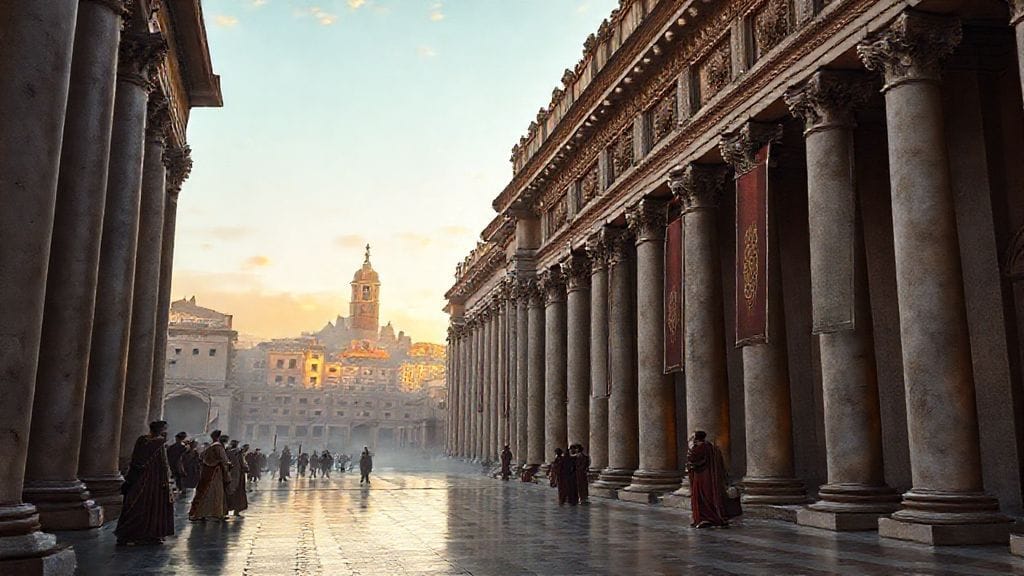
By the time Sigismund approached its walls, Rome was a strange mixture of glory and decay. Centuries of conflict, neglect, and shifting political fortunes had left the city’s ancient monuments half-buried or plundered for building stone. The Forum was a pasture in places, the Colosseum partially collapsed and used as a quarry. Powerful noble families—Colonna, Orsini, and others—held fortified towers scattered amid the ruins, treating the city like a patchwork of competing fortresses rather than a unified capital of Christendom. Plague, famine, and lawlessness were never far below the surface.
Yet for all that, Rome remained Rome. Pilgrims still arrived, kneeling on the worn steps of churches that guarded relics and memories stretching back to the apostles. The great basilicas—Saint Peter’s, Saint John Lateran, Santa Maria Maggiore—continued to dominate the city’s sacred geography, even if their walls bore the marks of hurried repairs and partial collapses. The pope’s presence, though often interrupted by his own need to flee or negotiate local uprisings, gave Rome a prestige no other city could match. For an emperor seeking the full measure of his title, no alternative site could compete.
In the weeks before Sigismund’s arrival, the city stirred with unusual energy. Streets were cleaned with a rigor they had not seen in years. Houses along the planned procession routes were draped with fabrics, some new and vivid, others faded but carefully displayed. Artisans worked late into the night to repair triumphal arches, paint temporary frescoes, and prepare the liturgical objects required for a coronation Mass. Food prices rose as demand surged; taverns filled with visitors speaking German, Hungarian, and a dozen other tongues. Suspicion and excitement mingled. For many Romans, the ceremony promised spectacle and economic relief; for others, it raised uncomfortable questions about the balance between papal and imperial power in their city.
Still, when the imperial party finally entered Rome, the city responded with outward enthusiasm. Bells rang from towers patched with makeshift repairs; incense thickened the air around key shrines; processions of Roman clergy emerged in their richest vestments to welcome the king who would soon become emperor. In those moments, the scars of the city receded slightly behind a rush of ceremonial grandeur. It is in this Rome—neither wholly ruined nor fully renewed—that we must place the scene of sigismund crowned holy roman emperor, a phrase soon to be inscribed in chronicles but first lived out in the dust and noise of real streets.
The Night Before: Vigil, Prayers, and Whispered Fears
On the eve of his coronation, Sigismund stood at a threshold not only of ceremony but of memory. The rituals that preceded an imperial coronation demanded prayer, fasting, and confession. The would-be emperor was expected to pass the night in a kind of spiritual vigil, preparing his soul for the immense burden symbolized by the crown. For a man like Sigismund, who had witnessed and shaped so many of the era’s great events, such a night could not have been simple.
One imagines him in a side chapel, candles flickering against frescoed walls, as priests intoned the ancient psalms. The Latin words were familiar, their cadences woven into his life since childhood, yet they must have sounded different now. How could he not think of Constance, of the flames that consumed Jan Hus while he, the king, watched from a distance, believing—or convincing himself—that such a sacrifice was necessary to preserve order? How could he not recall the dead of Nicopolis, fallen in a failed crusade that had promised glory and delivered humiliation? In that dim light, the future emperor would have confronted not only his aspirations but his failures.
Outside the quiet of the chapel, the city hummed with speculation. Courtiers discussed seating arrangements and ceremonial precedence, each detail carrying political meaning. Cardinals and papal functionaries checked and rechecked the order of Mass, the prayers to be recited, the exact placement of each sacred object. Rumors crept through the streets: would the emperor press for concessions from the pope? Would Rome rise in riot if rival factions felt slighted by the distribution of honors? The ceremonial scripts were old, but the actors were very much of their own contentious time.
In such a charged atmosphere, sleep came fitfully, if at all. The aging king, armored more by habit than by metal, might have dozed in brief intervals, only to wake with sudden clarity as he realized that by this time tomorrow the phrase sigismund crowned holy roman emperor would have passed from hope to history. Few medieval rulers were free of superstition; omens, dreams, and portents mattered. Did he seek signs that night—a particularly bright star, a sudden stillness in the air, an unexpected word from a trusted adviser? We cannot know for certain. But the weight of expectation in those hours before dawn must have pressed as heavily as any golden crown.
31 May 1433: The Coronation Ceremony Unfolds
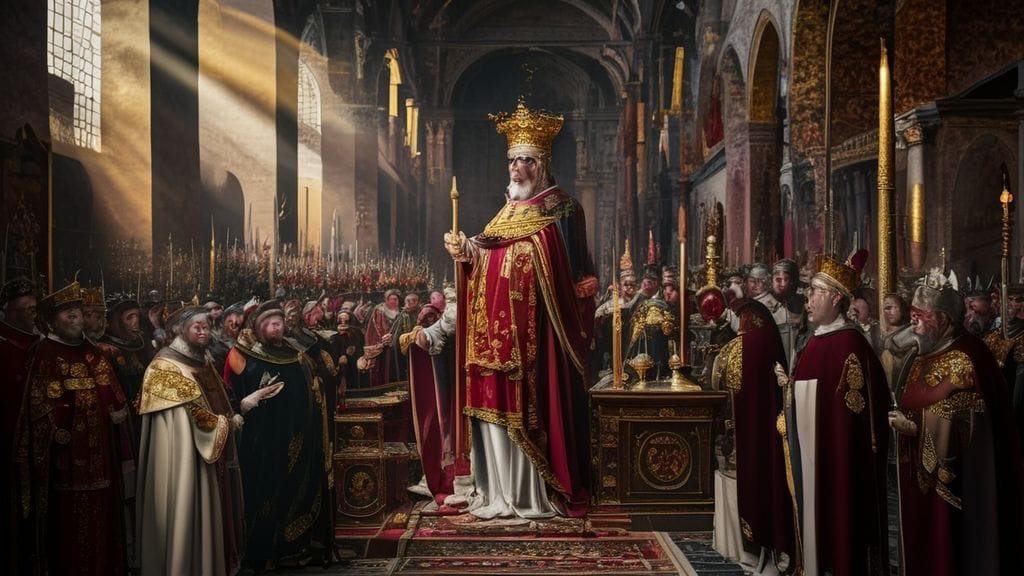
Morning came at last, and with it the carefully arranged choreography that would transform a restless king into a sacral emperor. The day began with processions: priests and bishops moving like streams of color toward the chosen basilica, likely Saint Peter’s itself, then still far from the soaring Renaissance church we know today but already the symbolic heart of Western Christendom. Trumpets sounded, their harsh brilliance cutting through the murmur of the crowd. The imperial party formed its own procession—standard bearers carrying the double-headed eagle, nobles in their richest garments, guards in polished armor catching the sunlight.
Sigismund rode or walked at the center of this living tapestry, surrounded by symbols of authority yet himself still un-crowned. As he entered the basilica, the atmosphere shifted. Outside, the city’s noise and dust prevailed; inside, thick incense and chanting filled a space charged with centuries of devotion. The solemn Latin of the liturgy rose and fell: prayers for the church, for Christendom, for the man about to receive the burden of empire. He was led before the altar, where relics of saints and apostles were enshrined. He swore oaths, promising to defend the church, to uphold justice, to protect the weak and punish the wicked.
Then came the moment that would be repeated in chronicles and diplomatic letters across Europe. The pope—or, more likely in practice, a high-ranking cardinal delegated for part of the task—took up the imperial regalia. The sword of Charlemagne, or a relic believed to be such, might have been placed in Sigismund’s hands with words invoking the defense of the faith. The orb, sign of dominion over the world under God’s law, was presented as both honor and admonition. Finally, the crown itself, heavy with metal and history, was raised above his head. The words pronounced at that instant carried a weight beyond their syllables. In that sacred Latin, the formula that historians echo in English—sigismund crowned holy roman emperor—became not just a description but a performative act.
The choir erupted into the Te Deum, an ancient hymn of thanksgiving: “Te Deum laudamus, te Dominum confitemur—We praise you, O God, we acknowledge you as Lord.” Incense veiled the edges of the scene; sunlight filtered through imperfect glass in dusty shafts that turned the ritual into something almost theatrical in its luminosity. Throughout, the tension between church and empire hovered like a silent third participant. The pope’s hands had placed the crown; the emperor’s hands would wield the sword. Each side needed the other, yet each feared the other’s power. In that moment of apparent unity, centuries of conflict and negotiation were both symbolically resolved and quietly postponed.
When the Mass concluded and the newly crowned emperor emerged into the Roman light, the city greeted him with cheers, banners, and the chaotic music of pipes and drums. For an instant, it must have seemed that the old dream of an ordered Christendom, guided jointly by pope and emperor, had been restored. Yet even as the crowds shouted, messengers somewhere in the city kept anxious watch for news from Bohemia, from Hungary’s borders, from German principalities already calculating how to respond to this new, sacralized authority. The ceremony had ended; the harder work of making its promises real was only beginning.
Symbols of Power: Crown, Sword, and Orb in the Imperial Ritual
The coronation of Sigismund was not merely a series of prayers and gestures; it was a dense web of symbols, each carrying centuries of theological and political meaning. The crown itself, likely one of several associated with imperial rites rather than a single, immutable object, represented continuity with an imagined line reaching back to Charlemagne and, beyond him, to the Roman emperors of antiquity. To place that crown on Sigismund’s head was to claim that the same divine providence that had once guided Augustus now rested, however faintly, on this Central European ruler.
The sword, drawn briefly and presented, spoke to another dimension of his role. An emperor was expected to be more than a distant, contemplative figure; he was to be a warrior for justice, defending Christendom against infidels and suppressing rebellion at home. For Sigismund, whose life had been marked by crusades and campaigns, the symbol fit uneasily with his mixed record. Victories had been partial, defeats painful. Yet the ritual did not dwell on such nuances; it affirmed the ideal. When later chroniclers noted that sigismund crowned holy roman emperor held the sword of empire, they wrote in the language of aspiration as much as observation.
The orb, often topped by a cross, condensed a complex theology into a sphere that could fit in a man’s hand. It reminded both emperor and subjects that all earthly power was secondary to God’s sovereignty. Holding the orb, Sigismund enacted a vision in which empire was not a simple assertion of dominance but a stewardship, a responsibility to maintain order under divine law. Whether this ideal could ever be realized in the messy, faction-ridden world of fifteenth-century Europe was another question entirely.
Each piece of regalia was embedded in ritual phrases. As one medieval ordo of coronation ceremonies specified, the crown signified “glory and honor,” the sword “the punishment of evildoers and the defense of the church,” and the orb “the governance of the world committed to your care.” Such formulae, copied and adapted in manuscripts across centuries, shaped how contemporaries understood the office. To declare sigismund crowned holy roman emperor was thus to say more than that a man had knelt and risen with new adornments. It was to inscribe him into an ongoing drama of Christian sovereignty, always threatened, never fully secure.
Voices in the Crowd: How Ordinary Romans Saw the New Emperor
While clerics and princes debated theology and jurisdiction, the people who filled Rome’s streets on that late May day experienced the coronation more as spectacle than as constitutional event. To a baker in the Trastevere or a water carrier near the Tiber, the arrival of a foreign king-turned-emperor meant work, disruption, and perhaps a brief glimpse of splendor. When the newly crowned ruler passed by in his glittering procession, flanked by soldiers and nobility, their responses were instinctive: cheering for the sheer excitement of it, craning necks for a better view, pushing children forward atop shoulders so they would remember the day.
Some among the crowd would have listened more closely to the Latin words shouted by heralds, recognizing in them the formal proclamation that sigismund crowned holy roman emperor was now a fact accomplished. Others heard the phrase only as part of a stream of sound, more captivated by the colors and the rhythm of drums than by the nuances of titles. The economic reality was never far away. Tavern keepers counted their profits from visiting entourages; prostitutes weighed the opportunities in a city temporarily flush with strangers. Sellers of food and trinkets lined the procession route, turning a rite of imperial theology into an occasion of commerce.
Yet even within this pragmatic world, touches of awe remained. Rome, so often disfigured by local conflict and papal absences, momentarily felt like the center of something larger. An eyewitness account cited by later historians—its original now lost but its details preserved in paraphrase—spoke of an old woman clutching a rosary, murmuring that she had lived long enough to see “another emperor in our city, may God grant him to be a just one.” Her hope, slender and humble, captured a sentiment that must have stirred in many hearts. Empires might rise and fall, but ordinary people continued to long for stability, fairness, and a sense that distant rulers cared about their fates.
Of course, not all Romans were impressed. Cynicism flourished in back rooms and over shared jugs of sour wine. Some muttered that one more solemn oath meant little in a world where powerful men routinely broke their promises. Others feared that the emperor’s presence might draw foreign armies, rival claimants, or internal unrest. Rome’s baronial families, watching from fortified palaces, assessed the balance of benefits and risks. For them, the coronation was another move on a chessboard that already contained popes, cardinals, and rival clans. Their calculations, no less than the whispered prayers of the devout, formed part of the human tapestry of that day.
An Empire of Many Frontiers: Hungary, Bohemia, and the Imperial Lands
When Sigismund left the basilica crowned as emperor, he did not suddenly gain a unified, obedient realm. His dominions remained a patchwork, each with its own grievances and expectations. Hungary, the cornerstone of his power, faced the relentless advance of the Ottoman Empire. Fortresses along the Danube and beyond stood as fragile bulwarks against raids and sieges that could erupt with little warning. There, peasants and nobles alike measured imperial authority not in refined legal formulae but in whether help arrived when the horse-hooves of Turkish raiders thundered across their fields.
Bohemia posed a different kind of challenge. The Hussite movement, sparked by the execution of Jan Hus and fed by deep dissatisfaction with church and crown, had erupted into full-scale warfare. Radical and moderate factions vied for influence, but all shared a burning resentment of Sigismund, whom they saw as complicit in Hus’s death and hostile to their demands for reform. For years, Bohemian forces had defeated crusades launched against them, including campaigns that carried papal blessing and imperial sanction. To them, sigismund crowned holy roman emperor would have sounded less like a promise of just order and more like a threat of renewed suppression.
Within the German lands of the empire, the picture was more varied still. Free cities guarded their privileges, rural knights engaged in feuds that sometimes devolved into outright banditry, and prince-bishops balanced their roles as spiritual shepherds and secular lords. The imperial title mattered in this environment, but often as a distant symbol rather than a direct source of daily governance. The emperor could issue charters, mediate disputes, or lead campaigns, yet his ability to coerce obedience was limited. In many places, local powerholders treated the empire as a framework within which they pursued their own interests, rather than as a hierarchy to which they unconditionally submitted.
Sigismund understood these complexities better than many rulers might have. His life had been spent traveling among these frontiers, listening to complaints, brokering deals, and sometimes leading armies in person. The coronation in Rome did not change the underlying realities, but it gave him a new card to play. Letters sent out afterward would emphasize that he no longer spoke merely as a king of Hungary or a king of the Romans, but as the crowned Holy Roman Emperor, consecrated in the heart of Christendom. Whether this would impress stubborn nobles in Prague or calculating burghers in Nuremberg was another matter entirely.
After the Applause: Politics, Promises, and Disappointments
Once the last echoes of the coronation chants faded and the streets of Rome returned to their more ordinary rhythms, the question lingered: what would the newly crowned emperor do with his sanctified authority? For Sigismund, the immediate aftermath involved a flurry of diplomatic activity. He negotiated with the pope over ongoing disputes, including the vexed issue of church councils and their role in reform. He corresponded with princes and nobles across the empire, urging unity against common enemies and obedience to the laws and customs he vowed to uphold.
Yet, as so often in medieval politics, the gap between aspiration and reality yawned wide. The Hussite challenge in Bohemia remained unresolved, despite years of bloody conflict. The Ottomans continued to press against Hungary’s borders, their power only intermittently checked by crusading armies that were often poorly coordinated and driven as much by plunder as by piety. Within Germany, old feuds flared anew, and the fragile consensus that had allowed his election decades earlier showed signs of fraying. To some observers, it seemed that the grand phrase sigismund crowned holy roman emperor had changed less than they had hoped.
None of this meant that the coronation lacked consequences. Symbolic acts can shape expectations, frame debates, and legitimize decisions. When Sigismund intervened in disputes or called for support, he could now invoke not only his earlier titles but the memory of his anointing before the altar in Rome. This mattered in an age when sacred ritual still carried immense weight. It also influenced how foreign powers saw him. Kings in France and England, locked in their own struggles during the waning years of the Hundred Years’ War, could not ignore the presence of a consecrated emperor, even if his actual reach into their affairs remained limited.
Still, time was not on Sigismund’s side. He was already an aging ruler at the time of his coronation, and the years that followed were few. His ability to embark on sweeping new policies or extended campaigns was constrained by both his health and the inertia of entrenched interests. Like other late medieval emperors, he found that the imperial crown bestowed grandeur more than direct control. The institution he led was an empire largely in name, a network of territories bound together by tradition, oaths, and occasional assemblies rather than by a centralized bureaucracy or standing army. The disappointments that followed his moment of greatest ceremonial triumph thus reflected structural realities as much as personal failings.
Faith, Reform, and the Shadow of the Council of Constance
Long before he knelt in Rome to receive the imperial crown, Sigismund had carved his place in church history at the Council of Constance. Convened from 1414 to 1418, that great assembly sought to end the Western Schism, address heresy, and undertake long-promised reforms of the church. Sigismund’s prominent role there shaped both his reputation and the spiritual atmosphere surrounding his later coronation. Historians such as Thomas A. Fudge have argued that “no lay ruler of the period engaged more directly with the doctrinal controversies of his day,” a judgment that, while perhaps slightly generous, captures his unusual engagement with ecclesiastical matters.
At Constance, Sigismund pressed cardinals and theologians to resolve the scandal of multiple popes. He was willing to risk papal displeasure by supporting the decree Haec Sancta, which declared that a general council held its authority directly from Christ and that even the pope was bound to obey its decisions in matters of faith and reform. This conciliarist stance, controversial then and now, reflected his belief that only a broad, representative assembly could heal the church’s divisions. It also revealed a tension that would later surface in his dealings with Pope Eugenius IV around the time of his coronation. If a council could stand above a pope, where did that leave the emperor who had promoted such a council?
The burning of Jan Hus at Constance cast a long, dark shadow over Sigismund’s legacy. Having given Hus a promise of safe conduct to the council, he later acquiesced in the theologian’s condemnation and execution for heresy. To many in Bohemia, this was a betrayal beyond forgiveness, transforming the king from potential protector into sworn enemy. Their anger fueled the Hussite Wars, which ravaged the region for years and repeatedly frustrated crusading armies sent to suppress them. For these communities, the words sigismund crowned holy roman emperor would only deepen resentment, signaling the further elevation of a man they associated with perjury and persecution.
Yet Sigismund’s own religious outlook was not simply that of a rigid persecutor. He sincerely believed that heresy threatened the unity and salvation of Christendom. To him, burning a heretic was not cruelty but tragic necessity, a harsh medicine intended to protect the wider body of the faithful. Such reasoning appears chilling to modern sensibilities, but it fit the logic of his age. He also continued to advocate for church reform in other areas, seeking to reduce abuses, curb simony, and improve clerical discipline. His coronation as emperor in 1433 therefore took place under a complex cloud: hailed by some as the champion who had ended schism, denounced by others as the betrayer who had extinguished a voice of reform in flames.
The Waning of Medieval Empire: How 1433 Marked an Ending and a Beginning
By the time Sigismund emerged from Saint Peter’s crowned as emperor, the medieval vision of empire was already slipping away. The ideals that had once animated figures like Otto III or Frederick II—a universal Christian monarchy uniting Latin Christendom under a single secular head—no longer matched the realities of an increasingly diversified Europe. National monarchies in France, England, and Spain were consolidating, building administrative structures that outstripped anything the decentralized Holy Roman Empire could deploy. Urban economies were transforming social life, while humanist scholars began to look beyond scholastic frameworks to the texts and values of classical antiquity.
In this changing environment, the phrase sigismund crowned holy roman emperor had a somewhat nostalgic ring. It evoked an older dream of unity that still possessed emotional and spiritual power but was increasingly difficult to translate into concrete governance. The empire Sigismund led was less a coherent state than a confederation of semi-autonomous entities agreeing, at least in principle, on a shared overarching order. Imperial diets, pledges, and ceremonies continued to matter, but the gravitational pull of local and regional interests grew stronger year by year.
Nonetheless, the coronation of 1433 did not simply mark an ending. It also foreshadowed new patterns of authority and identity. By asserting imperial leadership in defense against the Ottomans, Sigismund pointed toward a future in which the struggle along Europe’s eastern frontier would shape geopolitical alignments. By engaging—however controversially—with conciliarism and church reform, he anticipated later debates that would explode in the Reformation a century after his death. The tensions visible in his reign between central claims and local autonomy, between spiritual ideals and political necessities, would remain embedded in the empire’s structure until its eventual dissolution in 1806.
One contemporary chronicler, reflecting on Sigismund’s coronation some years later, wrote that “the world has grown too large and too many-tongued for a single crown to speak for all.” Whether or not the words are exactly as quoted, the sentiment rings true. The late medieval empire still projected an aura of universality, but linguistic, cultural, and political diversity increasingly pressed against any single, uniform model of rule. The emperor’s role would gradually shift from would-be universal monarch to first among many princes, a symbol of continuity presiding over a federation rather than commanding a unitary state.
Memory and Myth: How Historians Have Judged Sigismund
In the centuries after Sigismund’s death in 1437, his reputation moved in and out of shadow. Early chroniclers, especially those close to imperial and papal circles, tended to portray his coronation in Rome as the fitting climax of a long and devoted career in service to Christendom. They emphasized his role in ending the Great Schism, praised his tireless travels, and presented the formula sigismund crowned holy roman emperor as the rightful reward of a man who had borne heavy burdens for the common good.
Bohemian sources, by contrast, preserved a far harsher image. In Hussite songs and chronicles, he appeared as a false king, a breaker of promises, the man whose word of safe conduct had failed to protect Jan Hus from the stake. Tales grew around his name, some exaggerated, some grounded in real events, casting him as a kind of dark figure in the drama of Czech religious and national identity. For these narratives, his coronation in Rome symbolized not glory but the unjust triumph of an oppressive order.
Modern historians have sought to move beyond these polarized views. Nineteenth-century scholars, writing in an age fascinated by nation-states and strong central governments, often criticized Sigismund for failing to build a more cohesive empire or for underestimating the enduring power of Hussite religious conviction. Twentieth-century research, drawing on a wider range of sources and more nuanced understandings of late medieval politics, has been somewhat kinder. Scholars have noted the structural limitations he faced and the genuine complexity of his attempts to balance conciliar reform, papal interests, and imperial authority.
Today, Sigismund is often seen as a transitional figure. His life and his Roman coronation sit at the hinge between the high medieval world of universalist aspirations and the early modern era of religious fragmentation and emerging state power. The words sigismund crowned holy roman emperor thus resonate not only as a personal achievement but as a historical marker. They draw our attention to a moment when old symbols still commanded reverence even as new forces—humanist thought, national sentiment, economic change—quietly undermined their foundations. In that sense, Sigismund’s legacy is neither wholly heroic nor wholly tragic. It is, like the age he inhabited, ambivalent, unfinished, and deeply human.
Conclusion
The coronation of Sigismund in Rome on 31 May 1433 was a day dense with meaning, yet haunted by uncertainty. From the early morning processions through the incense-laden basilica to the jubilant emergence of the newly crowned ruler into the Roman streets, every gesture and word sought to restore an ancient vision of Christian empire. The phrase sigismund crowned holy roman emperor captured in a few words the hopes invested in that vision: the healing of schism, the defense of Christendom, the restoration of order in a world riven by heresy and war. Yet, as we have seen, the realities that awaited the emperor beyond Rome’s walls were stubbornly resistant to ceremonial solutions.
Sigismund’s life up to that point—the struggles in Hungary, the burning of Jan Hus, the Hussite Wars, the Council of Constance—shaped both the grandeur and the ambiguities of the moment. His imperial crown did not erase the blood on his hands, nor did it grant him the power to unify the kaleidoscopic territories over which he nominally ruled. It did, however, provide a potent symbol, one that contemporaries and later generations used to think about authority, faith, and responsibility. The image of an aging ruler kneeling before the altar in Rome, accepting crown, sword, and orb, remained etched in Europe’s collective memory as a last flourish of medieval imperial ceremony.
In the end, the significance of that day lies as much in what it reveals about a changing Europe as in what it accomplished for Sigismund personally. The ceremony testified to the enduring allure of universal authority, even as the structures that might sustain it were weakening. It showed how deeply late medieval people believed in the power of ritual to shape reality, even when underlying political and social forces pulled in contrary directions. To stand in imagination among the crowd in Rome in 1433 is to glimpse a world on the cusp: still rooted in the ceremonial language of Christendom, already edging toward the fractured, dynamic landscape of the early modern age.
FAQs
- Who was Sigismund before he became Holy Roman Emperor?
Sigismund of Luxembourg was born in 1368 as a younger son of Emperor Charles IV. Before his imperial coronation, he became King of Hungary through marriage and political struggle, and later King of the Romans, the title given to the elected heir to the imperial throne. Over decades he built a composite authority across Hungary, the German lands, and, more tenuously, Bohemia. - When and where was Sigismund crowned Holy Roman Emperor?
Sigismund was crowned Holy Roman Emperor in Rome on 31 May 1433. The ceremony took place in the sacred setting of papal Rome, most likely in the old basilica of Saint Peter’s, and was performed under the auspices of Pope Eugenius IV. - Why was the Roman coronation important if Sigismund was already king of the Romans?
The title “king of the Romans” signified that Sigismund had been elected by the prince-electors, but only a papal coronation in Rome completed the traditional transformation into Holy Roman Emperor. This ceremony provided a powerful spiritual and symbolic sanction, reinforcing his legitimacy and prestige across Christendom. - How did the Council of Constance influence Sigismund’s coronation?
At the Council of Constance (1414–1418), Sigismund played a central role in ending the Western Schism by supporting the election of Pope Martin V and advocating conciliar authority. His involvement elevated his profile as a healer of church divisions, which helped justify his later coronation. However, his complicity in the burning of Jan Hus also fueled enduring hostility in Bohemia. - What were the main challenges Sigismund faced after becoming emperor?
After his coronation, Sigismund still confronted major problems: the Hussite Wars in Bohemia, the Ottoman advance against Hungary, and deep internal divisions among the German princes and cities. The imperial crown added symbolic weight to his authority but did not give him a centralized apparatus capable of resolving these crises easily. - Did Sigismund’s coronation change the structure of the Holy Roman Empire?
No fundamental structural change followed directly from the coronation. The Holy Roman Empire remained a decentralized entity, with considerable autonomy for princes, bishops, and cities. The coronation reaffirmed the ideal of imperial unity without overcoming the practical limits on imperial power. - How is Sigismund remembered today by historians?
Historians now tend to see Sigismund as a transitional figure. He is credited for helping end the Western Schism and for engaging seriously with questions of church reform, but criticized for his role in the execution of Jan Hus and for his limited success against the Hussites and Ottomans. His reign illustrates both the persistence of medieval imperial ideals and their growing incompatibility with emerging political and religious realities. - What was the relationship between the pope and Sigismund at the time of the coronation?
The relationship was cooperative but cautious. Pope Eugenius IV needed imperial support in a turbulent Italy, while Sigismund needed papal sanction to complete his imperial status. Both sides negotiated carefully to avoid conceding too much authority, and the coronation reflected a delicate balance rather than unambiguous harmony. - Why did Bohemians view Sigismund negatively despite his imperial status?
Many Bohemians associated Sigismund with the betrayal and execution of Jan Hus, whom they regarded as a righteous reformer. The subsequent Hussite Wars, fought in defense of Hus’s teachings and against external attempts at suppression, entrenched a deeply hostile image of Sigismund that his later imperial coronation could not dispel. - What broader historical trends does Sigismund’s coronation highlight?
His coronation highlights the waning of the medieval idea of a universal Christian empire, the rise of conciliarism and early reformist ideas, the increasing prominence of national monarchies, and the pressure of the Ottoman advance on Europe’s eastern frontiers. It stands at a crossroads where older symbols of unity confronted a world becoming too diverse and fragmented for any single crown to command unquestioned obedience.
External Resource
Internal Link
Other Resources
- Encyclopaedia Britannica – general search for the exact subject
- Google Scholar – academic search for the exact subject
- Internet Archive – digital library search for the exact subject